Italy holds more UNESCO World Heritage Sites than any other country: 62 as of 2026, after the 2025 addition of the Domus de Janas prehistoric tombs in Sardinia and the 2026 inscription of the Italian-style condominio theatres of central Italy. Figures you will see online range from 58 to 62 because the list has changed twice in two years, and we have counted against the UNESCO World Heritage Centre list for Italy. This guide groups every site by region, says what it actually is, and links to our own guide where we have one, so you can build a route around the ones that interest you. For smaller towns that reward a visit, see our list of the 7 most beautiful hill towns in Italy, three of which hold UNESCO status.
A few things to know first. A “site” is not always a single place. Venice and its lagoon is one entry, the Dolomites span three regions, and the Via Appia, the Longobards and the pile dwellings are serial entries spread across many towns. Some entries are whole historic centres (Florence, Siena, Naples), some are a single building (Castel del Monte), and some are landscapes (Val d’Orcia, the Prosecco Hills). Planning around the region rather than the entry number works best.
Quick picks: where to start
- First trip, three cities: Rome, Florence and Venice, see our 10 days in Italy itinerary.
- South in one go: Naples, Pompeii and the Amalfi Coast, see Pompeii and the Amalfi Coast.
- Fewer crowds: Matera, Alberobello, Urbino, Syracuse and Ravenna.
- Landscape lovers: the Dolomites, Val d’Orcia and Cinque Terre.
Piedmont and Liguria
Turin and the Residences of the Royal House of Savoy (1997) is a ring of royal palaces in and around Turin, including the Palazzo Reale and the Venaria Reale. Start with our Turin guide. Sacri Monti of Piedmont and Lombardy (2003) are nine hilltop chapel complexes with life-size painted figures, the best known being Varallo and Orta.
The Vineyard Landscape of Langhe-Roero and Monferrato (2014) covers the Barolo and Barbaresco country around Alba. See our Langhe region guide and Alba. Ivrea, Industrial City of the 20th Century (2018) preserves the Olivetti factories and worker housing, a rare modernist entry.
Portovenere, Cinque Terre and the Islands (1997) is the terraced coastline of five villages plus Portovenere. Read our Cinque Terre guide, the Cinque Terre itinerary and best time to visit Cinque Terre. Genoa, Le Strade Nuove and the Palazzi dei Rolli (2006) is the Renaissance and Baroque street system where noble families hosted visiting dignitaries. Our Rolli Palaces guide and Genoa hub cover it.
Lombardy
Lombardy has six entries, more than most regions realise.
- Santa Maria delle Grazie with Leonardo’s Last Supper, Milan (1980). Timed tickets sell out weeks ahead, so see our Last Supper tickets guide and the Milan hub.
- Rock Drawings in Valcamonica (1979). Italy’s first listed site, with thousands of Alpine petroglyphs.
- Crespi d’Adda (1995). A 19th-century company village near Bergamo, still lived in.
- Rhaetian Railway in the Albula/Bernina Landscapes (2008). A Swiss-Italian line; the Italian leg runs to Tirano.
- Mantua and Sabbioneta (2008). Two Renaissance court towns. See our Mantua hotels guide.
- Monte San Giorgio (2010). A shared Swiss-Italian fossil site, one of the least visited on the list.
Veneto, Trentino-South Tyrol and Friuli
Venice and its Lagoon (1987) needs no introduction; start with our Venice guide, 3 days in Venice and the Venice entry fee guide. City of Verona (2000) is covered in our Verona hub and where to stay in Verona.
Vicenza and the Palladian Villas of the Veneto (1994) is Andrea Palladio’s body of work, best reached on a day trip from Venice or Verona. The Botanical Garden of Padua (1997) is the world’s oldest academic botanical garden still in its original site, and Padua’s Fourteenth-Century Fresco Cycles (2021) include Giotto’s Scrovegni Chapel; see Padua and Padua things to do. The Prosecco Hills of Conegliano and Valdobbiadene (2019) is the wine landscape north of Treviso.
The Dolomites (2009) span Veneto, Trentino-South Tyrol and Friuli. Our Dolomites hub, Dolomites itinerary and guided hikes are the place to start, and Bolzano, Cortina and Merano work as bases. Aquileia (1998) in Friuli was one of the largest cities of the Roman Empire, with a vast mosaic floor in its basilica.
Emilia-Romagna
Emilia-Romagna has five entries of its own and shares a sixth.
- Ferrara, City of the Renaissance and its Po Delta (1995). See our Ferrara guide.
- Early Christian Monuments of Ravenna (1996). Eight monuments with Byzantine mosaics. Our Ravenna hub, things to do and Ravenna hotels cover them.
- Modena Cathedral, Torre Civica and Piazza Grande (1997). Read our Modena hotels guide.
- The Porticoes of Bologna (2021). About 62 km of arcades, with the Portico di San Luca the longest. See Bologna and Bologna day trips.
- Evaporitic Karst and Caves of the Northern Apennines (2023). Gypsum caves near Bologna and Reggio Emilia, accessible mainly on guided visits.
- Condominio theatres of central Italy (2026). A serial entry of 18th and 19th century theatres across Emilia-Romagna, Marche and Umbria.
Tuscany
Tuscany has eight entries, the highest of any region.
- Historic Centre of Florence (1982). Our Florence guide, 3 days in Florence and Uffizi tickets cover it.
- Piazza dei Miracoli, Pisa (1987). See Pisa and Leaning Tower tickets.
- Historic Centre of San Gimignano (1990). The medieval tower town; see San Gimignano hotels.
- Historic Centre of Siena (1995). Our Siena hub and Palio di Siena guide go with it.
- Historic Centre of Pienza (1996). A Renaissance ideal town; see Pienza hotels.
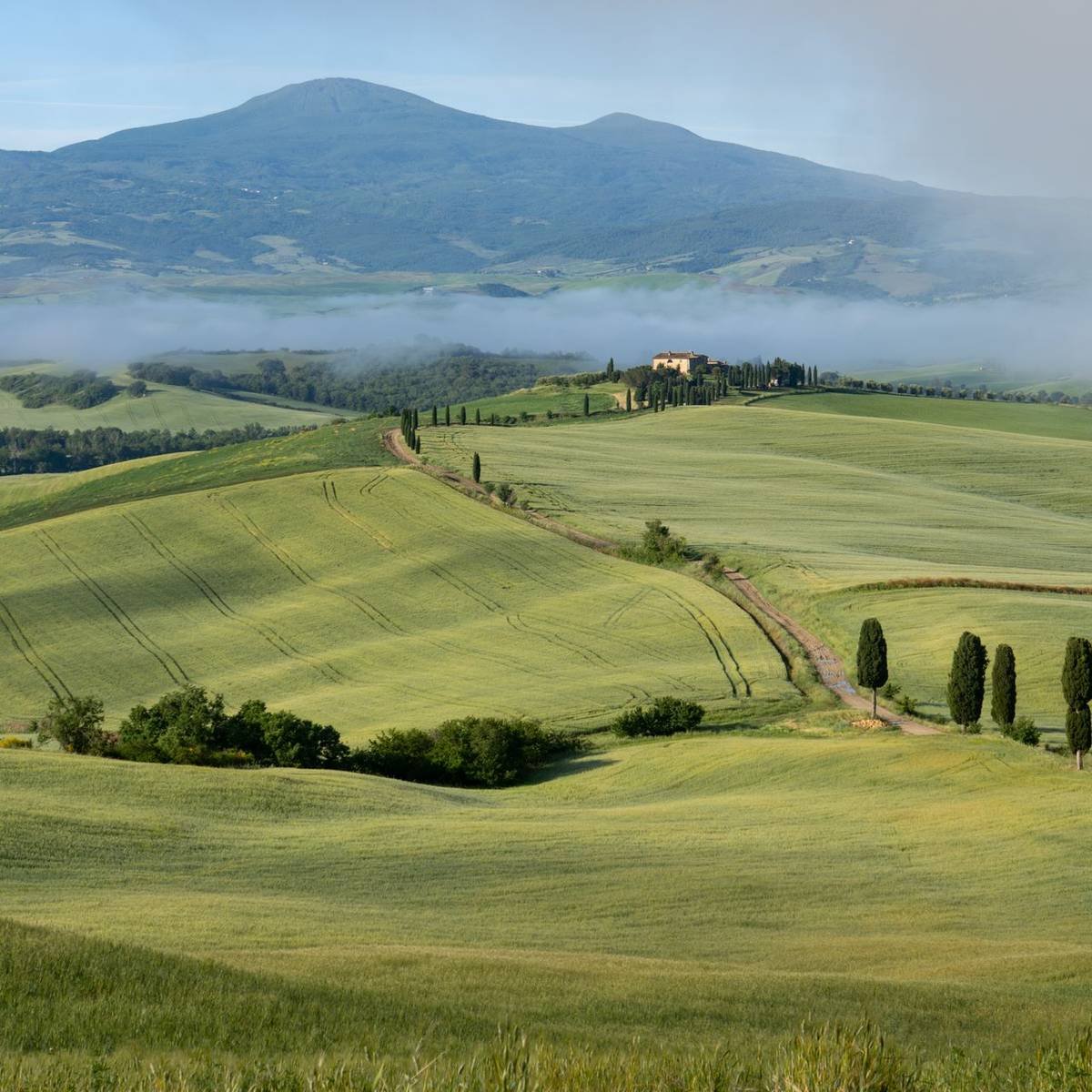
- Val d’Orcia (2004). The cypress and wheat landscape of postcards. Read our Val d’Orcia hotels guide and Tuscany itinerary.
- Medici Villas and Gardens (2013). Twelve villas and two gardens around Florence, including Poggio a Caiano.
- Great Spa Towns of Europe (2021). Montecatini Terme, Italy’s part of an eleven-town serial entry.
Our Tuscany region hub ties these together, and Tuscany wine tours are an easy way to cover the countryside entries without a car.
Umbria and Marche
Assisi, the Basilica of San Francesco and Other Franciscan Sites (2000) is covered in our Assisi guide and Assisi things to do. The Historic Centre of Urbino (1998) is the Montefeltro Renaissance capital; read Urbino things to do and Urbino hotels. Both regions are also part of the Longobards and condominio theatre serial entries below. See also Umbria and Le Marche.
Rome and Lazio
Historic Centre of Rome, the Properties of the Holy See and San Paolo fuori le Mura (1980) is the biggest single entry for most visitors. Our Rome hub, Colosseum and Forum tickets and Vatican Museums tickets are the practical starting points, and the ancient Rome history guide gives the background.
Three more Lazio entries are easy day trips: Villa Adriana (1999) and Villa d’Este (2001) at Tivoli, and the Etruscan Necropolises of Cerveteri and Tarquinia (2004). See Rome day trips.
Campania
- Historic Centre of Naples (1995). See Naples and 3 days in Naples.
- Royal Palace at Caserta (1997). The vast Bourbon palace, an easy half day from Naples.
- Pompeii, Herculaneum and Torre Annunziata (1997). Start with our Pompeii guide, Pompeii hub and Pompeii tours; Vesuvius hike fits the same day.
- Costiera Amalfitana (1997). Our Amalfi Coast hub, itinerary and Path of the Gods hike cover it.
- Cilento and Vallo di Diano National Park with Paestum and Velia (1998). The Greek temples at Paestum are the draw.
Puglia and Basilicata
Castel del Monte (1996) is Frederick II’s octagonal castle near Andria. The Trulli of Alberobello (1996): see our Alberobello hub and Alberobello hotels. The Sassi and Park of the Rupestrian Churches of Matera (1993): see Matera, Matera things to do and Matera hotels. For both regions, our Puglia itinerary and Puglia region hub help with routing.
Sicily and the Aeolian Islands
Sicily has seven entries, so allow a week. Our Sicily island hub and Sicily itinerary are the best place to plan.
- Valley of the Temples, Agrigento (1997). Read our Agrigento hotels guide.
- Villa Romana del Casale (1997). Near Piazza Armerina, with the largest set of Roman floor mosaics known.
- Aeolian Islands (2000). See the Aeolian Islands hub and Stromboli volcano guide.
- Late Baroque Towns of the Val di Noto (2002). Noto, Ragusa, Modica, Catania, Caltagirone, Scicli, Militello and Palazzolo Acreide; Catania is the usual base.
- Syracuse and the Rocky Necropolis of Pantalica (2005). See Syracuse hotels and Syracuse tours.
- Arab-Norman Palermo and the Cathedral Churches of Cefalu and Monreale (2015). See Palermo and Palermo day trips.
- Mount Etna (2013). Our Mount Etna tours guide covers access.
Sardinia
Su Nuraxi di Barumini (1997) is the best preserved Bronze Age nuraghe complex. Funerary Tradition in the Prehistory of Sardinia: the Domus de Janas (2025) covers rock-cut Neolithic tombs across the island. Our Sardinia hub and things to do in Sardinia help plan; a Sardinia rental car is close to essential.
Multi-region serial sites
Seven entries cross regional borders and are best treated as themes rather than destinations:
- Longobards in Italy: Places of Power (2011): Cividale, Brescia, Castelseprio, Spoleto, Campello sul Clitunno, Benevento and Monte Sant’Angelo. See Spoleto.
- Prehistoric Pile Dwellings Around the Alps (2011): 19 Italian sites in lakes and wetlands of the north.
- Venetian Works of Defence (2017): the fortified cities of Bergamo, Peschiera del Garda, Palmanova and others. See Bergamo.
- Ancient and Primeval Beech Forests of the Carpathians and Other Regions of Europe (2017): Italian forests in Abruzzo, Lazio, Calabria and elsewhere.
- Via Appia, Regina Viarum (2024): the Roman road from Rome toward Brindisi, with sections in Lazio, Campania, Basilicata and Puglia.
- Condominio theatres (2026) and Dolomites (2009) are covered in their regional sections above.
How to visit UNESCO sites well
Book timed entries early. The Last Supper, the Colosseum arena and underground, the Uffizi and the Vatican Museums sell out in peak season. Pompeii and the Valley of the Temples rarely do, but midday heat is a real constraint from June to August.
Pair one big site with one quiet one. Rome with Cerveteri, Venice with Vicenza, Naples with Caserta, and Florence with Pienza or Val d’Orcia all balance a crowded day with a quiet one.
Use trains for the cities, cars for the landscapes. Our getting around Italy guide explains the options, and Italy travel costs helps budget entry fees. A guided tour to major sites saves time at the busiest ones, and Rome tours and Pompeii tours are the two most common bookings.
Check opening days. State museums and sites often close on Mondays, and some sites close on public holidays; see Italy public holidays before locking in dates. Ticket prices quoted here are approximate as of 2026; confirm on the official site of each property.
New to Italy? Our first time in Italy guide and how many days in Italy help you decide how many of these sites realistically fit into one trip.