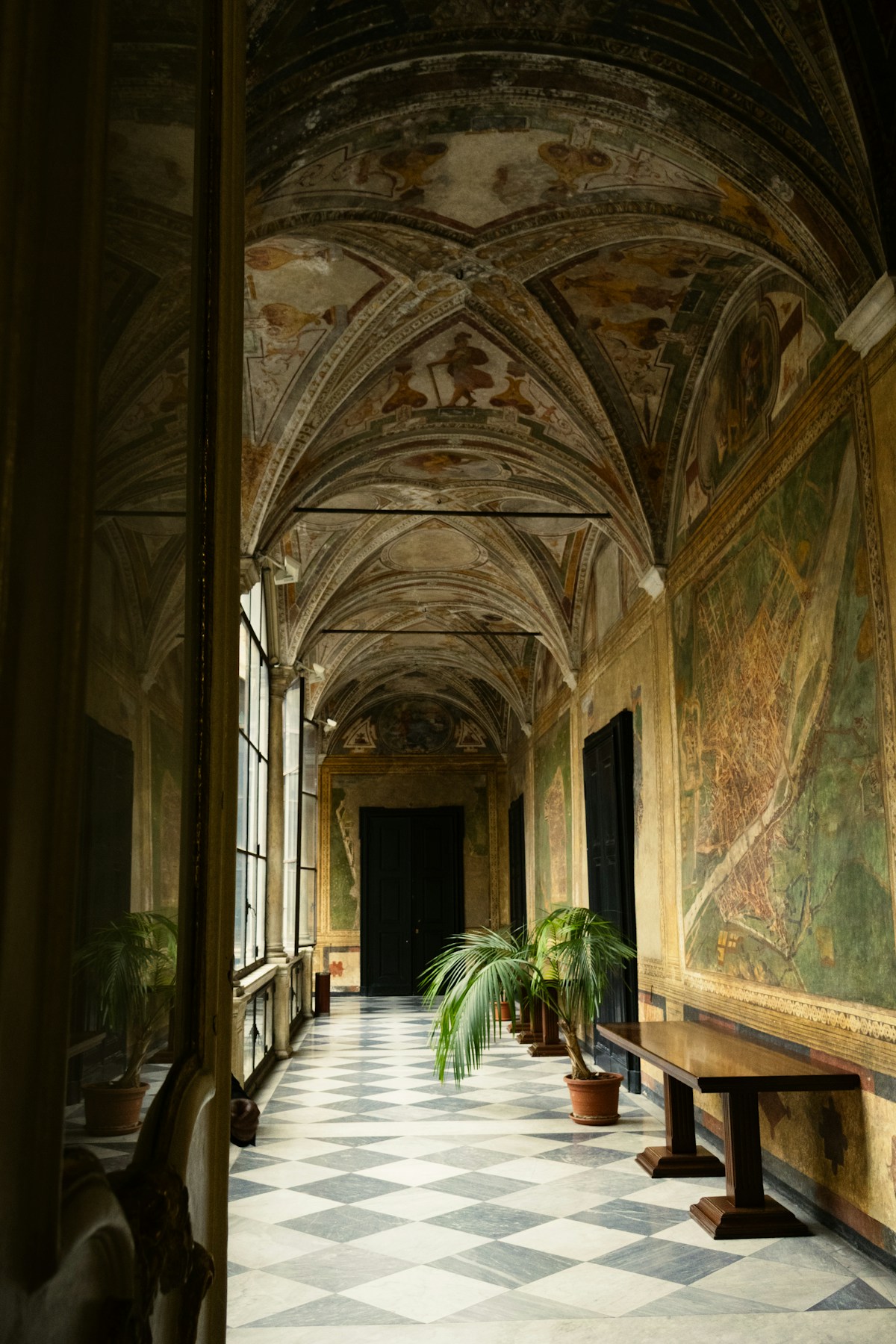
The Palazzi dei Rolli are the most ambitious architectural ensemble in Genoa and the reason the city’s historic centre received UNESCO World Heritage status in 2006 (alongside the medieval caruggi). Forty-two 16th–17th century patrician palaces - built by the most powerful banking families in Europe - remain in varying states of accessibility, with the finest concentration on Via Garibaldi (the former Strada Nuova), one of the most magnificent streets in Italy.
Understanding what the Rolli system was, knowing which palaces are actually open, and timing a visit to coincide with Rolli Days transforms a walk through these streets from confused admiration into something more rewarding.
What the Rolli system was
In 1576, the Genoese Republic formalised a system it had operated informally for decades: a register (the rollo) of privately owned palaces whose owners were obligated, when called upon by lottery, to accommodate and entertain visiting heads of state at their own expense. The system solved a peculiar Genoese problem - the Republic had no permanent royal court, no palace of state - through commercial pragmatism: the palaces on the rolls were ranked by status, and the lottery determined which would host which dignitary.
Between 1576 and the Napoleonic period, the Rolli palaces hosted Philip II of Spain, Pope Clement VIII, Cardinal Richelieu, Frederick IV of Denmark, and numerous other European rulers. The rollo required palace owners to maintain a standard of accommodation befitting their assigned class of guest - which explains why the palaces on Via Garibaldi are as large, ornate, and expensively decorated as they are.
The UNESCO listing covers 42 palaces in three separate clusters: Via Garibaldi, Via Balbi, and scattered through the historic centre.
Via Garibaldi: the main cluster
Via Garibaldi (laid out 1550–1558, originally called Strada Nuova) is a single straight street of approximately 250 metres lined with 16th-century palaces on both sides. It was the first planned street in Europe designed specifically to house an elite class - a deliberate statement of Genoese wealth at a moment when Genoese banking houses effectively financed the Spanish Empire.
The street is traffic-free, beautifully maintained, and best appreciated slowly. The street-level facades understate the scale of the interiors - most palaces extend deep into hillside terracing with hanging gardens that are not visible from the street.
Palazzo Rosso (Via Garibaldi 18)
The most visited Rolli palace and the finest art museum in Genoa. Built for the Brignole Sale family in the 1670s, the palazzo has a state room sequence on the piano nobile (first floor) with intact 17th-century fresco ceilings and a permanent collection of European painting. Highlights:
- Anthony van Dyck portraits - Van Dyck spent significant time in Genoa painting the Genoese aristocracy. Palazzo Rosso holds several of his finest works, including portraits of Paola Adorno and Anton Giulio Brignole Sale.
- Veronese, Bernardo Strozzi, Guercino - strong Ligurian and Venetian representation.
- State rooms - the sequence of gilded salons on the piano nobile gives a direct sense of 17th-century palace life; the frescoed ceilings by Gregorio De Ferrari are among the finest Baroque interiors in northern Italy.
Practical: Entry approximately €9 (combined with Palazzo Bianco and Doria Tursi) as of 2026. Open Tuesday–Friday 9am–7pm, Saturday–Sunday 10am–7pm. Closed Monday.
Palazzo Bianco (Via Garibaldi 11)
Across the street, and included in the same combined ticket. Stronger on Northern European painting than Palazzo Rosso:
- Flemish and Dutch masters - Rubens, Van Dyck (more portraits), Jan van Scorel, Jan Provost
- Ligurian painting - Bernardo Strozzi, Giovanni Benedetto Castiglione
- External view: Palazzo Bianco’s exterior courtyard, visible from the street, is the best place to understand the scale of these buildings - the courtyard loggia behind the street facade runs into a hillside garden terrace.
Practical: Same ticket and hours as Palazzo Rosso.
Palazzo Doria Tursi (Via Garibaldi 9)
Now the Genoa city hall (Comune di Genova), so access depends on what’s happening. The main courtyard and loggia are usually visible from the entrance free of charge. The state rooms (including the famous Sala della Giunta) open occasionally. The building is the largest on Via Garibaldi - three palaces effectively merged into one - and the courtyard, with its double-ramp staircase and loggia, is the finest in the street.
Notable: the city hall displays Paganini’s Guarneri del Gesù violin (1742) - the instrument the composer played throughout his career, donated to the city of Genoa in 1834. Viewable in a climate-controlled display case; entry free on standard Comune visits.
Palazzo Lomellini and others
Several palaces on Via Garibaldi and adjacent streets are now banks, law firms, or private residences. Their facades are freely visible and worth examining - the carving quality on the doorways, the proportions of the windows, and the courtyard glimpses visible through open gates reward slow walking. The area between Via Garibaldi and the caruggi to the south has additional Rolli palaces on Via delle Fontane and Via Lomellini.
Via Balbi cluster
Via Balbi, approximately 500m from Via Garibaldi, holds several important Rolli palaces including:
Palazzo Reale (Via Balbi 10) - a 17th-century royal residence later used by the Savoy family. The state apartments have been preserved as a museum with original furnishings, throne rooms, and ceiling frescoes. Entry approximately €10 as of 2026. Open Tuesday–Sunday 9am–7pm. The hanging gardens behind the palace offer views over the port.
Palazzo dell’Università (Via Balbi 5) - Genoa’s main university, housed in a 17th-century Jesuit college. The main courtyard (open to the public during university hours) is one of the finest in the city.
Palazzo Spinola (Piazza di Pellicceria)
A 15km walk from Via Garibaldi into the caruggi, Palazzo Spinola is a national museum with a complete sequence of 16th–18th century rooms retained in their original state - furnishings, tapestries, portraits, and decorative arts largely intact. Entry approximately €6 as of 2026. Open Tuesday–Sunday 9am–7pm. Less visited than the Musei di Strada Nuova but arguably the most atmospheric interior - it feels inhabited rather than curated.
Rolli Days
Rolli Days (le Giornate dei Rolli) is a biannual open-house event, typically held:
- Spring edition: two days in mid-May
- Autumn edition: two days in mid-October
During Rolli Days, approximately 30–40 palaces that are normally inaccessible - private apartments, institutional buildings, bank headquarters, private residences - open to the public with a timed-entry pass. This is the only opportunity to see the private chapel of Palazzo Doria Spinola, the frescoed staircase at Palazzo Carrega, the roof terraces of palaces whose gardens cascade down the hillside, and many other rooms invisible on a standard visit.
How to get passes: released online approximately two weeks before each edition. Passes are free but must be booked in advance - they fill within hours of release. Check the Comune di Genova Rolli Days page and the Turismo in Liguria website for current dates and booking links. Walk-in queues for passes form on the day but are long and not guaranteed.
Tip: the autumn edition is less crowded than May, partly because it is less well-known outside Italy. If you are planning a Genoa trip specifically around Rolli Days, October is the better choice.
Genova Museums Card
Guided Genoa walking tours that focus on the Rolli palaces and the Via Garibaldi are available and give useful historical context that’s hard to get from plaques alone - worth considering if this is your primary reason for visiting Genoa.
If you plan to visit multiple palaces and city museums, the Genova Museums Card (approximately €12 for 24 hours, approximately €16 for 48 hours as of 2026) covers:
- Musei di Strada Nuova (Palazzo Rosso, Bianco, Doria Tursi)
- Palazzo Spinola
- Museo Galata del Mare
- Several other civic museums
Available at any participating museum. Worth buying if you plan more than two museum visits.
Book Genoa Heritage Tours on GetYourGuide
| Tour | Duration | From price | Highlights |
|---|---|---|---|
| Genoa Rolli palaces and Via Garibaldi walking tour | 2.5 hrs | From €22 | Palazzi dei Rolli UNESCO heritage, Via Garibaldi architecture, historical context |
| Genoa caruggi and Palazzi Bianco & Rosso guided tour | 3 hrs | From €30 | Musei di Strada Nuova, medieval caruggi lanes, Van Dyck portraits |
| Genoa private architecture and history walking tour | 3 hrs | From €120 | Bespoke Rolli walk, Palazzo Spinola, Baroque frescoes, personal guide |
Browse all Genoa tours on GetYourGuide →
Back to the Genoa travel guide for the full city picture, or see things to do in Genoa for a complete list of attractions including the aquarium, funiculars, and the caruggi.