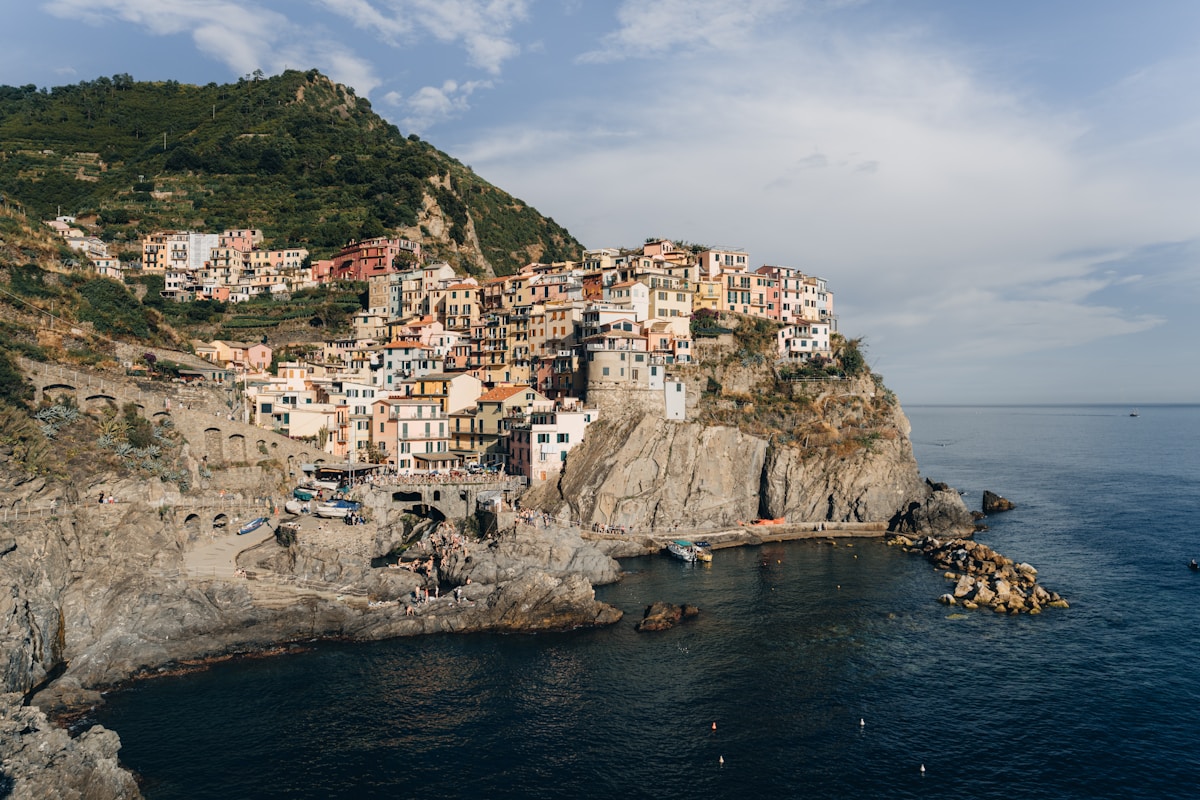
Genoa is an underused base for exploring the Ligurian coast. The city sits roughly in the middle of the Italian Riviera, with the Cinque Terre an hour and a half south and the Portofino peninsula 40 minutes east. Most visitors to Liguria go straight to the famous spots without spending time in Genoa itself - which is their loss, but their gain is your advantage: Genoa offers lower prices and a more practical hub.
Top Day Trip Tours at a Glance
| Tour | Duration | Price (from) | Group Size | Highlights |
|---|---|---|---|---|
| Cinque Terre Day Trip from Genoa | Full day | from €55 | Small group | Train logistics, Vernazza and Monterosso, Blue Trail |
| Portofino and Santa Margherita Boat Tour | Full day | from €65 | Up to 20 | Portofino harbour, Castello Brown, coastal views |
| Camogli and San Fruttuoso Abbey Excursion | Half day | from €39 | Small group | Ferry to abbey, Benedictine monastery, pebbly beach |
| Cinque Terre Hiking Tour with Guide | Full day | from €49 | Up to 12 | Guided trail, Via dell’Amore, village stops |
| Ligurian Riviera Boat Tour from Genoa | Half day | from €45 | Up to 20 | Coastal cruise, cliff villages, sea caves |
Browse all Genoa day trips → GetYourGuide
Cinque Terre (approximately 1.5 hours by train)
The five cliff-hung villages of Cinque Terre - Monterosso al Mare, Vernazza, Corniglia, Manarola, and Riomaggiore - need no introduction. The railway connects all five along the Ligurian coast, and the Sentiero Azzurro (Blue Trail) links them by foot.
Getting there: Regional train from Genova Piazza Principe or Genova Brignole toward La Spezia - approximately 1.5 hours to Monterosso, with stops at each village. Inter-regional trains take approximately 1 hour; slow regional trains approximately 1.5–2 hours. From approximately €12–18 as of 2026. The Cinque Terre Card (train + hiking trails) costs approximately €18 for 1 day or approximately €29 for 2 days as of 2026 - purchase at the station.
Hiking: The Sentiero Azzurro is approximately 12 km total. The most dramatic section is Monterosso to Vernazza (approximately 2–3 hours, rated medium difficulty - steep climbs and narrow paths). For a guided Cinque Terre tour from Genoa, small-group day trips handle the train logistics and include a local guide. The Vernazza to Corniglia section (approximately 1.5 hours) includes a long stone staircase descending to the sea at Corniglia. Via dell’Amore between Manarola and Riomaggiore (flat, 20 minutes, approximately €5 entry as of 2026, book online) is the most famous stretch.
Which villages: Vernazza has the most photogenic harbour and the best trattorias. Manarola has the most photographed clifftop views, particularly at sunset from the main square. Riomaggiore is the most convenient (nearest to La Spezia) but the least charming. Monterosso is the only village with a real beach.
Crowds: May and October are optimal - good weather, manageable crowds. June–September, particularly July and August, sees queues for the trails, overcrowded harbours, and villages at breaking point. Arrive at Monterosso by 8:30am in summer to walk the trails before the midday crush.
Portofino (approximately 40 minutes by train to Santa Margherita, then bus or ferry)
Portofino is a tiny former fishing village - approximately 400 permanent residents - that became one of the most glamorous addresses on the Mediterranean coast in the 1950s. The harbour is small, surrounded by colourful buildings climbing the hillside, and consistently full of very large yachts. It is beautiful and expensive.
What to do: Walk up to the Church of San Giorgio on the headland (5 minutes above the harbour) for views over the bay. Continue along the cliffside path to the Castello Brown (approximately 15 minutes further, entry approximately €8 as of 2026) - a 16th-century castle with terraced gardens and panoramic views. The coastal path continues to Paraggi (a small beach cove) and Santa Margherita Ligure - the full walk approximately 5 km each way.
Lunch in Portofino is expensive (expect approximately €25–40 for a pasta dish in the harbourfront restaurants). Santa Margherita Ligure is the practical alternative - a larger, less exclusive resort town 5 km back along the road with good trattorias at half the price.
Getting there: Train from Genova Brignole to Santa Margherita Ligure-Portofino - approximately 40 minutes, approximately €3.50 as of 2026. Bus ATP from Santa Margherita to Portofino (approximately 15 minutes, approximately €1.50). Alternatively, the summer ferry service from Genoa Porto Antico directly to Portofino - approximately 1 hour, approximately €18–22 one-way as of 2026.
Camogli (approximately 30 minutes by train or ferry)
Camogli is what Portofino would look like without the money - a genuine fishing town with tall, narrow, ochre and red-painted houses piled above a small harbour, pebbly beach, and excellent seafood restaurants. It is one of the most photogenic towns on the Ligurian coast and, in a direct comparison with Portofino, considerably more affordable.
San Fruttuoso Abbey is accessible from Camogli only by boat (approximately €12–15 return by ferry as of 2026, runs regularly in season) or by a 3-hour hiking trail through the Portofino natural park. The abbey sits in an isolated cove - a Benedictine monastery founded in the 10th century, with a Romanesque church and small beach. There is a submerged bronze statue of Christ of the Abyss approximately 15 metres below the surface of the cove - a diving point and, from a glass-bottomed boat, visible in clear conditions.
Getting there: Train from Genova Brignole toward La Spezia - stop at Camogli-San Fruttuoso (approximately 30 minutes, approximately €3 as of 2026). Ferry also runs from Genoa Porto Antico in summer (approximately 1 hour, approximately €15 one-way as of 2026).
La Spezia and Portovenere (approximately 1.5 hours by train)
La Spezia itself is primarily a naval and commercial city - the Museo Navale (Piazza Chiodo 1) has Italy’s most complete collection of naval history and ship models (free entry for some visitor categories, open Tuesday–Sunday). The city is the practical transport hub for the Cinque Terre and the Gulf of Poets.
Portovenere is 13 km west of La Spezia at the southern end of the Gulf of Poets (so named for Byron, Shelley, and Lawrence, who lived nearby). The village has a medieval main street with painted tower-houses (the palazzata), the Gothic church of San Pietro on a rocky promontory at the cliff edge, and the Grotta Arpaia - the sea cave where Byron reportedly swam, below the church. Ferry from La Spezia to Portovenere approximately €15–20 return as of 2026 (runs frequently in season).
Lerici is on the opposite shore of the Gulf from Portovenere - a small resort town with a 13th-century castle (approximately €8 entry as of 2026) and ferry connections to Portovenere.
Getting there: Train from Genova Piazza Principe to La Spezia Centrale - approximately 1 hour 20 minutes, approximately €12–15 as of 2026. Regional trains run every 30–60 minutes.
Rapallo (approximately 50 minutes by train)
Rapallo is the Belle Époque resort that time partially forgot - a long seafront promenade, a sea castle (Castello sul Mare) on a jetty just offshore (approximately €2 entry as of 2026), and a cable car to the Montallegro sanctuary (approximately 600 metres above, approximately €8 return as of 2026) with views over the Gulf of Tigullio. Less exclusive than Santa Margherita or Portofino, more lived-in, with lower prices. The focaccia from the local bakeries is particularly good.
Getting there: Train from Genova Brignole to Rapallo - approximately 50 minutes, approximately €4 as of 2026. Services every 30 minutes.
Albenga (approximately 1 hour west by train)
Albenga is Liguria’s most intact Roman city - a rectangular grid street plan still defined by the original Roman layout, an early Christian baptistery (5th century, one of the finest in Liguria - entry approximately €4 as of 2026), and a medieval centre with towers. It receives very few tourists despite being straightforwardly reachable. A good option for those who want to see something genuinely historical without crowds.
Getting there: Train from Genova Piazza Principe toward Ventimiglia - approximately 1 hour, approximately €7 as of 2026. Services every 30–60 minutes.
Practical notes
- Genoa has two main stations - Piazza Principe (closer to the old town and Porto Antico) and Brignole (closer to eastern neighbourhoods); most trains toward La Spezia and Cinque Terre stop at both
- For Cinque Terre: the Cinque Terre Card covering hiking trails and Cinque Terre Express trains is the most practical option - buy at Genova Piazza Principe or Brignole before departure
- In peak season (July–August), Cinque Terre hiking trail permits sell out - book online at parconazionale5terre.it before you travel
- The Ligurian coast from Genoa to La Spezia is busy on summer weekends; Tuesday–Thursday visits are significantly less crowded
- Ferry services along the Ligurian coast operate May through October only; outside these months, trains are the only practical connection
Book Genoa Day Trip Tours on GetYourGuide
| Day Trip | Duration | From price | Highlights |
|---|---|---|---|
| Cinque Terre guided day trip from Genoa | Full day | From €65 | Five villages, coastal hiking trail, sea views, local food |
| Portofino and Camogli boat tour from Genoa | Full day | From €75 | Portofino harbour, Abbey of San Fruttuoso, Ligurian coast |
| Turin day trip from Genoa | Full day | From €69 | Egyptian Museum, Royal Palace, Piedmontese food culture |
Browse all Genoa day tours on GetYourGuide →
Back to the full Genoa travel guide for the caruggi, the Palazzi dei Rolli, and getting around. For Ligurian food and the best restaurants in Genoa’s old town, see the Genoa food guide. For accommodation, see best hotels in Genoa. For things to see in the city, see things to do in Genoa. For a northern Italy circuit connecting Genoa, Turin, and Milan, see our northern Italy itinerary.
Where to stay in Genoa: Find hotels in Genoa — search accommodation across all budgets.