Genoa (Genova) is Italy’s greatest overlooked city. The medieval capital of a maritime republic that rivalled Venice, the birthplace of Christopher Columbus, the city with the most extensive medieval street network (caruggi) in Europe, and arguably the finest concentration of 16th–17th century palace architecture in northern Italy. Foreign visitors largely ignore it, which makes visiting it genuinely rewarding - you see a real Italian city rather than a stage set.
The caruggi
The caruggi are the medieval lanes of Genoa’s historic centre - a UNESCO World Heritage Site since 2006. The network extends for kilometres: passages too narrow for cars, often roofed with laundry, flanked by 5–8-storey medieval buildings that create dark, narrow canyons. The historic centre is the largest medieval urban fabric surviving in Europe.
Walking the caruggi is disorienting and entirely worthwhile. The area around Via San Luca, Piazza Banchi, and Via Chiabrera has the most concentrated medieval character. Bring a good phone (the streets don’t appear on all maps) and don’t hurry.
The area was, until recently, considered unsafe. Gentrification has changed the western part significantly; the deeper eastern caruggi are still rough. Walking in daylight is straightforward.
Via Garibaldi (Strada Nuova)
The 16th-century “New Street” built for Genoese banking families who had grown rich financing the Spanish Empire. The palaces on Via Garibaldi are among the finest Renaissance palace facades in Europe - three of them (Palazzo Rosso, Palazzo Bianco, and Palazzo Doria Tursi) are now the Musei di Strada Nuova. The collections include Flemish paintings, Genoese baroque, and historical memorabilia; the palaces themselves are the real attraction.
The Aquarium (Acquario di Genova)
The largest aquarium in Europe, built for the 1992 Columbus Expo in the redeveloped port area. Over 70 tanks and 600 species. A genuinely impressive facility with shark tanks, tropical fish, and a ray walkway. Busy on weekends; book online. The surrounding Porto Antico area is pleasant for walking and eating, if somewhat generic in its redevelopment.
Palazzo Ducale
The seat of the Doge’s power until the Napoleonic conquest. Now a cultural centre with temporary exhibitions (the permanent collection is minimal), but worth seeing for the architecture - the two great courtyards, the Cappella Dogale, and the views from the terrace. The Piazza De Ferrari outside is the central public square.
San Lorenzo Cathedral
The medieval cathedral at the heart of the old city. The facade is Gothic, striped black and white marble. The Treasury Museum (Museo del Tesoro) holds the Sacro Catino - a green glass dish alleged to be the Holy Grail (almost certainly Byzantine or Carolingian glass). Also: a polished quartz plate on which St John’s head was allegedly presented to Salome. Genoa’s collection of relics was assembled from Crusader looting.
The funiculars and the fortifications
Genoa is a vertical city - the port is at sea level, the residences climb the cliffs behind. Several funiculars and elevators connect levels. The Zecca-Righi funicular runs from the historic centre to the hilltop above. From the top, the Mura Nuove (17th-century fortification walls) extend for kilometres across the ridge - walks with views over the port and the Ligurian coast.
Christopher Columbus
Columbus was born in Genoa in 1451 (the exact house is disputed, but a reconstructed “Casa di Colombo” stands adjacent to the Porta Soprana city gate). The Palazzo Tursi on Via Garibaldi holds Columbus memorabilia including his presumed letters.
Day trips
Cinque Terre (1–1.5 hours by train from Genova Brignole): The five clifftop villages. The trains from Genoa stop at La Spezia; from there local trains run to all five villages. A long day trip but very workable.
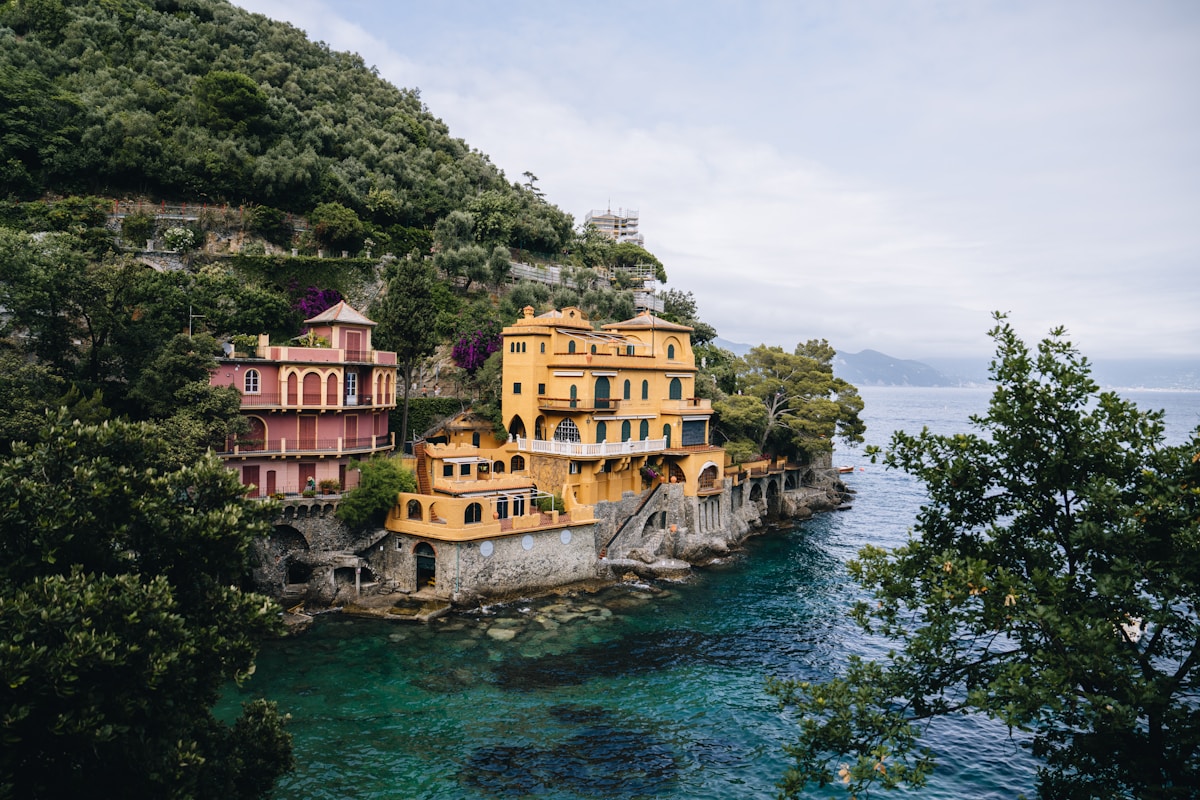
Portofino (1 hour by bus or ferry from Genoa): The small harbour village famous for its coloured buildings and celebrity visitors. Expensive but beautiful for a few hours. Guided day trips from Genoa cover Portofino and Camogli with sea views from the ferry route.
Camogli (35 minutes by train): Less famous than Portofino, arguably more charming - tall painted buildings, a fishing harbour, good restaurants.
Pesto
Genoa is the origin of pesto alla genovese - the basil, pine nut, Parmesan, Pecorino, garlic, and olive oil sauce. The basil used locally is a specific Genoese variety (DOP protected) with smaller, more fragrant leaves than the basil found elsewhere. Pesto in Genoa, made locally with the correct ingredients, is noticeably different from pesto anywhere else. It is eaten on trofie pasta or with trenette and green beans; it is not used as a pizza topping or a sandwich spread.
Book Genoa Tours on GetYourGuide
| Tour | Duration | From price | Highlights |
|---|---|---|---|
| Genoa caruggi walking tour — medieval lanes and Palazzi dei Rolli | 2.5 hrs | From €22 | Caruggi UNESCO historic centre, Via Garibaldi palaces, Columbus house |
| Genoa pesto and focaccia food tour | 3 hrs | From €50 | Pesto alla genovese making, focaccia and farinata tasting, local market |
| Portofino and Camogli day trip from Genoa by ferry | 8 hrs | From €55 | Ligurian coast ferry, Portofino harbour, Camogli painted houses |
Browse all Genoa tours on GetYourGuide →
Back to the full Genoa travel guide for the medieval caruggi, the palaces of Via Garibaldi, and port logistics. For Ligurian food - pesto, focaccia genovese, farinata - see the Genoa food guide and the broader Ligurian food guide. For day trips from Genoa to the Cinque Terre and the Ligurian coast, see the Genoa day trips guide. For accommodation in Genoa, see best hotels in Genoa. For a northern Italy itinerary connecting Genoa with Turin and Milan, our northern Italy itinerary covers the circuit.
Where to stay in Genoa: Find hotels in Genoa — search accommodation across all budgets.