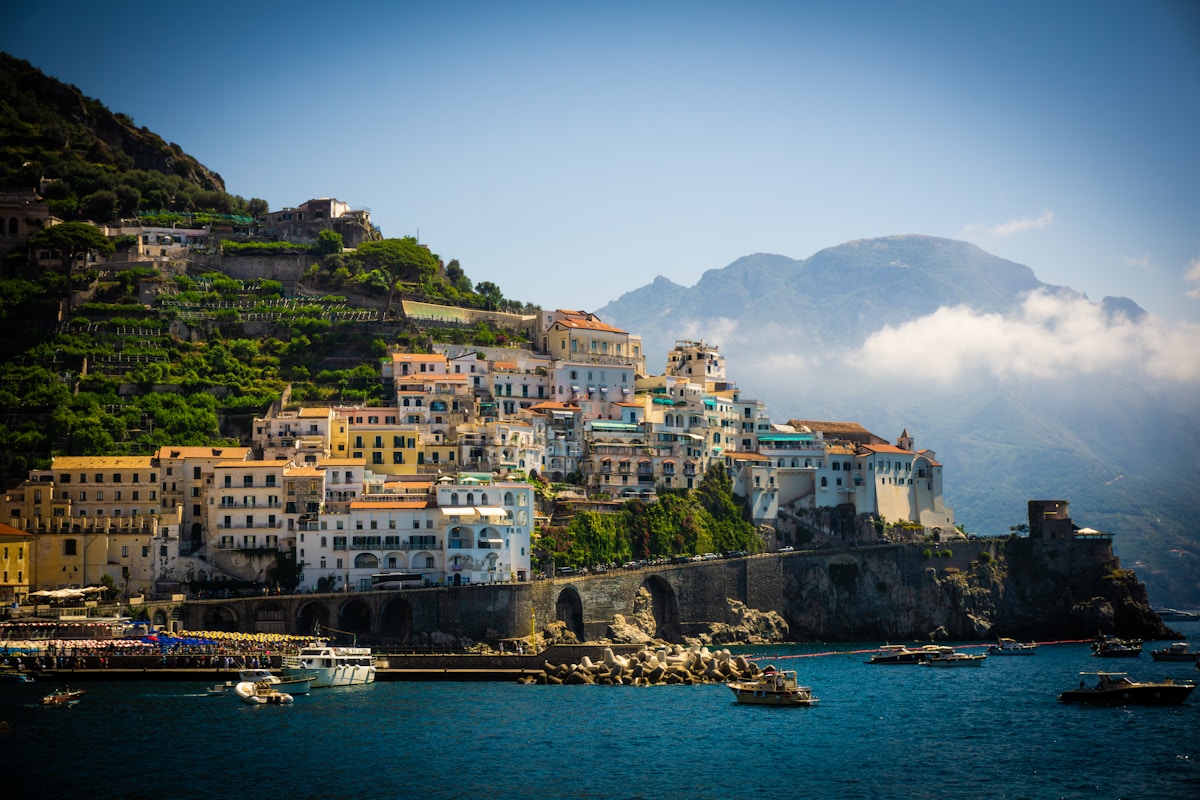
The Amalfi Coast packs more visual drama per kilometre than almost anywhere else in Europe: cliffs that drop straight into the Tyrrhenian, pastel towns piled vertically into the rock, lemon groves hanging over terraced drops, and light off the water that changes everything it touches. This 5-day itinerary uses Sorrento as the base for Days 1–2 and moves coast-side from Day 2 onward, letting you cover Pompeii on arrival day, then work through Positano, Amalfi, Ravello, and Capri before an optional quieter final day at Cetara or Vietri sul Mare.
There is no good reason to drive here. The SS163 is one lane in each direction for most of its length, passes through town centres, and has nowhere to park. The SITA bus, the ferry network, and your own feet are the right tools.
Getting to the Amalfi Coast
Fly into Naples (NAP) - direct flights from most European cities. Book a private transfer from Naples airport directly to Sorrento (approximately €80–100, 1.5–2 hours depending on traffic). Alternatively, take the Alibus express from the airport to Naples Piazza Garibaldi (€5), then the Circumvesuviana train to Sorrento (€4.50, 1 hour 10 minutes, trains every 30 minutes). The Circumvesuviana is functional but not scenic - the private transfer is worth it after a flight.
Day 1: Sorrento + Pompeii
Arrive in Sorrento - drop bags and walk the town. The old centre is a tight grid of lanes above the cliffs; the Marina Grande below is the fishing harbour and has the best seafood. Sorrento is the most comfortable base on this stretch - better connected, more varied accommodation, and less exposed to the worst of the summer crowds.
Afternoon at Pompeii: Sorrento to Pompeii Scavi–Villa dei Misteri station is 25 minutes on the Circumvesuviana (€2.80 each way, trains every 30 minutes). The site entrance is directly opposite the station exit. Allow 3 hours minimum. Book tickets in advance at pompeiisite.org (€18 adults as of 2026) - summer queues without a booking are long. A guided Pompeii tour is worth it here - the context around the plaster casts, the bakeries, and the graffiti-covered walls is hard to read cold.
Highlights that reward attention: the Villa of the Mysteries (extraordinary cycle of frescoes, 60 BC), the Forum baths, the Street of Abundance, and the cast figures in the Garden of the Fugitives. The new Pompeii excavations in Regio IX revealed in 2023–2024 include a fast-food counter (thermopolium) with intact food residues and a ceremonial room with detailed frescoes - check which sections are open when you visit.
Dinner in Sorrento:
- Il Buco - the best restaurant in town; creative Campanian cooking in a wine cellar, mains €28–45
- Ristorante Caruso - reliable, good pasta, pleasant roof terrace, mains €18–28
- Fuoro 8 - casual trattoria near the main square, pasta from €12, good house wine
Hotels in Sorrento:
- Budget: Hotel Mignon (Corso Italia, doubles from approximately €75 in shoulder season, functional, central)
- Mid-range: Hotel Antiche Mura (doubles from approximately €130, pool above the medieval walls, good breakfast)
- Luxury: Grand Hotel Excelsior Vittoria (doubles from approximately €450–700, Belle Époque villa on the cliff above the Marina Piccola, pool with sea views, the benchmark)
Search all hotels in Sorrento on Booking.com
Day 2: Positano + Praiano
SITA Bus from Sorrento to Positano: departs from Sorrento Circumvesuviana station forecourt. The Sorrento–Amalfi SITA bus (Line A) runs approximately every 40–60 minutes from 06:30, first afternoon service from Sorrento is around 08:00. The journey to Positano (Sponda stop, upper town) is 45–50 minutes. Tickets cost €2.60 and must be bought before boarding - from tabacchi shops, the ticket machine at the station, or the SITA app. Validate on the bus. The views from the bus along the SS163 are the best available - sit on the right side heading east.
In Positano, descend on foot from the Sponda stop to the beach via Viale Pasitea - allow 20–25 minutes. The town spills in tiers down a single valley; almost everything is accessed by stairs.
Morning: Walk to the Church of Santa Maria Assunta on the seafront (free, open 08:00–12:00 and 16:00–19:00) - 13th-century icon of the Black Madonna, Byzantine in origin. The beach (Spiaggia Grande) charges for sun lounger rental in season (approximately €25–35 per person per day). A free strip of beach exists to the right side of the harbour.
Lunch in Positano:
- La Tagliata - up in Montepertuso above Positano, exceptional set lunch (six courses, local produce, approximately €40 per person). Shuttle from the beach available - call ahead
- Ristorante da Vincenzo - mid-coast with sea view terrace, grilled fish from €22, pasta from €14
Praiano (15 minutes on the SITA bus east from Positano): Quieter than Positano, less photographed, used mainly by people who stay overnight. The Marina di Praia is a tiny cove with a beach bar and the most direct access to the water between Positano and Amalfi. The hike from Praiano to the Torre Asciola watchtower gives good coastal views; 45 minutes return.
Return to Sorrento by SITA bus (last bus from Positano approximately 22:00 in summer, check current timetable on sitasudtrasporti.it - the schedule changes seasonally).
Alternative: Positano to Sorrento by ferry (April–October, approximately €18, 25 minutes, operated by Alilauro and NLG - check goamalfi.it for current fares and schedules). Ferry is faster and more pleasant than the return bus.
Day 3: Amalfi + Ravello
Ferry from Sorrento to Amalfi: Sorrento–Positano–Amalfi, departs Sorrento Marina Piccola approximately 09:00 and 11:00 in season. Total journey to Amalfi approximately 1 hour 45 minutes via Positano. Fare approximately €25 as of 2026 (Alilauro, check goamalfi.it). The ferry view of the coast from the water - Positano’s cliff face, the point at Praiano, the sea stacks - is the defining Amalfi Coast image.
Amalfi: The town is small (fewer than 5,000 residents) but dense. The Duomo di Sant’Andrea dates to the 9th century and has a two-tone Romanesque–Arab-Norman facade rebuilt after an earthquake in 1762. The Cloister of Paradise next to the cathedral (€3) contains Roman sarcophagi and medieval sculpture. The town is one street wide, hemmed in by the Canneto valley gorge.
The Valle dei Mulini (Valley of the Mills) begins at the back of the town - a 2km walk up the gorge past abandoned paper mills to the Mulini waterfalls. Amalfi was a paper-producing centre from the 13th century; the Museo della Carta (€4) tells the story. Quiet and worthwhile.
Bus to Ravello: The local orange bus runs from the seafront in Amalfi up to Ravello (4km, approximately 15 minutes, €1.30, runs roughly every 30–40 minutes from around 07:00). Taxis are available but the bus is easy. Ravello sits on a spur 350 metres above the sea.
Ravello: The Villa Cimbrone gardens (€10, open 09:00–sunset) end in the Belvedere of Infinity - a terrace on the cliff edge with a view that encompasses the full sweep of the Gulf of Salerno. Come in the afternoon when the light is from the west. The villa itself has rooms open to visitors with a modest art collection. The Villa Rufolo (€7, open 09:00–sunset) has the more formal garden used as the stage for the Ravello Festival (Wagner Festival, June–August - tickets from ravellofestival.com, from approximately €30 per concert).
Dinner in Ravello:
- Ristorante Rossellinis - the benchmark in Ravello, inside Palazzo Avino hotel, tasting menu from €130 per person
- Cumpa’ Cosimo - local institution since 1929, generous pasta portions, mains €15–22, book ahead in season
Hotels in Amalfi/Ravello:
- Budget: B&B Il Giardino di Ester, Amalfi (doubles from approximately €80, family-run, small)
- Mid-range: Hotel Lidomare, Amalfi (doubles from approximately €150, sea-facing rooms, historic building)
- Luxury: Palazzo Avino, Ravello (doubles from approximately €700, 12th-century palazzo, pool perched on the cliff, among the finest hotels on the coast)
Search all hotels in Amalfi on Booking.com
Day 4: Capri Day Trip
Ferry from Amalfi to Capri: departs Amalfi Porto approximately 09:10, arrives Capri (Marina Grande) approximately 10:30. Fare approximately €24 each way (check goamalfi.it - routes and fares change by season and operator). Return ferry departs Capri approximately 16:30 or 18:00 in summer; confirm the last boat time before you go ashore.
Booking a Capri boat tour from Amalfi is a strong alternative to the public ferry - many tours include the Blue Grotto (Grotta Azzurra), a circuit of the island by small boat, and stops to swim, which the public ferry does not.
On Capri:
- Funicular from Marina Grande to Capri town (€2.20 each way, runs continuously)
- The Blue Grotto (Grotta Azzurra): take a bus or taxi from Capri town to Anacapri, then the descent to the boat landing. The official entrance fee is €14 (boat entry and torch surcharge additional, approximately €30 total). The cave is best visited before 10:00 when the light angle is strongest. Lines can be long in July–August
- Anacapri: quieter than Capri town. The chair lift from Anacapri to Monte Solaro (€12 return) gives panoramic views of the island and Gulf of Naples
- Capri town: Via Camerelle for serious (expensive) shopping; the Giardini di Augusto for views of the Faraglioni sea stacks. The stacks are best seen from the water
Lunch on Capri:
- Ristorante da Paolino - garden restaurant under lemon trees, pasta and seafood, mains €25–40
- Bar al Piccolo Marina (Marina Piccola beach) - simpler, good for a swim-and-lunch afternoon
Day 5 (optional): Cetara + Vietri sul Mare
Continue east from Amalfi by SITA bus (approximately 30 minutes to Cetara, €1.60). Cetara is a working fishing village that retains more of its original character than anywhere between Positano and Salerno. It is the source of colatura di alici - an intense anchovy condiment produced here since medieval times. Buy it from any of the village shops.
Vietri sul Mare (20 minutes further east on the SITA bus) is the pottery capital of the coast - majolica tiles, ceramic workshops, and a ceramics museum (Museo della Ceramica, €3). The town marks the eastern end of the SS163 and the beginning of Salerno’s built suburbs.
Return from Salerno by train to Naples (frequent, 35–45 minutes, €4.90 - regional trains only, not Frecciarossa).
Lunch in Cetara:
- Acqua Pazza - the best fish restaurant in the village, mains €20–30, try the spaghetti alle vongole and anything with colatura
- Trattoria San Pietro - simpler, cheaper, same good anchovy fish culture, mains €14–20
Practical notes
SITA bus: All buses along the SS163 use the same Campania Artecard/SITA ticket (€2.60 single). Download sitasudtrasporti.it schedules before you travel - the printed timetables posted at bus stops are not always current. The bus gets very crowded between Positano and Amalfi in July–August; consider taking the first morning departure.
Ferry network (April–October): Alilauro and NLG operate the main routes. Fares: Sorrento–Positano approximately €18; Positano–Amalfi approximately €10; Amalfi–Capri approximately €24 each way. Timetables at goamalfi.it and traghettiamalfi.it. Confirm last departures on your day.
What to pack: The coast involves a lot of stairs and narrow paths on uneven stone. Flat, rubber-soled shoes. A light layer for sea crossings. Sunscreen - the light reflects off the water and off white walls. Cash - many smaller bars and restaurants are cash-preferred.
Book Your Trip
- Flights - Flights to Italy guide · Find the best fares to Italy
- Travel Insurance - Italy travel insurance guide · get covered with EKTA
- eSIM - Italy eSIM & SIM guide · buy with Airalo
- Tours & Activities - Browse Amalfi Coast tours on GetYourGuide