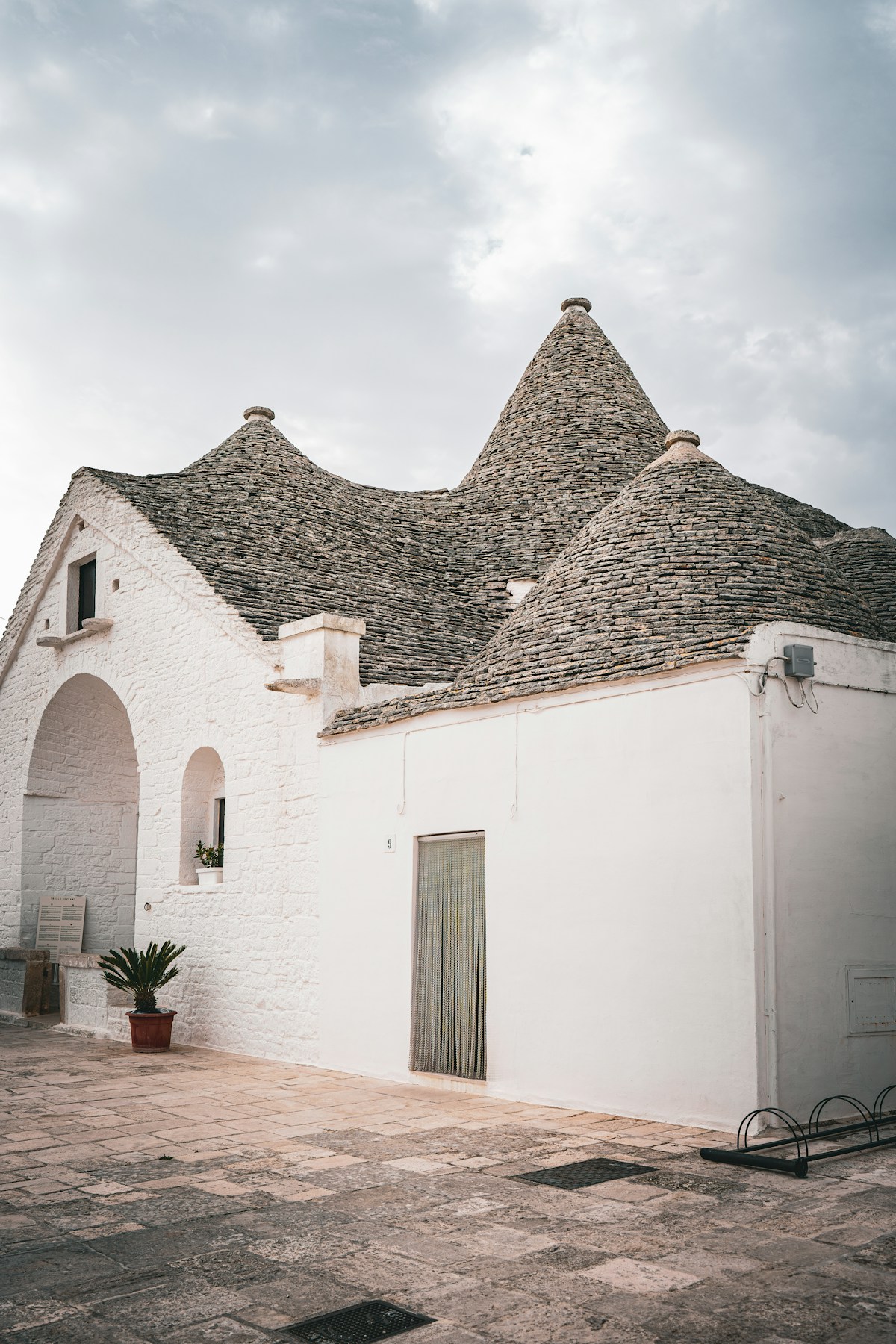
Puglia (Apulia) - the heel of Italy’s boot - is one of the country’s most distinctive regions: trulli houses, Baroque cities, Adriatic coastline, and a food culture built on olive oil, orecchiette, and burrata. Seven days allows a complete loop from Bari through the Valle d’Itria, into Basilicata (Matera), and south to the Salento peninsula.
Overview
- Days 1–2: Bari and the coast
- Day 3: Alberobello and the Valle d’Itria
- Day 4: Matera (Basilicata - technically a day trip into a neighbouring region)
- Days 5–6: Lecce and the Salento
- Day 7: Ostuni and departure from Brindisi
Days 1–2: Bari
Fly into Bari airport (Karol Wojtyla Airport, connected to the city centre by train). Base in or near the historic centre.
Day 1: Bari Vecchia - the old city’s labyrinthine alleyways, the Basilica di San Nicola (one of the finest Romanesque churches in Italy), the fish market on the seafront (buy sea urchins directly from vendors), and the Castle Svevo. Evening: aperitivo in the new city and dinner in the old.
Day 2: Day trip to Polignano a Mare (30 minutes by train) - a whitewashed village on limestone cliffs above the Adriatic. Swimming from the sea caves below the town in summer. Back to Bari for focaccia barese for lunch.
Day 3: Alberobello and the Valle d’Itria
Drive or take the train from Bari to Alberobello (1.5 hours by train or 50 minutes by car).
The trulli - the conical limestone houses - are unique to this area. Alberobello has the largest concentration, with two UNESCO-listed districts (Rione Monti and Aia Piccola). Heavily visited in summer; go early.
From Alberobello, drive through the Valle d’Itria: Locorotondo (a circular white city on a hill with an excellent DOC white wine), Martina Franca (Baroque city, best prosciutto in Puglia), Cisternino (less visited, the best butchers in the region). Sleep in the Valle d’Itria (Alberobello or Locorotondo) or continue to Ostuni.
Day 4: Matera
Drive from the Valle d’Itria to Matera (1.5 hours by car; public transport requires a bus from Taranto, allow 2.5–3 hours).
Matera (technically in Basilicata, not Puglia) is within day-trip range. The sassi - cave dwellings carved into a ravine, inhabited for 9,000 years - are one of Italy’s most extraordinary places. The view from the Belvedere across the Gravina ravine is unlike anything else in Italy.
The Museo Nazionale di Matera, the cave churches (rupestrian churches carved into the rock), and the streets of the Sasso Barisano and Sasso Caveoso. Sleep in Matera to experience the city in the evening (the tourist day-trippers leave around 5–6pm).
Days 5–6: Lecce
Drive from Matera to Lecce (2.5 hours by car; 3.5 hours by bus via Taranto).
Day 5: Lecce’s Baroque historic centre - the Cathedral, the Basilica di Santa Croce (the most exuberant Baroque facade in southern Italy), the Roman amphitheatre below the Piazza Sant’Oronzo. Morning: pasticciotto for breakfast from a historic pasticceria.
Day 6: Day trips from Lecce into the Salento: Otranto (the easternmost city in Italy, a Byzantine mosaic floor in the cathedral showing the whole of medieval cosmology), the Adriatic beaches at Torre dell’Orso or Torre San Giovanni, or the Ionian coast at Santa Maria di Leuca (the southernmost point, where the Adriatic and Ionian meet).
Day 7: Ostuni and Departure from Brindisi
Drive from Lecce to Ostuni (50 minutes by car), then to Brindisi airport (30 minutes from Ostuni).
Ostuni - the “white city” on a hill above the olive groves, the most photographed city in Puglia after Alberobello. The medieval centre, the cathedral, and the view over the Adriatic. Allow 2–3 hours before driving to Brindisi for departure.
Getting Around
A rental car is strongly recommended. Puglia’s towns are spread across a large area and public transport between smaller places (Valle d’Itria, Matera) is slow. The main cities (Bari, Lecce, Brindisi) have good train connections to each other.
Fly in to Bari; out from Brindisi - or vice versa - to avoid backtracking.
When to Go
May, June, September: ideal - warm but not extreme, sea swimmable from late May, beaches manageable. July–August: very hot (35–38°C), packed beaches, accommodation at premium - the Italian holiday season. October–April: Puglia’s interior is mild; the coast is quieter and cheaper. Many masserie close October–April.
What to Eat
Orecchiette alle cime di rapa (Bari), burrata (at any point), focaccia barese (Bari), taralli (everywhere), frisella (Salento), pasticciotto (Lecce), Primitivo and Negroamaro wine throughout.
Specific restaurants: Osteria delle Travi in Bari Vecchia (orecchiette made fresh, mains from approximately €12–18 as of 2026); Ristorante Il Poeta Contadino in Alberobello (the best table in the Valle d’Itria, set-menu from approximately €60 per person); Trattoria Le Zie in Lecce (home-cooking style, mains approximately €10–15); Il Frantoio Masseria between Ostuni and Fasano (one of Puglia’s finest masserie dinners, reserve in advance).
Transport Costs
Bari to Alberobello: approximately €5–7 by FSE regional train (1.5 hours, runs infrequently - check fsbari.it for timetable). By car: 50 minutes via SP240.
Bari to Matera: no direct train. Bus from Bari to Matera (Flixbus or Ferrovie Appulo Lucane): approximately €5–8, 1.5–2 hours. By car: 60 kilometres, approximately 1 hour.
Matera to Lecce: Bus from Matera to Taranto, then train to Lecce: approximately 3–3.5 hours total, approximately €15–20. By car: 2.5 hours direct.
Lecce to Brindisi: Train: approximately €5–7, 25–35 minutes. By car: 30 minutes via SS613.
Polignano a Mare from Bari: Train on the Adriatica line: approximately €3.50, 30 minutes.
Entry Fees and Opening Hours
Basilica di San Nicola, Bari: Free entry. Open daily approximately 7:30am–7:30pm (closed during Mass).
Alberobello Trulli - Rione Monti district: Open access (no entry fee to walk the streets). Trullo Sovrano interior: approximately €3.
Matera Sassi area: Free to walk. Cave church entry fees: approximately €3–5 per church. The Cripta del Peccato Originale fresco complex: approximately €10; book ahead at criptadelpeccatooriginale.it.
Museo Nazionale di Matera: approximately €5 as of 2026. Open Tuesday–Sunday, approximately 9am–8pm.
Lecce - Basilica di Santa Croce: Free. Open daily 9am–12:30pm and 5–8pm approximately.
Budget Guide (per person per day, as of 2026)
Budget (B&B accommodation, market lunches): approximately €70–100/day
- Stay: B&B options in Bari Vecchia from approximately €45/night (search hotels in Bari)
- Eat: Street food and market lunches €8–12, simple trattoria dinners €18–25
Mid-range (masseria or boutique hotel, restaurant meals): approximately €130–190/day
- Stay: Masseria Torre Coccaro near Fasano (search hotels in Fasano, doubles from approximately €200/night in shoulder season) or Hotel Patria Palace in Lecce (search hotels in Lecce, central, doubles from approximately €120)
- Eat: Two-course lunch €20–30, dinner with wine €40–55
Splurge (luxury masseria, tasting menus): approximately €350–550/day
- Stay: Masseria Il Frantoio (accommodation + dinner included in some packages, from approximately €350/night); Borgo Egnazia near Fasano (doubles from approximately €400 in peak season)
- Eat: Tasting menus at Il Poeta Contadino or Già Sotto l’Arco in Carovigno (€70–100 per person)
For the main cities in this itinerary: Bari travel guide and Lecce travel guide. For Bari’s hotels and neighbourhood breakdown: Bari hotels. For the food - orecchiette, burrata, and Apulian street food: Pugliese food guide. Planning to compare with Sicily? Our Puglia vs Sicily guide helps with that decision.
Book Your Trip
- Flights - Flights to Italy guide · Find the best fares to Italy
- Travel Insurance - Italy travel insurance guide · get covered with EKTA
- eSIM - Italy eSIM & SIM guide · buy with Airalo
- Airport Transfers - Door-to-door from Bari or Brindisi airport
- Car Rental - Renting a car in Italy · Compare prices across providers
- Tours & Activities - Browse Puglia tours on GetYourGuide