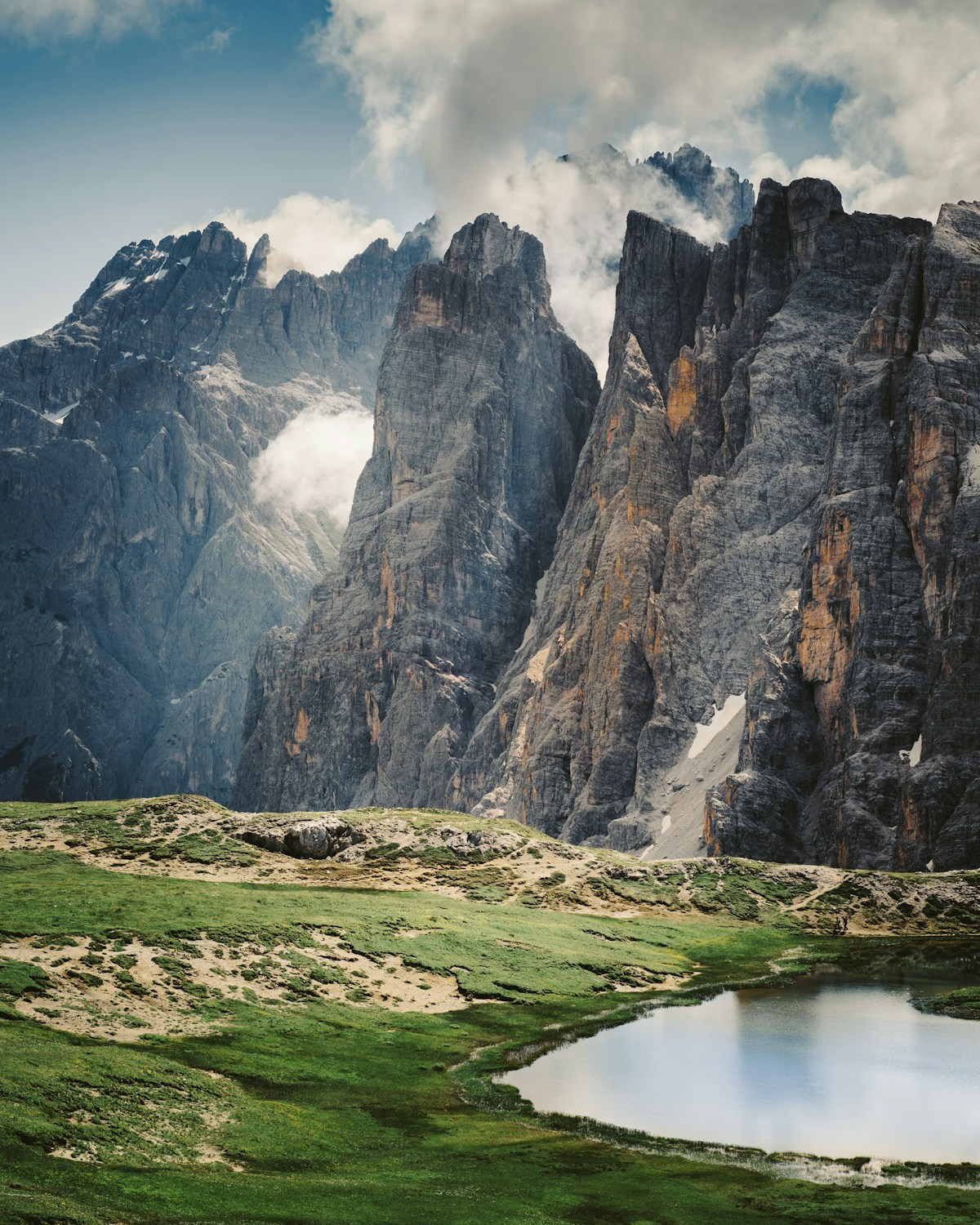
The Dolomites are a UNESCO World Heritage landscape of vertical limestone towers, alpine meadows, and valleys divided between Italian, German, and Ladin-speaking communities. A 7-day circuit covers the main valley groups and gives enough time to hike, drive the high mountain passes, and understand the Alpine-Italian cultural blend.
Overview
- Days 1–2: Bolzano and the approach
- Days 3–4: Cortina d’Ampezzo and the eastern Dolomites
- Day 5: The Dolomite passes circuit
- Days 6–7: Alta Badia and the western Dolomites
Days 1–2: Bolzano (Bozen)
Bolzano is the gateway city - train from Verona (1 hour) or Venice (2 hours). The capital of South Tyrol, it is bilingual Italian-German and has a distinctly different character from any other Italian city.
Day 1: Bolzano’s old centre - the Gothic Duomo, the Piazza Walther, and the South Tyrol Museum of Archaeology (home to Ötzi the Iceman - a 5,300-year-old mummy found frozen in the Alps, and the world’s most preserved prehistoric human). Afternoon: cable car up to the Renon plateau above the city.
Day 2: Drive north from Bolzano toward the Dolomites. Stop at Castel Roncolo (a medieval castle with extraordinarily well-preserved frescoes), then continue to the Gardena Valley (Val Gardena) and the town of Ortisei - the center of Ladin culture and wood carving. Sleep in Ortisei or Selva di Val Gardena.
Where to stay: For Days 1–2, search hotels in Bolzano - the centre is compact and walkable, with guesthouses from approximately EUR 70/night as of 2026. For the Day 2 overnight, search Val Gardena hotels in Ortisei or Selva di Val Gardena, from approximately EUR 80/night.
Days 3–4: Cortina d’Ampezzo
Drive east from Val Gardena over the Passo Gardena (2,121m) and Passo Falzarego (2,117m) to Cortina d’Ampezzo - the most famous resort in the Italian Dolomites. (2–3 hours via the mountain passes.)
Day 3: Cortina orientation - the Corso Italia, the Tofane massif (cable car to the summit at 3,244m), and the surrounding peaks. In summer: the Cinque Torri (Five Towers) - five volcanic rock pillars with World War I trenches and a WWI museum (the Dolomites were the front line in 1915–18).
Day 4: Hike from Cortina - the Lago di Misurina circuit (one of the most beautiful high-altitude lakes in the Alps) and the Tre Cime di Lavaredo (the three distinctive peaks, one of the most photographed images in the Alps). The Tre Cime circuit takes 2.5–3 hours; the views across the Dolomites are extraordinary.
Day 5: The Dolomite Passes Circuit
Drive the Great Dolomites Road (Strada Statale delle Dolomiti) - one of the great mountain drives in Europe. The circuit crosses Passo Pordoi (2,239m), Passo Sella (2,240m), and Passo Gardena, with views of the Sella Group, the Marmolada glacier (the highest peak in the Dolomites at 3,342m), and the Langkofel towers.
This circuit can be driven in 3–4 hours without stops; with stops and hiking it fills a day. Best in the morning when light on the eastern faces is warmest.
Days 6–7: Alta Badia
The Alta Badia valley is the culinary heart of the Dolomites - more Michelin-starred restaurants per capita than almost anywhere in Italy, and a Ladin food tradition (the ancient indigenous culture of the Dolomites) that is distinct from both Italian and Austrian cooking.
Day 6: Alta Badia - the villages of Corvara, La Villa, and San Cassiano. The Ladin Ethnographic Museum (Musée Ladins). The Sassolungo and Sella Group above the valley.
Day 7: Final hike or via ferrata (fixed-rope climbing routes) in the Alta Badia area, then drive south via the Eisack/Isarco valley to Bolzano for the train departure.
Getting Around
A rental car is essential for a Dolomites itinerary. The mountain passes are closed by snow from November through May (opening varies); check pass conditions on the South Tyrol website before planning.
In summer, some passes have traffic restrictions on weekend afternoons - check local regulations.
When to Go
July–August: Peak hiking and climbing season. Warm, all passes open, rifugi (mountain huts) busy. Book rifugi accommodation 2–3 months ahead. September–October: Excellent - cooler, autumn colours on the larch forests, fewer crowds, lower prices in the valleys. December–April: Ski season. The Dolomites are one of Italy’s major ski areas (the Dolomiti Superski pass covers 12 valleys). Accommodation at ski premium; January–February the best snow. November and May: Shoulder season - passes may be closed, rifugi closed, least busy.
What to Eat
Speck (smoked ham from South Tyrol, lighter than Parma, more aromatic), Schlutzkrapfen (half-moon pasta stuffed with spinach and ricotta), polenta con cervo (polenta with venison), Knödel (bread dumplings in broth), apple strudel. The Dolomite food identity is Central European as much as Italian. The local white wines (Gewürztraminer, Pinot Grigio, Kerner) from the vineyards in the Eisack valley are excellent.
Specific restaurants: Löwengrube in Bolzano (traditional South Tyrolean, mains from approximately €18–28 as of 2026); La Stube Gourmet at Hotel Rosa Alpina in San Cassiano, Alta Badia (two Michelin stars, tasting menu from approximately €200 per person - reserve months ahead); Rifugio Scotoni near Armentarola (rifugio lunch above the valley, pasta and Knödel approximately €12–16).
Entry Fees and Opening Hours
South Tyrol Museum of Archaeology (Ötzi Museum), Bolzano: approximately €13 as of 2026. Open Tuesday–Sunday 10am–6pm (closed Monday). Book at iceman.it.
Castel Roncolo, Bolzano: approximately €10. Open Tuesday–Sunday 10am–6pm approximately.
Cinque Torri WWI Museum (open-air), Cortina: Free access to the trenches. The small museum hut: approximately €3. Cable car to the area: approximately €16 return.
Tofane cable car, Cortina: approximately €32–38 return to the summit as of 2026. Book at dolomiti.org.
Tre Cime di Lavaredo (road toll): Private car access requires a toll of approximately €30 per vehicle as of 2026. The car park fills early in summer - arrive before 8am or take the shuttle bus from Dobbiaco (approximately €10 return).
Ladin Ethnographic Museum (Musée Ladins), San Martino in Badia: approximately €7. Open daily 10am–6pm in season.
Transport Costs
Verona to Bolzano by train: approximately €10–20, 1 hour on EC/Frecciabianca. Book via Omio.
Venice to Bolzano by train: approximately €20–35, 2–2.5 hours. Afternoon trains fill quickly — book early via Omio.
Val Gardena shuttle buses (summer): The Südtirol Pass covers unlimited bus and cable car use in South Tyrol; from approximately €18/day or €32 for 3 days as of 2026. Useful for car-free movement within the valleys.
Budget Guide (per person per day, as of 2026)
Budget (guest house / Pension, self-catering or rifugio lunch): approximately €90–130/day
- Stay: Pension Garni Anvidalfarei in Corvara (doubles from approximately €80/night in summer) or agriturismo guesthouses throughout the valleys (from approximately €60–90)
- Eat: Rifugio lunch €15–20, supermarket snacks for breakfast, simple osteria dinner €25–35
Mid-range (3-star hotel or chalet, daily restaurant meals): approximately €180–280/day
- Stay: Hotel Miramonti Majestic in Cortina (historic, doubles from approximately €180/night in summer); Hotel La Perla in Corvara (doubles from approximately €200 in peak summer)
- Eat: Lunch at a rifugio or trattoria €20–30, sit-down dinner with wine €45–65
Splurge (luxury hotel, Michelin-starred dinner): approximately €450–700/day
- Stay: Cristallo Hotel Spa & Golf in Cortina (doubles from approximately €350/night); Hotel Rosa Alpina in San Cassiano (doubles from approximately €400)
- Eat: Tasting menu at La Stube Gourmet or Stüa de Michil (approximately €150–200 per person)
For the full Dolomites guide: Dolomites travel guide. The nearest gateway cities covered separately: Bolzano (South Tyrol’s capital) and Verona for travellers entering from the south. Planning a broader northern Italy trip? Our northern Italy itinerary combines the Dolomites with the lakes, Venice, and Milan.
Book Your Trip
- Flights - Flights to Italy guide · Find the best fares to Italy
- Travel Insurance - Italy travel insurance guide · get covered with EKTA
- eSIM - Italy eSIM & SIM guide · buy with Airalo
- Airport Transfers - Door-to-door from Venice or Verona airport
- Car Rental - Renting a car in Italy · Compare prices across providers
- Tours & Activities - Browse Dolomites tours on GetYourGuide