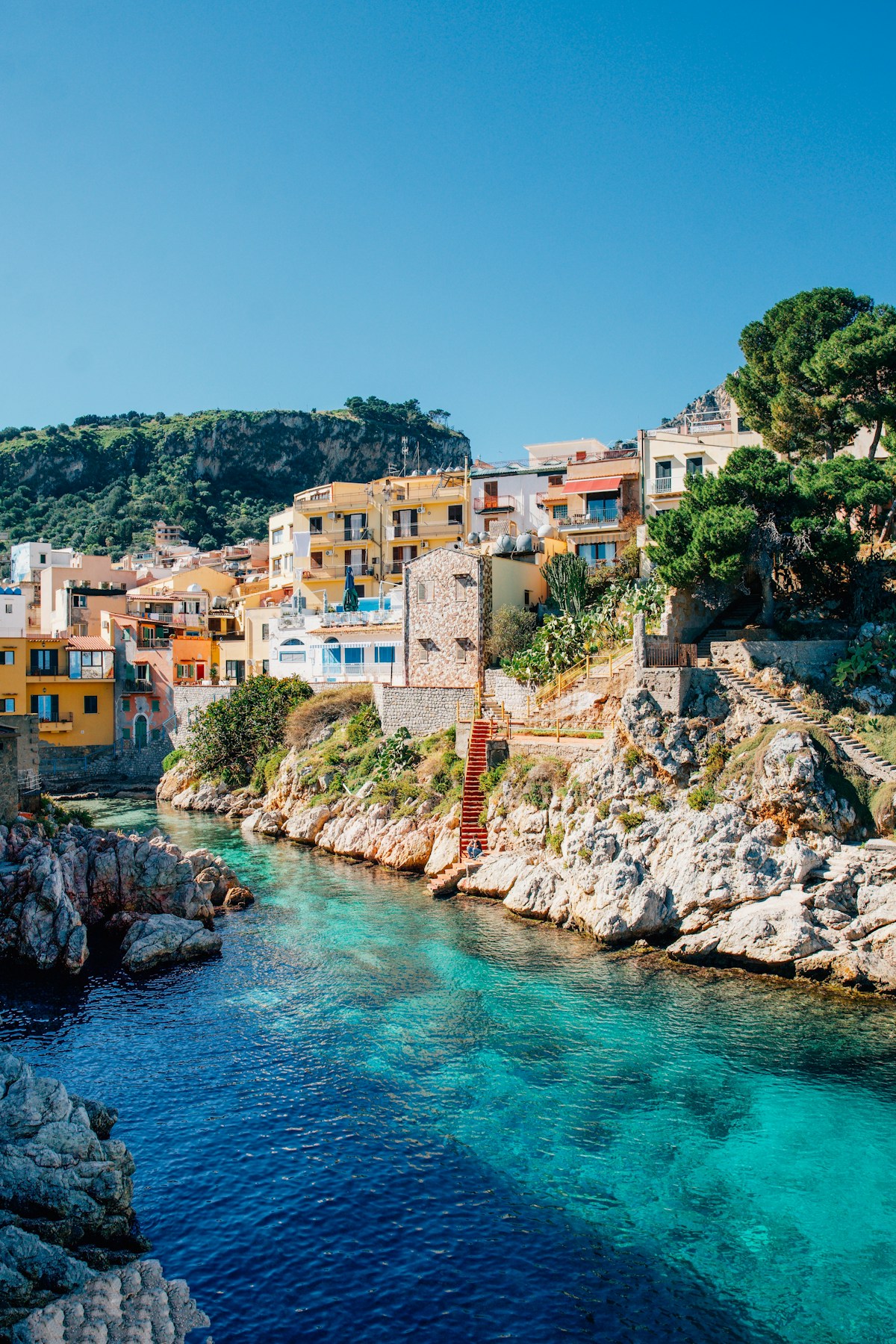
Sicily is the Mediterranean’s largest island and one of Italy’s most complex destinations - Greek temples older than the Parthenon, Byzantine mosaics, Norman cathedrals, Baroque hill towns, and an Etna that is actively erupting. Ten days covers the island’s western, eastern, and central highlights without rushing.
Overview
- Days 1–3: Palermo and the west
- Days 4–5: Agrigento and the Valley of Temples
- Days 6–7: Syracuse and the southeast
- Days 8–9: Ragusa Ibla and the Baroque Val di Noto
- Day 10: Catania and departure
Days 1–3: Palermo
Arrive Palermo (Falcone-Borsellino airport, connected to the city by train or bus; pre-arranged airport transfers available if arriving late or with luggage). Base yourself in the historic centre.
Day 1: The Cappella Palatina (Norman mosaics in the Royal Palace - one of the world’s great rooms), the Palermo Cathedral, the Quattro Canti crossing. Evening: street food at the Ballarò market - panelle (chickpea fritters), arancini, sfincione (Sicilian pizza).
Day 2: The Cathedral of Monreale (12 kilometres above the city, bus or taxi - the Byzantine mosaic cycle is the most complete in Italy), the Capuchin Catacombs (8,000 mummified bodies in posed positions - genuinely extraordinary, not merely macabre), the Palermo seafront.
Day 3: Day trip to Cefalù (1 hour by train) - a Norman cathedral on a beach, a rock above the town, and one of the most beautiful small cities in Sicily. Back to Palermo for dinner in the Vucciria market area.
Days 4–5: Agrigento and the Valley of Temples
Drive or bus to Agrigento (2.5 hours from Palermo by bus, 2 hours by car via the A19).
Day 4: The Valle dei Templi - seven Greek temples dating to the 5th century BC, better preserved than anything in Greece. The Temple of Concordia is the best preserved ancient Greek temple in existence. Go at opening (8:30am) before the heat and the tour groups. A guided Valley of Temples tour adds historical context that the on-site panels don’t fully cover.
Day 5: The Museo Archeologico Regionale (the finds from the temples, including the best collection of Greek pottery outside Athens), the medieval quarter of Agrigento, and the drive east toward Syracuse along the southern coast.
Days 6–7: Syracuse
Drive or take the bus from Agrigento to Syracuse (3 hours by bus, 2 hours by car). Base in Ortigia - the ancient island district connected to the mainland by two bridges.
Day 6: Ortigia - the Greek fountain of Arethusa, the Cathedral of Syracuse (a Greek temple converted to a church - the Greek columns still visible inside the walls), the Temple of Apollo, the Piazza del Duomo, and the waterfront fish market.
Day 7: The mainland Syracuse - the Greek Theatre (5th century BC, still used for performances), the Roman Amphitheatre, the Ear of Dionysius (a vast limestone cave with remarkable acoustics), and the Neapolis Archaeological Park.
Days 8–9: Ragusa and the Baroque Val di Noto
Drive from Syracuse to Ragusa Ibla (2 hours by car, more complex by public transport).
Day 8: Ragusa Ibla - the lower, older, Baroque city rebuilt after the 1693 earthquake in a unified late-Baroque style. The Cathedral of San Giorgio, the garden of Ibla, the narrow streets of the historic centre. More beautiful and less visited than Palermo or Syracuse. Lunch in one of the trattorias overlooking the valley.
Day 9: The Val di Noto towns - Noto (the most perfectly preserved Baroque street in Italy, Via Corrado Nicolaci), Modica (chocolate made in the Spanish/Aztec style without heat), and Scicli. All three are UNESCO World Heritage Sites.
Day 10: Catania and Departure
Drive from Ragusa to Catania (1.5 hours). Catania airport serves mainland Italy and international connections.
Catania has its own character - the black lava stone architecture, the Piazza del Duomo, the fish market (Pescheria), and Etna above everything. With time before your flight, an Etna crater hike or 4x4 tour departs from Catania or Nicolosi - the closest active volcano experience in Europe. Allow 3–4 hours before departure if arriving mid-morning.
Getting Around
A rental car is strongly recommended for western and central Sicily - public transport exists but is slow and infrequent between smaller towns. The eastern circuit (Syracuse–Ragusa–Catania) is more bus-accessible.
Arrive at Palermo airport; depart from Catania airport - a one-way car rental makes the loop without backtracking.
When to Go
April, May, September, October: ideal - warm, not extreme, flowers in spring, harvest in autumn. June and early July: good but getting hot (Valley of Temples in July is brutal by midday). July–August: very hot (35°C+), crowded, expensive - the Sicilian holiday season. November–March: mild in coastal areas, cool inland, many sights quieter. Some ferry services and beach facilities closed.
Pre-Book
- Valley of Temples entry (especially in summer)
- Cappella Palatina in Palermo (timed entry)
- Ear of Dionysius / Neapolis park in Syracuse
- Accommodation in Ragusa Ibla - small and fills quickly
What to Eat
Arancini in Palermo, granita with brioche for breakfast (the Sicilian way), swordfish in Syracuse, horse meat at the Catania market (normal in eastern Sicily), Nero d’Avola wine throughout.
Specific restaurants: Osteria dei Vespri in Palermo (Baroque palazzo setting, mains from approximately €22–35 as of 2026); Trattoria La Foglia in Agrigento (near the temples, simple Sicilian food, lunch approximately €15–20); Don Camillo in Syracuse (established seafood restaurant, Ortigia, mains from approximately €20–30); Ristorante Duomo in Ragusa Ibla (two Michelin stars, tasting menu from approximately €130 per person - book at ristoranteduomo.it).
Entry Fees and Opening Hours
Cappella Palatina, Palermo (Royal Palace): approximately €15 as of 2026. Open Monday–Saturday 8:15am–5:40pm, Sunday 8:15am–1pm. Timed entry essential - book at federicosecondo.it.
Cathedral of Monreale: Cathedral free (donations welcome), treasury approximately €5. Open daily approximately 8am–1pm and 2:30–5pm; mosaic interior closes earlier on Sundays.
Capuchin Catacombs, Palermo: approximately €3. Open daily 9am–1pm and 3–6pm (afternoon hours may vary).
Valley of Temples, Agrigento: approximately €16 (full site) as of 2026. Open daily from 8:30am; last entry 2 hours before sunset. Book at coopculture.it in summer to avoid queues.
Museo Archeologico Regionale, Agrigento: approximately €8. Open Tuesday–Saturday 9am–7:30pm, Sunday 9am–1pm.
Neapolis Archaeological Park (Greek Theatre + Ear of Dionysius), Syracuse: approximately €16 as of 2026. Open daily from 9am; last entry 2 hours before sunset. Book online during summer.
Ragusa Ibla - Cathedral of San Giorgio: Free. Open approximately 10am–1pm and 3:30–7pm.
Transport Costs
Palermo to Agrigento: Bus (Cuffaro/SAL lines from Palermo Piazza Principe di Camporeale): approximately €9–12, 2–2.5 hours. By car: approximately 2 hours via A19/SS640.
Agrigento to Syracuse: By car: approximately 2 hours via SS115 coastal road (scenic) or faster inland. Bus: approximately 3 hours, from €12.
Syracuse to Ragusa: By car: approximately 2 hours. By bus: 2.5–3 hours, approximately €8–10.
Ragusa to Catania airport: approximately 1.5 hours by car.
Palermo airport to city centre (train): approximately €6.30, 45 minutes (Trinacria Express to Palermo Centrale).
Budget Guide (per person per day, as of 2026)
Budget (B&B, street food and simple trattorias): approximately €70–100/day
- Stay: B&Bs throughout Sicily from approximately €40–60/night per person; in Palermo, areas around Via Roma offer good value (search hotels in Palermo)
- Eat: Street food for lunch (arancini, panelle, sfincione: €5–10), trattoria dinners €18–28
Mid-range (boutique hotel, restaurant meals): approximately €130–200/day
- Stay: Boutique Hotel Caol Ishka in Siracusa (search hotels in Siracusa, Ortigia, doubles from approximately €120); Eremos Boutique Hotel in Ragusa (search hotels in Ragusa, doubles from approximately €130 in shoulder season)
- Eat: Two-course lunch €20–30, dinner with Nero d’Avola €40–60
Splurge (design hotel, Michelin dining): approximately €300–500/day
- Stay: Monaci delle Terre Nere on Etna slopes (doubles from approximately €280); Zash Country Boutique Hotel near Riposto (doubles from approximately €250)
- Eat: Ristorante Duomo tasting menu (€130–160 per person) or Don Camillo multi-course (€70–90)
For the full island overview: Sicily guide. For what to do in detail: Sicily things to do. The food - arancini, granita, Nero d’Avola - covered in the Sicilian food guide. For the two main cities: Palermo guide and Taormina guide. For accommodation by area: Sicily hotels guide.
Book Your Trip
- Flights - Flights to Italy guide · Find the best fares to Italy
- Travel Insurance - Italy travel insurance guide · get covered with EKTA
- eSIM - Italy eSIM & SIM guide · buy with Airalo
- Car Rental - Renting a car in Italy · Compare prices across providers
- Tours & Activities - Browse Sicily tours on GetYourGuide