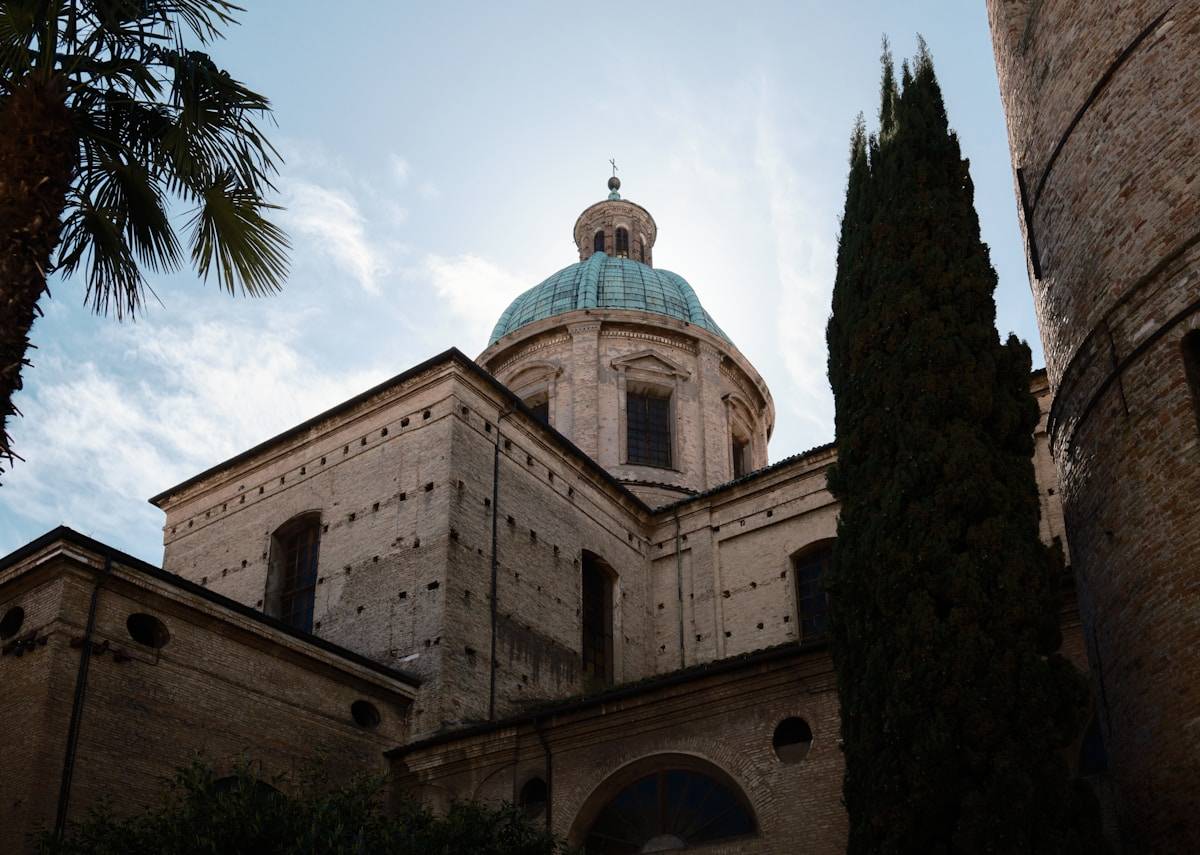
Ravenna occupies an unusual place in Italian tourism. It is one of the most historically significant cities in Europe — the capital of the Western Roman Empire in its final decades, then of the Ostrogoths under Theodoric the Great, and later the seat of the Byzantine Exarchate — and it holds eight UNESCO World Heritage monuments of extraordinary quality. The mosaics inside the Basilica di San Vitale and the Mausoleo di Galla Placidia are arguably the finest surviving examples of early Byzantine art anywhere in the world. And yet Ravenna remains relatively uncrowded compared to Florence, Rome, or Venice. If you care about early Christian and Byzantine art, this is a priority stop.
The city itself is flat, compact, and easy to navigate. The centro storico is the only base you need.
Search Ravenna hotels on Booking.com to compare prices and check availability across all areas in this guide.
Centro Storico
The historic centre is enclosed by the line of the old Roman and medieval walls, largely following modern ring roads. Within this zone, all eight UNESCO monuments are reachable on foot. The city is entirely flat — cycling is common, and the centro storico is compact enough that nothing takes more than 15 minutes to walk.
The two main monument clusters: the western group around Via Fanti and Via Argentario includes the Basilica di San Vitale (arguably the finest) and the Mausoleo di Galla Placidia (tiny, but with mosaics of extraordinary quality); the eastern group on Via di Roma includes the Basilica di Sant’Apollinare Nuovo and the Battistero degli Ariani. Dante’s Tomb (where he died in exile in 1321) is on Via Dante Alighieri.
Pros: Walking distance to all eight UNESCO monuments. Flat and easy to navigate. Good selection of restaurants around Piazza del Popolo and Via Corrado Ricci. Best atmosphere in the evenings when the tour groups have left. Train station (Ravenna FS) is 10 minutes’ walk from the centre.
Cons: Ravenna has fewer hotel options than larger Italian cities — the best boutique properties book ahead. The city is quiet outside of festival season; it’s not a late-night destination.
Budget (€55–90/night): Small guesthouses and B&Bs in the streets around the historic centre. The B&B Ravenna (Via Aurelio Saffi area): central position, simple clean rooms, family-run; doubles from approximately €65/night as of 2026. The Albergo Cappello Residenza d’Epoca (Via IV Novembre 41): a converted 15th-century palazzo, modest rooms with historic character; doubles from approximately €80/night.
Mid-range (€95–160/night): The Hotel Centrale Byron (Via IV Novembre 14): a comfortable three-star in the heart of the centro storico, named for Lord Byron who lived in Ravenna 1819–1821; doubles from approximately €110/night as of 2026. Hotel Sant’Andrea (Via Cardinal Merry del Val 14): a four-star a short walk from San Vitale, clean modern rooms, courtyard; doubles from approximately €130/night.
Luxury (€170–280/night): The Albergo Cappello (Via IV Novembre 41): the most characterful option in Ravenna, a small boutique hotel in a medieval building with frescoed ceilings and an excellent restaurant; doubles from approximately €200/night as of 2026. Limited availability — book well ahead. The Hotel M Club (Via Rocca Brancaleone): a four-star near the gardens, modern facilities; doubles from approximately €170/night.
Near the Train Station
The area between the station and the centro storico — roughly along Viale Farini and the streets parallel to it — has a concentration of practical, competitively priced hotels aimed at business travellers and train arrivals. The walk into the centre takes 10–12 minutes.
Budget (€50–85/night): Several reliable chain hotels and three-star properties near the station offer better value than equivalent options in the centre. Good if you’re arriving on a tight budget or for a single night with an early departure.
Mid-range (€90–140/night): The Hotel Mosaico and similar three-stars near the station area offer reliable facilities at lower prices than centro storico equivalents. Useful for longer stays where being central is less critical than saving money on accommodation.
Plan your trip:
- Browse guided tours of Ravenna’s mosaics
- Book an airport or station transfer
- Get travel insurance before you book
- Pick up an eSIM for Italy
- Search hotels in Ravenna on Booking.com
Booking and practical tips
- Buy the combined ticket for the UNESCO monuments. The Opera di Religione della Diocesi di Ravenna (ORDRA) sells a single ticket covering the main mosaic monuments including San Vitale, Galla Placidia, Sant’Apollinare Nuovo, and the Battistero della Cattedrale. As of 2026, the combined ticket costs approximately €12. Sant’Apollinare in Classe (5 km south) is covered by a separate entry fee.
- Galla Placidia requires advance booking in peak season. The Mausoleo di Galla Placidia is tiny (capacity strictly limited) and requires a reservation in April–June. Online booking is available through the official Ravenna tourism site. Without a booking, waits of 45+ minutes are common in spring.
- Ravenna Ravenna festival. The Ravenna Festival (late June to early July) is a major classical and contemporary music festival held partly in the historic monuments. If you’re visiting during this period, check the programme — tickets for concerts inside San Vitale are remarkable but sell out early. Hotels also fill up, so book accommodation well ahead.
- Cycling in Ravenna. The flat terrain makes cycling the ideal way to see the city and reach the outlying monuments. Several bike rental shops near the station and centre offer daily rentals from approximately €10–15.
- Getting to the coast. The Adriatic coast (Marina di Ravenna) is 10 km east — accessible by bus from the train station (approximately 30–40 minutes). A useful half-day extension in summer.
- City tax in Ravenna is approximately €1–2/night per person — payable at the property.
For the full Ravenna guide: the city’s mosaics, the best visit order for the eight monuments, and where to eat near the historic centre. For nearby cities: hotels in Ferrara (60 km north) and hotels in Bologna (80 km southwest) for easy connections along the Emilia-Romagna route.
Ready to Plan Your Trip?
- 2 Weeks in Italy - the extended Italian itinerary with time for Ravenna, Matera and less-visited cities
- 10 Days in Italy - ten days from Rome through central and northern Italy
- Northern Italy Itinerary - lakes, cities, and the Dolomites