Assisi: St. Francis, Giotto & Umbrian Hill Town
Your guide to Assisi: the Basilica of St. Francis with Giotto's frescoes, the Rocca Maggiore, and why staying overnight transforms the visit.
Guides for Assisi
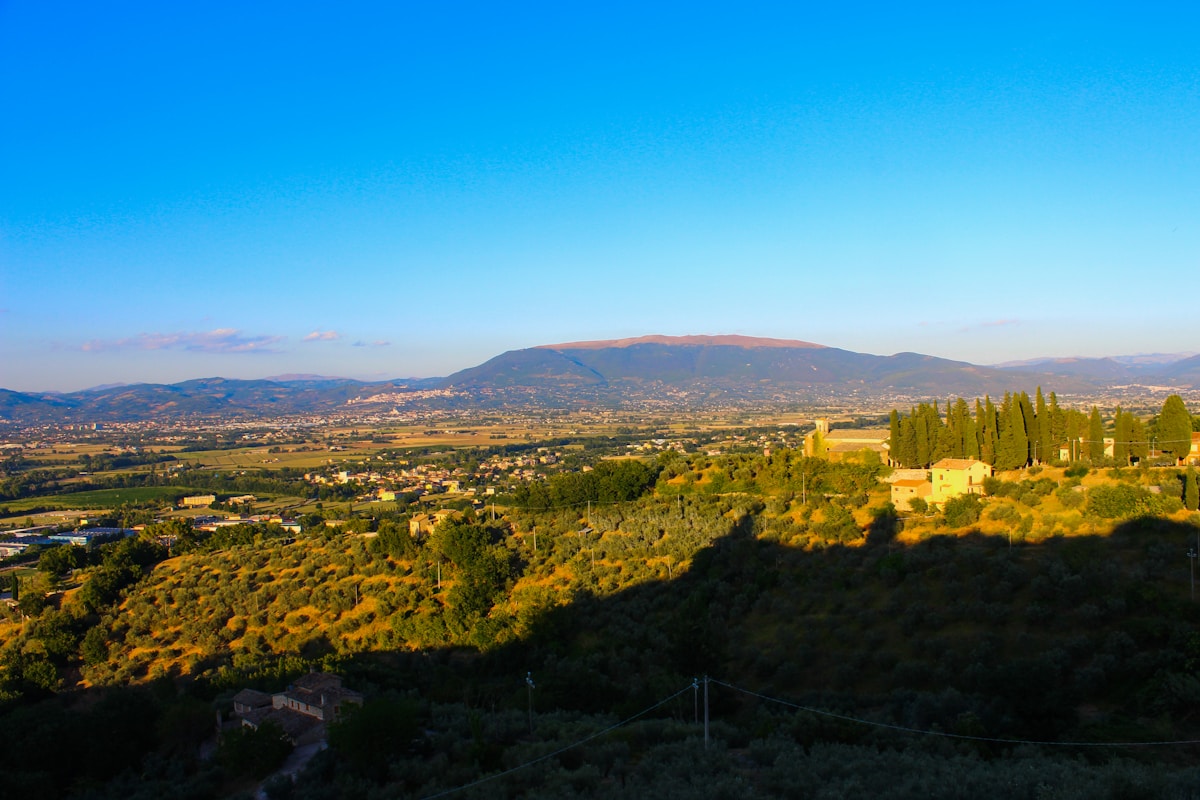
Assisi is the birthplace of St. Francis (1181–1226) and the site of his tomb. The pilgrimage basilica built over his grave is one of the most important churches in Christendom - and the building that Giotto decorated with frescoes that proved almost as revolutionary as his Scrovegni Chapel work in Padua. Assisi is a small medieval hill town that handles millions of pilgrims and tourists each year with remarkable grace; the town itself is architecturally beautiful and the views over the Umbrian plain are exceptional. UNESCO World Heritage since 2000.
The Basilica of St. Francis
The Basilica di San Francesco (begun 1228, two years after Francis’s death) consists of two superimposed churches built into the hillside.
Upper Church: Contains Giotto’s cycle of 28 frescoes depicting the life of St. Francis (painted approximately 1297–1300) - the definitive narrative cycle of medieval Italian painting. The frescoes trace Francis’s life from his youth as a wealthy merchant’s son through his renunciation of material goods, the receiving of the stigmata, and his death. Cimabue’s earlier frescoes in the transept are also significant, though badly deteriorated. The 1997 earthquake caused serious damage; the restoration is largely complete.
Lower Church: Darker, earlier, and more intimate. Contains the tomb of the saint (in the crypt, rediscovered in 1818) and frescoes by Simone Martini, Pietro Lorenzetti, and Cimabue. The chapel of San Martino has Simone Martini’s finest narrative frescoes.
Visiting: Free entry. Open daily 6am–6:45pm (lower church), 8:30am–6:45pm (upper church). No photography in the lower church. Modest dress required (shoulders and knees covered). Visitors are asked to maintain silence - this is an active place of worship and pilgrimage.
The town
Assisi’s medieval streets are largely unchanged since the 13th and 14th centuries.
Basilica di Santa Chiara (St. Clare’s church) - Built in 1265 to house the remains of St. Clare, founder of the Order of Poor Ladies (now the Poor Clares). The church houses the Byzantine crucifix that St. Francis reportedly heard speaking to him at San Damiano. Free entry.
Rocca Maggiore - The 14th-century fortress above the town, reconstructed by Cardinal Albornoz in 1367. The climb (approximately 15 minutes from the centre) rewards with the best panoramic view of the Umbrian plain, Monte Subasio, and the town below. Entry approximately €5 as of 2026. Open daily.
Piazza del Comune - The main square, built over the old Roman forum. The Temple of Minerva (1st century BC Roman temple facade, remarkably well-preserved, now a church interior) is one of the best-surviving Roman temples in Italy. Goethe wrote in 1786 that it was the first complete classical building he had ever seen.
Eremo delle Carceri - The hermitage on the slopes of Monte Subasio where St. Francis retreated for prayer. Approximately 4km uphill from the town (walkable in approximately 1 hour, or by car). The forest setting and the tiny caves where Francis and his followers prayed are deeply atmospheric. Free entry.
San Damiano - The small church below the town where the crucifix reportedly spoke to Francis. The simplicity of the building is moving after the grandeur of the Basilica. Approximately 15 minutes’ walk downhill from Porta Nuova. Free entry.
Where to eat
Umbrian cuisine is simple and excellent: strangozzi (thick hand-rolled pasta, often with truffle or tomato), porchetta (whole-roasted pig, sold by the slice), lentils from Castelluccio, and Umbrian olive oil. Trattoria Pallotta (Vicolo della Volta Pinta 2 - mains approximately €10–14) serves traditional Umbrian dishes. Osteria Piazzetta dell’Erba (Via San Gabriele dell’Addolorata 15b - mains approximately €12–16) has a small terrace and seasonal menu.
Where to stay
Staying overnight is strongly recommended - when the day-trippers leave by 5pm, the town becomes peaceful and the evening light over the Umbrian plain is extraordinary. Budget: approximately €50–70/night in religious guesthouses and simple B&Bs. Mid-range: approximately €80–130/night. Hotel Subasio (Via Frate Elia 2 - doubles from approximately €100/night) has a terrace overlooking the Umbrian plain directly beside the Basilica.
For current pricing and availability across religious guesthouses, B&Bs, and hotels in Assisi, search hotels in Assisi on Booking.com.
Getting there
Assisi station (Santa Maria degli Angeli) is approximately 4km below the hilltop town; buses run every 20–30 minutes (approximately €1.30, 10 minutes). Regional trains from Perugia approximately 25 minutes (approximately €3). From Florence: approximately 2.5 hours with one change. From Rome: approximately 2–2.5 hours via Foligno.
Practical details
Visiting the Basilica: The Basilica di San Francesco draws approximately 5–7 million visitors a year. To avoid the densest crowds (late morning and early afternoon from April to October), arrive at opening time (8:30am for the upper church) or in the late afternoon. The lower church - darker and more atmospheric - can be entered from 6am. Silence is expected and enforced by attendant friars.
Religious guesthouses: Several Franciscan convents and monasteries in and around Assisi accept overnight guests at rates significantly below commercial hotels. The Ostello della Pace (Via di Valecchi 177 - dorms from approximately €25/night, doubles from approximately €55/night) is the main hostel, a 15-minute walk from the Basilica. Casa Papa Giovanni (Via Sermei 5 - doubles from approximately €60/night) is a religious guesthouse inside the walls. Many pilgrims combine a stay in a religious house with the spiritual purpose of the visit.
Expanded accommodation options: Budget B&Bs and religious guesthouses: approximately €50–70/night. Hotel Subasio (Via Frate Elia 2 - doubles from approximately €100/night as of 2026) has a terrace overlooking the Umbrian plain, immediately adjacent to the Basilica - the best-positioned hotel in Assisi. Hotel Alexander (Piazza della Chiesa Nuova 6 - doubles from approximately €85/night) is a reliable mid-range option in the medieval centre. For a higher-end stay, Nun Assisi Relais (Via Eremo delle Carceri 1a - doubles from approximately €180/night) is a converted medieval spa in the old Roman amphitheatre foundations, with a rooftop pool.
Combining with Perugia and Spello: Assisi, Perugia (25 minutes by train, approximately €3), and Spello (10 minutes by train, approximately €2) form a logical Umbrian triangle. Spello has the finest collection of Perugino and Pinturicchio frescoes outside major museums, set in a less-visited hillside village. Perugia - the regional capital - has the Galleria Nazionale dell’Umbria, with the finest collection of Umbrian painting in existence.
For accommodation across all budgets - religious guesthouses, B&Bs, and Relais hotels: Assisi hotels. For the Basilica visiting logistics, the Rocca Maggiore, and the Eremo delle Carceri forest hermitage: things to do in Assisi. Book a guided tour of Assisi to visit the Basilica with a licensed guide who can explain Giotto’s fresco cycle in full. Our southern Italy itinerary covers the Umbria leg connecting Assisi with Rome and the south.
For more sights and walking routes: things to do in Assisi. For accommodation across budget and pilgrimage guesthouse options: Assisi hotels. For the broader context on Giotto and the Franciscan art tradition: Italian Renaissance guide.
Upcoming Events in Assisi
La Befana - Feast of the Epiphany 2027
La Befana 2027, January 6. Italy's Epiphany gift-giving day: children receive sweets or coal from the Befana witch, then decorations come down.
Book an experience
Top experiences in Assisi
Explore the best tours and activities in Assisi, with instant confirmation and free cancellation on most bookings.