Rome Travel Guide: What to See, Eat & Know Before You Go
A complete guide to Rome: the Colosseum, the Vatican, Trastevere, Monti, where to eat, where to stay, and how to plan your visit.
Guides for Rome
Rome is one of the most visited cities on earth, and unlike many cities that wear that title, it earns it. The density of history within walking distance of almost any central point is extraordinary - a city where a traffic roundabout sits next to a 2,000-year-old temple, where the metro tunnels regularly hit archaeological layers that halt construction for decades, where the neighbourhood bakery operates out of a building that’s been standing since the Renaissance.
The neighbourhoods
Centro Storico is the historical core - Piazza Navona, the Pantheon, Campo de’ Fiori. Tourist-heavy but genuinely beautiful. Accommodation is expensive; restaurants in the immediate vicinity vary from excellent to trap. Trastevere is a reliable alternative base: cobblestone medieval streets, fewer coach tour groups, better value for food and lodging. Testaccio is the working-class neighbourhood where real Roman food survives - the covered market, the old slaughterhouse district, the best carbonara and cacio e pepe in the city. Prati sits opposite the Vatican and has a more bourgeois, residential feel with good aperitivo bars. Pigneto is the neighbourhood for nightlife and creative restaurants, further east and cheaper.
The ancient sites
The Colosseum, Roman Forum, and Palatine Hill are sold as a combined ticket. Book online well in advance - queues without a booking run to several hours in peak season. The Colosseum alone is extraordinary, but the Forum and Palatine, where Roman emperors lived and the Republic was born, repay a full morning if you have any interest in ancient history. For a deeper look at the city’s founding and early centuries, our guide to ancient Rome’s history and sites covers the Republic, the Empire, and what survives today - a useful read before your first walk through the Forum. We also have a dedicated guide to the Roman Republic for those who want context on the centuries before the emperors.
The Pantheon - originally a Roman temple, then a Christian church, now one of the best-preserved buildings from the ancient world - is free to enter (registration required online). The dome’s concrete pour in 125 AD remains one of the greatest feats of engineering in history.
Vatican City
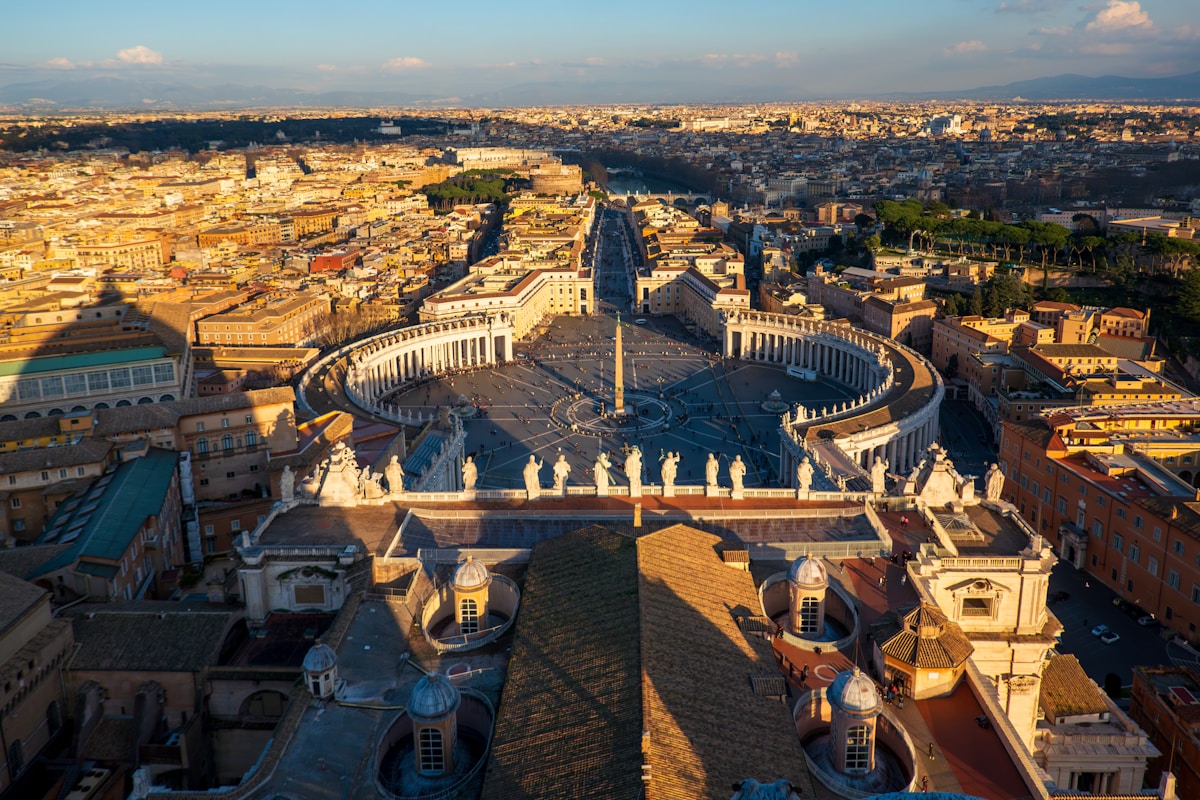
The Vatican Museums and Sistine Chapel require advance booking regardless of season. The queue for walk-in entry can be four to five hours on busy days. The Sistine Chapel ceiling - painted by Michelangelo between 1508 and 1512 - is exceptional; the crowds and no-photography enforcement make the experience chaotic. An early-morning guided Vatican tour gives access before general crowds and includes a guide through the Museums and Sistine Chapel. St. Peter’s Basilica is free to enter (no booking required); the dome climb gives the best aerial view of Rome.
Food
Roman cuisine is defined by five pasta dishes - cacio e pepe, carbonara, amatriciana, gricia, and cacio e uova - and an offal tradition that reflects the city’s working-class roots. The best versions are found in Testaccio and Trastevere. Jewish-Roman cooking in the Ghetto neighbourhood (carciofi alla giudia, baccalà in pastella) is a distinct and excellent tradition worth a dedicated meal. Plant-based travellers will find Rome more navigable than its reputation suggests - our vegan guide to Rome covers the best plant-based restaurants and naturally vegan Roman dishes. For a country-wide overview of eating vegan in Italy, the complete Italy vegan guide is the place to start.
Entry fees and opening hours
The Colosseum, Forum, and Palatine Hill combined ticket costs approximately €16 as of 2026 (book online at coopculture.it - skip queues and save €2 on the booking fee when booked in advance). The Colosseum opens at 9am daily; closing times vary seasonally (typically 7pm in summer, 4:30pm in winter). For tickets and queue-skipping advice, our Colosseum tickets guide covers booking windows, combined Forum passes, and the early-morning entry options.
Vatican Museums and Sistine Chapel: approximately €20 standard admission; book at museivaticani.va. Guided early-morning or after-hours access costs approximately €50–65 per person through licensed operators. St. Peter’s Basilica is free; the dome climb costs approximately €8 (with lift) or €6 (stairs only). Opening hours: Monday to Saturday 9am–6pm; Sunday access restricted. Our Vatican tours guide compares skip-the-line options and the difference between guided and self-guided visits.
The Pantheon: approximately €5 to enter (free under 18). Opens 9am–7pm Monday to Saturday, 9am–6pm Sunday. The National Roman Museum (four sites including Palazzo Massimo) costs approximately €10.
If you have left booking late, our last-minute tours page tracks Rome tours and skip-the-line tickets with confirmed availability over the next three days, refreshed twice daily.
Where to eat
Roman food at its best is in Testaccio and Trastevere - both within 30 minutes’ walk of the Colosseum. Flavio al Velavevodetto (Via di Monte Testaccio 97) serves cacio e pepe and rigatoni alla carbonara in the neighbourhood where these dishes evolved - mains approximately €12–18. Da Enzo al 29 (Via dei Vascellari 29, Trastevere) is a small neighbourhood trattoria with excellent Roman pastas and abbacchio; mains approximately €10–15, book ahead. Armando al Pantheon (Salita de’ Crescenzi 31) is the best-located serious restaurant in the centro storico - mains approximately €15–22. For street food, Supplì Roma (Via di San Francesco a Ripa 137) serves some of the best fried rice balls in the city - approximately €2–3 each.
Where to stay
Rome has accommodation across every price point. In Trastevere, budget hostels run from approximately €25/night per bed; guesthouses from approximately €70/night for a double. Around Prati (near the Vatican), solid mid-range hotels cost approximately €100–160/night - the NH Collection Roma Palazzo Cinquecento is a good option from approximately €130/night. In the centro storico, expect to pay approximately €150–250/night for mid-range hotels. The Hotel de Russie (Via del Babuino 9) and Hotel Eden (Via Ludovisi 49) are the city’s most iconic luxury properties - doubles from approximately €400/night as of 2026.
Getting around
Rome’s metro system has only two main lines and misses most of the historic centre. Walking and buses cover the gaps. A single bus or metro ticket costs approximately €1.50 and is valid for 100 minutes. A 48-hour pass costs approximately €7. Taxis are metered and reliable - airport to centre costs approximately €50 fixed fare from Fiumicino. For a pre-booked transfer with driver meet-and-greet in arrivals, Welcome Pickups is a reliable option from both Fiumicino and Ciampino. Renting a scooter is legal but requires confidence in aggressive Italian traffic. A three-day central Rome itinerary is walkable if you’re strategic with neighbourhood groupings.
Getting to Rome
Fiumicino (Leonardo da Vinci) Airport is the main gateway, 30km from the centre. The Leonardo Express train to Roma Termini runs every 15 minutes and takes 32 minutes (approximately €14 one way). Ciampino Airport is closer but served mainly by budget carriers; buses to Termini cost approximately €5–7 and take 45–60 minutes. High-speed trains from Milan take approximately 3 hours (from approximately €30); from Florence approximately 1.5 hours (from approximately €19).
If you are undecided between the two cities, our Milan vs Rome guide compares pace, cost, and what each city does better. Choosing between the south and the capital? Our Naples vs Rome guide sets out the differences in character, cost, and pace. Splitting time in Italy? Our Rome vs Florence guide helps with prioritisation. Weighing Rome against a European city outside Italy? Our Rome vs Barcelona guide compares both cities on history, food, nightlife, and beaches. For a broader look at accommodation across all price tiers - from historic centre guesthouses to design hotels near the Vatican - our Rome hotels guide covers the neighbourhoods and what to expect at each price point.
Upcoming Events in Rome
La Befana - Feast of the Epiphany 2027
La Befana 2027, January 6. Italy's Epiphany gift-giving day: children receive sweets or coal from the Befana witch, then decorations come down.
Book an experience
Top experiences in Rome
Explore the best tours and activities in Rome, with instant confirmation and free cancellation on most bookings.