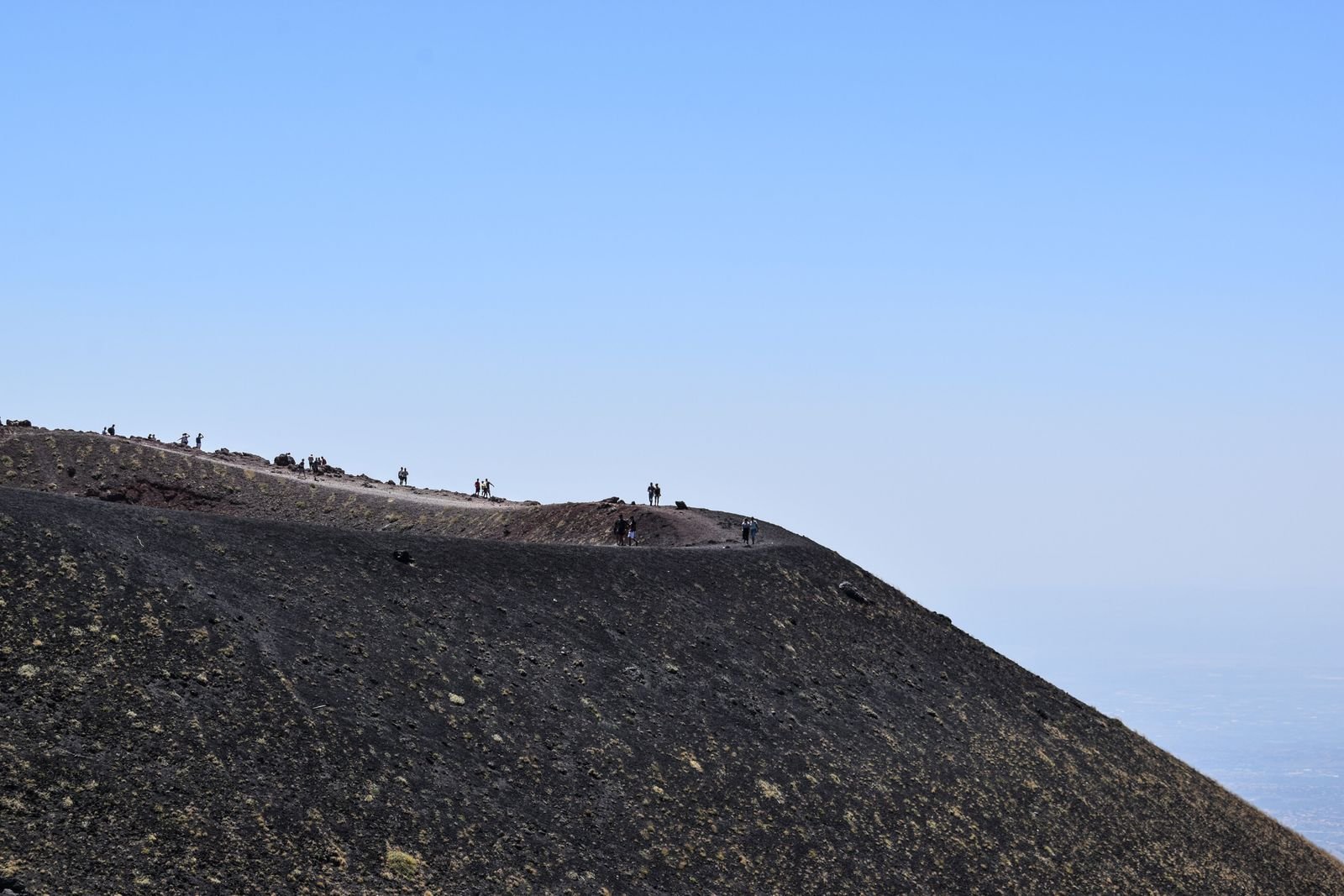
Mount Etna is the reason many people base themselves on the east coast of Sicily. At roughly 3,350 m (the height changes after eruptions), it is Europe’s highest active volcano, and it is easy to reach in a day from Catania or Taormina. The hard part is choosing between the cable car, a 4x4 transfer or a full guided summit trek. This guide compares the options, what each costs as of 2026, and what to wear. If you are still choosing a base, see our Catania guide and our Taormina guide.
The three ways up Mount Etna
Nearly every visit to the south side starts at Rifugio Sapienza, a car park and cluster of cafes at about 1,900 m. From there you pick one of three levels.
Option 1: Cable car only
The Funivia dell’Etna takes you from Rifugio Sapienza to about 2,500 m. From the top station you can walk the marked trails at your own pace, though you will not be allowed higher without a guide. It is the cheapest paid route and suits families and anyone who wants the scenery without a long trek. Prices are around EUR 35 to 55 return depending on the source and season; confirm on the official Funivia dell’Etna site{target=“_blank”}. Service stops in strong wind, low cloud or increased volcanic activity.
Option 2: Cable car plus 4x4 to about 2,900 m
This is the standard tour. After the cable car, a 4x4 minibus climbs the old lava track to about 2,900 m, the highest point regular visitors are allowed to reach, where a guide walks you around the craters of past eruptions and explains the geology. Expect roughly EUR 65 to 100 per person as of 2026. Be careful with cheaper listings: many online tours do not include the cable car and 4x4, which are then paid at the base station, often around EUR 75 to 80 extra.
Option 3: Guided summit crater trek
Above the 4x4 stop, the summit craters at roughly 3,200 to 3,350 m are open only with a licensed volcanological guide and only when activity allows. Guided summit tours typically cost EUR 85 to 130 or more as of 2026. The walk is steep over loose ash and takes several hours. We rate this a good fit for fit, confident walkers only. Summit access can be restricted at short notice, so an operator should offer an alternative route or a refund if your day is closed.
Catania or Taormina as your base
| From Catania | From Taormina | |
|---|---|---|
| Drive to Rifugio Sapienza | About 1 hour | About 1 to 1.5 hours |
| Typical tour length | 4 to 6 hours | 6 to 8 hours |
| Tour price from | About EUR 65 | About EUR 75 to 80 |
| Best for | Maximum time on the mountain | Combining Etna with a Taormina stay |
Catania is the easier base, with more departures and shorter transfers. Browse the Catania tours for half-day, sunrise and sunset options, plus combinations with winery visits or the Alcantara Gorge. From Taormina, full-day trips cost a bit more and take longer on the road; see Etna tours from Taormina or our wider best tours in Taormina.
Going independently
You can reach Rifugio Sapienza without a tour. From Catania, an AMT bus runs from the central station to the refuge in the morning and returns in the late afternoon, so check the current timetable before relying on it. Driving is simpler: Sapienza is about 1 hour from Catania, and our Sicily car rental guide covers pickup and road rules. The Circumetnea narrow-gauge railway circles the volcano through lava fields and villages but does not climb it; timetables are on the Circumetnea website{target=“_blank”}.
A free alternative is the network of trails around the Silvestri Craters near Rifugio Sapienza, which are open without a guide and give you the black-ash scenery for nothing.
Which option should you choose?
- Short on time or budget: cable car only, or the Silvestri Craters for free.
- First visit, wanting the full experience: a guided cable car and 4x4 tour.
- Fit and wanting the summit: a guided summit trek, booked a week or two ahead in July and August.
- Not keen on crowds: a sunrise or late-afternoon departure, when light is better and most day-trip buses have gone.
What to wear and bring
Temperatures drop quickly with altitude, often 15 to 20 degrees below Catania’s, and wind makes it feel colder. Even in August, bring a warm layer.
- Closed hiking shoes or boots with grip; ash and scoria are loose and sharp. Trainers are acceptable on the lower trails.
- Long trousers, a fleece and a windproof jacket. Many operators lend jackets and boots, so ask when booking.
- Sunglasses, a hat and sun cream, because UV is strong at altitude.
- Water, snacks and a small backpack. Prices at the refuge cafes are higher.
- Gloves and a hat in autumn, winter and spring, when snow can cover the upper slopes. Etna is also a ski area in winter.
Safety and checking conditions
Etna erupts regularly, and authorities adjust access zones by alert level. Before you go, check the INGV Catania Etna bulletins{target=“_blank”} and ask your operator what is open. Cable car and 4x4 service can be cancelled on the day, and refund policies vary, so read them before paying. Follow your guide at all times, and keep away from fenced areas.
When to go
Spring (April to June) and autumn (September to October) usually combine good visibility, comfortable temperatures at the base and fewer crowds. July and August bring the biggest groups; book early. Winter offers snow scenery but more cancellations. Our Taormina best time guide has more on seasons in eastern Sicily.
Ready to book? Compare Mount Etna tours from Catania and check what each includes before you pay. For other volcano and day-trip options across the island, read our best tours in Sicily and the Sicily island guide.