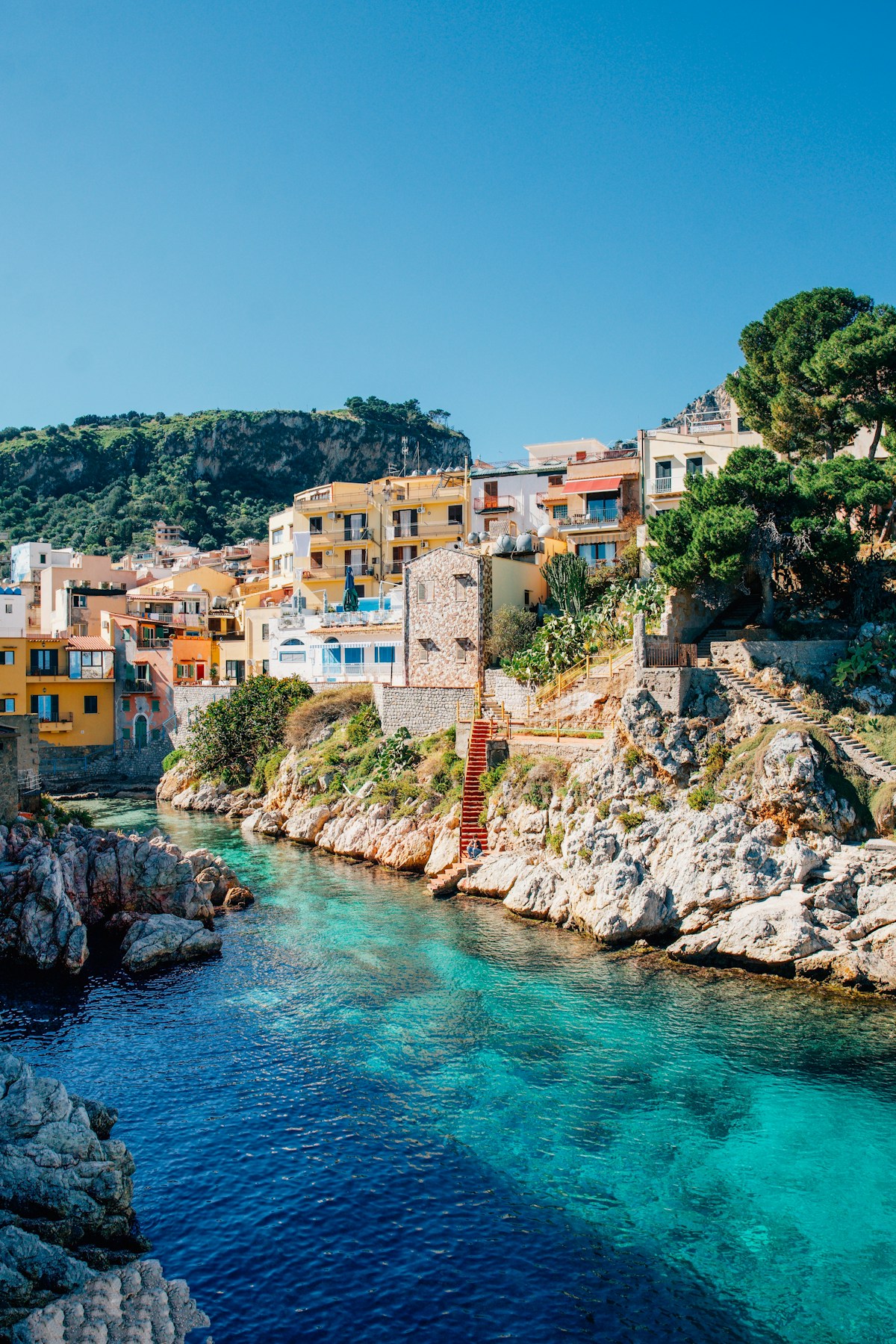
Sicily Travel Guide: Ancient Temples, Volcanoes and Food
Sicily: Greek temples, Norman mosaics, Mount Etna, and baroque city centres layered with Arab, Greek, and Spanish history. Plan your trip here.
Guides for Sicily
Sicily is the largest island in the Mediterranean and one of the most historically layered places in Europe. Greeks colonised it in the 8th century BC, building temples that survive better than anything in mainland Greece. The Romans took it. The Arabs transformed it. The Normans built gold-mosaic cathedrals on Arab foundations. The Spanish left baroque cities. Every occupier added a layer, and all of them are still visible. On top of all this, Sicily has Mount Etna - Europe’s largest active volcano - and some of the most dramatic coastline in the Mediterranean.
Where to base yourself
Palermo - the capital and the best base for western Sicily, with Arab-Norman monuments, baroque piazzas, and one of Italy’s most intense street-food cultures. See the full Palermo guide for neighbourhood breakdowns, where to eat, and where to stay.
Catania - the second city, on the east coast beneath Etna. More organised than Palermo. The baroque centre (rebuilt after the 1693 earthquake) is UNESCO-listed. Good base for Etna, Taormina, and the eastern coast.
Syracuse (Siracusa) - the most historically significant city in Sicily. At its peak in the 5th century BC, Syracuse was the largest city in the western world. The archaeological park holds a Greek theatre and a Roman amphitheatre; the island of Ortigia, connected by bridge to the mainland, is a perfectly preserved baroque town.
Taormina - the classic clifftop resort, famous for its Greek/Roman theatre with Etna framed in the backdrop. See the Taormina guide for when to visit, where to stay, and what to do beyond the theatre.
Agrigento - in the south-west, base for the Valley of the Temples.
The essential sites
Valley of the Temples (Agrigento) - seven Doric Greek temples from the 5th century BC, in various states of preservation. The Temple of Concordia is one of the best-preserved Greek temples in the world. The park is particularly beautiful at dusk when the temples are lit up.
Selinunte - massive Greek temple complex on the south-west coast, largely unexcavated. The fallen columns create an extraordinary landscape. Far fewer visitors than Agrigento.
Segesta - a complete, unfinished Greek temple in the hills of western Sicily (c.420 BC), with an attached theatre. The setting - isolated, surrounded by hills - is exceptional.
Palermo’s Norman monuments - the Palatine Chapel in the Royal Palace (1132–1140) is the finest example of Norman-Arab-Byzantine art in the world: gold mosaics, Arab muqarnas ceiling, Greek inscriptions. Monreale Cathedral (1174), 8km from the city centre, has the most extensive Byzantine mosaic programme outside Constantinople.
Mount Etna - the highest active volcano in Europe (3,329m). Can be visited year-round; cable car + 4WD jeeps take you to the craters area at ~2,900m. Snow on the summit well into spring. Numerous trekking routes on the lower slopes.
Taormina’s Greek Theatre - built by the Greeks, modified by the Romans, with Etna framed in the backdrop. One of the most photographed views in Italy.
Syracuse Archaeological Park - the Greek theatre (5th century BC, still used for summer productions), the Ear of Dionysius (a limestone quarry with extraordinary acoustics), and the Roman amphitheatre.
Food and drink
Sicily has the most distinctive food culture in Italy. The Arab influence is still visible: aubergine, couscous (in Trapani), saffron, almonds, pistachio (from Bronte, on Etna’s slopes), sweet-and-sour agrodolce sauces.
- Arancini - fried rice balls stuffed with ragù, peas, and mozzarella. Standard street food throughout the island.
- Sfincione - Palermitan pizza: thick, spongy, with anchovy, tomato, and caciocavallo cheese.
- Pasta alla Norma - aubergine, tomato, basil, and ricotta salata. Catania’s signature dish, named after Bellini’s opera.
- Granita - coarser and more intensely flavoured than mainland Italian gelato. Best with brioche.
- Cannoli - the island’s most famous export. Tube-shaped pastry shells filled with sweetened ricotta. Infinitely better made to order.
- Marsala - fortified wine from the western coast. The basis of the wine industry in the 18th century when an English merchant named John Woodhouse discovered it by accident.
Getting to Sicily
By air: Palermo (PMO) and Catania (CTA) both have direct flights from major European cities and Rome/Milan domestically.
By train/ferry: High-speed train from Rome to Villa San Giovanni (4 hours), then a 20-minute ferry crossing to Messina. The entire train is loaded onto the ferry. Journey Rome–Palermo takes about 10.5 hours total. Overnight trains available.
Internal transport: Renting a car is strongly recommended outside Palermo and Catania. Buses run between major towns but are slow and infrequent.
When to go
March–June: Best time. Mild temperatures (18–25°C), almond blossoms in February/March, wildflowers, manageable crowds. Easter Week (Settimana Santa) in towns like Trapani and Marsala is spectacular.
September–November: Also excellent. Harvest season, warm sea, fewer tourists than summer.
July–August: Very hot (35–40°C), very crowded at coastal resorts, expensive. Mount Etna and the interior are more bearable.
December–February: Quiet, cool, many coastal hotels closed. Good for archaeology, bad for beaches.
For where to stay, our Sicily hotels guide covers the main resort areas, historic city stays, and budget options. For activities, tours, and the main sites in detail: things to do in Sicily. The island’s food - arancine, pasta alla Norma, granita - is covered in depth in the Sicilian food guide. Planning a full trip? Our Sicily itinerary covers 10–14 days across the island’s main areas. For the city hubs covered separately: Palermo and Taormina each have their own dedicated guides.
Deciding between Sicily and Sardinia? Our Sicily vs Sardinia guide covers what distinguishes each island for different types of trip. For a comparison with mainland southern Italy, our Puglia vs Sicily guide sets out the practical and cultural differences.
Where to Stay
Sicily is a large island and where you base yourself matters. Palermo suits those focused on history, street food, and Norman architecture. Taormina suits the resort crowd: clifftop views, the Greek Theatre, and easy access to Etna. The Val di Noto, covering Noto, Ragusa, and Modica, suits those whose primary interest is Baroque architecture and quieter travel. The south-west (Agrigento, Selinunte, Trapani) is best explored with a car and a mid-point base. Each area has distinct accommodation options and a different feel.
Budget (from approximately €45–€65/night)
Bed & Breakfast Palermo Centrale sits in the heart of Palermo’s historic centre, within walking distance of the Quattro Canti, the street markets, and the major Norman monuments. Rooms are clean and simply furnished, and the central location removes the need for transport for most of the city’s sights. From approximately €50/night as of 2026.
A’Putia is a compact guesthouse in Palermo’s historic district, popular with travellers who want to be close to the Ballarò and Vucciria markets without paying mid-range prices. The location is one of its main selling points. From approximately €45/night as of 2026.
Masseria degli Ulivi, near Noto in the south-east, is a working farm agriturismo offering basic rooms in a rural setting. It works well as a base for the Val di Noto Baroque towns, with Noto, Ragusa, and Modica all within an hour’s drive. Breakfast is included and typically uses produce from the farm. From approximately €60/night as of 2026.
Mid-range (from approximately €130–€160/night)
Palazzo Brunaccini in Palermo occupies a historic building a short walk from the Royal Palace and the Palatine Chapel. The rooms are traditionally decorated, service is attentive, and the location makes it a practical choice for touring the western city on foot. From approximately €130/night as of 2026.
Villa Carlotta Boutique Hotel in Taormina offers a quieter alternative to the large resort hotels on the main strip, with a terrace, pool, and views of the coastline below. Rooms are well-furnished and the hotel has a more personal scale than the major chains in town. From approximately €160/night as of 2026.
Manganelli Palace in Catania is a restored aristocratic palazzo in the baroque city centre, a short walk from the fish market and the Piazza del Duomo. A strong choice if Etna and the eastern circuit are your focus. From approximately €140/night as of 2026.
Luxury (from approximately €400/night)
Grand Hotel Timeo in Taormina sits above the Greek Theatre with the best view in the town: the Theatre in the foreground, Etna behind it, and the Ionian coast below. One of the oldest hotels in Sicily, now managed by Belmond. The terrace restaurant is worth a visit even if you are not staying. From approximately €450/night as of 2026.
Four Seasons San Domenico Palace in Taormina occupies a converted 14th-century Dominican convent, with original cloisters, a large terrace, and a clifftop pool above the sea. The conversion retains the historic fabric of the building while adding contemporary facilities. From approximately €700/night as of 2026.
Verdura Resort, near Sciacca on the south-west coast, is a Rocco Forte property spread across 230 hectares of coastal countryside, with three golf courses, multiple pools, and a long private beach. It operates as a self-contained resort: not ideal for touring, but exceptional as a place to stay for its own sake. From approximately €400/night as of 2026.
Search all hotels in Sicily on Booking.com
Upcoming Events in Sicily
La Befana - Feast of the Epiphany 2027
La Befana 2027, January 6. Italy's Epiphany gift-giving day: children receive sweets or coal from the Befana witch, then decorations come down.
Book an experience
Top experiences in Sicily
Explore the best tours and activities in Sicily, with instant confirmation and free cancellation on most bookings.