Aeolian Islands Guide: Stromboli, Lipari, Vulcano & Beyond
Plan your Aeolian Islands trip: ferries from Sicily, which islands to visit, Stromboli at night, beaches, and accommodation on each island.
Guides for Aeolian Islands
The Aeolian Islands are a volcanic archipelago 25–90km off Sicily’s northeastern coast - seven main islands that Homer described as the domain of Aeolus, god of winds, in the Odyssey. They are a UNESCO World Heritage Site, named for their outstanding volcanic activity that has been studied by scientists since the eighteenth century, and they range from Lipari (the biggest, most populated, most visited) to Alicudi (car-free, population around 100, accessible by a single daily ferry in winter). Sicily-based tours that include the Aeolian Islands as a day excursion from Milazzo or Cefalù are available if you want a guided introduction before committing to a multi-day stay.
Each island has a distinct character. Stromboli has the active volcano and nothing much else - just a single village, a few restaurants, and the extraordinary spectacle of regular eruptions visible from the sea. Lipari has archaeology, ceramics, a proper historic centre, and the region’s best infrastructure. Vulcano has sulphurous mud baths and volcanic beaches. Salina has vineyards, Malvasia wine, capers, and the relative peace of an island where the tourism industry hasn’t entirely taken over. Panarea has the smallest car-free village and the archipelago’s most exclusive nightlife. Filicudi and Alicudi are for people who genuinely want to disappear.
Getting there
From Milazzo (Sicily): The main and most frequent gateway. Hydrofoils (aliscafo) run by Liberty Lines reach Lipari in approximately 55 minutes and Stromboli in approximately 2 hours 30 minutes. Car ferries (Siremar, Caronte & Tourist) take approximately 2 hours to Lipari, longer to the outer islands. As of 2026, hydrofoil fares from Milazzo to Lipari are approximately €20–25 each way; to Stromboli approximately €28–38. Car ferries are cheaper but significantly slower - unless you specifically need a vehicle (which is only permitted on Lipari and Salina in any case), foot passenger is the sensible option.
Getting to Milazzo: Milazzo is approximately 40km west of Messina. Regional trains on the Palermo–Messina line stop at Milazzo station (Milazzo is also called “Milazzo-Castroreale”), though the station is 4km from the ferry terminal - take the connecting bus or a taxi (approximately €8–10). Alternatively, take a train to Messina and connect by private transfer to Milazzo. Driving from Messina takes approximately 40 minutes via the A20 motorway.
From Palermo: Liberty Lines runs a direct seasonal hydrofoil service from Palermo to Lipari (approximately 4 hours), convenient for visitors starting their Sicily trip in Palermo.
From Naples: Overnight car ferries (approximately 14–16 hours) run in summer, operated by Siremar and occasionally by SNAV, connecting Naples to Lipari, Vulcano, Salina, and Stromboli. Check schedules carefully - this service operates seasonally and schedules change year to year.
Getting between the islands
Inter-island hydrofoils and ferries form a network connecting all seven islands, with Lipari as the central hub. Most runs take 15–60 minutes between neighbouring islands. A key point: inter-island services reduce significantly outside of June–September, and some routes are daily only in shoulder and low season. Check current Liberty Lines and Siremar timetables before planning connections to Alicudi or Filicudi in particular.
The seven islands
Lipari
The archipelago’s main island - 37km² with a permanent population of around 12,000. The upper town (centro storico) is built on a volcanic promontory with Norman walls, a cathedral, and the excellent Museo Archeologico Regionale Eoliano (open Tuesday–Sunday approximately 9am–1:30pm and 3–6pm; entry approximately €6 as of 2026), which holds one of the world’s most significant collections of ancient Greek theatre masks. The island has a working port, supermarkets, pharmacies, banks, and dozens of restaurants - it’s the only island where you can forget you’re on a remote archipelago if you want to. Beaches include Canneto (volcanic black pebbles, accessible by bus) and the white pumice beach at Porticello.
Stromboli
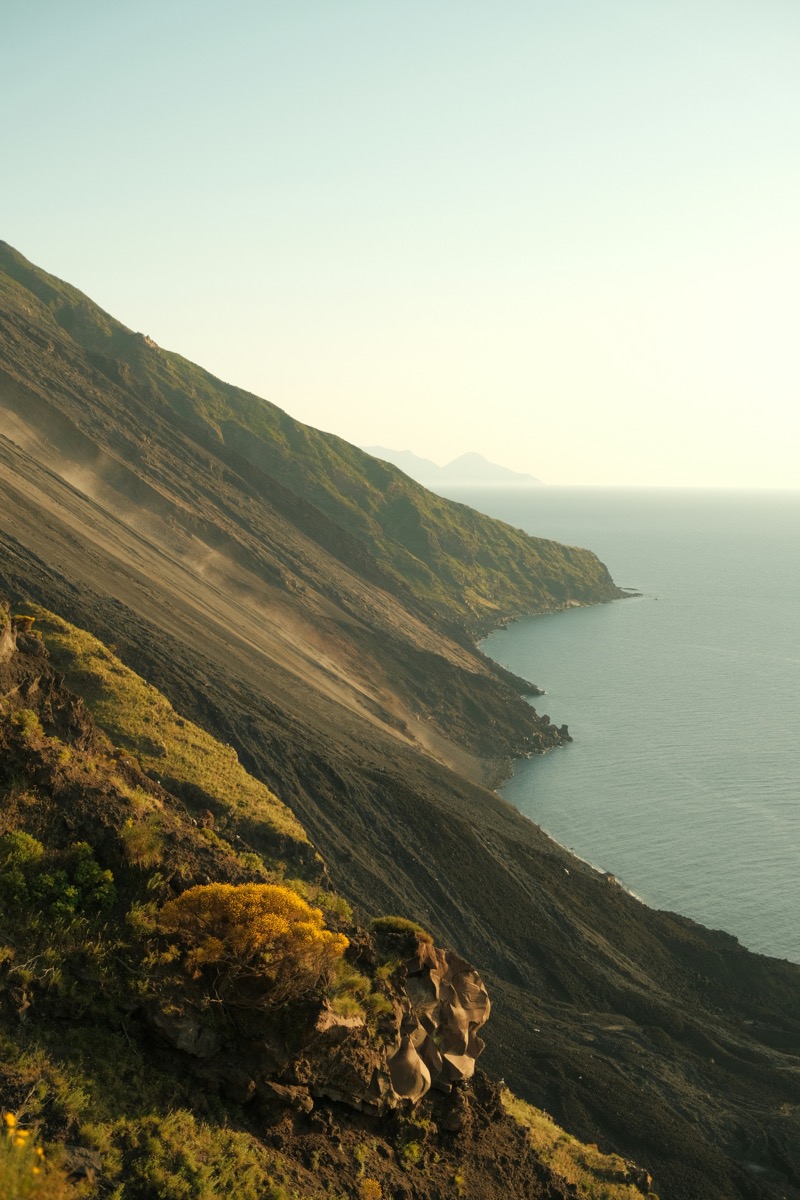
The most dramatic of the seven - an active stratovolcano rising 924 metres from the sea, with a small village (Stromboli town) at its base and almost nothing else. The permanent population is under 500. The island’s main activity is watching the volcano. Night hikes to the 400-metre observation point with a licensed guide are the most popular option (guides from approximately €30/person; full summit ascent to 920m approximately €50–80/person as of 2026 including guide). The Sciara del Fuoco - the lava flow channel on the volcano’s northwest flank - can be watched from the observation area during eruptions, which occur on average every 15–20 minutes. Boat tours from the main harbour (approximately €25–40/person as of 2026) circle the island at night to watch lava reach the sea - spectacular on a clear night.
Vulcano
Named for the Roman god of fire, Vulcano sits just south of Lipari - accessible by hydrofoil in approximately 15 minutes. The famous Fanghi di Vulcano (mud baths) - sulphurous natural pools near the main port - have been drawing visitors since the 19th century. Entry approximately €5 as of 2026; be prepared for the strong sulphur smell, which clings to clothing. A hike to the Gran Cratere (the main crater) takes approximately 1–2 hours from the port and offers views into an active but currently non-erupting caldera. Beaches include the Spiaggia Sabbie Nere (black sand) and the Spiaggia di Ponente. Water temperature near the coast can be noticeably warm due to underwater thermal activity.
Salina
The greenest and most fertile of the islands - fed by two water springs (unusually for the Aeolian archipelago) and planted with vineyards producing the sweet Malvasia delle Lipari DOC wine, and caper bushes that supply a significant share of Italy’s caper production. The village of Santa Marina Salina, Malfa (known for its views from the cliffs), and Santa Marina are the three main settlements. Salina featured prominently in the 1994 film Il Postino - the scenes supposedly set on a fictional island were filmed here. Good walking between the two volcanic peaks (Monte Fossa delle Felci, 962 metres).
Panarea
The smallest inhabited island and the most fashionable - Panarea is car-free (only authorised electric vehicles), with a clifftop village of whitewashed houses and a summer season that attracts an upscale crowd. There are significant prehistoric ruins at Capo Milazzese (Bronze Age village, free to visit, spectacular coastal setting). Panarea is popular as a day trip from Lipari and gets crowded in August; visiting in June or early September is preferable.
Filicudi and Alicudi
The two most remote western islands. Filicudi has the remains of a Bronze Age village at Capo Graziano and excellent diving; Alicudi (car-free, no roads, only mule tracks) has a permanent winter population of around 100 and is for visitors who genuinely want complete isolation. Accommodation on both is basic and limited; ferry services in winter may be daily or less.
Where to Stay in the Aeolian Islands
Most visitors base themselves on Lipari, the largest island with the widest choice of accommodation at every price point, and make day trips to the outer islands. Stromboli has a handful of small hotels and guesthouses close to the village; Salina has the archipelago’s best upscale options. Panarea is exclusively mid-range to luxury in season.
Budget (from approximately €65–95/night)
Casa Mia (Lipari) is a well-run guesthouse in the centre of Lipari town, within easy walking distance of the ferry port and the Museo Archeologico Eoliano. Rooms are clean and simply furnished; the location makes it ideal for early hydrofoil departures to the outer islands. From approximately €65/night as of 2026.
Hotel Carasco (Lipari) sits on the Canneto road just outside the town centre, with a pool and sea views over the pumice coastline. It is larger than most island properties and more reliably priced outside peak season. A good base for island-hopping from Lipari. From approximately €90/night as of 2026.
Guesthouses in Lipari town (multiple operators) are available through standard booking platforms, particularly around Via Garibaldi and the upper town. Simple rooms in family-run B&Bs typically run from approximately €60–80/night in shoulder season; prices roughly double in August. Advance booking is essential for July and August.
Mid-range (from approximately €130–220/night)
Hotel Tritone (Lipari) is a well-established property just outside the town centre with a seawater pool, terrace dining, and direct sea views. It is one of the more reliable four-star options on the islands, with enough capacity to hold bookings in peak season without the price spikes common on smaller properties. From approximately €150/night as of 2026.
Hotel Raya (Panarea) is the signature hotel on Panarea, a whitewashed terrace complex climbing the hillside above the village with views across the sea to Stromboli. It runs at mid-range prices in early and late season but peaks significantly in August when Panarea draws a fashionable summer crowd. From approximately €200/night as of 2026.
La Sciara Residence (Stromboli) is a small resort-style property on the approach to Stromboli village, with bungalows set in gardens and a thermal pool heated by the island’s volcanic activity. It is the most comfortable option on Stromboli, with a restaurant and spa. From approximately €180/night as of 2026.
Luxury (from approximately €280/night)
Hotel Signum (Salina, Malfa) is the best-regarded property in the Aeolian archipelago: a Relais & Châteaux member set in the village of Malfa on Salina’s northern cliff edge. The infinity pool appears to meet the sea below; the restaurant uses local capers, Malvasia wine, and island produce; the spa is among the better ones in the region. From approximately €280/night as of 2026, rising significantly in July and August.
Strombolicchio Resort (Stromboli) is a small clifftop property offering suite-level rooms with views directly over the Sciara del Fuoco lava channel. Given Stromboli’s limited accommodation, booking well ahead is essential for summer stays. From approximately €300/night as of 2026.
Search hotels in the Aeolian Islands on Booking.com
Where to eat
E Pulera (Lipari) - A long-established Lipari restaurant known for traditional Aeolian dishes: linguine con le sarde, caponata with local capers, swordfish in a sweet-sour agrodolce sauce. Open evenings only. Main courses approximately €20–35 as of 2026.
Punta Lena (Stromboli) - Situated at the water’s edge on Stromboli’s Ficogrande beach, with good fish and pasta and an unobstructed view of the sea and the glowing volcano at night. Mains approximately €18–30 as of 2026.
Porto Bello (Lipari, Santa Marina Salina) - The best-known restaurant on Salina, offering Malvasia-glazed dishes and local caper-heavy Aeolian cooking in a pretty garden setting. Expect approximately €25–40 per main as of 2026. Book ahead in summer.
Practical notes
The Aeolian Islands are significantly busier in July and August than any other time - book accommodation at least 2–3 months in advance for peak season. Hotels outside of Lipari fill quickly and have limited capacity.
Cash remains important on the smaller islands (Stromboli, Alicudi, Filicudi have limited or no ATMs). Lipari has ATMs and card acceptance at most restaurants; on Stromboli, carry enough cash for your stay.
Sunscreen and light wind protection are important - the islands are exposed, and reflected light off volcanic rock intensifies UV exposure. Proper walking shoes are essential for volcano hikes and uneven lava terrain.
Mosquitoes can be significant in summer evenings on most islands. Bring repellent.
The archipelago can be combined with a Sicily trip (fly into Catania or Palermo, take the train to Milazzo) or visited as a standalone week-long island-hopping itinerary. A three-island trip covering Lipari, Stromboli, and Salina is the most popular combination for a five- to seven-night stay.
Upcoming Events in Aeolian Islands
La Befana - Feast of the Epiphany 2027
La Befana 2027, January 6. Italy's Epiphany gift-giving day: children receive sweets or coal from the Befana witch, then decorations come down.
Book an experience
Top experiences in Aeolian Islands
Explore the best tours and activities in Aeolian Islands, with instant confirmation and free cancellation on most bookings.