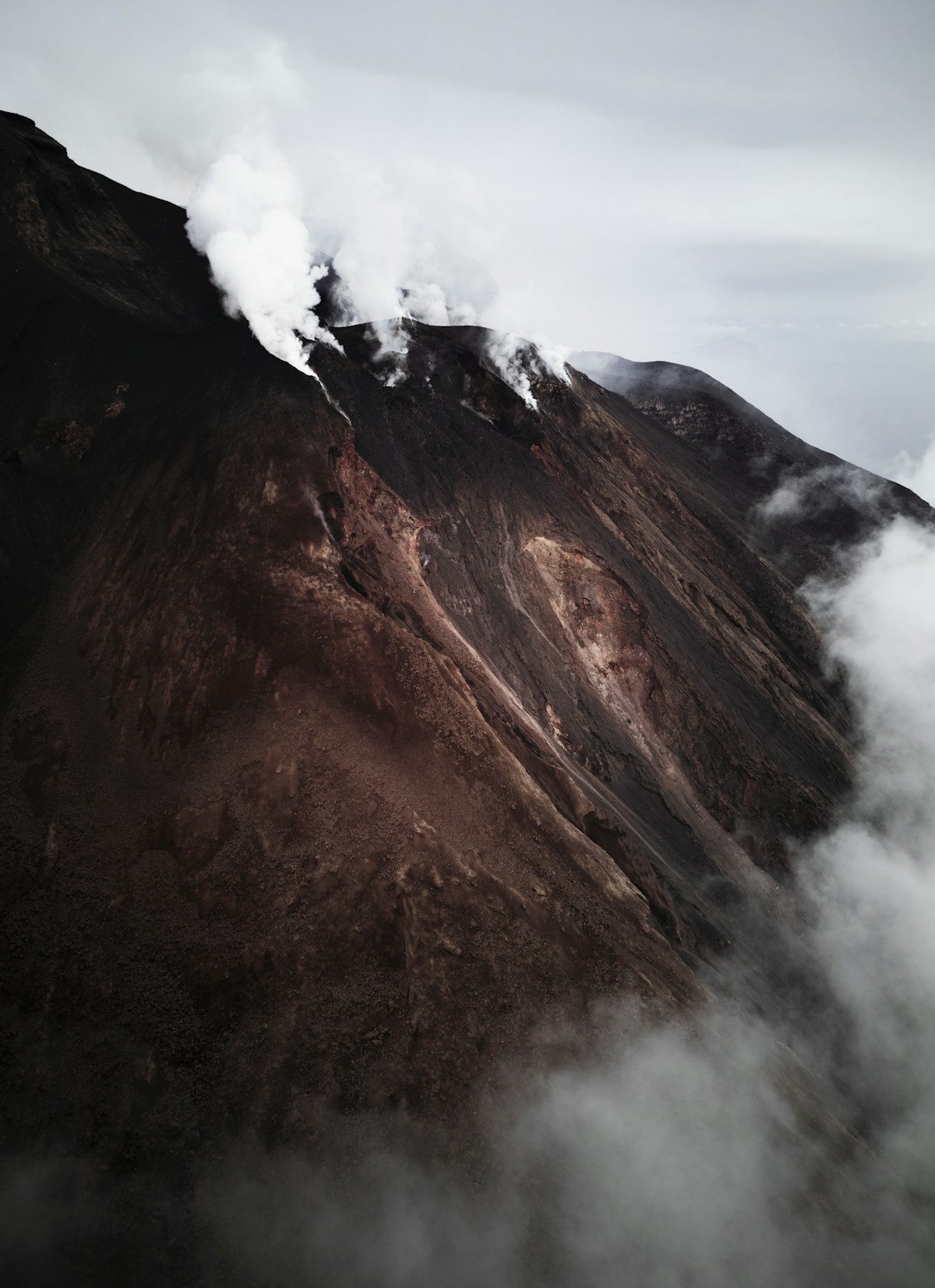
Stromboli is one of only three volcanoes in the world that has been erupting almost continuously for 2,000 years. The island - a near-perfect volcanic cone rising 924 metres from the Tyrrhenian Sea - erupts every 15–20 minutes on average, throwing incandescent material from its summit craters. Jules Verne called it the “Lighthouse of the Mediterranean.”
Visiting requires planning. Access to the summit is regulated, guide use is mandatory above a defined elevation, and the experience itself - a night-time ascent of an active volcano with lava visible in the darkness - is one of the most singular things available in Italy.
The Summit Trek
The standard guided summit hike goes to approximately 920m - just below the active crater rim at 924m - and positions hikers at the Belvedere crater viewpoint to watch eruptions from an authorised safe distance.
Departure time: All licensed guides run afternoon departures, typically between 4pm and 6pm. This times the ascent for sunset at higher elevations and positions hikers at the viewpoint during the first 1–2 hours of darkness, when lava glow is most dramatic. Descent begins around 10–11pm, returning to the village around midnight.
Duration: 3–4 hours ascent, 1.5–2 hours at the viewpoint, 2–3 hours descent. Total outing approximately 6–8 hours.
Difficulty: Moderate to strenuous. The terrain is loose volcanic scree on the upper slopes - fine black ash and larger lava fragments that shift underfoot. The gradient is consistent throughout with no technical climbing sections, but the footing requires attention. Total elevation gain approximately 920m from sea level.
What to bring:
- Sturdy closed-toe shoes with grip (trainers are borderline; hiking boots strongly preferred)
- Warm jacket and windproof layer (temperature at the summit can be 12–15°C cooler than the village)
- Long trousers (cinder and ash irritate exposed skin)
- Headtorch (provided by many operators but bring your own as backup)
- 2 litres of water minimum
- Small backpack for clothing layers
What to leave behind: Large bags, luggage, or anything you wouldn’t carry for 3 hours uphill. There is no luggage storage at the crater.
Licensed Operators
Magmatrek (Via Vittorio Emanuele 5, Stromboli; magmatrek.it) is the largest and most established guide service on the island, operating since 1995. They run daily departures in groups of up to 20, with individual guides ensuring groups stay within regulated zones. Prices approximately €35–45 per person as of 2026 for the standard summit trek.
Totem Trekking (Via Vittorio Emanuele, Stromboli; totemtrekking.com) is a smaller operation with a reputation for attentive guiding and smaller group sizes. Similar pricing to Magmatrek.
Stromboli Adventures (stromboliadventures.it) offers the summit trek plus optional boat transfer packages from Lipari, making it practical to do the hike as a full-day excursion from another island without staying overnight on Stromboli.
For advance-bookable guided treks, boat tours, and Stromboli packages departing from Lipari or Sicily, browse Aeolian Islands tours on GetYourGuide.
Booking in advance is essential for July and August when guide capacity fills quickly. April–June and September–October permit more flexible booking.
The Sciara del Fuoco Viewpoint (400m)
If the full summit trek is too demanding - or if you’re with children, or want a lower-commitment introduction - the Sciara del Fuoco viewpoint at approximately 290–400m elevation is accessible without a guide.
The Sciara del Fuoco (River of Fire) is the northwest flank of the volcano where historic lava flows have carved a dark scar down to the sea. The viewpoint looks directly across this channel from above. Eruptions send material down this slope - the glowing rocks tumbling into the sea below are visible from the viewpoint, particularly after dark.
Access: Follow Via Vittorio Emanuele from the ferry dock through the village, then continue uphill on the clearly marked path. The viewpoint is approximately 1 hour 30 minutes of walking from the village. This section of the path is below the 290m limit and requires no guide.
What you see: From the viewpoint you see the Sciara del Fuoco channel and, during eruptions, the flow of material down the flank toward the sea. You do not see into the active crater itself - that view is only available from the 920m summit.
Best timing: After sunset. The glow from lava rocks is invisible in daylight - arrive at the viewpoint with enough time to be in position as the light fails (approximately 8–9pm in summer, 5–6pm in winter).
Evening Boat Tours (Sciara del Fuoco from the Sea)
The most dramatically beautiful Stromboli experience doesn’t involve hiking at all. Evening boat tours position vessels off the Sciara del Fuoco at sea level, watching eruptions from below as lava rocks tumble and steam explodes from the water where hot rock meets sea.
From Stromboli village: Local fishermen and licensed operators run evening boat excursions departing approximately 9–10pm. The tour circles the volcanic flank, parks offshore from the Sciara del Fuoco, and waits for eruptions - typically visible every 15–30 minutes on an active night. Duration approximately 2–2.5 hours. Cost approximately €25–35 per person as of 2026.
From Lipari: Several Lipari-based operators run day and evening excursions to Stromboli that include the boat tour as the main attraction, avoiding the need to stay overnight on Stromboli. These typically depart Lipari in the afternoon, arrive at Stromboli for a walk around the village and dinner, then do the boat tour, returning to Lipari late at night. Cost approximately €60–90 per person all-in as of 2026.
Combined day: It is possible, with careful timing, to do both the boat tour and the summit hike on the same day if you stay overnight on Stromboli - summit hike one afternoon, boat tour the following evening. This is the most complete way to experience the volcano.
Staying on Stromboli
Stromboli has a small number of guesthouses and hotels in the village - predominantly small family-run places. Expect very simple accommodation at higher-than-comparable prices due to the island’s remoteness and logistics. Rooms with air conditioning are limited; the village is generally cooler than the Italian mainland in summer due to constant sea wind.
La Sirenetta Park Hotel is the most established accommodation on the island, with sea-facing rooms and a restaurant. Doubles from approximately €150–230/night in peak season as of 2026.
Booking months ahead is recommended for July and August when the island’s small accommodation inventory fills.
Practical Details
Eruption frequency: Stromboli erupts on average every 10–20 minutes, though this varies. Some nights produce spectacular eruptions every few minutes; others are quieter. There is no way to predict activity in advance - this is a live volcanic system, not a timed performance.
Safety: The authorised zones are set by civil protection authorities in cooperation with the Istituto Nazionale di Geofisica e Vulcanologia (INGV), which monitors Stromboli continuously. If activity increases beyond normal parameters, access to the summit is suspended. This happens several times per year, sometimes with short notice. If your trek is cancelled for safety reasons, licensed operators typically offer rescheduling or refunds.
Best months: April–June and September–October for manageable hiking temperatures and lower crowds. July and August are busiest and hottest. Winter visits (November–March) are possible with fewer crowds, though weather can affect boat access to the island.