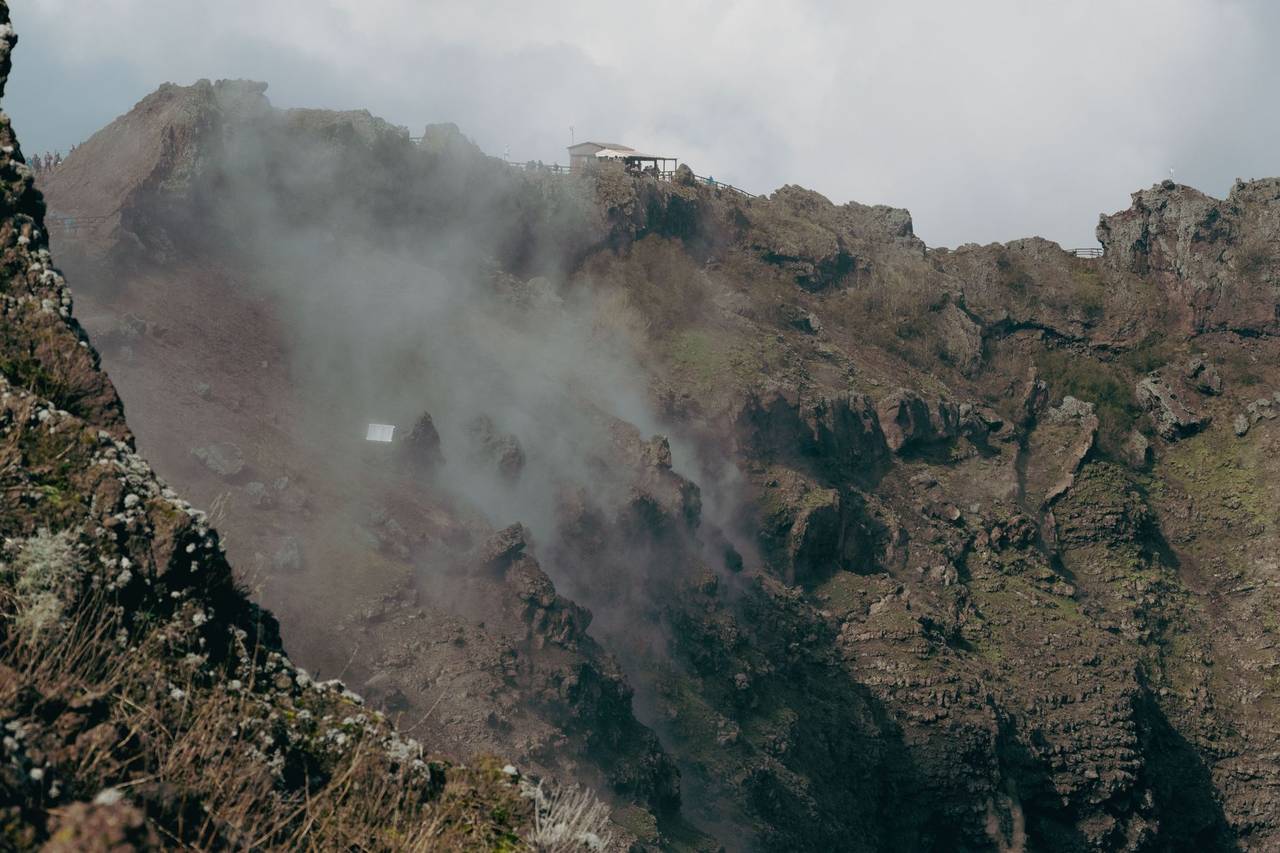
Mount Vesuvius is the only active volcano on the European mainland, and standing at its crater rim — looking down into a sulphur-venting caldera above a Bay of Naples panorama — is one of the more striking things you can do on a visit to Campania. The hike itself is short and accessible, which makes Vesuvius a realistic half-day trip from Naples or a natural pairing with Pompeii tours before lunch.
Top Tours at a Glance
| Tour | Duration | Price (from) | Group Size | Highlights |
|---|---|---|---|---|
| Vesuvius guided hike from Naples | 4 hrs | from €35 | Up to 15 | Transport, guide, crater entry included |
| Vesuvius + Pompeii combo day tour | 8 hrs | from €75 | Up to 20 | Both UNESCO sites, guide, hotel pick-up |
| Vesuvius + Herculaneum half-day tour | 5 hrs | from €55 | Up to 15 | Two volcanic sites, less crowded than Pompeii |
| Private Vesuvius tour from Naples | 4 hrs | from €120 | Private | Flexible schedule, expert volcanologist guide |
Browse all Naples tours → GetYourGuide
Getting to Vesuvius from Naples
Circumvesuviana Train
The most practical route from Naples begins at Naples Porta Nolana or Napoli Garibaldi station with the Circumvesuviana commuter rail line. Take the Sorrento-bound service and alight at Ercolano Scavi — the journey takes approximately 20 minutes and tickets cost approximately EUR 2.60 each way as of 2026. The Circumvesuviana runs frequently throughout the day, typically every 20 to 30 minutes.
Ercolano Scavi is also the stop for the Herculaneum ruins (another UNESCO site and a less-crowded alternative to Pompeii), so combining both in a single day is very feasible if you start early.
Shuttle Bus to the Crater
From Ercolano Scavi station, follow the signs uphill for around five minutes to the shuttle bus stop on Via Vesuvio. Several operators run shuttles up the lower flanks of the volcano to a car park at approximately 1,000 m elevation — the starting point for the crater trail. Return shuttle fares vary by operator but typically run approximately EUR 10 per person as of 2026. The journey takes around 20 minutes and winds through scrubby volcanic terrain with increasingly wide views back over the bay.
Alternatively, private taxis from the station offer door-to-door service to the car park, usually costing approximately EUR 30–40 per car each way. If you are travelling in a group of four, this can be competitive with four shuttle tickets and saves waiting around.
The Crater Trail
Trail Overview
From the shuttle drop-off at the car park, a signed paved path climbs in broad switchbacks to the crater rim. The elevation gain is approximately 200 m over a distance of about 860 m — steep enough to feel like a real ascent but manageable for anyone with reasonable fitness. Walking poles are not necessary but can be useful on the loose volcanic scree patches near the top.
The path surface is paved or compacted gravel for most of its length. There are no technical sections, no scrambling, and no exposure to drops. The main challenge is the altitude — the air is thinner than at sea level, and if you are visiting in summer, the sun is strong with limited shade on the upper section. Bring water.
Duration
Most visitors reach the rim in 30 to 45 minutes at a normal pace. Fitter walkers do it in 20. The path is busy in peak season and bottlenecks can form near the ticket booth, so factor in queue time if visiting in July or August.
What You See at the Top
The crater is approximately 450 m across and 300 m deep. You walk a section of the rim along a metal-railed path with views directly into the caldera below — pale grey volcanic rock, fissures venting pale sulphurous steam, and patches of yellow mineral deposits around the fumaroles. The smell of sulphur is noticeable but not overwhelming.
Turning around, the panorama over the Bay of Naples is exceptional on a clear day: the city spread across the coast below, the islands of Capri and Ischia offshore, and the curve of the Sorrento Peninsula to the south. This is the view that appears in 18th-century Grand Tour paintings, and it is still as dramatic as the canvases suggest.
At the rim there are usually a few vendors selling water and snacks, and a small café near the ticket booth at the top of the shuttle route.
Practical Information
Entry Fee and Tickets
Crater access costs approximately EUR 10 per person as of 2026. This is paid at the ticket kiosk at the upper end of the shuttle route, just before the trail begins. There is no online booking required for independent walkers — you simply queue at the booth. Guided tours from Naples typically include the entry fee in the overall price.
Opening Hours
- November to March: approximately 09:00–15:00 (last entry 15:00)
- April to October: approximately 09:00–18:00 (last entry 17:00)
Hours are subject to seasonal adjustment and can change due to weather or volcanic activity monitoring — check the Vesuvio Observatory website or your accommodation for current times before visiting.
The site closes in adverse weather, including high winds, heavy rain, and occasional closures for safety assessments. These are relatively rare but worth checking in January and February.
What to Wear
The summit is significantly cooler than Naples in all seasons — bring a layer even in July. The path is uneven in places, so trainers or walking shoes are more comfortable than sandals. In summer, sun protection is essential: there is minimal shade above the car park.
Guided Tours from Naples
If you prefer company, a guide, and less logistical planning, there are numerous half-day tours operating from Naples and Sorrento that cover Vesuvius. Most depart from central Naples in the morning, include shuttle transport up the volcano, an English-speaking guide on the crater trail, and return transport to the city by midday.
Book guided Vesuvius tours from Naples — these typically run EUR 35–60 per person and include entry fees. Combination tours pairing Vesuvius with Pompeii or Herculaneum are also available and represent reasonable value if you want to cover both sites in a single day without managing multiple transport connections.
Combining Vesuvius with Pompeii or Herculaneum
Vesuvius and its buried cities form a natural circuit. All three sites are accessible from Ercolano Scavi or the nearby Torre Annunziata station on the Circumvesuviana, and a well-organised day can take in two of them.
- Vesuvius + Herculaneum: Herculaneum ruins are a 10-minute walk from Ercolano Scavi station. Visit in the morning when it is cooler and the crowds thinner, then take the shuttle up Vesuvius in the early afternoon. Allow 2 to 3 hours for Herculaneum and 2 to 2.5 hours for Vesuvius including transit.
- Vesuvius + Pompeii: Pompeii is considerably larger than Herculaneum and requires more time — 3 to 4 hours minimum. Combining with Vesuvius in a single day is feasible but involves an early start and efficient scheduling.
Best Time to Visit
Spring (April to June) and autumn (September to October) are the most comfortable months for the hike: mild temperatures, clearer skies than summer, and lighter visitor numbers. September in particular often has excellent visibility for the bay panorama.
July and August are busy and hot — the upper path is exposed and the shuttle queues are longer. If you visit in summer, go early (first shuttles usually run from around 08:30) and bring substantially more water than you think you need.
Winter visits are quieter and occasionally atmospheric, with lower cloud adding drama to the crater, but hours are reduced and the site can close with little notice if weather conditions deteriorate.
Getting Back to Naples
Shuttles return from the car park on a continuous service throughout the operating day. Once back at Ercolano Scavi, Circumvesuviana trains run regularly to Naples — check the timetable board at the station as frequencies vary through the day. The last train back to Naples typically departs Ercolano in the early evening, but confirm this before you go up.