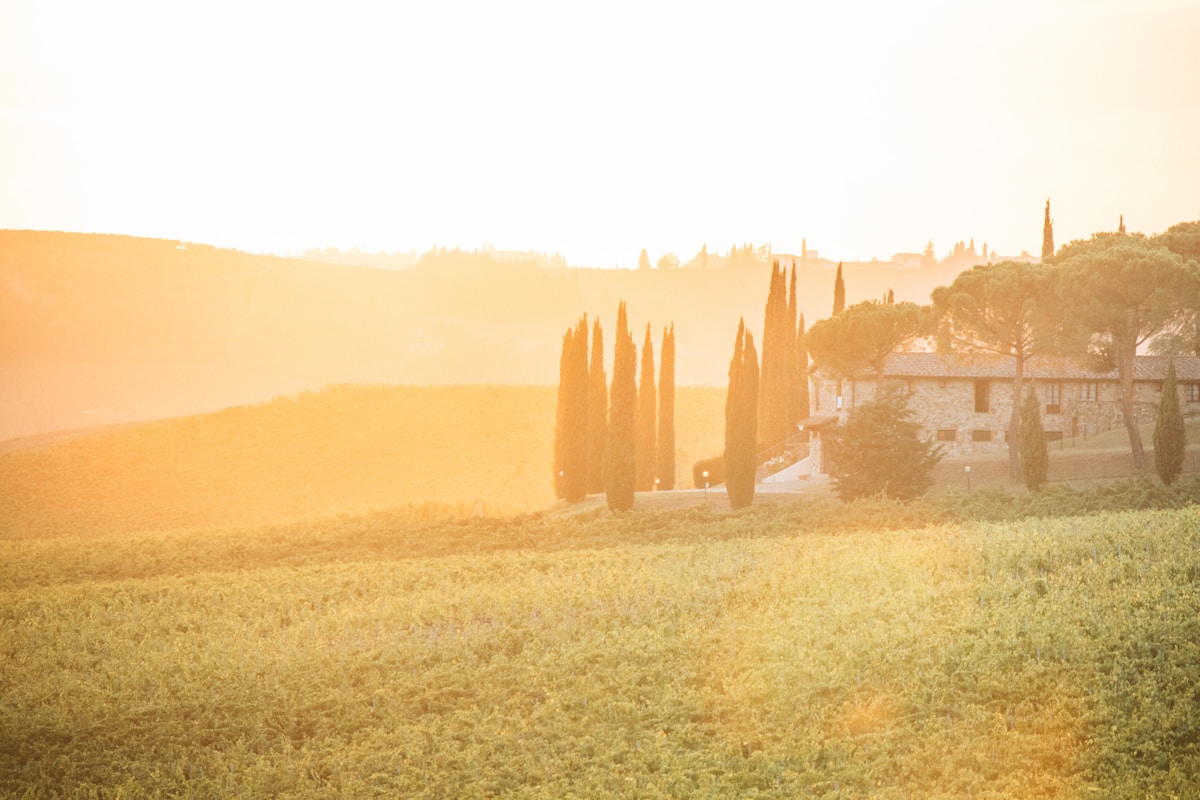
Tuscany is Italy in concentrated form: the art of Florence, the medieval pride of Siena, the hill towns of San Gimignano and Montepulciano, the cypress-lined roads and golden light of the Val d’Orcia. This 5-day itinerary is structured around Florence (2 days) and the Tuscan countryside (3 days with a rental car). It works best from April to June or September to October - the light is best, the heat manageable, and the harvest season adds context.
Getting there and around
Fly into Florence (FLR - Peretola, 15 minutes from the centre) or Pisa (PSA, 1 hour by train to Florence - the Leaning Tower and Campo dei Miracoli make a worthwhile half-day stop en route). Pick up a rental car in Florence after 2 days in the city - you don’t need a car within Florence itself, and cars are a problem there.
Day 1–2: Florence
Day 1 - The Uffizi and the Cathedral: The Uffizi is essential but requires booking (uffizi.it) - don’t queue. The Botticelli rooms alone are worth the visit. Allow 2–3 hours. Afternoon: the Cathedral exterior (always free), Giotto’s Campanile, the Baptistery doors (Ghiberti’s Gates of Paradise). The Florence Card (€85) gives priority entry to multiple museums.
Walk the Oltrarno in the evening: the Santo Spirito neighbourhood is the most Florentine part of the city - local bars, trattorias, and no tourist menus.
Day 2 - Michelangelo and the hills: Galleria dell’Accademia (pre-book) for the David. Allow 1 hour. The Piazzale Michelangelo for panoramic views of the city is 20 minutes on foot from the Oltrarno via the rose garden. The Medici Chapels and the Bargello (Donatello’s sculptures) complete the Florentine art picture. Pick up your rental car in the evening or early morning of Day 3.
Day 3: Siena
1.5 hours south of Florence by motorway (SS2/A1). Siena is the best-preserved medieval city in Italy.
The Piazza del Campo - the shell-shaped central square, built between 1297 and 1349, is one of the finest public spaces in Europe. The Palazzo Pubblico on the lower curve houses the Museo Civico with Simone Martini’s Maesta (1315) - a landmark of Italian medieval painting. Climb the Torre del Mangia (€10) for views across the Campo and the roofscape.
The Duomo - among the most spectacular Gothic cathedrals in Italy. The inlaid marble floor (56 panels, 1369–1547) is covered for protection for most of the year; it is uncovered in August–September. The Piccolomini Library inside has Pinturicchio frescoes of extraordinary quality.
Around the Campo: The Contrade (city districts) each have their own churches and museums related to the Palio horse race. The Palio itself runs on 2 July and 16 August - if you’re visiting then, book accommodation in Siena a year ahead and expect extraordinary crowds.
Stay in Siena overnight - the city empties of day-trippers after 6pm and becomes a very different place.
Day 4: San Gimignano, Volterra, and the Chianti
Morning - San Gimignano (45 minutes from Siena): The medieval “Manhattan” - 14 of its original 72 towers survive, built by competing merchant families in the 12th–13th centuries as wealth displays. The Piazza della Cisterna is genuinely lovely. The Vernaccia di San Gimignano white wine (DOCG) is worth trying at any of the enotecas. Busy in summer; go early.
Afternoon option 1 - Volterra (40 minutes from San Gimignano): An Etruscan city on a plateau - the Guarnacci Museum has the best collection of Etruscan urns in Italy (outside the Etruscan section of the Vatican). The Roman theatre visible from the city walls. Alabaster workshops throughout the town.
Afternoon option 2 - Chianti road: Drive the SS222 through the Chianti Classico wine zone between Siena and Florence. Greve in Chianti has a good wine shop and enoteca. The Badia a Passignano abbey (11th century, surrounded by vines) is worth a stop. Wine tasting at estates along the route - Antinori, Fontodi, and many smaller producers.
Day 5: Val d’Orcia, Pienza, and Montepulciano
The Val d’Orcia is a UNESCO World Heritage landscape - the rolling hills, cypress lines, and honey-coloured hill towns that appear on every Tuscany photograph. The drive from Siena takes 1 hour.
Pienza (40 minutes from Siena): A Renaissance planned town, redesigned in 1459 on the instructions of Pope Pius II. The Cathedral and the Palazzo Piccolomini face each other across a perfectly proportioned piazza. The views south over the Val d’Orcia from the garden terrace are the best in the area. Pienza is the capital of pecorino di Pienza - sheep’s milk cheese sold from every shop; buy some.
Monticchiello: A tiny medieval hamlet near Pienza with walls and a tower. Less visited than any of the main towns.
Montepulciano (30 minutes from Pienza): A hilltop town built of local travertine stone. The Piazza Grande at the summit with the Renaissance Palazzo Comunale. The Vino Nobile di Montepulciano is one of Italy’s great red wines - enotecas are everywhere and tasting before buying is standard practice. The town descends in a long straight street (Via di Gracciano nel Corso) from the gate at the bottom to the Piazza Grande at the top; walk up, stop for everything.
On the way back: Bag - the southern Val d’Orcia lookout point at Castiglione d’Orcia. The view north from the road near San Quirico d’Orcia with the curved cypress road is the classic Tuscan image.
Practical notes
Car hire: Book a car hire for Tuscany - choose a small automatic (Italian roads are narrow, and many people are not used to manual cars). Fuel is expensive (€1.80–2.00/litre). Motorway tolls apply on the Autostrade.
ZTL zones: Siena’s historic centre has ZTL restrictions. Park outside the walls at the designated car parks (Santa Caterina, Stadio) and walk in. San Gimignano and Montepulciano: park at the bottom of town near the gates.
Accommodation: Florence (search hotels) for the first two nights; Siena (search hotels) for nights 3–4 (essential to stay overnight); a farmhouse or agriturismo in the Val d’Orcia for night 5 is the best way to experience the landscape at its most atmospheric (Podere Il Casale near Pienza, Adler Thermae near Bagno Vignoni, and Borgo Scopeto are well-regarded options at various price points).
For Florence hotel options across all price tiers: Florence hotels guide. For Siena: Siena hotels. The Uffizi and Duomo require advance booking - our Uffizi tickets guide and Florence Duomo tickets guide cover booking windows. For the food this route passes through: Tuscan food guide. Arriving without pre-booked tickets? Our last-minute tours page lists Florence and Tuscany guided tours with confirmed availability in the next few days.
Entry Fees and Opening Hours
Uffizi Gallery, Florence: approximately €25 (+ €4 booking fee as of 2026). Open Tuesday–Sunday 8:15am–6:30pm. Book at uffizi.it — sold out weeks ahead in summer.
Galleria dell’Accademia, Florence (Michelangelo’s David): approximately €20 (+ €4 booking fee). Open Tuesday–Sunday 8:15am–6:50pm. Book at gallerieaccademia.it.
Florence Cathedral complex (Brunelleschi’s Dome, Campanile, Baptistery, Museum): combined ticket approximately €30 as of 2026. The Dome climb (463 steps) requires a timed entry — book at ilgrandemuseodelduomo.it. Cathedral nave: free.
Palazzo Pubblico and Torre del Mangia, Siena: Torre del Mangia climb approximately €10. Museum Civico (Simone Martini frescoes): approximately €10. Open daily 10am–7pm approximately.
Siena Duomo: Cathedral entry approximately €4. Opera della Metropolitana pass (includes cathedral, the inlaid marble floor when uncovered, and the Piccolomini Library): approximately €15. The floor is uncovered August–September only.
San Gimignano — Torre Grossa: approximately €8. The tallest surviving tower and the best views from the Piazza della Cisterna. Open daily 10am–7:30pm in summer.
Etruscan Museum, Volterra (Museo Guarnacci): approximately €8, or €16 combined ticket with the Pinacoteca and the Palazzo dei Priori. Open daily 9am–7pm.
Transport Costs
This itinerary is designed for driving from Day 3 onward, but the main Florence–Siena link has a reliable non-car option.
Florence (FLR/Peretola) to city centre: Tram T2 from the airport to the Santa Maria Novella railway station — approximately €1.50, 22 minutes. Runs frequently. Taxi: approximately €20–25 flat rate.
Florence to Siena by bus: The most practical non-car option. SENA (Siena–Firenze Express) and FlixBus run direct services from Florence Santa Maria Novella bus station: approximately €7–14, 1.5 hours via the Autostrada or 2 hours via the scenic SR2 (Cassia). Book at flixbus.com or at the bus station.
Florence to Siena by train: Requires a change at Empoli — approximately 1.5–2 hours, approximately €9–13 on Trenitalia. Slower than the bus. Train not recommended for this route.
Florence to Pisa (for those flying in via PSA): Direct Trenitalia train from Florence Santa Maria Novella: approximately €9–13, 50–60 minutes. Runs frequently — book via Omio.
Siena to Montepulciano by bus: TRA-IN regional bus (route 112): approximately €5–7, 1.5 hours. Check timetable at trainspa.it. Infrequent on weekends.
Siena to Pienza by bus: Approximately 1 hour by TRA-IN. Infrequent service — driving is significantly easier for this stretch.
Car hire note: Renting from Florence for 3 days (Days 3–5) rather than 5 days typically costs approximately €50–90 for a small car. Add approximately €80–100 in fuel for the full countryside circuit. Compare car hire prices here.
Budget Guide (per person per day, as of 2026)
Budget (hostel or 2-star hotel, market lunches, free attractions): approximately €90–130/day
- Stay: Soprarno Suites in the Oltrarno, Florence (doubles from approximately €90) or B&B options in Siena from approximately €60/night
- Eat: Mercato Centrale Florence for lunch (€8–12), aperitivo to stand in for dinner, one sit-down trattoria (€20–30)
- Activities: Stick to the Cathedral exterior, Piazzale Michelangelo (free), and budget one major museum entry
Mid-range (3-star boutique hotel, restaurant lunches and dinners): approximately €160–240/day
- Stay: Hotel Davanzati in Florence (doubles from approximately €130, central, roof terrace); Grand Hotel Continental in Siena (doubles from approximately €160 in shoulder season); agriturismo in the Val d’Orcia (from approximately €110/night)
- Eat: Lunch €18–25, dinner with house wine €40–60
Splurge (boutique or 5-star, fine dining, private tours): approximately €350–700/day
- Stay: Portrait Firenze in Florence (suites from approximately €500); Belmond Castello di Casole near Siena (doubles from approximately €450); Adler Thermae spa resort near Bagno Vignoni in the Val d’Orcia (doubles from approximately €300 including half-board)
- Eat: Trattoria Sostanza or Buca Mario in Florence (historic restaurants, mains €30–50); wine estate dinner in the Chianti (private events from approximately €80–120 per person)
Book Your Trip
- Flights - Flights to Italy guide · Find the best fares to Italy
- Travel Insurance - Italy travel insurance guide · get covered with EKTA
- eSIM - Italy eSIM & SIM guide · buy with Airalo
- Airport Transfers - Door-to-door from Florence or Pisa airport
- Car Rental - Renting a car in Italy · Compare prices across providers
- Tours & Activities - Browse Tuscany tours on GetYourGuide