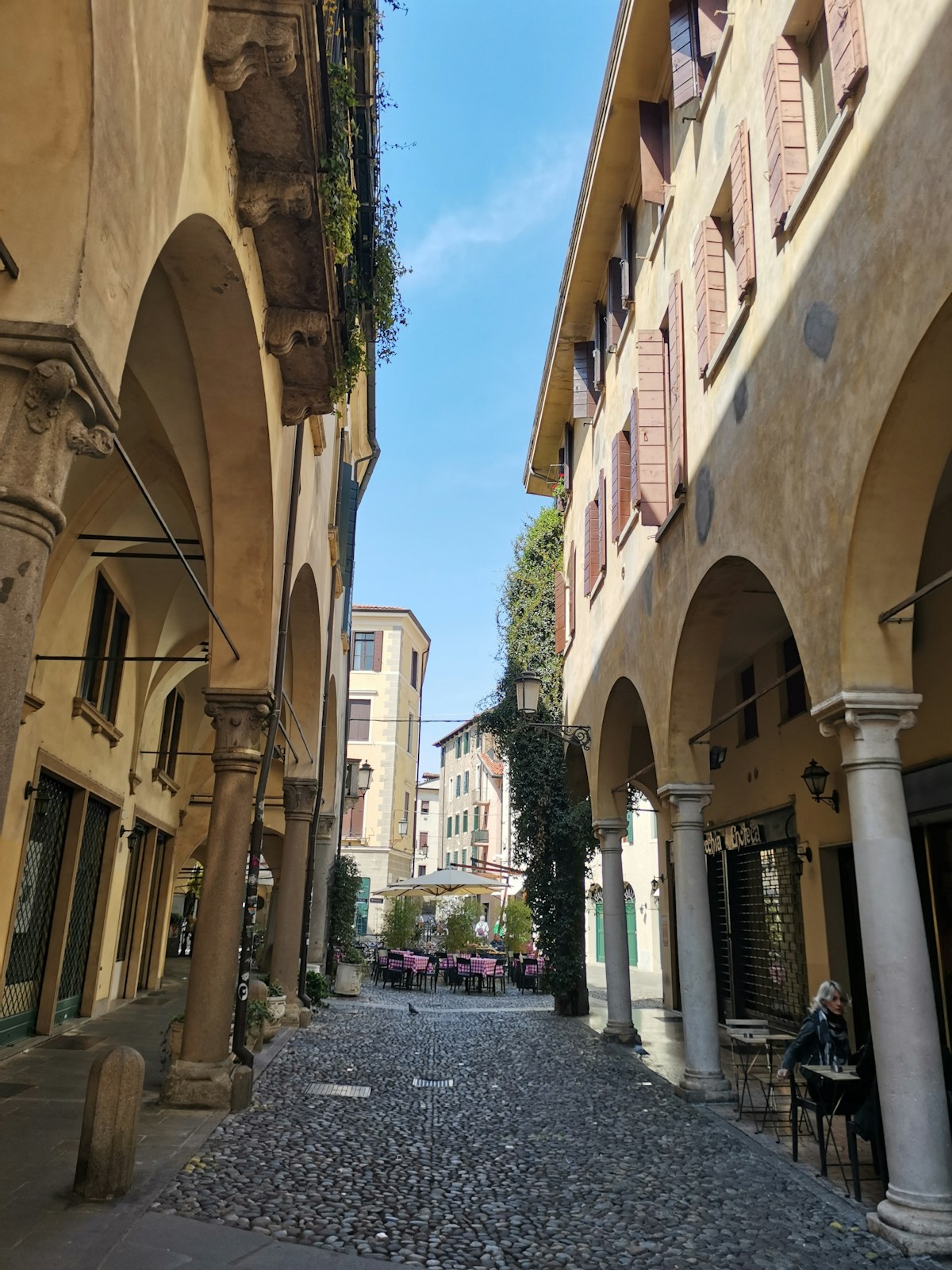
Padua (Padova) is a 45-minute train from Venice and is consistently overlooked by visitors making directly for Venice. This is a mistake. Padua contains the Scrovegni Chapel - the most important work in the history of Western art - Europe’s oldest botanical garden, Italy’s second-oldest university, and the Basilica of St Anthony, one of the great pilgrim destinations in Christendom. A day in Padua, ideally two, is among the best investments in any Veneto itinerary.
Scrovegni Chapel (Cappella degli Scrovegni)
This is why you come to Padua. Giotto di Bondone painted the interior of this small chapel between 1303 and 1305 - 38 narrative scenes depicting the Life of the Virgin and the Life of Christ, plus the Last Judgement on the entrance wall. The result is the founding document of Western art: the moment when flat, symbolic Byzantine painting became three-dimensional, emotional, and humanistic. Every subsequent development in European painting - the Renaissance, naturalism, modern figuration - traces back to this room.
Visits are timed, maximum 25 people, 15 minutes inside (with a 15-minute acclimatisation chamber to equalise humidity). Book well in advance at cappelladegliscrovegni.it - visits sell out days or weeks ahead. €14 entry. Guided tours of Padua that include Scrovegni entry handle the booking process and provide context that transforms the 15 minutes inside the chapel.
The Eremitani Museum adjacent holds models of the original Giotto panel layout and a collection of Paduan and Venetian art.
Top Tours at a Glance
| Tour | Duration | Price (from) | Group Size | Highlights |
|---|---|---|---|---|
| Padua walking tour with Scrovegni Chapel | 3 hrs | from €40 | Up to 15 | Scrovegni Chapel entry, Basilica di Sant’Antonio, Prato |
| Padua food tour — markets and trattorias | 2.5 hrs | from €55 | Up to 12 | Piazza delle Erbe market, bigoli, Veneto wine |
| Padua + Brenta Riviera villa tour | 5 hrs | from €65 | Up to 15 | Palladian villas, Burchiello boat, Padua |
| Day trip to Padua from Venice | 4 hrs | from €45 | Up to 20 | Scrovegni Chapel, Basilica, train from Venice |
Browse all Padua tours → GetYourGuide
Basilica of Sant’Antonio
One of the most important pilgrimage churches in the Catholic world. St Anthony of Padua (1195–1231), a Franciscan friar from Lisbon, died in Padua and was canonised within a year of his death. The basilica (begun 1232) is a mix of Gothic and Byzantine styles, with eight domes and twin minarets. The tomb of St Anthony is in the Treasury Chapel, covered with ex-votos (votive offerings) from pilgrims who claim miracles. The bronze reliefs on the high altar are by Donatello (1448–1453) - among his greatest work.
The Piazza del Santo outside has Donatello’s Gattamelata (1453) - the first large-scale equestrian statue cast in bronze since antiquity.
The University (Palazzo del Bò)
The University of Padua was founded in 1222 - making it the second oldest in the Western world after Bologna (1088), and the oldest still continuously operating in its original buildings. The Palazzo del Bò on Via VIII Febbraio is the historic core. Guided tours take in:
- The anatomical theatre (1594) - the first permanent anatomical theatre in the world, a wooden oval where dissections were conducted in secret (the Church prohibited public dissection)
- The old court where Galileo Galilei taught (1592–1610)
- The desk of Elena Lucrezia Cornaro Piscopia (1646–1684), the first woman to receive a university degree anywhere in the world (Padua, 1678)
Prato della Valle
The largest piazza in Italy - an elliptical island surrounded by a moat, with 78 statues of historical figures. Built in 1775 on the site of a Roman theatre. A pleasant space for walking; Saturday market. Much bigger than it looks on maps.
Botanical Garden (Orto Botanico)
Founded in 1545 by the University of Padua - the oldest university botanical garden in the world, still functioning in its original layout. UNESCO World Heritage Site. The original circular structure is surrounded by the more recent planting areas. Goethe visited in 1786 and studied a palm still living in the garden. €10 entry.
Day trips from Padua
Venice (45 minutes by train) - the obvious option.
Brenta Riviera (by hire car or riverboat) - the series of Palladian villas along the Brenta river between Padua and Venice. The Barchessa Valmarana and the Villa Pisani (with extraordinary hedge maze) are the highlights. A historical boat trip (Il Burchiello) runs the route.
Vicenza (30 minutes by train) - the city of Andrea Palladio, with the Palazzo della Ragione (the Basilica Palladiana), the Teatro Olimpico (the oldest surviving Renaissance theatre), and Villa Capra “La Rotonda” on the hill above the city.
Back to the full Padua travel guide for the Scrovegni Chapel booking, St Anthony’s Basilica, and transport from Venice. For Padua food - bigoli pasta, risotto, and Veneto wines - see the Padua food guide. For day trips from Padua to Venice, Verona, and the Euganean Hills, see day trips from Padua. Padua is a common day trip from Venice - our Venice day trips guide covers the Scrovegni booking and train logistics. For accommodation, see best hotels in Padua. For the northern Italy circuit, our northern Italy itinerary includes Padua.
Where to stay in Padua: Find hotels in Padua — search accommodation across all budgets.