Cicero, writing in the first century BC, called Syracuse “the greatest and most beautiful of all Greek cities.” He was not being generous — he was prosecuting Gaius Verres for looting the city’s art, and he needed his Roman audience to understand the scale of what had been taken. At its peak in the 5th century BC, Syracuse was the most powerful Greek polis in the western Mediterranean, with a population estimated at 300,000 — larger than Athens. The city defeated two Athenian naval expeditions (413 BC), had Archimedes among its citizens, and produced poets, mathematicians, and tyrants of the first order.
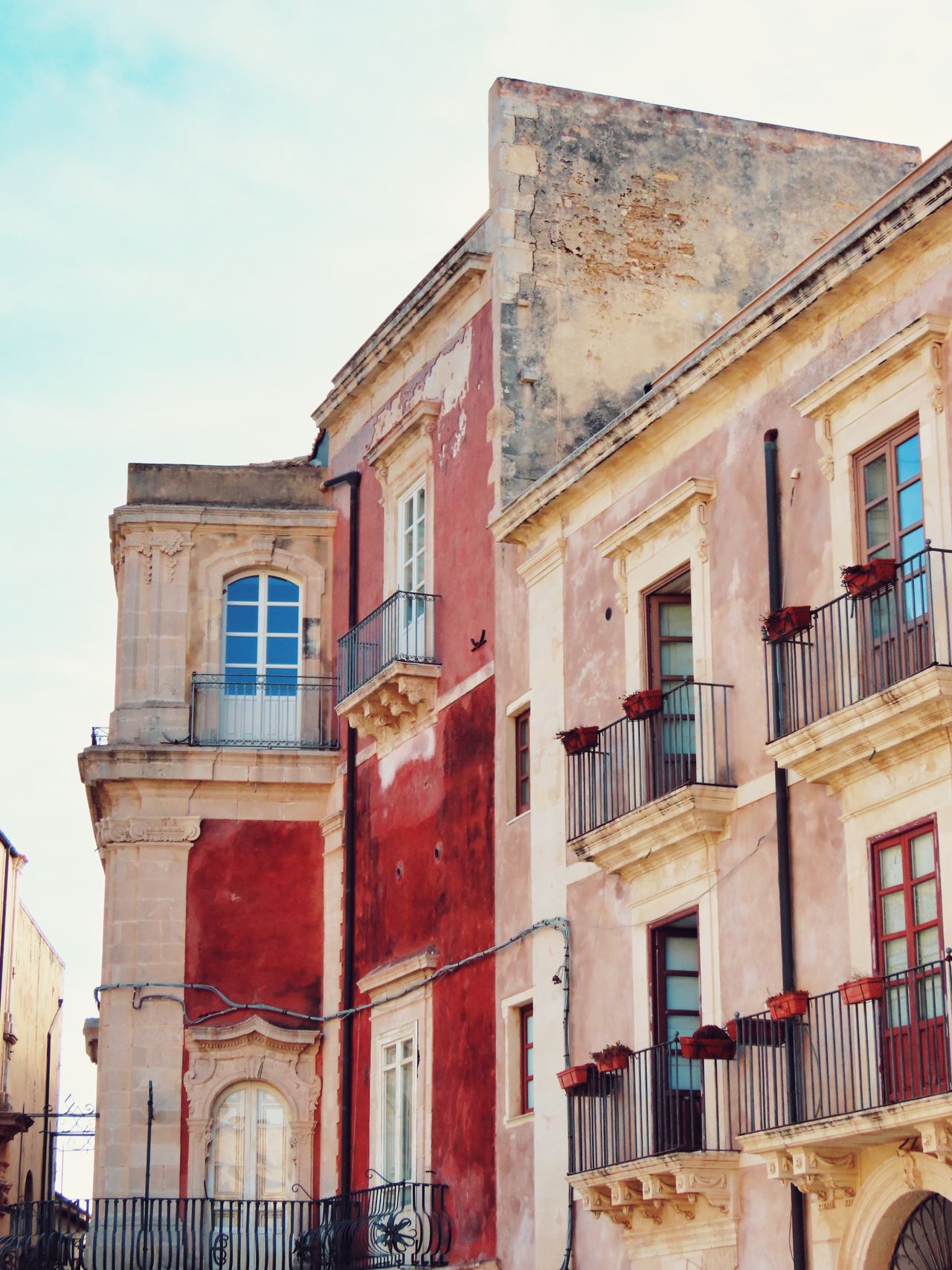
Visiting Syracuse today without a guide risks missing most of this. The physical layers are stacked in ways that are easy to misread: the Cathedral on Piazza del Duomo is a Baroque church built around a Greek temple built on an earlier sacred precinct — the columns of the Temple of Athena (5th century BC) are still visible, absorbed into the cathedral’s side walls. The Fonte Aretusa, a freshwater spring that wells up in the sea at Ortigia’s waterfront, looks like a pond with ducks and papyrus reeds; a guide explains that it is the site of one of antiquity’s most persistent myths, associated with the nymph Arethusa who was transformed into a spring to escape the river god Alpheus. The geography of Ortigia — a small island connected to the mainland by bridges, separated from the modern city that grew on the mainland — mirrors the geography of the ancient city, which was also centred on this island.
The Neapolis Archaeological Park on the mainland contains the Greek Theatre (5th century BC, still in use for summer classical drama), the Roman Amphitheatre, and the Latomie — ancient limestone quarries carved deep into the rock, now converted into extraordinary sunken gardens. The Ear of Dionysius, a 23m-high cave cut into the quarry wall with perfect acoustic properties, is named after the tyrant Dionysius I, who was said to have used it to overhear prisoners’ conversations. Whether or not that is true, the acoustic effect is real and startling.
Find accommodation in Syracuse before booking your tour.
Quick Comparison: Top Syracuse Tours at a Glance
| Tour | Duration | Price (approx) | Best For |
|---|---|---|---|
| Ortigia Island Walking Tour | 2.5 hrs | from €15 | First-time visitors |
| Neapolis Archaeological Park Tour | 2.5 hrs | from €20 | Greek and Roman history |
| Combined Ortigia and Archaeology Tour | 5 hrs | from €35 | Full city overview |
| Ortigia Sea Cave Boat Tour | 2 hrs | from €25 | Coastal scenery, swimming |
| Fiume Ciane Papyrus Boat Tour | 2.5 hrs | from €30 | Nature, ancient waterway |
| Syracuse to Noto Day Trip | Full day | from €45 | Baroque architecture |
| Food and Street Market Tour | 2.5 hrs | from €40 | Sicilian cuisine, local life |
| Private Archaeological Tour with Historian | 4 hrs | from €80 | In-depth, specialist |
Ortigia Island Walking Tour
Duration: 2.5 hours | From: approximately €15 per person
Ortigia is the heart of ancient Syracuse: a small limestone island roughly 800m by 400m, connected to the modern city by two bridges, densely built with layers of architecture from Greek, Roman, Byzantine, Arab, Norman, and Baroque periods. A walking tour is the essential introduction because the island’s streets do not follow a legible grid — they accumulated over 2,700 years of continuous habitation.
The guide covers Piazza del Duomo (one of the finest Baroque piazzas in Sicily, lined with 17th-18th century palaces), the Cathedral interior (where the Greek columns are visible in the nave walls — the Temple of Athena was simply converted rather than demolished), the Fonte Aretusa with its papyrus reeds (one of only two places in Europe where papyrus grows wild), and the old Jewish quarter (Giudecca) with its 15th-century mikveh (ritual bath) discovered beneath a hotel. The castle at the island’s southern tip, Castello Maniace (built 1232–1240 by Frederick II), is included in some tours; entry is approximately €4 as of 2026.
Neapolis Archaeological Park Tour
Duration: 2.5 hours | From: approximately €20 per person
The Neapolis Archaeological Park covers the ancient city’s western quarter on the mainland. A guided tour covers three main sites: the Greek Theatre, the Roman Amphitheatre, and the Latomie (limestone quarries) including the Ear of Dionysius.
The Greek Theatre (5th century BC) is one of the largest and best-preserved in the ancient world — 67 rows of seats carved directly into the rock of the Temenites hill, with a diameter of 138m. It has been in continuous use as a performance venue; the INDA (National Institute of Ancient Drama) has staged Greek tragedies and comedies here every spring since 1914, making it the only ancient theatre in the world with an unbroken modern performance tradition of over a century. The guide explains the acoustic properties, the staging conventions of Greek theatre, and the political context of theatrical performance in a democracy.
The Ear of Dionysius is the tour’s most atmospheric stop. The cave is 65m deep and 23m high, with walls that curve in a shape that concentrates sound at a specific point near the entrance — a whisper at one end is audible as a clear sound at the other. Whether the tyrant Dionysius actually used it as a listening device is unverified, but the cave’s properties are unambiguous. Park entry is approximately €16 as of 2026.
Book the Neapolis Archaeological Park tour
Combined Ortigia and Archaeology Full-Day Tour
Duration: 5 hours | From: approximately €35 per person
A combined tour covers both Ortigia and the Neapolis park in a single day, typically with Ortigia in the morning (before the heat becomes a factor) and the archaeological park after a lunch break. This is the most efficient way to cover the city’s two principal areas, and the guide can draw connections between the island’s Baroque layering and the ancient city represented by the park — the Cathedral built over the Temple of Athena on Ortigia, and the Greek Theatre in Neapolis, are both products of the same city’s different phases.
The combined tour also covers the Syracuse Archaeological Museum (Paolo Orsi Museum), which houses the finest collection of Siceliot (Sicilian Greek) artefacts in the world, including the Venus Anadyomene (a Roman copy of a 2nd-century BC original) and a large collection of Greek vases, terracotta figures, and coins minted in Syracuse at the height of its power. Museum entry is approximately €10 as of 2026.
Book the combined Ortigia and archaeology tour
Ortigia Sea Cave Boat Tour
Duration: 2 hours | From: approximately €25 per person
Ortigia’s limestone coastline is riddled with sea caves, grottos, and rock arches cut by the Ionian Sea. A boat tour from the Ortigia harbour circles the island, entering the accessible caves — including the Grotta dei Cordari, a cave once used by rope-makers who needed the humidity — and stopping for swimming in the cleaner water on the eastern side of the island.
The tour gives a view of Ortigia from the sea that is impossible from the streets: the castle walls rising from the water at the southern tip, the limestone cliffs with their stratified colours, and the point where the Fonte Aretusa’s fresh water meets the sea. Some operators include snorkelling equipment and stop at a rock ledge on the eastern coast. Morning departures (before 09:00) are best for calm water and cooler temperatures; afternoon tours in summer can encounter afternoon Tramontane winds that make the sea rough.
Book the Ortigia sea cave boat tour
Fiume Ciane Papyrus Boat Tour
Duration: 2.5 hours | From: approximately €30 per person
The Fiume Ciane is a short river, approximately 5km long, flowing from a spring in the hills south of Syracuse into a bay on the coast. It is one of only two rivers outside Africa and the Middle East where papyrus (Cyperus papyrus) grows wild in significant quantities — the plant was introduced to Sicily by the Arab rulers of the 9th century and has persisted in the Ciane and in the Fonte Aretusa on Ortigia.
A boat tour from the river mouth navigates upstream through dense papyrus reeds reaching 3–4m in height, with herons, kingfishers, and turtles visible along the banks. The spring at the river’s source was sacred to the nymph Cyane in Greek mythology — she was transformed into a spring while attempting to prevent the abduction of Persephone by Hades. Guides explain both the ecological rarity of the papyrus colonisation and the mythological geography of the river. Morning departures are recommended; the papyrus provides shade but early starts avoid both heat and crowds.
Book the Fiume Ciane boat tour
Syracuse to Noto Day Trip
Duration: Full day | From: approximately €45 per person
Noto is 32km southwest of Syracuse and the finest example of Baroque town planning in Sicily: the entire city was rebuilt after the 1693 earthquake on a new grid plan, with the main street (Corso Vittorio Emanuele) aligned to face the setting sun and flanked by churches and palaces in a uniform golden limestone. UNESCO designated Noto and seven other Baroque towns in the Val di Noto as a World Heritage Site in 2002.
A day trip from Syracuse combines a guided walk of Noto’s main street and the Cathedral (collapsed in 1996, rebuilt by 2007) with time to explore the city independently and lunch at one of the trattorias in the side streets. Guides explain the planning logic behind Baroque Noto — the street alignment, the uniform building height, the decision to rebuild completely rather than repair the ruins of the old city — and put it in the context of the wider Val di Noto reconstruction, one of the most ambitious urban renewal projects of the 18th century. The Caffè Sicilia in Noto (opened 1892) is a standard stop for granita and almond-based sweets.
Book the Noto day trip from Syracuse
Practical Information
Getting to Syracuse: Direct trains from Catania (approximately 1 hour 20 minutes, approximately €7 as of 2026) and Messina (approximately 2 hours 30 minutes). From Palermo, change at Catania; total approximately 4 hours. Syracuse Centrale station is on the mainland; Ortigia is a 20-minute walk or a short bus ride.
When to visit: April–June and September–October offer the best conditions — comfortable temperatures, the INDA theatrical season runs May to July in the Greek Theatre, and the summer crowds have not yet arrived or have thinned. July and August are very hot (35°C+ regularly) and the most crowded.
Food in Syracuse: Granita con brioche for breakfast (almond, lemon, coffee, pistachio — not the frozen-dessert texture of northern granita); arancini (rice balls, sometimes called arancine in eastern Sicily); pasta alla Norma (with fried aubergine, tomato, and ricotta salata — the dish was invented in nearby Catania); involtini di pesce spada (swordfish rolls grilled or braised).
Archaeological Park hours: Open daily 09:00–18:00 (shorter hours in winter). Entry approximately €16 as of 2026. The park is outdoors and largely unsheltered — bring water and sun protection.