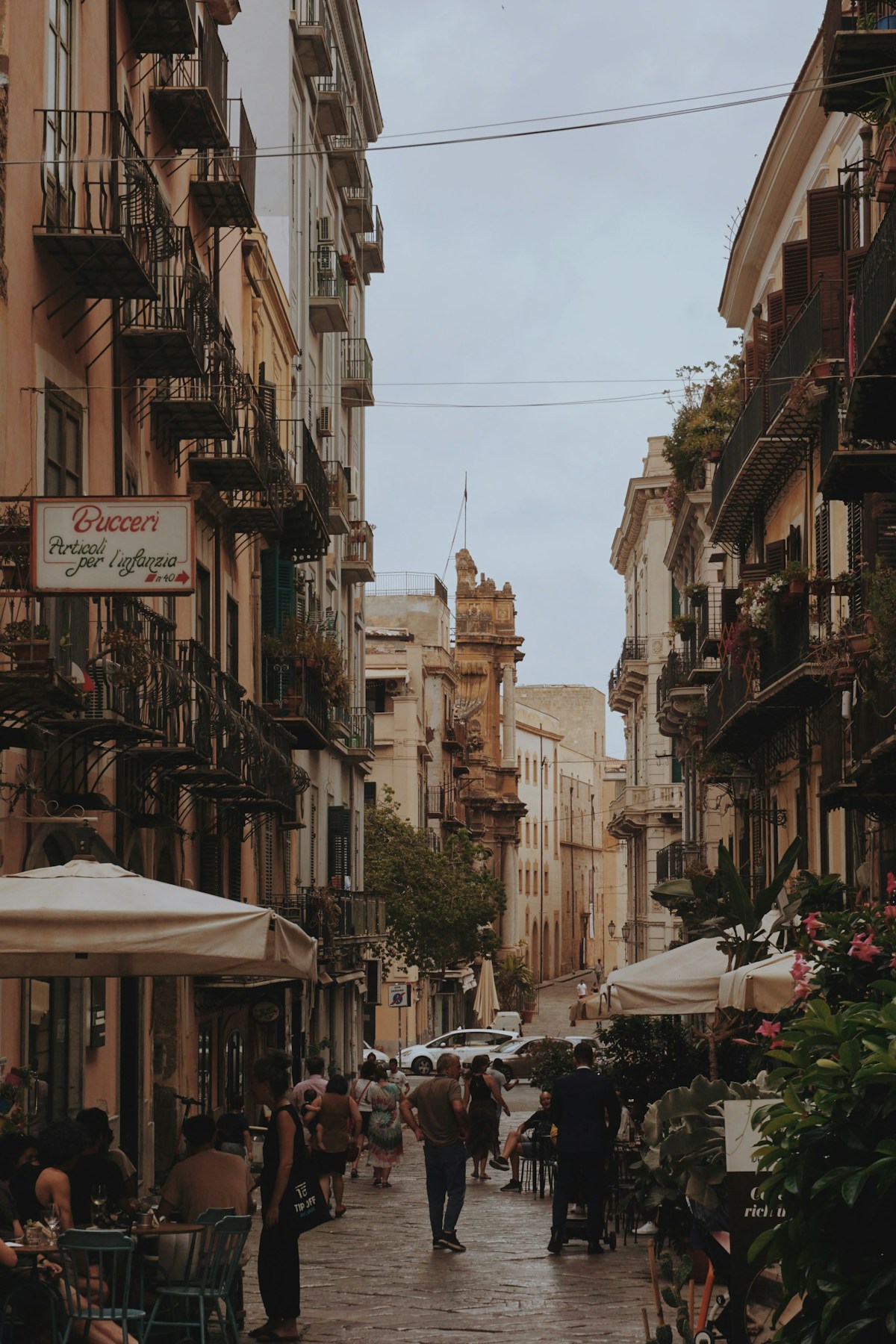
Palermo Travel Guide: Markets, Street Food & Baroque Sicily
Plan a trip to Palermo: street markets, street food, Arab-Norman churches, where to eat, where to stay, and day trips across western Sicily.
Guides for Palermo
Palermo is the only major European city to have been ruled consecutively by Phoenicians, Romans, Byzantines, Arabs, Normans, Hohenstaufen Germans, French Angevins, and Spanish Aragonese - and all of them left something behind. The result is a city where a Norman palace sits on Arab foundations, Byzantine mosaics fill a chapel built by Vikings, and the street food draws from three continents. It is chaotic, direct, and consistently surprising.
The markets
Palermo’s three main street markets are working food and goods markets, not tourist set pieces. They operate weekday mornings (roughly 7am–2pm) and Saturday mornings; most stalls close Sunday.
Ballarò is the largest and most local, covering several blocks in the Albergheria quarter southwest of the Palatine Chapel. Stalls sell fish, vegetables, cheap clothing, and household goods. The street food circuit runs through the market’s edges - look for arancine, panelle, and sfincione vendors from around 8am onwards. No entry fee. A Palermo street food tour takes you through all three markets with a guide who knows each vendor and what to order at each stall.
Vucciria (off Piazza San Domenico, in the Castellammare quarter) was Palermo’s most famous market through the 20th century and has slimmed down considerably, but remains active in the mornings with fish and produce. By evening it transforms into a lively outdoor eating and drinking area - tables appear on the cobbles, vendors sell stigghiola (grilled sheep intestine, skewered and charcoal-cooked) and cheap wine.
Capo (along Via Sant’Agostino) is the least touristy of the three, running through a long covered street with fish, meat, and produce. The vendors are animated and prices are low - a kilo of swordfish or tuna costs approximately €12–18 as of 2026.
Arab-Norman architecture
Palermo’s UNESCO-listed Arab-Norman trail is the city’s primary architectural draw - a series of buildings constructed or commissioned by the Norman kings in the 12th century that fuse Arab Islamic craftsmanship, Byzantine mosaic tradition, and Western European Romanesque form.
Cappella Palatina (Palatine Chapel, inside the Palazzo dei Normanni on Piazza Indipendenza) - The masterpiece of the trail. Built by Roger II between 1130 and 1143, its ceiling is a honeycomb of carved wooden muqarnas (geometric stalactite decoration) of pure Arab workmanship, while every wall surface is covered in Byzantine gold mosaics depicting the life of Christ and Old Testament figures. The combination is unlike anything else in Europe. Entry to the chapel approximately €15 as of 2026; the full palace complex (including the Royal Apartments, open Tuesday–Saturday mornings) is included. Open Monday–Saturday 8:15am–5:40pm, Sunday 8:15am–1pm.
Cattedrale di Palermo (Cathedral of Palermo, Corso Vittorio Emanuele) - A composite structure that started as a mosque converted from a Byzantine church and was progressively enlarged by Norman, Gothic, and Baroque additions. The exterior is more interesting than the interior. The Royal Tombs in the south aisle contain the sarcophagi of Roger II, Frederick II, and Constance of Aragon - free to see. Cathedral free; treasury and royal tombs approximately €5 as of 2026. Open Monday–Saturday 9:30am–5:30pm, Sunday 9am–1pm.
San Giovanni degli Eremiti (Via dei Benedettini 3) - A former mosque converted to a church in 1136, identifiable by five distinctive red domes that mark it as the most visually Islamic of the Norman monuments. The cloister garden is peaceful and photogenic. Entry approximately €6 as of 2026. Open Monday–Saturday 9am–7pm, Sunday 9am–1pm.
La Martorana / Santa Maria dell’Ammiraglio (Piazza Bellini) - A 12th-century church commissioned by Roger II’s Greek admiral, with the best-preserved original Byzantine mosaics in Palermo. Entry approximately €2 as of 2026. Open Monday–Saturday 9:30am–1pm and 3:30pm–5:30pm.
La Zisa (Piazza Zisa) - A Norman pleasure palace built outside the city walls, combining Arab garden design with Norman royal architecture. Entry approximately €6 as of 2026. Open daily 9am–6pm.
Street food guide
Palermo has one of the most distinctive street food cultures in Italy. The classics:
Arancine - Fried rice balls, either round (Palermo style, filled with meat ragù and peas) or torpedo-shaped (filled with butter and prosciutto or spinach and cheese). The distinction between arancine (feminine, Palermo) and arancini (masculine, Catania) is taken seriously locally. Available at virtually every rosticceria and bar from breakfast onwards. Approximately €1.50–2.50 each. Try them at Ke Palle (Via Vittorio Emanuele 424) or Friggitoria Chiluzzo (Via Calderai 69).
Panelle - Chickpea flour fritters, eaten in a soft sesame roll (mafaldo) with cazzilli (potato croquettes). A standard Palermitan breakfast or mid-morning snack. Approximately €2.50 for a roll at a street fryer. Look for vendors in and around Ballarò market.
Sfincione - Thick, spongy pizza topped with tomato, onion, caciocavallo cheese, and breadcrumbs. Distinctly different from Neapolitan pizza - denser, less crisp. Vendors sell it from trays on street corners, approximately €2 a slice.
Pani ca meusa - Spleen sandwich. Boiled beef spleen and lung, fried in lard, served in a soft bun with lemon or ricotta. An acquired taste and a genuine Palermitan street food tradition. Try it at Antica Focacceria San Francesco (Via Alessandro Paternostro 58) - the oldest restaurant in Palermo, open since 1834 - where the sandwich costs approximately €5.
Stigghiola - Grilled lamb or goat intestine, skewered and cooked over charcoal, typically sold around the Vucciria market in the evenings for approximately €3–5.
Where to eat
Trattoria Ai Cascinari (Via d’Ossuna 43/45) - A family-run trattoria in the Capo market neighbourhood with no printed menu. The cook describes what is available that day - typically Sicilian classics like pasta con le sarde (pasta with sardines, fennel, pine nuts, raisins, and saffron), aubergine caponata, and swordfish. Mains approximately €10–14. Cash only; booking recommended.
Osteria dei Vespri (Piazza Croce dei Vespri 6) - Set in a courtyard that appears in the film The Leopard, this is the most refined option in the historic centre. The kitchen applies modern technique to traditional Sicilian ingredients - excellent carpaccio di gambero rosso (raw red prawn) and pasta with sea urchin. Mains approximately €16–24.
Bisso Bistrot (Via Maqueda 172, inside the Libreria del Mare) - Casual lunch spot attached to a nautical bookshop, serving fish-forward Sicilian dishes at reasonable prices. Pasta dishes approximately €10–13, mains approximately €14–18. Closed Sunday evenings.
Antica Focacceria San Francesco (Via Alessandro Paternostro 58) - The go-to address for traditional Palermitan snacks: sfincione, arancine, vastedda (spleen sandwich), and panelle. Open since 1834. Snacks approximately €3–6.
Where to stay
Budget: B&B Palazzo Pantelleria (Via Pantelleria 7) has double rooms from approximately €65–80/night in a historic building near the Capo market. Hostel dei Vespri (Via Discesa dei Giudici 11) offers dormitory beds from approximately €25 and private rooms from approximately €70.
Mid-range: Hotel Ambasciatori (Via Roma 111) is a reliable three-star in a central location, doubles from approximately €90–130/night. Hotel Garibaldi (Piazza Magione 1) is in a quieter corner of the historic centre near the Kalsa neighbourhood, with doubles from approximately €100–140/night.
Top-end: Grand Hotel Piazza Borsa (Via dei Cartari 18) occupies a former 16th-century palazzo converted in the early 20th century, with a rooftop pool. Doubles from approximately €180–260/night. Centrale Palace Hotel (Corso Vittorio Emanuele 327) is on the main historic boulevard, doubles from approximately €150–220/night.
Day trips from Palermo
Monreale (8km southwest) - The Duomo di Monreale contains 6,340 square metres of Byzantine-Norman gold mosaics - the most extensive medieval mosaic cycle in the world outside of the Hagia Sophia. Entry approximately €5 as of 2026. The cloister (separate entry approximately €6 as of 2026) has 228 twin columns with carved Romanesque capitals. Take bus 389 from Piazza Indipendenza, approximately 30 minutes, approximately €1.50. Open Monday–Saturday 8am–12:45pm and 2:30pm–5pm.
Cefalù (70km east) - A small beach town with a striking Norman cathedral (entry approximately €3) and a long sandy beach backed by a high limestone rock (La Rocca). Trenitalia regional train from Palermo Centrale, approximately 1 hour, approximately €7. Better for a half-day in summer than a full day.
Segesta (35km west) - One of the best-preserved Greek temples in the world (5th century BC), set in open countryside with no enclosing buildings, plus a Greek theatre above it with views across to the Tyrrhenian Sea. Entry approximately €10 as of 2026. Autoservizi Tarantola bus from Piazzetta Capo, approximately 45 minutes, or car. Open daily 9am to an hour before sunset.
Agrigento / Valley of the Temples (120km south, approximately 2 hours by car or direct Autolinee Cuffaro bus) - Seven Greek temples in various states of preservation, spread across a limestone ridge. The Temple of Concordia is the best-preserved Doric temple in the world. Entry to the archaeological park approximately €12 as of 2026. Open daily 9am–7pm (seasonal variation). Best visited as a full day or combined with a night in Agrigento.
Getting to Palermo
By air: Falcone-Borsellino Airport (PMO), approximately 35km northwest of the city. The Trinacria Express train connects the airport to Palermo Centrale in approximately 50 minutes (approximately €6.90). Taxis are fixed rate at approximately €45 to the historic centre. For a pre-booked transfer with driver meet-and-greet, Welcome Pickups covers Falcone-Borsellino Airport.
By train from the Italian mainland: There is no direct rail route - trains cross the Strait of Messina on a ferry shuttle (carriages are rolled onto the ship). Rome to Palermo takes approximately 10–11 hours on overnight trains; Naples approximately 9 hours. The Intercity Notte overnight from Rome is the standard option. Alternatively, take a high-speed train to Naples or Reggio Calabria and a ferry from there.
By ferry: Grimaldi Lines and Tirrenia run overnight ferries from Civitavecchia (Rome’s port) in approximately 13 hours, and from Genoa in approximately 21 hours. GNV also operates on these routes. Passenger berths from approximately €50–120 depending on season and cabin type.
Best time to visit
May, June, and September offer the most comfortable conditions - warm and dry with daytime temperatures around 22–28°C. July and August are very hot (regularly 35°C+), crowded in the historic centre, and expensive for accommodation. The Festino di Santa Rosalia on July 15 draws large crowds to the Cassaro. Winter (December–February) is mild by northern European standards (12–16°C) with occasional rain, and the city is calm and inexpensive.
For accommodation from budget to luxury: Palermo hotels. For sights, street food markets, and the best day trips: things to do in Palermo. Book a guided Palermo tour to explore the Arab-Norman churches, the historic markets, and the street food circuit with a local expert. For the full Sicilian food tradition - pasta con le sarde, arancine, and cannoli: Palermo food guide and the Sicilian food guide. Planning a wider Sicily trip? Our Sicily itinerary connects Palermo with Taormina and the Valley of the Temples.
Upcoming Events in Palermo
Alba White Truffle Fair 2026
Alba White Truffle Fair 2026, October 3–December 6. World's largest white truffle market with Barolo tastings, tajarin, and live auctions in Piedmont.
La Befana - Feast of the Epiphany 2027
La Befana 2027, January 6. Italy's Epiphany gift-giving day: children receive sweets or coal from the Befana witch, then decorations come down.
Book an experience
Top experiences in Palermo
Explore the best tours and activities in Palermo, with instant confirmation and free cancellation on most bookings.