Merano Travel Guide: South Tyrol's Spa Town on the Passirio River
Soak in Terme Merano's thermal pools, wander the Trauttmansdorff Gardens, and walk the riverside promenade in South Tyrol's elegant spa town.
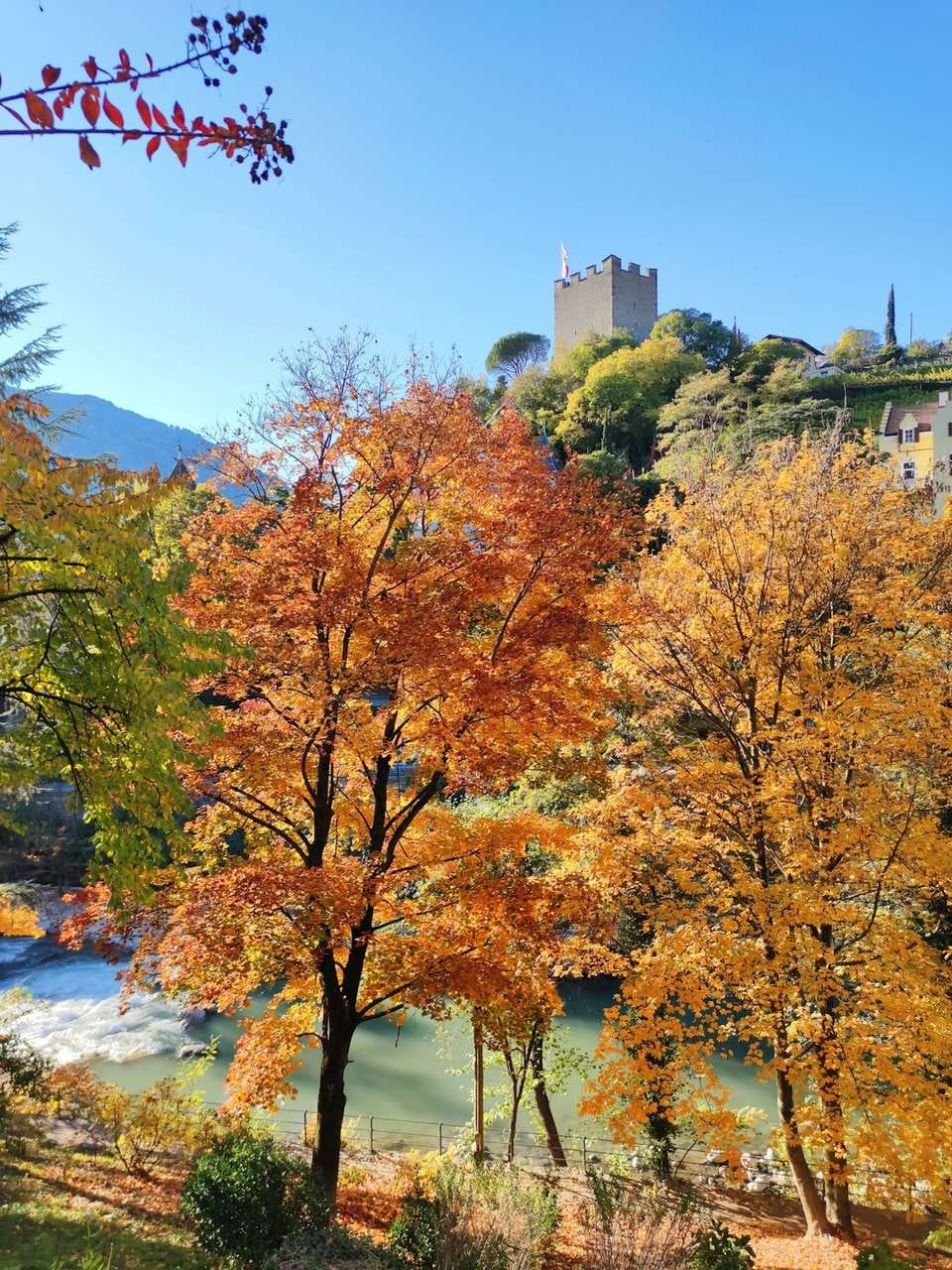
Merano spent most of the 19th century as the most fashionable resort in the Habsburg Empire. Empress Elisabeth of Austria — Sisi — came here for her health. Kafka came for rest cures. The town developed a ring of sanatoriums, thermal facilities and villa hotels that attracted European aristocracy and literary figures in roughly equal numbers. The Belle Époque architecture that era left behind still defines the centre: colonnaded walkways along the Passer river, ornate villas on the hillsides, a casino, a racecourse. Today the town has repositioned around wellness tourism, but it has done so without losing the structural elegance of its past.
Merano is also smaller and less visited than Bolzano, 30 km to the east. That is part of its appeal.
Terme Merano Spa Complex
The Terme Merano is the centrepiece of the town’s wellness identity — a large contemporary spa complex opened in 2005 and designed by architect Matteo Thun, built against the backdrop of the Alps on Piazza Terme. It contains 25 pools spread across indoor and outdoor areas, a sauna village, treatment rooms and a rooftop pool with mountain views.
Day entry to the pool area costs approximately €26 for adults (weekday off-peak); prices rise at weekends and in high season to around €30–34. The sauna area is ticketed separately (approximately €18 additional). Treatment packages — massages, mud wraps, alpine herb therapies — start from around €60 and should be booked at least 48 hours ahead in summer.
Opening hours: Monday to Sunday 09:00–22:00. Children under 16 are permitted in the outdoor pools but not in the sauna areas. Towels and robes are available to hire if not brought.
The spa is within five minutes’ walk of the train station and main shopping street, making it a realistic focus for a day trip from Bolzano rather than requiring an overnight stay.
Trauttmansdorff Gardens
The Giardini di Castel Trauttmansdorff climb the hillside above the eastern edge of Merano, arranged across 12 hectares of terraced gardens that contain plants from five continents. The castle itself — a neo-Gothic structure rebuilt in the 1850s for Empress Sisi — anchors the upper terraces. A small museum inside the castle covers South Tyrolean tourism history and the Empress’s connection to the town.
Entry is €14 for adults, €7 for children. Open April through November (closed December to March); hours 09:00–19:00, with late opening to 21:00 in July and August. The gardens are busiest in late May and early June when rhododendrons and roses peak, and again in October for autumn colour.
The hillside location means some sections involve significant uphill walking. The garden map is well designed — pick up a paper copy at the entrance and plan a route based on how much climbing you want to do. A panoramic terraced path runs along the upper edge with unobstructed views over the Passer valley and the Texel Group mountains.
Allow at least two hours. Combination tickets for the gardens and the Sisi Museum inside the castle are available from the entry desk.
The Tappeinerweg and Promenade
Two walking routes define Merano’s leisure geography. The Tappeinerweg is a 4 km cliff path above the town, running from the castle district west to Quarazze, lined with Mediterranean vegetation — palms, agaves, cacti — that survive here due to Merano’s protected microclimate. No entry fee. The path is wide and mostly flat after the initial ascent; the views over the town and valley are the best available without a cable car.
The Passeggiata Lungo Passirio (Riverside Promenade) runs at valley level along both banks of the Passer river. The southern bank (Passeggiata d’Estate) is planted with palms and magnolias; the northern bank (Passeggiata d’Inverno) is enclosed under glass arcades, designed to be walked on colder days. The promenade connects the thermal spa district to the old town in about 20 minutes. Free. Café kiosks at intervals along the summer bank from April through October.
The town centre itself — the Via dei Portici arcade and the adjoining medieval streets — repays an hour of wandering. The covered porticos have housed merchants since the 14th century; current occupants are a mix of independent boutiques, delicatessens and pharmacies.
The Merano WineFestival
Held over four days in early November, the Merano WineFestival is one of Italy’s most curated wine events. Around 500 producers from Italy and internationally present wines selected by an independent panel — the emphasis is on small producers and natural methods. The event spreads across the Kurhaus (Merano’s historic congress building) and surrounding venues.
Public day tickets cost approximately €75–90 per session and include unlimited tastings. Some sessions sell out months ahead. Check the official website (meranowinefestival.com) for the current year’s schedule and ticket release dates. The November timing aligns well with South Tyrol’s apple harvest season, and local restaurants typically run seasonal menus during the same period.
If travelling to Merano specifically for the festival, book accommodation at least three months ahead — the town fills completely for the four festival days.
Where to Stay in Merano
Hotel Therme Merano on Piazza Terme is the most convenient hotel for spa visitors — a glass-and-steel property connected directly to the Terme Merano complex, with its own pool access included in room rates. Rooms start at approximately €200/night in shoulder season, rising to €280+ in August and at WineFestival. The design is contemporary alpine; rooms on the upper floors have unobstructed mountain views.
Hotel Castel sits on the eastern hillside above the Trauttmansdorff Gardens at Via Winkel 1, in a converted 13th-century tower with panoramic terraces. A more atmospheric choice than the spa hotels, with individually decorated rooms and an outdoor pool. Rates from approximately €160/night for a double in low season; suites significantly higher. Closed November through March.
Hotel Garni Donatella is a straightforward three-star on Via Piave in the residential part of the old town, suitable for visitors prioritising location and value over facilities. Rates from approximately €85/night double. No pool; breakfast included. Ten minutes’ walk from both the thermal spa and the Tappeinerweg.
Where to Eat in Merano
Sissi Restaurant on Via Galilei takes its name from the Empress and its aesthetic seriously — white tablecloths, ornate detailing and a menu that balances South Tyrolean ingredients with modern Italian technique. Think beetroot Knödel with goat’s cheese, or Lagrein braised beef cheek with celeriac purée. Three-course dinner from approximately €50–65 per person, excluding wine. Book ahead, especially in summer and WineFestival week.
Kallmünz on Vicolo dei Portici is more casual — a wine bar and kitchen in a medieval alleyway off the main shopping arcade. Lunch plates from €10–14 (speck platters, local cheeses, soup). The wine list focuses on South Tyrolean producers and is well-priced for the quality.
Cafè Rainer on Via Portici is the old town’s best café for cake and coffee in the Austrian tradition. The Apfelstrudel (around €5) is well made and large; the seating inside the listed building is preferable to the street tables.
For a quick lunch before or after the spa, the thermal complex itself has a café-restaurant with mountain views and straightforward plates from €12–16 — the location is hard to beat even if the food is functional rather than special.
The Dorf Tirol and Castel Tirolo
Three kilometres above Merano by cable car (Seilbahn Hochmut, approximately €7 return) is the village of Dorf Tirol, where Castel Tirolo stands as the ancestral castle of the Counts of Tyrol — the medieval dynasty that gave the entire region its name. The castle museum (€8 entry, open April–November) covers South Tyrolean history from the Iron Age to the Habsburg period with good English labelling.
The cable car runs year-round except for maintenance periods in spring and autumn. Check current schedules at the Merano tourist office or on the Seilbahn website. From Dorf Tirol, a network of walking paths leads further into the Texel Nature Park — serious hiking territory requiring proper footwear and preparation.
Getting to Merano
From Bolzano: Trains run every 30 minutes on the Vinschgau/Merano line; journey time approximately 40–45 minutes. Tickets from approximately €4.50 one way. The Bolzano–Merano line is fully integrated with South Tyrol’s regional transit network (Südtirol Pass available for multi-day travel). Buses on the same route are slower but cost the same and stop at more villages.
From Verona: Change at Bolzano; total journey time approximately 2 hours 45 minutes. Direct connections from Verona Porta Nuova to Bolzano, then regional train to Merano.
From Innsbruck: Take the train to Bolzano (approximately 1 hour) then change for the Merano regional service (40 minutes). Total journey around 1 hour 45 minutes.
By car: Merano is on the SS38/E66 road, 30 km northwest of Bolzano. Parking near the spa complex (Piazza Terme) charges around €2/hour. The town centre is largely pedestrianised; park in the spa district and walk.
Practical Information
- Language: German predominates; Italian spoken by all. English widely understood in tourist businesses.
- Currency: Euro. ATMs on Via Portici and near the train station.
- Best months: May–June (gardens, mild weather), September–October (harvest season, wine festival). July–August warmest but busiest.
- Nearby: Bolzano is 40 minutes east by train — the natural pairing for a two-city South Tyrol itinerary. The Vinschgau valley stretches west toward the Swiss border; local trains run the full length in around 2 hours from Merano.
- Accessibility: The spa complex and riverside promenade are fully accessible. The Trauttmansdorff Gardens have an accessible route; the Tappeinerweg cliff path is not wheelchair accessible.
Upcoming Events in Merano
Alba White Truffle Fair 2026
Alba White Truffle Fair 2026, October 3–December 6. World's largest white truffle market with Barolo tastings, tajarin, and live auctions in Piedmont.
La Befana - Feast of the Epiphany 2027
La Befana 2027, January 6. Italy's Epiphany gift-giving day: children receive sweets or coal from the Befana witch, then decorations come down.
Book an experience
Top experiences in Merano
Explore the best tours and activities in Merano, with instant confirmation and free cancellation on most bookings.