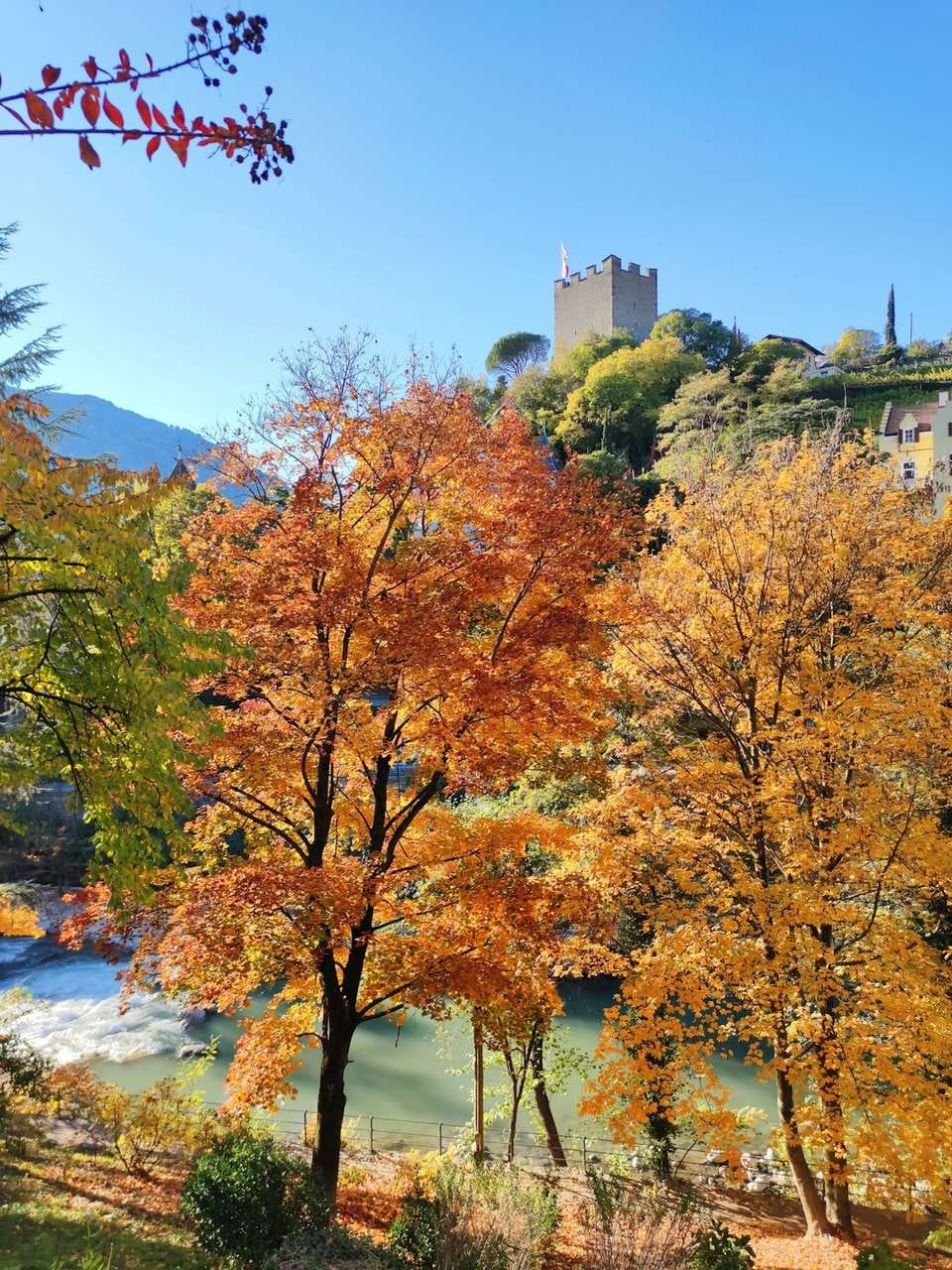
Merano is South Tyrol’s most refined resort town — a city that blends Austrian-influenced architecture, Italian Mediterranean character, and a centuries-old thermal spa tradition into something genuinely distinctive. The Habsburgs developed it as a health resort, and the grand promenades along the Passer river, the Belle Époque hotel facades, and the Terme di Merano bath complex still bear the mark of that imperial investment. The surrounding landscape — Tyrolean mountains immediately above, and the Vinschgau valley opening to the west toward Switzerland — gives the city an alpine grandeur that its relatively low altitude (330m) belies.
Search Merano hotels on Booking.com to compare prices and check availability across all areas in this guide.
Kurgebiet — The Spa District and River Promenades
The Passeggiata d’Estate (Summer Promenade) and Passeggiata d’Inverno (Winter Promenade) run along opposite banks of the Passer river through the spa quarter — the heart of Merano’s historic resort identity. The Terme di Merano thermal complex sits on the Summer Promenade side. The grand hotels that line both banks were built in the Belle Époque and Jugendstil (Art Nouveau) style to accommodate wealthy European health tourists.
Luxury grand hotels (€250–500/night): Palace Merano Espace Henri Chenot (Via Cavour 2) is the flagship property — a grand 19th-century building housing one of Italy’s most celebrated destination wellness programmes (the Henri Chenot Method), with a comprehensive spa, detox and medical aesthetics services, and beautifully maintained rooms; doubles from approximately €280–450/night as of 2026. The spa services require separate booking and are available to both guests and day visitors. Hotel Meranerhof (Via Manzoni 1) is a historic four-star in the spa district with indoor pool, sauna, and traditional South Tyrolean service; doubles from approximately €200–300/night as of 2026.
Mid-range (€140–220/night): Several well-maintained four-star hotels operate in the Kurgebiet, most with pool, sauna, and a breakfast focusing on South Tyrolean products (Vinschgau rye bread, speck, local apple juice). Hotel Terme (directly adjacent to the thermal baths) offers convenient access; doubles from approximately €150–210/night as of 2026.
Centro Storico — Medieval Lanes and Portici Arcades
Merano’s medieval core — the narrow lanes radiating from the Gothic Duomo di San Nicolò and the arcaded Portici shopping street — is a 5-minute walk from the river promenades. This area has a more Italian and less resort feel than the spa district, with better evening dining options.
Mid-range (€110–180/night): Smaller boutique hotels and B&Bs in converted historic buildings. Hotel Adria (Via Volta 6) is a reliable three-star near the centre; doubles from approximately €110–155/night as of 2026. Appartements and garni in the centro storico offer self-catering alternatives from approximately €90–130/night.
Budget (€80–110/night): Pensioni and garni (B&B-style establishments) in the streets just outside the historic core. Standards are generally decent — South Tyrolean hospitality standards are consistently high across the region.
Surrounding Villages
The hills and valleys immediately above Merano — Tirolo (10 minutes by cable car or road), Scena, Lagundo — have hotels and garni with mountain views and often pool access, at prices 15–25% lower than the city centre.
What to expect: Quieter, greener, higher-altitude settings. Suitable for guests with a car who want Dolomites access combined with Merano day visits. Tirolo village (Schloss Tirol, the historic seat of the Counts of Tyrol) is particularly pleasant.
Plan your trip:
- Browse tours in Merano and South Tyrol
- Book an airport transfer
- Get travel insurance for Italy
- Pick up an eSIM for Italy
- Search hotels in Merano on Booking.com
Practical notes
- Merano Wine Festival (November). One of Italy’s most respected wine events takes place in Merano in early November — the Kurhaus and the city fill with producers and buyers. Book accommodation 2–3 months ahead for festival dates.
- Trauttmansdorff Gardens. The terraced botanical gardens above the city (where Empress Sisi famously convalesced) are open April to November. They’re a short walk or cable car ride from the city — worth building into any stay of two days or more.
- Cycling. The Vinschgau cycle path (Ciclovia dell’Adige/Via Claudia Augusta) begins near Merano and runs west toward Switzerland — one of Europe’s most scenic flat cycling routes. Several hotels arrange bike hire.
- Language. Merano is in the German-speaking majority part of South Tyrol. Most residents speak German, Italian, and some Ladin. All services are bilingual; English is widely understood in hospitality.
The Merano travel guide covers the thermal baths, the Trauttmansdorff Gardens, and the surrounding South Tyrolean wine country.