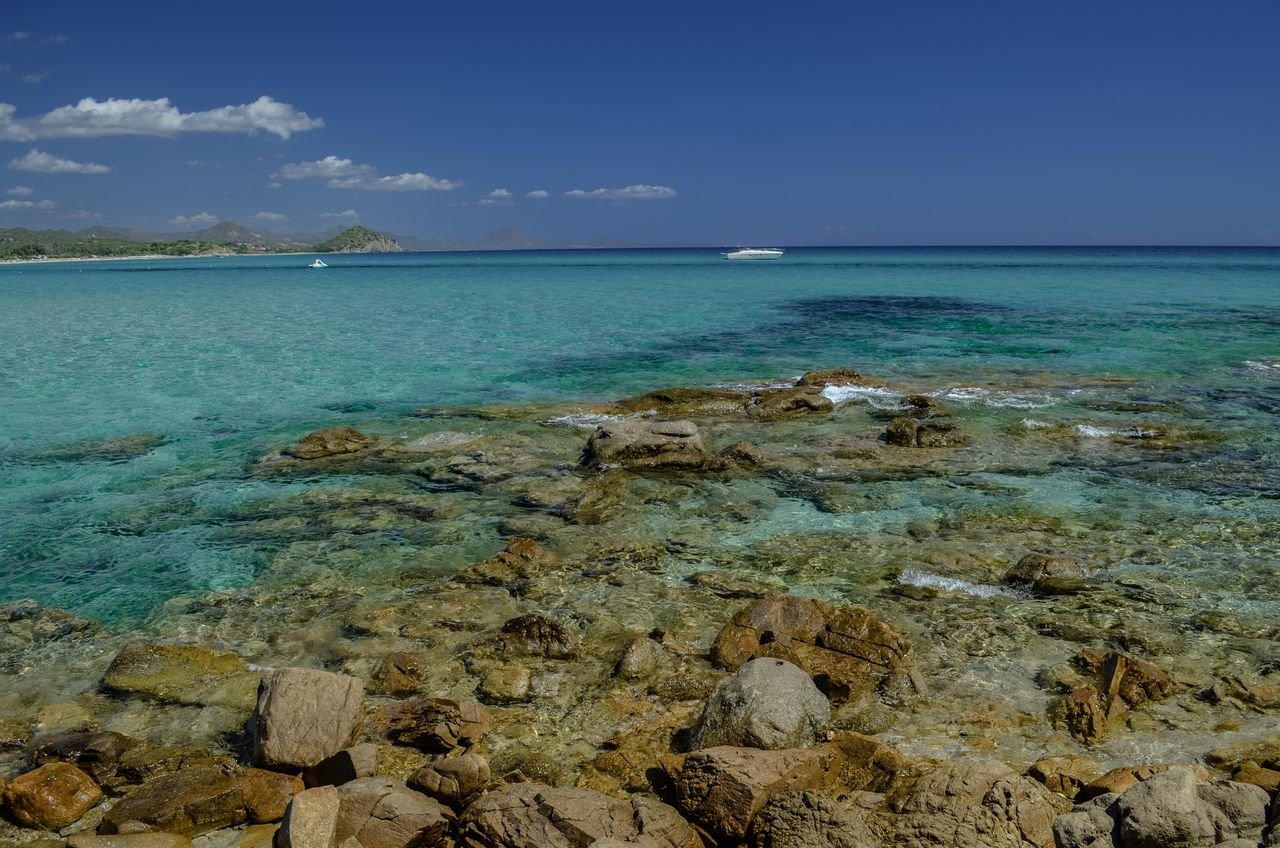
Italy has more than 7,500 km of coastline, and the best beaches are spread across a dozen regions that have little in common beyond the sea. A sandbar in northern Sardinia, a pebble cove under a Roman bridge in Puglia and a lakeside rock shelf at Sirmione are all “beaches in Italy”, but they need different planning. This guide picks 20 of the best, grouped by region, with how to reach each one, what it costs and when to go. Where we have a dedicated guide to a region’s beaches, we link to it for the full list.
If this is your first trip, read the first-time Italy guide alongside this one.
Quick comparison: 20 best beaches in Italy
| Beach | Region | Type | Best for |
|---|---|---|---|
| La Pelosa | Sardinia | White sand | Shallow turquoise water, families |
| Cala Goloritzè | Sardinia | White pebble | Hiking, cliffs, clear water |
| Spiaggia del Principe | Sardinia | Sand | Costa Smeralda scenery |
| Chia (Su Giudeu) | Sardinia | Sand and dunes | Windsurfing, long beaches |
| San Vito lo Capo | Sicily | Fine sand | The best sandy beach in Sicily |
| Scala dei Turchi | Sicily | Marl cliffs | Photography, sunset |
| Mondello | Sicily | Sand | Palermo city beach |
| Isola Bella (Taormina) | Sicily | Pebble, islet | Swimming and snorkelling with a view |
| Fornillo | Campania | Dark pebble | Quiet alternative to Positano’s main beach |
| Maronti | Campania (Ischia) | Dark sand | Longest beach on the Bay of Naples |
| Citara | Campania (Ischia) | Dark sand | Thermal gardens and calm water |
| Marina Piccola | Campania (Capri) | Rock and lidos | Swimming under the Faraglioni |
| Paraggi | Liguria | Sand | Sheltered bay near Portofino |
| Baia del Silenzio | Liguria | Sand | Shallow sheltered bay, Sestri Levante |
| Monterosso | Liguria (Cinque Terre) | Sand and pebble | Beach plus hiking trails |
| Cala di Forno | Tuscany | Sand, protected | Wild coast without development |
| Fetovaia | Tuscany (Elba) | Sand | Clear water, island holiday |
| Lama Monachile | Puglia | Pebble cove | Dramatic setting, free entry |
| Tropea | Calabria | White sand | Clifftop town above the beach |
| Jamaica Beach, Sirmione | Lombardy (Lake Garda) | Rock slabs | Lake swimming |
Sardinia: Italy’s best sand and clearest water
Sardinia is the answer most people want when they ask for the best beaches in Italy. Our full list is in the Sardinia beaches guide.
1. La Pelosa, Stintino
La Pelosa sits at the north-western tip of the island, facing the small Torre della Pelosa and the Isola Piana. The water is only knee to waist deep for a long way out and the sand is almost white, so it photographs like the Caribbean. The price of that fame is a reservation system: in July and August entry is limited and charged at approximately €3.50 per person as of 2026, and slots sell out weeks ahead. Our La Pelosa booking news explains how the system worked last summer. A shuttle runs from Stintino village in summer. Go in late May, June or September to avoid the cap and the crowd.
2. Cala Goloritzè, Gulf of Orosei
A white pebble cove under a limestone needle, reached either by a steep hike of about 1.5 hours each way from the Altopiano del Golgo trailhead or by boat from Cala Gonone. There are no facilities, so bring water and food. The boat option runs at approximately €25 to €35 per person for a half-day trip as of 2026. Access has a daily visitor cap in season, so check before you go.
3. Spiaggia del Principe, Costa Smeralda
A crescent of golden sand near Arzachena with a pine-backed shore and almost no buildings behind it. The setting is the draw; sunbed hire is Costa Smeralda priced. It suits a day trip from a base in Porto Cervo or Olbia.
4. Chia (Su Giudeu), south-west
A string of beaches with dunes and a view of a Spanish watchtower, 60 km south of Cagliari. It is Sardinia’s best option for a stay near the capital and a good windsurfing and kitesurfing spot when the wind blows. Summer buses run from Cagliari.
Book a guided Sardinia boat or coastal tour to reach the coves that roads do not.
Sicily: variety from sand to marl cliffs
The Sicily beaches guide covers the island in depth, and the Sicily island hub places each beach in a route.
5. San Vito lo Capo
The best sandy beach in Sicily: a wide arc of fine white sand beside shallow, clear water, with Monte Monaco rising behind. It is 37 km from Trapani, with summer buses (approximately €4 each way as of 2026). Lido sunbeds run approximately €18 to €25 per day. The nearby Zingaro Nature Reserve has quieter coves reached on foot.
6. Scala dei Turchi, Realmonte
White marl cliffs that erode into natural steps down to the sea, near Agrigento. It is more a place to photograph and paddle than to spend a beach day, and it is best at sunset. Parking fills by 9am in high summer and there is no direct bus.
7. Mondello, Palermo
The beach for people staying in Palermo: 11 km north by bus 806 or 833, with a wide sandy bay and a resort village. It is busy in summer but gives a day at the sea without hiring a car.
8. Isola Bella, Taormina
A small islet joined to the shore by a pebble strip, below the cliffside town of Taormina. The water is clear and good for snorkelling. A cable car links Taormina with the Mazzarò shore; see our Taormina guide for how to organise the day.
Read the Sicily itinerary to combine these beaches with the main sights, or browse Sicily tours.
Campania: Amalfi, Ischia and Capri
The Bay of Naples and the Amalfi Coast have rock coves and dark volcanic sand rather than white sand. Sea access is part of the day out, so boat hire and taxi boats are the practical way to move.
9. Fornillo, Positano
Positano’s main beach is crowded and expensive. Fornillo, a ten to fifteen minute walk along the coastal path, is smaller, quieter and has more relaxed lido pricing. It is dark pebble and shingle. For the town itself, see our Positano guide and the Amalfi Coast hub. Compare Positano tours for boat trips along the coast.
10. Maronti, Ischia
Ischia’s longest beach, on the south coast, is reached by taxi boat from Sant’Angelo (approximately €5 to €8 per person as of 2026) or by bus 5 and a steep walk. Hot springs bubble up in the sand at the fumarole area.
11. Citara, Ischia
A long curve of dark volcanic sand on the south-west coast below the Poseidon thermal gardens. Independent lidos charge approximately €15 to €22 per day as of 2026. The full list, with San Montano and Cartaromana, is in our Ischia beaches guide.
12. Marina Piccola, Capri
Capri has no sandy beaches. Marina Piccola on the south side is the classic swim spot, with rock platforms and lidos facing the Faraglioni. Our Capri beaches guide covers Bagni di Tiberio and Punta Carena, and the Capri boat tours page shows how to see the sea grottoes.
For Ischia and Capri, book Capri tours or Ischia tours in advance in July and August.
Liguria: small bays and the Cinque Terre
13. Paraggi
A small sandy bay between Santa Margherita Ligure and Portofino, sheltered from the wind and one of the few sandy beaches on the Portofino peninsula. Most of it is private lido, priced at a premium, with a small free area at one end.
14. Baia del Silenzio, Sestri Levante
A shallow sheltered bay beside the old town’s peninsula, with fine sand and calm water that suits children. It is a quieter alternative to the busier Riviera resorts.
15. Monterosso al Mare, Cinque Terre
The only village in the Cinque Terre with a proper sand beach, which makes it a good base for combining swimming with hiking. See the Cinque Terre guide, the boat trips and Cinque Terre tours for planning.
Tuscany: Maremma and Elba
16. Cala di Forno, Maremma
A wild cove inside the Parco Naturale della Maremma, with no road access. The park runs guided visits on set summer dates by reservation, so check the Maremma park website before planning. Expect a hike of roughly 5 km each way and carry all water with you.
17. Fetovaia, Elba
A sandy cove on Elba’s south-west coast with clear water and a pine-backed shore. Our Elba beaches guide covers Lacona, Cavoli, Sant’Andrea and the rest of the island.
Puglia and Calabria: the south
18. Lama Monachile, Polignano a Mare
A small pebble cove squeezed between two limestone cliffs under the town’s old bridge. It is free, tiny and packed in summer, and the pebbles make water shoes worthwhile. It is reachable on foot from the station, and Bari is about half an hour away by train. See the Polignano a Mare guide, the Puglia itinerary and Polignano tours for boat trips to the sea caves.
19. Tropea, Calabria
Long white sand beneath a clifftop old town, reached by a staircase of about 200 steps or a lift. The central beach is part private lido (approximately €20 to €30 for two sunbeds and an umbrella as of 2026) and part free. Our Tropea beaches guide covers Capo Vaticano and the coves to the south, and Tropea tours include boat trips.
Lake Garda: the best lake beach
20. Jamaica Beach, Sirmione
A shelf of white rock below the Grotte di Catullo at the tip of the Sirmione peninsula, with clear water for swimming. It is a lake rather than a sea beach, but it is the best choice for visitors based in the north. Lake Garda’s other beaches, from Torbole to Manerba, are in the Lake Garda beaches guide. See Lake Garda tours for boat excursions.
When to go and what to pay
June and September are the best months: warm sea, open lidos and lower prices. July and August are the most crowded, and Ferragosto on 15 August is the single busiest day. Sunbed and umbrella prices run roughly from €15 in the south to €40 or more in Costa Smeralda and Capri as of 2026, so check the lido before you arrive. Many lidos take advance bookings online in high season.
Official regional and national information, including sea-water quality reports, is available from Italia.it, the national tourism site. Before travelling, check ferry timetables on the island pages and book your accommodation early for July and August.
How to choose between them
- Clearest water and best sand: Sardinia (La Pelosa, Goloritzè) and San Vito lo Capo in Sicily.
- Beach plus a famous town: Positano (Fornillo), Taormina (Isola Bella), Tropea, Polignano a Mare.
- Easiest by public transport: Mondello, Monterosso, Lama Monachile, Citara.
- Quietest: Cala di Forno, Cala Goloritzè and the Zingaro coves.
- Families: La Pelosa, Baia del Silenzio, Paraggi and San Vito lo Capo for shallow water.