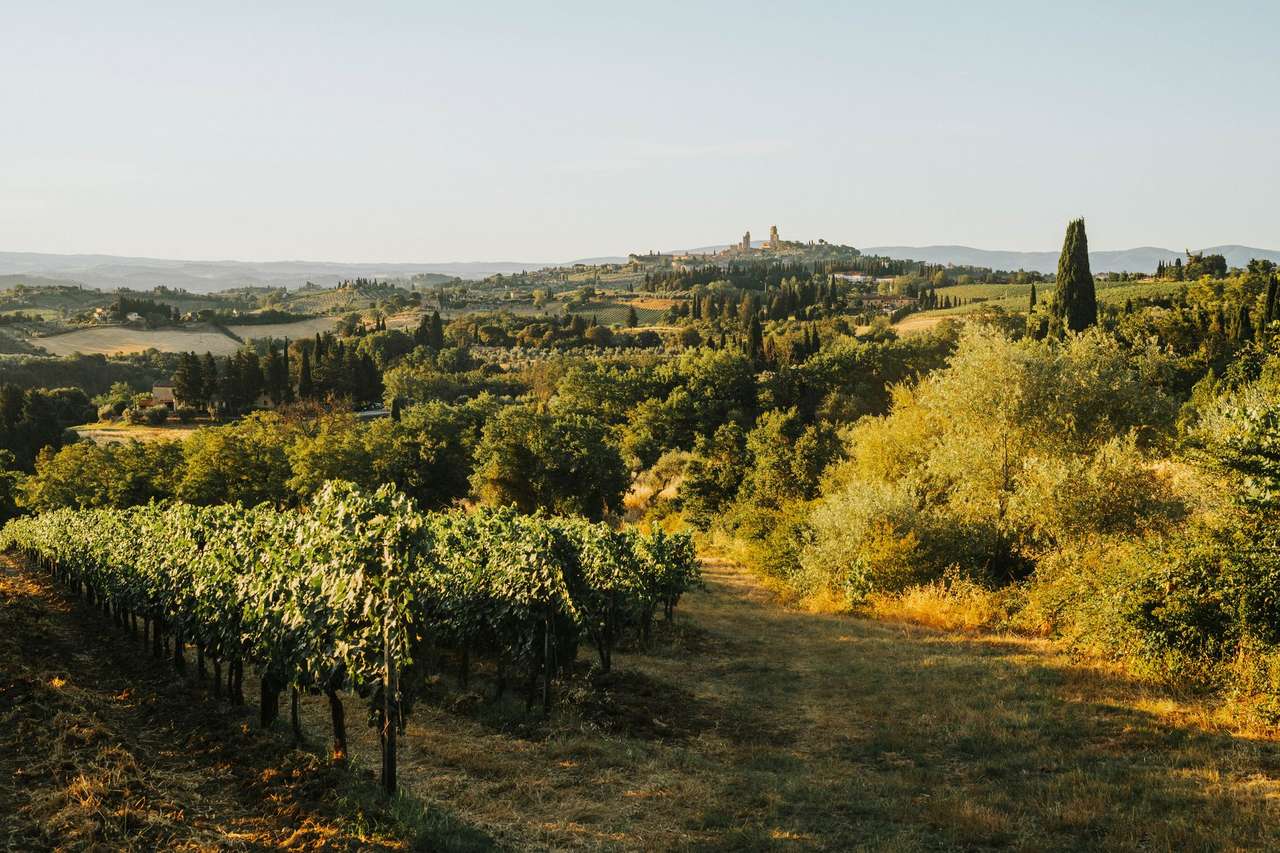
Tuscany is the Italy that most people picture before they arrive: cypress-lined roads cutting between vine rows, hilltop towns rising above a valley of wheat and sunflowers, a light in late afternoon that painters have been trying to describe since the 14th century. The region sits in the middle of the country, bordered by Liguria and Emilia-Romagna to the north, Umbria and Lazio to the east and south. Florence is the capital and gateway; beyond it, in every direction, is some of the most recognisable landscape on earth.
Tuscany is large enough that a single trip rarely covers everything. It works best approached by subregion: the urban cluster of Florence, Siena, Pisa, and Lucca in the north; the wine country of Chianti and the Crete Senesi rolling south from Siena; the ridge towns of the Val d’Orcia near the Lazio border; and the wilder Maremma coast in the south-west. This guide covers the main areas and what you need to know to move between them.
Florence
Florence is Tuscany’s capital and one of the most art-dense cities in the world. The historic centre is compact enough to walk across in 20 minutes, which concentrates the Renaissance inventory — the Uffizi, Accademia, Bargello, Duomo, Baptistery, and Palazzo Pitti — into a manageable circuit.
The Uffizi Gallery (Piazzale degli Uffizi 6) holds Botticelli’s Birth of Venus and Primavera, Caravaggio, Raphael, and Leonardo in a single building. Entry costs approximately EUR 20–25 as of 2026; book online at uffizi.it well in advance in summer, as timed-entry slots sell out days ahead. Hours are Tuesday to Sunday 08:15–18:50.
The Accademia Gallery (Via Ricasoli 58–60) is smaller but contains Michelangelo’s David, still one of the more arresting sculptures you are likely to see in person. Entry approximately EUR 12–20; similarly busy, book ahead at firenzemusei.it.
Where to stay in Florence:
- Hotel Savoy — The city’s grande dame on Piazza della Repubblica, a five-minute walk from the Duomo. Rooms from approximately EUR 350–500 per night.
- Hotel Davanzati — Well-placed mid-range hotel inside the historic centre, friendly service and comfortable rooms. From approximately EUR 130–200 per night.
- Academy Hostel — A solid budget option on Via Ricasoli, steps from the Accademia. Dorm beds from approximately EUR 28; private rooms from approximately EUR 80.
Where to eat in Florence:
- Trattoria Mario (Via Rosina 2) — Communal tables, cash only, some of the best ribollita and bistecca in the city. Lunch only. Budget approximately EUR 15–25 per person.
- Buca Mario (Piazza Ottaviani 16) — Florence’s oldest restaurant, reliable for traditional Florentine beef and local wines. Approximately EUR 35–55 per person.
See our Florence city guide for a full breakdown of museums, neighbourhoods, and where to book timed entries.
Siena
Siena is Florence’s great rival and, for many visitors, the more immediately loveable of the two. The Piazza del Campo — the sloping fan-shaped main square — is arguably the finest civic space in Italy, and the twice-yearly Palio horse race (2 July and 16 August) that takes place around it is the most intensely attended local event in the country. Book accommodation months in advance for Palio dates and expect very high prices.
The Siena Cathedral (Piazza del Duomo) is a Gothic masterpiece with an extraordinary inlaid marble floor — partially uncovered for a period each autumn, typically August to October. Entry to the cathedral is approximately EUR 4; combined tickets with the Museo dell’Opera and Baptistery run approximately EUR 13–15. Hours are roughly 10:00–18:00 Monday to Saturday, 13:00–18:00 Sunday (hours vary by season).
Where to stay in Siena:
- Grand Hotel Continental — A five-star palazzo inside the medieval walls, frescoed ceilings and all. Rooms from approximately EUR 300–450 per night.
- Hotel Duomo — Central, clean, and well-priced given its location a minute from the cathedral. From approximately EUR 120–180 per night.
- Hostel Siena — Budget option in the historic centre. Dorm beds from approximately EUR 25; private rooms from approximately EUR 70.
Where to eat in Siena:
- Osteria Le Logge (Via del Porrione 33) — Respected local trattoria with seasonal Sienese dishes, strong wine list. Approximately EUR 35–50 per person.
- Trattoria Papei (Piazza del Mercato 6) — Simpler and cheaper, great for wild boar pici and ribollita. Approximately EUR 20–35 per person.
Pisa
Pisa earns its place on the Tuscany circuit more than day-tripper reputation suggests. The Piazza dei Miracoli — holding the cathedral, baptistery, and leaning tower together on a lawn — is genuinely one of the stranger and more beautiful spaces in Italy. The Leaning Tower itself costs approximately EUR 18–20 to climb (timed entry only; book at opapisa.it); the Cathedral is free to enter. Allow two to three hours for the square.
Beyond the Piazza, central Pisa has a working university city atmosphere — good cafés and bars along the Arno, the Palazzo della Carovana on Piazza dei Cavalieri, and the Museo Nazionale di San Matteo for Pisan medieval art. Most tourists miss all of it.
Getting there: Pisa Centrale station is served by frequent trains from Florence (journey approximately 1 hour, fares from approximately EUR 8–15), Lucca (20 minutes, approximately EUR 4), and Genoa.
Lucca
Lucca is enclosed by Renaissance-era defensive walls — wide enough at the top to bicycle around — and inside them is a compact city of medieval towers, Romanesque churches, and narrow streets that manages to feel largely tourist-free despite its popularity. There is no single unmissable museum; the pleasure is the walking.
The Torre Guinigi (Via Sant’Andrea) — a medieval tower with oak trees growing from its top — is the city’s most distinctive landmark. Entry approximately EUR 4 as of 2026. The Cathedral of San Martino (Piazza San Martino) contains Jacopo della Quercia’s tomb of Ilaria del Carretto, one of the finest Renaissance sculptures in Tuscany. Entry to the cathedral sacristy approximately EUR 3.
Bicycle hire is widely available in the city centre (approximately EUR 3–5 per hour) and the most enjoyable way to cover the walls.
Where to stay in Lucca:
- Palazzo Busdraghi — Elegant four-star hotel in a 17th-century palazzo inside the walls. From approximately EUR 160–240 per night.
- Hotel Universo — Long-established central hotel on Piazza del Giglio, reliable mid-range. From approximately EUR 90–140 per night.
Chianti
The Chianti Classico zone runs along the SR222 road between Florence and Siena — a route through vine-covered hills, olive groves, and a succession of castle estates that produce the region’s most famous wine. The main towns along the route are Greve in Chianti, Panzano, Radda, Gaiole, and Castelnuovo Berardenga, each with its own enotecas and local producers.
Chianti wine tours from Florence run daily from Florence and typically cover two or three estates with tastings. Expect to pay approximately EUR 75–130 per person for a half-day group tour. Self-driving the SR222 is entirely feasible — the road is well signed and most major estates welcome visitors, but cellar door tastings should be booked in advance for the more prestigious producers (Antinori, Badia a Coltibuono, Castello di Brolio).
Val d’Orcia
The Val d’Orcia — a UNESCO World Heritage landscape of rolling clay hills, isolated farmhouses, and stand-alone cypress trees — is the pastoral image that defines Tuscany in the popular imagination. The main settlements are Pienza (a Renaissance ideal city, free to wander), Montepulciano (Vino Nobile, excellent street food, views from the town walls), and Montalcino (home to Brunello, arguably Italy’s most age-worthy red wine).
Public transport to the Val d’Orcia from Siena exists but is infrequent and slow. A rental car is the practical choice; the round trip from Siena covers 120–150 km depending on which towns you include.
Where to stay:
- Castello di Velona (Montalcino) — A luxury resort inside a genuine medieval castle above the Orcia valley. Rooms from approximately EUR 400–700 per night.
- Agriturismo Poggio Covili (near Castiglione d’Orcia) — A working farm producing olive oil and wine, with comfortable rooms and an excellent breakfast. From approximately EUR 130–200 per night.
Maremma
The Maremma is Tuscany’s least-visited subregion: a stretch of the south-western coast from Piombino to the Lazio border, with Etruscan sites, a nature reserve, and long stretches of beach that draw Italian rather than international visitors. Grosseto is the provincial capital; Saturnia has thermal hot springs that are free to use (the Cascate del Mulino pools on the main road, open day and night). Pitigliano — a medieval town built on a tufa ridge above a gorge — is worth the detour from the coast.
Getting Around Tuscany
By train: Trenitalia and Italo serve Florence, Pisa, Lucca, and Siena with frequent connections. Florence to Siena takes approximately 1.5 hours by fast bus (SITA/FlixBus) or around 1.5–2 hours by train via Empoli. Florence to Pisa is approximately 1 hour by train; Florence to Lucca approximately 1.5 hours.
By car: A rental car is essential for Chianti, Val d’Orcia, and Maremma. Florence city centre is a ZTL (Limited Traffic Zone) — do not drive into the historic centre without a specific permit, as cameras issue fines automatically. Pick up and drop off at the airport or train station instead. See our renting a car in Italy guide for ZTL rules and booking advice, and compare car hire rates for Tuscany.
By bus: SITA and Tiemme operate regional buses connecting smaller towns not on the rail network. Timetables are available at tiemmespa.it.
Best Time to Visit Tuscany
Late April to June is the most broadly rewarding period: wildflowers in the Val d’Orcia, mild temperatures, and visitor numbers below summer peak. Tuscany’s landscapes are at their most photogenic with green vegetation and clear light.
September and October are the local favourite months — the vendemmia grape harvest runs through October in Chianti and Montalcino, olive harvest follows in November, and temperatures are warm without being oppressive. Accommodation is slightly easier to book than peak summer.
July and August are hot (Florence can hit 35–38°C), very busy, and expensive. Many Italians leave the cities for the coast in August. If you visit in summer, prioritise early morning starts at museums and save afternoons for air-conditioned restaurants or the Maremma coast.
Winter (November to March) is quiet and significantly cheaper. Many agriturismo properties and smaller hotels close for the season, but the cities are fully open and the absence of crowds makes Florence’s museums a different experience.