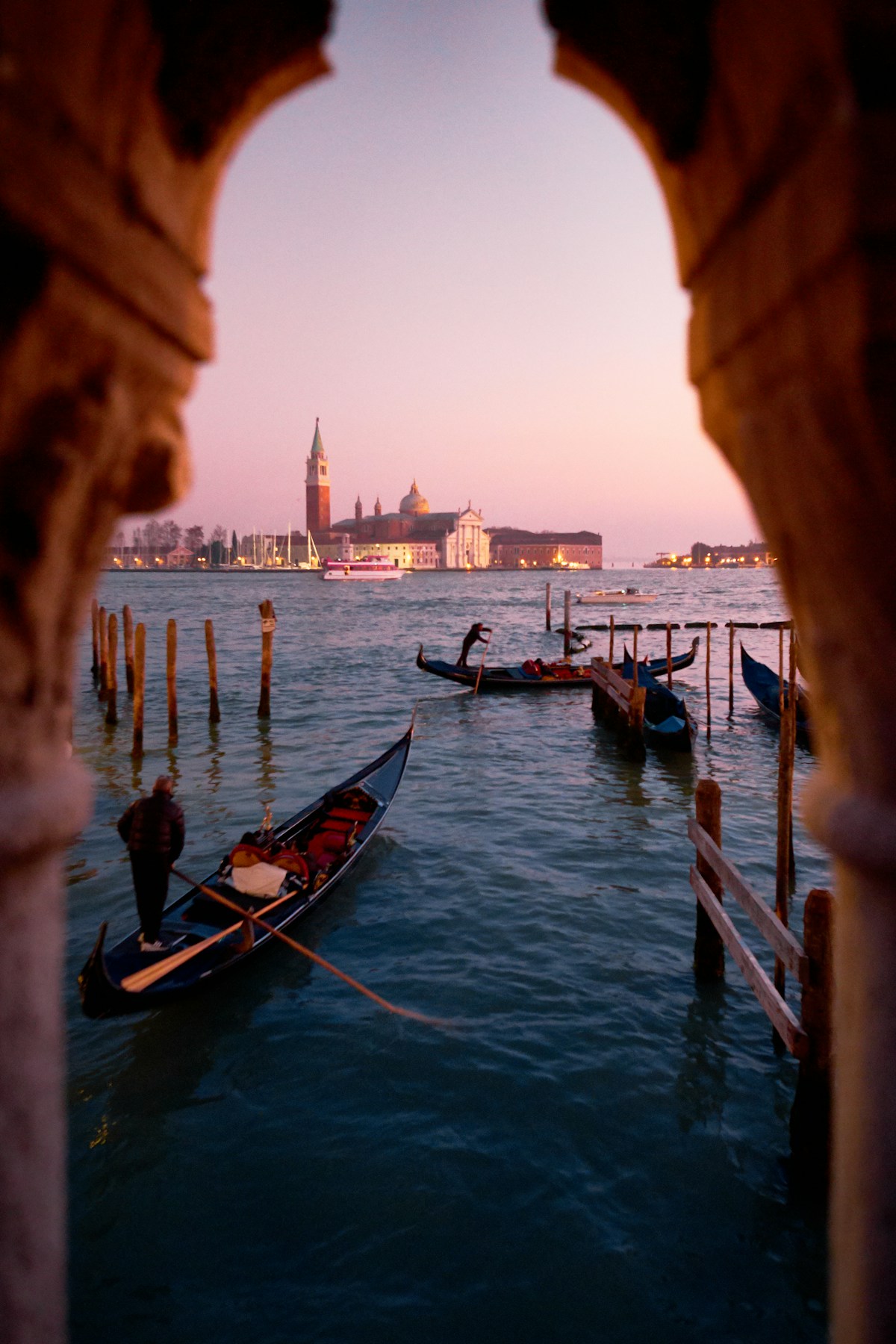
Venice Travel Guide: Canals, Art & the Real City
A practical guide to Venice: St. Mark's, the Grand Canal, which islands to visit, how to get around by vaporetto, and where to stay.
Guides for Venice
Venice is built on 118 small islands connected by 400 bridges, with canals where the streets would be. There is no other city like it. It is also the most over-touristed city in Italy - on a busy summer day, 80,000 to 100,000 visitors arrive into a city where fewer than 50,000 people actually live. Managing your visit requires some planning.
Orientation
Venice proper (the main island cluster) is divided into six sestieri (districts): San Marco, Dorsoduro, Santa Croce, San Polo, Cannaregio, and Castello. San Marco contains the Basilica, the Doge’s Palace, and the Piazza - and the densest crowds. Dorsoduro (south) and Cannaregio (north) have a more local character. The Lido is the beach island, accessible by vaporetto.
The sights
St. Mark’s Basilica is architecturally extraordinary - a Byzantine-Venetian hybrid covered in 8,000 square metres of gold mosaic. Free to enter; queue forms early. The Doge’s Palace next door requires a ticket and is worth it for the council chambers and the Bridge of Sighs. The Gallerie dell’Accademia holds the definitive collection of Venetian Renaissance painting (Titian, Tintoretto, Veronese, Bellini). The Peggy Guggenheim Collection on the Grand Canal is one of the best modern art museums in Europe. Venice’s history as a maritime republic - stretching from the 7th century to 1797 - shaped much of what visitors see today; our guide to medieval Italy covers the broader context of how the Italian city-states developed and fought for supremacy during the period that gave Venice its wealth and architecture.
The islands
Murano (glassmaking, a short boat ride north) and Burano (brightly painted fishermen’s houses, renowned lace) are easy half-day trips on the vaporetto. Torcello has the oldest church in the lagoon (7th-century mosaics) and is almost empty.
Costs
Venice is the most expensive city in Italy by a significant margin. A canal-view hotel room in peak season costs €250–500 per night. A gondola ride is €90 for 30 minutes. Budget options exist: the HI Venice hostel on the Giudecca island offers the best-value beds. The trick for food is to move away from Piazza San Marco - within a 10-minute walk, prices halve and quality rises.
Getting around
Vaporetti (water buses) are the public transit system. A single-ride ticket is €9.50; a 24-hour pass is €25. Walking is often faster for short distances. Water taxis are expensive (€50+ for most journeys). There are no cars.
From Marco Polo Airport: the Alilaguna water bus runs direct to central Venice stops including San Marco (approximately 70–80 minutes, approximately €15). The ATVO or ACTV land bus to Piazzale Roma is faster (approximately 25 minutes, approximately €8) and connects to vaporetti from there. For a pre-booked private land transfer from the airport to Piazzale Roma with fixed pricing, Welcome Pickups covers Marco Polo arrivals.
Entry fees and opening hours
Doge’s Palace (Palazzo Ducale): approximately €35 as of 2026 (advance online booking at least 30 days ahead reduces this to approximately €30), including the Bridge of Sighs. Open daily 9am–7pm (last entry 6pm). Booking at visitvenezia.eu avoids the worst queues. Gallerie dell’Accademia: approximately €15; closed Monday. Peggy Guggenheim Collection: approximately €18; open Wednesday to Monday 10am–6pm. St. Mark’s Basilica is free but has timed entry slots (book at saintmarksbasilica.org - €3 reservation fee); the basilica museum and loggia cost an extra €7. The bell tower (Campanile) charges approximately €10.
Murano glassblowing demonstrations are free at most factories; Burano is free to visit - just ferry costs. Torcello’s Cathedral of Santa Fosca charges approximately €5.
Booking close to your travel dates? Our last-minute tours page shows Venice and Italy tours with confirmed availability in the next three days, refreshed twice daily.
Where to eat
Away from Piazza San Marco, prices drop sharply. Osteria alle Testiere (Calle del Mondo Novo, Castello) is one of the best small seafood restaurants in Venice - tasting menu approximately €55–65 per person; book weeks ahead. Trattoria da Jonatan (Via Garibaldi, Castello) is a reliable neighbourhood option; mains approximately €12–18. For lunch, Cantina Do Mori (Calle Do Mori, San Polo) near the Rialto is one of Venice’s oldest bacari - cicchetti (bar snacks) from approximately €1.50 each, a glass of wine approximately €2–3. All’Arco (Calle dell’Arco, San Polo) is a favourite among locals for cicchetti - arrive before 12:30pm when the best selections are gone.
For a full dinner, eating in Cannaregio or Castello keeps costs roughly half those of San Marco.
Where to stay
Venice accommodation is expensive across all tiers. Budget hostels on the Giudecca or near the train station cost from approximately €25–35/night per bed. Generator Venice (Fondamenta Zitelle, Giudecca) is a stylish hostel with doubles from approximately €90/night - a 10-minute vaporetto ride from San Marco. Mid-range hotels on the main island start at approximately €130–200/night; around the Rialto and Dorsoduro, expect €160–250/night for a comfortable double. Hotel Danieli (Riva degli Schiavoni) and The Gritti Palace (Campo Santa Maria del Giglio) are the landmark luxury hotels - rooms from approximately €500–700/night as of 2026. Staying in Mestre (mainland, 15 minutes by train) cuts accommodation costs by 50–60%.
For a realistic take on the experience, our Venice gondola rides guide covers pricing, route options, and when (and whether) it is worth it. Book a guided Venice tour to explore St. Mark’s Basilica, the Doge’s Palace, and the Grand Canal with a local expert - and avoid the worst walk-in queues. Trieste - 2 hours by train - is a Habsburg-era port city with a distinct Central European character, strong coffee culture, and a literary heritage (Joyce, Svevo) that makes it unlike anywhere else in Italy.
For things to do beyond the major sights, our Venice things to do guide covers museum queues, island day trips, and the lesser-visited sestieri. Where to sleep: our Venice hotels guide covers areas, price tiers, and the Mestre mainland alternative. For the cicchetti bars, seafood trattorias, and what the locals order, the Venice food guide and the broader Venetian cuisine guide cover both in detail.
Deciding between the two cities? Our Venice vs Florence guide helps with that choice. For a full accommodation guide covering the main island, Mestre, and the best value options at each price tier: our Venice hotels guide.
When to visit
November to January is quieter, cheaper, and often beautifully atmospheric - fog on the canals is genuinely striking. February brings Carnevale (extraordinary costumes, massive crowds). July and August bring floods of tourists and occasional acqua alta (high water) flooding in autumn. The city introduced a day-tripper entry fee (€5 as of 2026) on peak weekend days in spring and summer - check the city’s official site before visiting.
Upcoming Events in Venice
La Befana - Feast of the Epiphany 2027
La Befana 2027, January 6. Italy's Epiphany gift-giving day: children receive sweets or coal from the Befana witch, then decorations come down.
Book an experience
Top experiences in Venice
Explore the best tours and activities in Venice, with instant confirmation and free cancellation on most bookings.