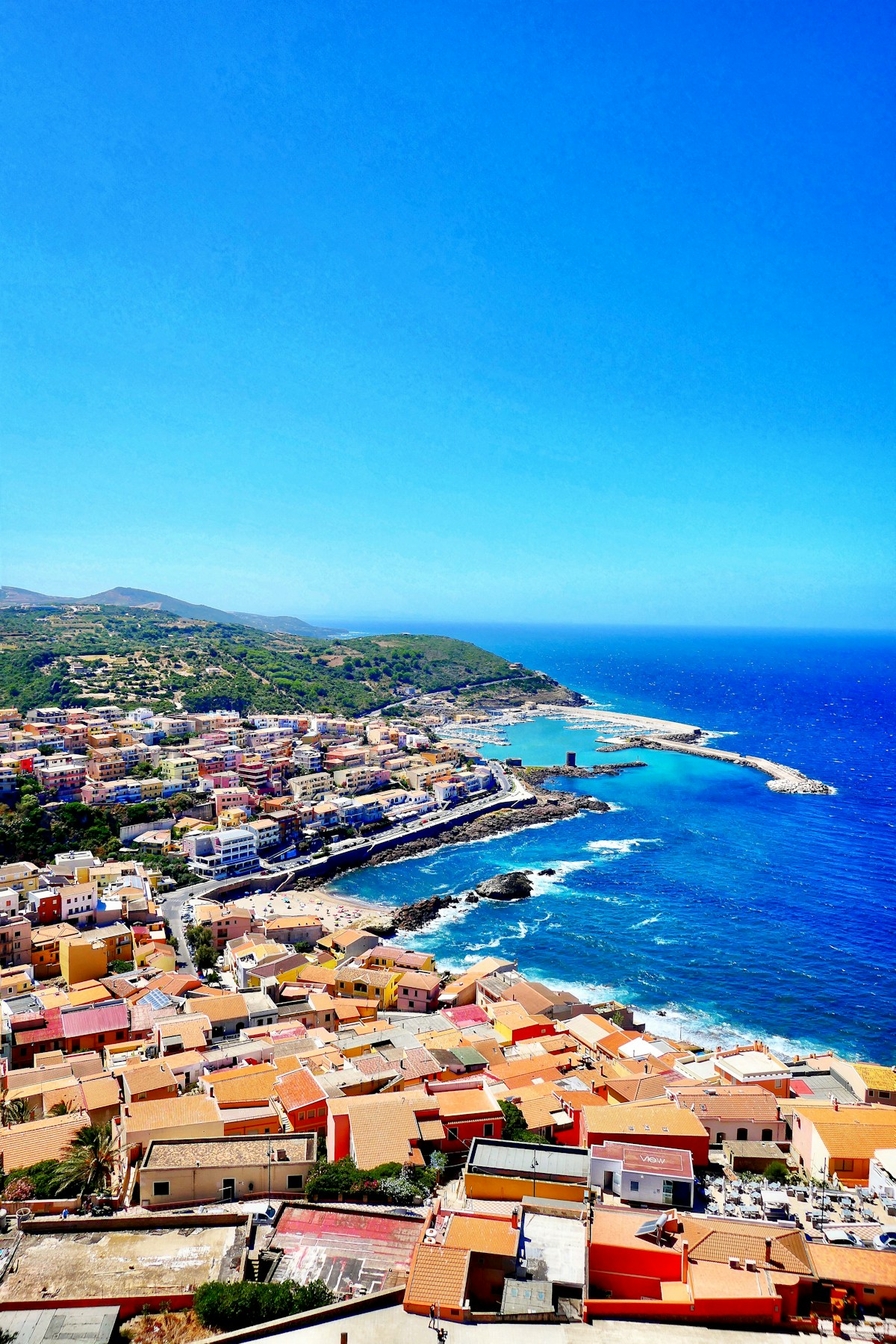
Sardinia requires a car and time - it rewards both generously. The beaches are the most obvious draw, but the Bronze Age archaeology, the mountain interior, and the Catalan-inflected northwest create a much richer experience than a standard beach holiday.
Swim at Cala Goloritzé
The most spectacular beach on the island - and one of the most spectacular in the entire Mediterranean - is accessible only by boat (30 minutes from Cala Gonone or Santa Maria Navarrese) or by a 2-hour hike down from the plateau above. A vertical limestone cliff rises 143m from a beach of white pebbles and turquoise-green water. A distinctive sea stack stands in the bay. UNESCO World Heritage Site. There is no development, no facilities, and a daily visitor limit.
Go by boat from Cala Gonone for the easiest access; the hike from Golgo plateau is for the properly fit. Either way, arrive early in summer. Guided tours of Sardinia covering the Golfo di Orosei boat circuit and the nuragic sites are available from Cala Gonone and Cagliari.
Visit Nuraghe Su Nuraxi
The Nuragic civilisation built around 7,000 stone towers across Sardinia between roughly 1800 and 900 BC, and this is the most complete example. A central tower surrounded by four secondary towers, enclosed by a fortified wall with further towers, and a village of round stone huts beyond. UNESCO World Heritage Site since 1997. 45 minutes south-west of Cagliari, near the town of Barumini.
The museum in Barumini puts the site in context. The site itself takes 1–2 hours with a guided tour (mandatory, included in the ticket price).
Explore the Golfo di Orosei by boat
The east coast between Cala Gonone and Santa Maria Navarrese is a UNESCO-protected coastline of limestone cliffs, sea caves, and inaccessible beaches reachable only by water. Day-trip boats from Cala Gonone visit:
- Cala Goloritzé - the standout beach
- Cala Biriola - small, wild
- Cala Sisine - larger pebble beach between cliffs
- Grotta del Bue Marino - a sea cave once used by monk seals (now gone but still extraordinary)
Book a half-day or full-day boat from Cala Gonone; combined tickets cover multiple beaches.
Walk the Gorropu Gorge
The Sa Gologone area near Orgosolo contains what is sometimes called the Grand Canyon of Sardinia. The Gorropu Gorge cuts through a limestone massif - 500m walls narrowing in places to 4m across. The standard day hike follows the Flumineddu river through the gorge for several kilometres. No technical climbing required but scrambling over boulders is involved. Spring (April–May) is the best time - summer is extremely hot and the gorge can flood in winter.
Drive the Costa Smeralda and La Maddalena
The Costa Smeralda (Emerald Coast) in the north-east is Sardinia’s most famous coastline - fine white sand, water in shades from pale turquoise to deep blue-green, and the distinctive rock formations of pink granite. The beaches of Capriccioli, Cala di Volpe, Pevero, and Romazzino are the best of the standard resort section. Expensive in July and August; relatively quiet in May–June and September–October.
From Palau, a 15-minute ferry takes you to La Maddalena - the largest island of the national park archipelago. From La Maddalena, a bridge connects to Caprera (where Garibaldi lived out his retirement). Day-trip boats from both La Maddalena and Palau reach the outer islands.
Spend a day in Alghero
Alghero (L’Alguer in Catalan) is a small walled port town in the north-west that was colonised by Catalans in 1354 and maintained a Catalan-speaking population for centuries. The old town is well-preserved medieval/Renaissance streets behind defensive walls above the sea. The Cathedral of Santa Maria is Catalan Gothic. The nearby beaches at Lazzaretto and le Bombarde are excellent.
Take an evening boat from Alghero port to the Grotta di Nettuno - a sea cave reached through the cliffs, accessible by sea or by a famous stairway (Escala del Cabirol: 654 steps) down the cliff face.
Visit Cagliari’s museums and Castello quarter
Cagliari, the capital, is often bypassed for the beaches but repays exploration. The Castello quarter, on a hilltop above the city, is a walled medieval district - narrow streets, palazzos, and views across the Campidano plain and the sea. The Archaeological Museum contains the finest collection of nuragic bronzetti (small bronze figurines of extraordinary quality) and Phoenician/Carthaginian artefacts from the south of the island.
The Stagno di Molentargius, on the edge of the city, is a lagoon with flamingos.
Drive through the Barbagia
The mountainous interior of Sardinia - the Barbagia, around Nuoro - is the least-visited and most traditional part of the island. Villages like Orgosolo (famous for political murals painted on every building), Oliena, and Mamoiada have maintained festivals, costumes, and food traditions that feel entirely distinct from coastal Italy. The Carnevale at Mamoiada features the Mamuthones - masked figures wearing heavy cowbells, related to the most ancient pastoral rituals in the western Mediterranean.
This is remote territory requiring a car and some willingness to navigate without tourist infrastructure.
Back to the full Sardinia island guide for getting there, transport, and when to go. For where to stay across the island by area: Sardinia hotels guide. Comparing Sardinia with Sicily? Our Sicily vs Sardinia guide covers what each island does best. For a broader southern Italy trip that takes in the islands: our 2 weeks in Italy itinerary includes island extension options. For the nuragic culture and Sardinian food traditions, the Sardinia guide provides more context.