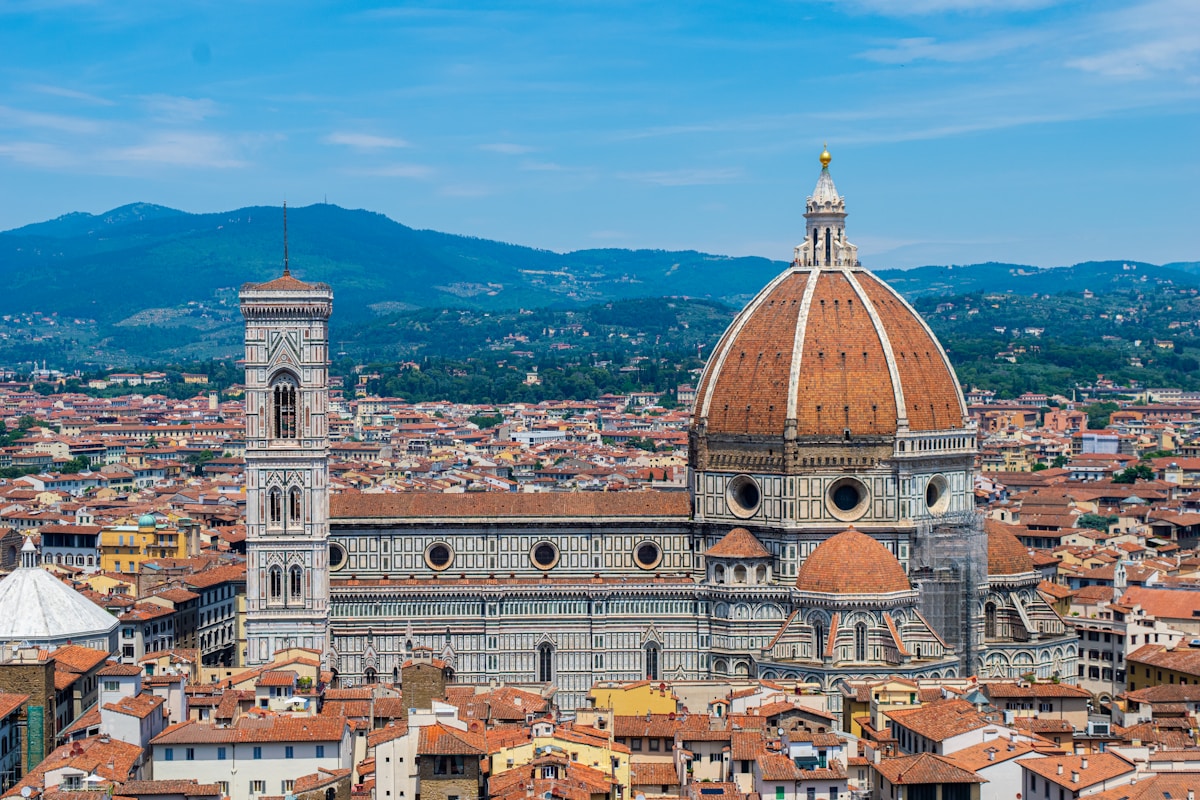
Bologna and Florence are separated by just 37 minutes of high-speed rail - yet they have fundamentally different personalities. Florence is Italy’s Renaissance capital, a global tourist destination built around world-famous art. Bologna is Italy’s food capital, a university city with a strong local identity that tourism has not yet overwhelmed. Florence is on every first-time itinerary. Bologna is the city that experienced Italy travellers insist you should not miss.
Quick Verdict
| Category | Bologna | Florence |
|---|---|---|
| Food | Winner | - |
| Art and museums | - | Winner |
| Value for money | Winner | - |
| Local atmosphere | Winner | - |
| Architecture | Tied | Tied |
| Nightlife | Winner | - |
| Day trips | - | Winner |
| Tourist infrastructure | - | Winner |
Choose Bologna if food is your priority, you want a more local Italian experience, and you prefer fewer tourists. Choose Florence if you want Renaissance art, the classic Tuscan experience, and better day-trip access to the Tuscan countryside.
Food and Dining
This is Bologna’s signature strength - the city is known as “La Grassa” (The Fat One) for good reason.
Emilian food in Bologna represents arguably the richest pasta tradition in Italy. Tortellini in brodo (small pasta parcels in clear broth, €12–14) is the dish that locals consider the test of a restaurant. Tagliatelle al ragù (the original “Bolognese” - fresh egg pasta with a slow-cooked meat sauce, €10–14) is ubiquitous and consistently excellent. Mortadella (Bologna’s original cured pork, not the supermarket version), Parmigiano Reggiano, and traditional balsamic vinegar from nearby Modena complete the picture. Osteria dell’Orsa (student favourite, pastas from €8), Trattoria Anna Maria (handmade pasta from €10), and Drogheria della Rosa (€12–16) are all excellent. A full dinner with Lambrusco wine costs €25–35.
The Mercato delle Erbe and Mercato di Mezzo are the food market experiences - less polished than Florence’s Mercato Centrale but more local. Bologna’s food culture is not a tourist attraction; it is simply how the city eats. Bologna food tours offer a guided way into the Quadrilatero markets and producers.
Florence’s Tuscan food is excellent but different - simpler and more ingredient-driven than Bologna’s rich pasta tradition. Bistecca alla fiorentina (Chianina beef, served rare, €45–60/kg) is the centrepiece — order it at Buca Mario (Via dell’Aqua 28, Florence’s oldest restaurant, founded 1886) or Trattoria Sostanza (Via della Porcellana 25, famous for its butter pasta and ‘chicken in butter’). Ribollita (Tuscan bread and vegetable soup, €10–12) and pappa al pomodoro (bread and tomato stew, €9–11) are the hearty staples. Lampredotto (tripe sandwich, €4–5) from the kiosks around Mercato Centrale is the best cheap lunch in the city. Florence’s Mercato Centrale (San Lorenzo) has a ground-floor traditional food market and an upstairs food hall for cooked food. Tuscan wines are outstanding: Chianti Classico (€6–10 per glass at a good enoteca), Brunello di Montalcino, and Vino Nobile di Montepulciano. A full dinner at a good Florentine trattoria costs €25–40 per person. For authentic eating, look to the Oltrarno district (south of the Arno) or the streets around Santa Croce, rather than the restaurants ringing Piazza della Repubblica.
Winner: Bologna, as Italy’s acknowledged food capital. Florence has equally fine ingredients but fewer locals eating out, which means more variation in quality.
Art and Museums
Florence is the birthplace of the Renaissance and has no peer in Italy for art.
The Uffizi Gallery (€25) holds Botticelli, Leonardo, Raphael, and Caravaggio. The Galleria dell’Accademia (€16) has Michelangelo’s David. The Palazzo Pitti (€16) adds more depth. The Bardini Museum (€8), the Museo di San Marco (Fra Angelico frescoes, €8), and churches like Santa Croce and San Lorenzo contain masterpieces at every turn.
Bologna’s art is more understated. The Pinacoteca Nazionale (€8) has Raphael, Giotto, and the Bolognese school (Carracci, Guido Reni). The Basilica di San Petronio - Italy’s largest brick church, dominating Piazza Maggiore - was intended to be larger than St Peter’s in Rome before the Pope halted construction. The Archiginnasio (free) houses the extraordinary Anatomical Theatre (1637), with carved wooden lecturer’s chair and flayed-muscle statues. The MAMbo contemporary art museum (€8) is a worthwhile modern counterpoint.
Winner: Florence, convincingly - one of the world’s great art cities.
Architecture and Atmosphere
Both cities have distinctive architectural characters.
Bologna is famous for its porticoes - approximately 40 kilometres of covered arcades that line the streets, now a UNESCO World Heritage Site. The Two Towers (Torre degli Asinelli, €5 to climb, 498 steps for a panoramic view; Torre Garisenda, leaning at a concerning angle) are the city’s symbol. The buildings are predominantly red-brick, giving the city its other nickname - “La Rossa” (The Red One). The overall effect is warm, intimate, and distinctly un-touristic.
Florence’s architecture is grander - the Duomo with Brunelleschi’s dome (dome climb €30) dominates the skyline, the Palazzo Vecchio anchors Piazza della Signoria, and Ponte Vecchio (lined with jewellers’ shops) crosses the Arno. The buildings are cream and ochre rather than red, giving the city a more refined appearance.
Winner: Florence for grandeur. Bologna for character and the portico experience.
Accommodation
Bologna is substantially cheaper. A 3-star hotel near Piazza Maggiore costs €70–120/night. The university district has good budget options from €50–80. The city has fewer luxury options than Florence but more affordable mid-range choices. The Art Hotel Commercianti (from €100) on Piazza Maggiore and Hotel Metropolitan (from €80) are well-regarded.
Florence’s hotels are more expensive and book up faster. A 3-star hotel near the Duomo costs €110–180/night. The Oltrarno district is slightly more affordable. Hostels from €35–50/night. The compact centre means most hotels are within walking distance of major sights.
Winner: Bologna - 30–40% cheaper with comparable quality.
Getting Around
Both cities are highly walkable. Bologna’s centre is compact - Piazza Maggiore to the train station is a 15-minute walk, and the porticoes provide shelter from rain and sun. The city is flat and easy to navigate.
Florence’s centre is similarly walkable - the Duomo to the Uffizi is 5 minutes, and most sights are within a 15-minute walk. The Oltrarno (south of the Arno) adds a slightly longer dimension but remains accessible on foot.
Neither city requires public transport for the main sights.
Winner: A draw - both are excellent walking cities.
Nightlife and Student Culture
Bologna is one of Italy’s liveliest university cities. The University of Bologna - the oldest in the Western world, founded in 1088 - brings approximately 85,000 students to a city of 400,000. The result is an active bar and nightlife scene concentrated around Via Zamboni and the university district. Aperitivo bars (drinks €5–8 with free food buffers) are packed every evening. Live music, jazz clubs, and alternative culture thrive here. The atmosphere is more local and less tourist-oriented than Florence.
Florence’s nightlife is more tourist-driven. Piazza Santo Spirito in the Oltrarno has a strong aperitivo scene. The area around Santa Croce has bars popular with students and travellers. But Florence’s nightlife does not match Bologna’s energy or authenticity.
Winner: Bologna - a genuine university city atmosphere.
Day Trips
Florence is the better day-trip base for Tuscany. Siena (75 minutes by bus), Pisa (1 hour by train), Lucca (1.5 hours), San Gimignano (90 minutes by bus), and the Chianti wine country are all easily accessible.
Bologna’s day trips go in different directions: Modena (20 minutes by train - balsamic vinegar factories, Ferrari Museum €17), Parma (1 hour - Parmigiano Reggiano, prosciutto di Parma), Ravenna (1 hour - extraordinary Byzantine mosaics), and Ferrara (30 minutes - Renaissance city walls). These are less famous than Florence’s day trips but equally rewarding for food and culture.
Winner: Florence for range and fame. Bologna for food-focused day trips.
When to Visit
Both cities follow the same seasonal pattern. Spring (April–June) and autumn (September–October) are ideal.
Bologna is less crowded than Florence year-round - it never reaches Florence’s peak-season saturation. Summer is hot in both cities (Bologna’s Po Valley location makes it humid; Florence’s valley traps heat). Winter in Bologna is colder and foggier than Florence but brings atmospheric markets and the university-term buzz.
Winner: A draw. Bologna handles crowds better; Florence has milder winters.
Final Verdict
Florence is the essential first-time destination - a city that delivers the Italian art and architecture experience at the highest possible level. Bologna is the city you visit when you want to eat like a local, experience Italy without tourist crowds, and discover one of Europe’s most underrated cities.
The 37-minute train connection makes combining them effortless. Book the Bologna–Florence train on Omio for side-by-side fare comparison. A week in Italy that splits time between Florence and Bologna captures two of Italy’s finest but most different cities - art and food, tourists and locals, Tuscany and Emilia.
How to Book Hotels in Bologna and Florence
Bologna hotels book out far less aggressively than Florence. Even in July and August you can often find good central options 2–3 weeks ahead. Florence is the opposite — peak season (May–September) and Easter week require 6–8 weeks’ notice for anything near the Duomo or Uffizi, and quality options near Piazza della Signoria fill fastest of all.
Specific Bologna picks:
- Art Hotel Commercianti (Via de’ Pignattari 11): Directly on Piazza Maggiore, the best-positioned hotel in the city. Several rooms have medieval timbered ceilings and views over San Petronio. From approximately €100/night.
- Hotel Metropolitan (Via dell’Orso 6): A reliable 4-star a short walk from Piazza Maggiore, with well-maintained rooms and efficient service. From approximately €80/night.
- Hotel Touring (Via de’ Mattuiani 1, near the Due Torri): A clean, consistent 3-star close to the Two Towers. One of the best-value central hotels in Bologna. From approximately €70/night.
Specific Florence picks:
- Hotel degli Orafi (Lungarno Archibusieri 4): A 4-star directly adjacent to the Uffizi, with upper-floor rooms facing Ponte Vecchio across the Arno. From approximately €140/night.
- Hotel Perseo (Via de’ Cerretani 1): 100 metres from the Duomo, clean and well-managed 3-star, one of the best mid-range options in the historic centre. From approximately €100/night.
- Soprarno Suites (Via Maggio 35, Oltrarno): A design-forward boutique property in the quieter Oltrarno neighbourhood. Good option for repeat Florence visitors who want to stay south of the Arno. From approximately €130/night.
Search Bologna hotels on Booking.com → Search Florence hotels on Booking.com →
Ready to Plan Your Trip?
See our itineraries for inspiration:
- Northern Italy Itinerary - lakes, cities, and the Dolomites
- Tuscany Itinerary - five days in the heart of Italy
- One Week in Italy - seven days through Rome, Florence, and Venice
- 10 Days in Italy - the classic grand tour of Italy’s highlights
For more Florence comparisons: our Venice vs Florence guide covers two very different Renaissance cities, and our Rome vs Florence guide weighs Tuscany’s art hub against the capital.
Plan Your Trip
✈️ Book your flights to Italy 🛡️ Get travel insurance 📱 Stay connected with an eSIM 🚗 Rent a car
🎟️ Browse tours in Bologna — Browse tours in Florence 🏨 Search hotels in Bologna — Search hotels in Florence