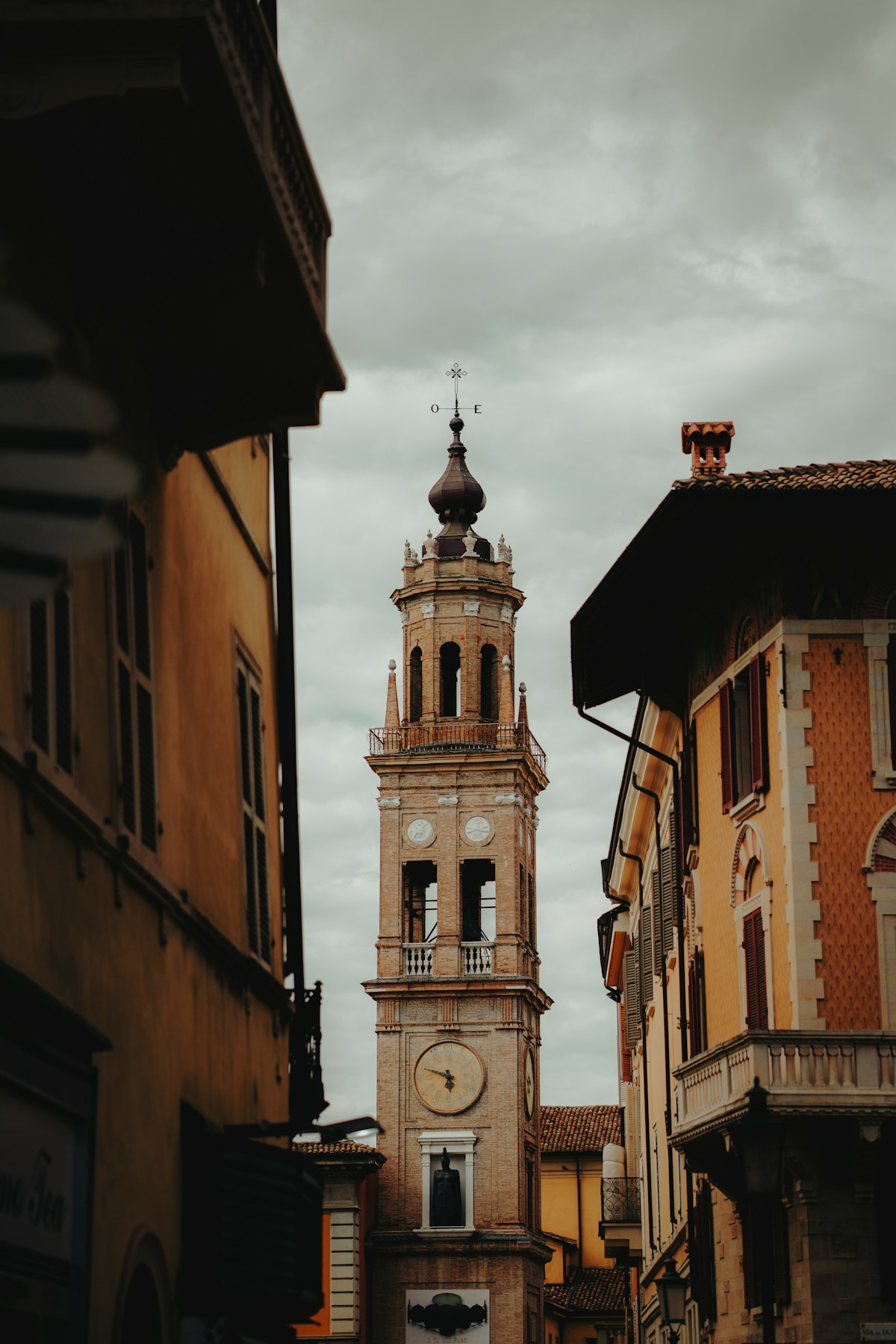
Parma Travel Guide: Prosciutto, Parmigiano, and Baroque Art
Your guide to Parma: Emilia-Romagna's gourmet capital, with Correggio's frescoes, the Teatro Regio opera house, prosciutto, and Parmigiano.
Guides for Parma
Parma is the capital of Italian gastronomy and, arguably, its most underrated city. Compact, wealthy, and self-assured, it sits in the heart of the Po Valley midway between Milan and Bologna, and produces - under strictly enforced geographic designations - two of the world’s most recognisable food products: Prosciutto di Parma and Parmigiano Reggiano. It also contains a concentration of Correggio frescoes unmatched anywhere, a world-class opera house, and one of Europe’s finest Romanesque cathedral complexes. Most tourists skip it en route between Milan and Bologna. They are missing something significant.
The Cathedral and Baptistery
Parma Cathedral (Cattedrale di Santa Maria Assunta) was begun in the 11th century and completed in the 12th, with a Lombard Romanesque facade in white marble. The interior is exceptional for one reason above all others: the dome fresco painted by Antonio Allegri da Correggio between 1526 and 1530, depicting the Assumption of the Virgin. Correggio created the illusion of the dome opening upward into a swirling heaven - arguably the first true illusionistic ceiling in European painting and the direct ancestor of every Baroque ceiling that followed. The effect, seen from the floor, is remarkable. Free entry to the Cathedral; the dome viewpoint costs approximately €2 as of 2026.
The Battistero (Baptistery) stands immediately alongside - an octagonal 12th–13th century structure in pink Verona marble, one of the finest Romanesque-Gothic buildings in Italy. The sculpted portals (Benedetto Antelami, circa 1200) and the interior fresco cycle are both outstanding. Entry approximately €5 as of 2026; a combined ticket with the Cathedral museum is available.
Camera di San Paolo (Via Melloni, approximately €4 as of 2026) is a former abbess’s reception room whose ceiling was painted by Correggio around 1519 - his earliest surviving major work in Parma. It is small, often uncrowded, and the quality is extraordinary.
Palazzo della Pilotta
The Palazzo della Pilotta (Piazzale della Pace) is the vast ducal palace begun by the Farnese family in 1583, never completed, and badly damaged in Second World War bombing. What survives contains several major institutions:
Galleria Nazionale - the principal art collection of the Duchy of Parma, with major works by Correggio, Parmigianino (born in Parma), Bronzino, and El Greco. Entry approximately €10 as of 2026.
Teatro Farnese (within the Pilotta) - an extraordinary wooden theatre built in 1618 for a visit by the Medici that never happened. It is the oldest surviving example of a theatre with a permanent proscenium arch stage - the model for virtually every theatre built in Europe for the next 200 years. Free with the Galleria Nazionale ticket.
Museo Archeologico Nazionale (also in the Pilotta) - Roman and Etruscan finds from the region. Entry approximately €4 as of 2026.
Teatro Regio
Teatro Regio di Parma (Via Garibaldi 16) is one of Italy’s great opera houses, commissioned by Marie Louise of Austria (Napoleon’s second wife, made Duchess of Parma after his defeat) and opened in 1829. Parma audiences are notoriously exacting - they have whistled off internationally renowned singers who fail to meet their standards. The opera season runs October–April. The Festival Verdi, celebrating the composer born nearby in Busseto, takes place each October and is the highlight of the calendar - book well ahead. Guided tours of the theatre are available outside performance times (approximately €8–10 as of 2026).
Food and drink
Parma’s food identity is entirely its own. Prosciutto di Parma (the genuine article, produced under DOP rules, with the ducal crown stamp) is best sampled at the source: local salumerie sell it sliced to order for approximately €3–5 per 100g. Parmigiano Reggiano - the cheese that inspired every “parmesan” in the world - comes in various ages (12, 24, 36 months); the older the nuttier and more crystalline. Local alimentari sell it from the wheel.
Culatello di Zibello is considered the premium prosciutto of the region - made from the heart of the rump rather than the leg, aged in the fog-prone Po Valley cellars, and considerably more expensive. Torta fritta (fried dough) served alongside prosciutto is the local aperitivo tradition.
Named restaurants: Trattoria Corrieri (Via Conservatorio 1 - old-school Parma cooking, tortelli di erbette and anolini in brodo, mains approximately €10–16), Osteria dei Graselli (Via Garibaldi 39 - relaxed Emilian trattoria, mains approximately €12–18), Parizzi (Via della Repubblica 71 - Michelin-starred, tasting menu approximately €90–130).
Aperitivo culture in Parma is strong. The streets around Piazza Garibaldi fill out from approximately 6–9pm. Wine is typically local Malvasia (sparkling and slightly sweet), Lambrusco (red and sparkling), or a Colli di Parma Rosso.
Where to stay
Parma is a mid-size city with good accommodation range. It is particularly good value relative to nearby Bologna.
Budget: Hotel Button (Borgo Salina - doubles from approximately €55/night) is a reliable central option. Several B&Bs in the centro storico offer doubles from approximately €50–75/night.
Mid-range: Hotel Farnese (Via Reggio 51A - doubles from approximately €90–140/night) is a solid three-star with good central position. Park Hotel Pacchiosi (Viale Piacenza - doubles from approximately €80–120/night) is a slightly suburban option with more space and parking.
Luxury: Hotel Palazzo della Rosa Prati (Strada al Duomo - doubles from approximately €180–280/night) is the most atmospheric option - a converted palazzo directly behind the Cathedral, with comfortable rooms and thoughtful service.
Getting there and around
By rail: Parma is on the Milan–Bologna main line, well-served by Frecciarossa high-speed trains. From Milan Centrale: approximately 45–55 minutes (from approximately €15–25 booked ahead). From Bologna Centrale: approximately 35 minutes (from approximately €10 booked ahead). From Rome Termini: approximately 3 hours via Bologna (from approximately €40 booked ahead).
On foot: The compact centro storico is walkable from the train station in approximately 10 minutes. The Cathedral, Baptistery, Palazzo della Pilotta, and Teatro Regio are all within a 10-minute walk of each other.
Car: Parma has good motorway connections (A1 Milan–Bologna autostrada). Parking near the centre is limited and paid; the train is simpler for visitors.
Practical details
When to go: Parma is good year-round. Summer is warm (30–35°C) and the city has fewer tourists than coastal destinations. Autumn (September–November) is excellent: Festival Verdi in October, harvest season for prosciutto and cheese production, and noticeably cooler. The Po Valley fog (nebbia) in November–January is a signature feature of the region - atmospheric but cold.
Producer visits: Several prosciutto curing houses and Parmigiano dairies offer tours. The Prosciutto di Parma consortium (prosciuttodiparma.com) lists certified producers. Dairy visits typically begin at 8am when the cheese is processed - early starts required.
Shopping: The covered market at Piazza Ghiaia (daily) is the best place to buy local products at competitive prices. Via Farini has well-stocked alimentari and delicatessens. The Bottega del Parmigiano at Via Garibaldi is reliable for cheese.
For hotels from budget to palazzo: Parma hotels. For the full list of sights, Correggio frescoes, and producer tour logistics: things to do in Parma. Book a food and sights tour of Parma to visit a prosciutto curing house or Parmigiano dairy with a guide. For the full Emilian food tradition - tortelli d’erbette, prosciutto, and what to order where: Parma food guide and the Emilian food guide. Bologna is 35 minutes by train - both cities together make a strong Emilia-Romagna base.
Upcoming Events in Parma
Alba White Truffle Fair 2026
Alba White Truffle Fair 2026, October 3–December 6. World's largest white truffle market with Barolo tastings, tajarin, and live auctions in Piedmont.
La Befana - Feast of the Epiphany 2027
La Befana 2027, January 6. Italy's Epiphany gift-giving day: children receive sweets or coal from the Befana witch, then decorations come down.
Book an experience
Top experiences in Parma
Explore the best tours and activities in Parma, with instant confirmation and free cancellation on most bookings.