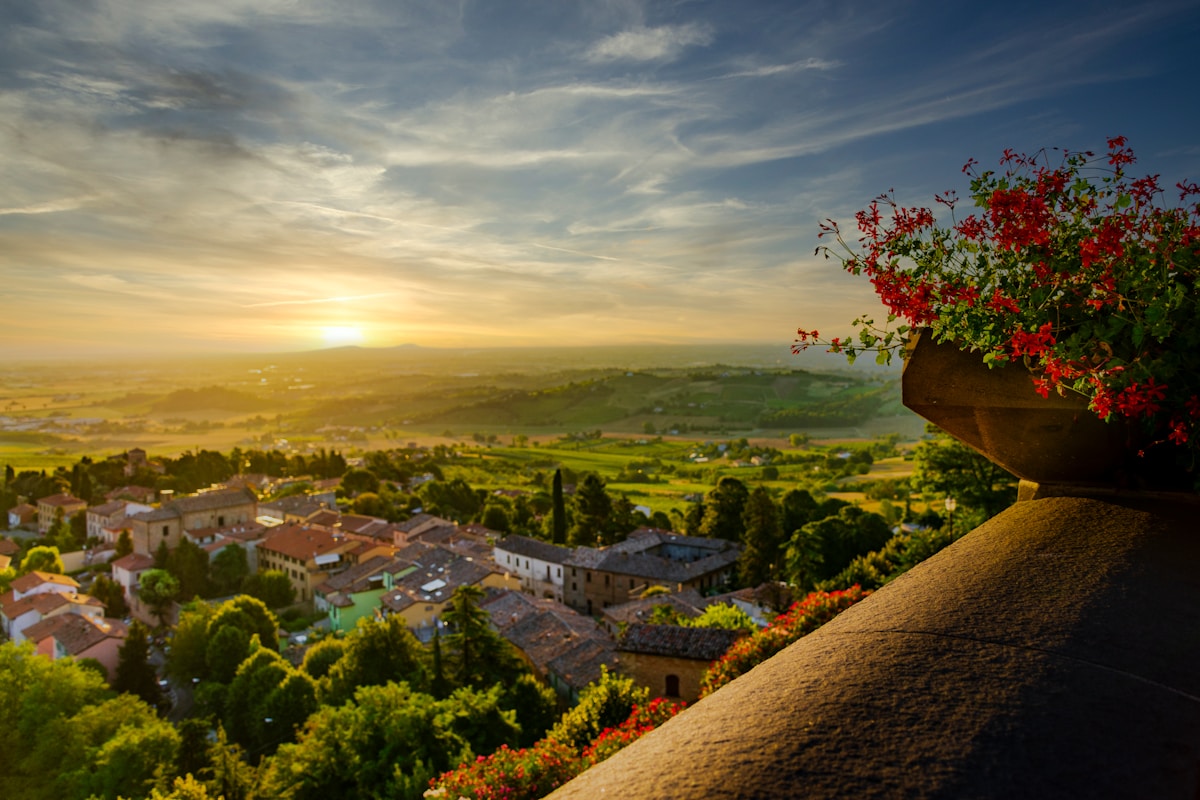
Italy doesn’t have a single best time to visit - it depends on where you’re going and what you’re doing. The north (Milan, Venice, the lakes) has a continental climate; the south (Naples, Sicily, Puglia) is Mediterranean. Rome and Florence sit in between. Spring and autumn are generally the most comfortable seasons nationwide.
Spring (April–June)
The optimal season for most of Italy. Temperatures are mild (18–25°C in central Italy, slightly cooler in the north), wildflowers cover Tuscany and Umbria, and tourist crowds haven’t peaked. April and May are particularly good - the light is excellent for photography, the almond and cherry blossoms are out in Sicily in late March/April, and Rome and Florence are manageable.
| City | April Avg High | May Avg High | June Avg High |
|---|---|---|---|
| Rome | 19°C | 24°C | 29°C |
| Florence | 18°C | 23°C | 28°C |
| Venice | 16°C | 21°C | 26°C |
| Milan | 17°C | 22°C | 27°C |
| Naples | 18°C | 23°C | 27°C |
| Palermo | 19°C | 23°C | 27°C |
Events: Easter (variable - major celebrations in Rome, Florence, and throughout Sicily), Salone del Mobile in Milan (April - the world’s largest design fair, approximately €30–50 entry), Venice Biennale (art, opens May in odd years; architecture in even years - approximately €25 entry), Maggio Musicale Fiorentino (Florence’s opera and classical music festival, May–June).
Book ahead: Accommodation and popular sites (Uffizi, Colosseum, Last Supper) fill up from April onwards. Don’t arrive without bookings. Hotel prices in April–June are approximately 20–30% lower than July–August peaks.
Summer (July–August)
The hottest and most crowded period. Rome and Florence are genuinely overwhelming - temperatures regularly exceed 35°C, the streets are packed, and prices are at their maximum. Hotel rates in Rome, Florence, and Venice reach peak levels (approximately 30–50% above shoulder season).
Avoid: Rome and Florence in August if possible. The ferragosto holiday (15 August) sees many local businesses close - restaurants, shops, even some trattorias shut for 2–3 weeks. The tourist crowds without the local population creates an unusual atmosphere.
Best for: Beach destinations (Amalfi Coast, Puglia, Sardinia, Sicily), outdoor opera at the Verona Arena (June–September - tickets from approximately €30 at arena.it), Lake Como and Lake Garda swimming. The Palio horse race in Siena runs on 2 July and 16 August.
Budget note: Southern Italy (Naples, Puglia, Sicily) is significantly cheaper than the north even in peak season. A margherita pizza in Naples costs approximately €4–5 vs approximately €10–12 in Venice.
Autumn (September–October)
As good as spring for most destinations. Temperatures are still warm (20–27°C in September, 15–22°C in October), tourist numbers drop significantly after the school-year return, and the harvest season adds interest.
Events: Wine harvests across Tuscany, Piedmont, and Veneto (September–October - many wineries offer harvest-time tours and tastings from approximately €20–30 per person; browse Tuscany wine harvest tours). Truffle season in Umbria and Piedmont (October–December - the Alba White Truffle Fair runs through October and November, free entry to the fair, truffle market prices from approximately €3,000/kg for white truffles). Olive harvest across central Italy (October–November). Venice Film Festival (late August/early September - screenings from approximately €15).
October is particularly good for cities. The light is golden, the air is cooler, and accommodation prices drop approximately 20–30% below summer peaks. The Uffizi, Colosseum, and other major sites are significantly less crowded.
Winter (November–March)
Cities are quiet and significantly cheaper - hotel rates drop 30–50% below peak season in Rome, Florence, and Venice. Rome in winter is cold (average highs 11–14°C in December–February) but manageable with the right clothing. Venice in fog is genuinely atmospheric - the city empties of day-trippers and returns to something closer to its residential character. Acqua alta (high water) flooding is possible November–February, though the MOSE barrier system now prevents the worst events.
Events: Christmas markets in Trento, Bolzano, and across Trentino-Alto Adige (late November–early January - the best in Italy, influenced by the Austrian tradition). Carnival in Venice (February, dates vary - the most famous carnival in Italy, approximately 2 weeks of masked events, many free). New Year’s Eve celebrations across major cities (Rome’s Piazza del Popolo concert is free).
Best for: Skiing in the Dolomites (December–March - lift passes approximately €50–65/day at major resorts like Cortina d’Ampezzo and Val Gardena), Christmas markets, quiet museum visits, lower hotel rates. Sicily and the southern coast remain mild (12–16°C) and pleasant for walking.
Avoid: The Amalfi Coast from November to March - many restaurants and hotels close substantially, and SITA bus services reduce frequency. Lake Como resort towns are similarly quiet, with many lakeside restaurants closed.
Regional variations
- Rome and central Italy: Best April–June and September–October. Summer is hot; winter is manageable.
- Venice: November to February for atmosphere and low prices; avoid July–August (hot, extremely crowded, expensive). Carnival (February) is spectacular but accommodation prices spike.
- Tuscany: April–May and September for beauty and manageable crowds. The wine harvest (September–October) is worth planning around.
- Amalfi Coast and southern coasts: May–June and September for swimming without peak crowds. July–August is packed and expensive.
- Sicily: March–June (cool enough for walking and sightseeing) and September–November. Summer is very hot (35°C+) but good for beaches.
- Dolomites/Alps: July–August for hiking; December–March for skiing. The shoulder months (June, October) are less predictable for weather but offer lower prices.
- Milan: Avoid April (Salone del Mobile - prices triple) and February/September (Fashion Weeks) unless those events are the purpose of the visit.
Practical budget tips by season
- Cheapest months overall: January, February (excluding Carnival week in Venice), and November
- Best value: Late September through mid-October - warm weather, fewer crowds, moderate prices
- Most expensive: Mid-June through August, Easter week, Christmas/New Year week in major cities
- Book trains early: Frecciarossa tickets booked 2–4 weeks ahead cost approximately €15–25 for routes like Rome–Florence. Same-day prices reach €55+.
- Museum passes: The Roma Pass (approximately €32/48 hours or €52/72 hours), Florence Card (approximately €85/72 hours), and Venice Card (Venezia Unica) can save money if you plan multiple museum visits - calculate based on your specific itinerary before buying.
Month-by-Month Italy Guides
Detailed breakdowns for each month - weather by city, crowd levels, events, and what to book ahead:
January · February · March · April · May · June · July · August · September · October · November · December
Planning a longer trip? Our 3 weeks in Italy itinerary combines north and south into a structured route. Still deciding on your destination? Our Italy vs Greece guide and Italy vs Spain guide compare timing, cost, and what each country does best for different travel styles.
Ready to Plan Your Trip?
See our itineraries for inspiration:
- One Week in Italy - seven days through Rome, Florence, and Venice
- 10 Days in Italy - the classic grand tour of Italy’s highlights
- 2 Weeks in Italy - the ultimate two-week Italian itinerary
- 3 Weeks in Italy - the north-to-south grand tour from Milan to Sicily
Plan Your Trip
✈️ Book your flights to Italy 🛡️ Get travel insurance 📱 Stay connected with an eSIM 🚗 Rent a car