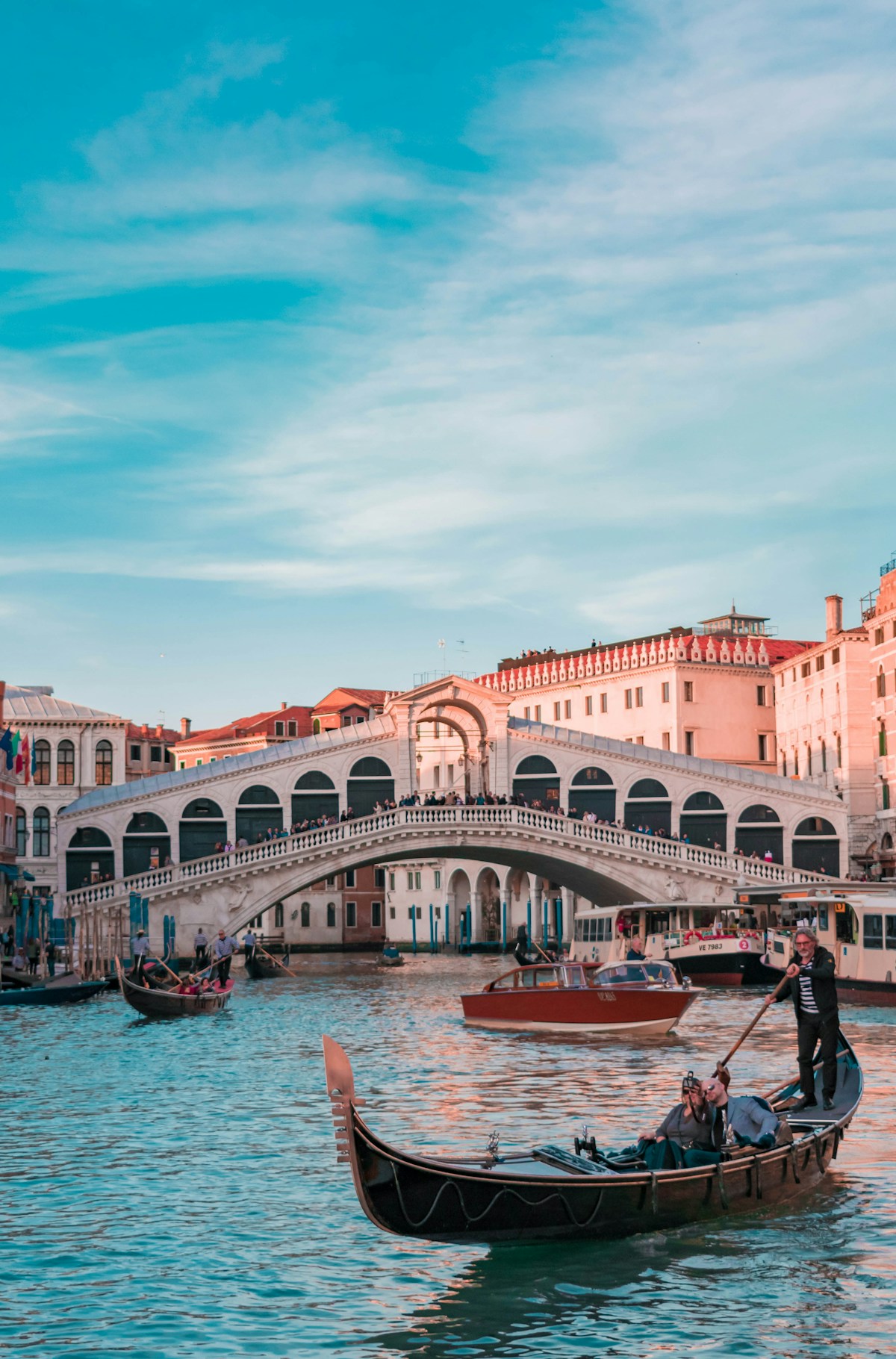
Venice and Florence are Italy’s two great Renaissance cities - and they represent completely different visions of beauty. Venice is a floating city of canals, bridges, and slowly decaying palaces, unlike anywhere else on earth. Florence is a compact, walkable museum of Renaissance art and architecture set in the Tuscan hills. Both are unmissable. Both are very different experiences.
Quick Verdict
| Category | Venice | Florence |
|---|---|---|
| Uniqueness | Winner | - |
| Renaissance art | - | Winner |
| Romance | Winner | - |
| Food | - | Winner |
| Value for money | - | Winner |
| Walkability | Tied | Tied |
| Day trips | - | Winner |
| Photography | Winner | - |
Choose Venice if you want a once-in-a-lifetime setting, romance, and an experience unlike any other city. Choose Florence if Renaissance art, Tuscan food, and wine are your priorities.
The Setting
Venice is unique. There is no city on earth that compares - a city built on 118 small islands, connected by over 400 bridges, with canals instead of roads. Arriving at Santa Lucia station and stepping out to the Grand Canal is one of travel’s great moments. The light on the water, the crumbling palazzo facades, the sound of boats rather than cars - Venice operates on a different sensory register.
Florence sits in a valley along the Arno river, framed by Tuscan hills. The cityscape is dominated by Brunelleschi’s dome on the Duomo, the tower of the Palazzo Vecchio, and the elegant bridges crossing the Arno. The view from Piazzale Michelangelo at sunset - looking across to the dome, the river, and the hills beyond - is one of Italy’s finest panoramas.
Winner: Venice for sheer uniqueness. Florence for classical beauty.
Art and Museums
Florence is the birthplace of the Renaissance and has the art to prove it. The Uffizi Gallery (€25, book ahead) houses Botticelli’s Birth of Venus, Leonardo’s Annunciation, and rooms of Raphael, Caravaggio, and Titian. The Galleria dell’Accademia (€16) has Michelangelo’s David. The Palazzo Pitti (€16) adds galleries of Raphael, Titian, and Rubens. The Bargello (€9) has Donatello’s David and early Michelangelo sculptures. No city in the world has this concentration of Renaissance masterpieces.
Venice’s art is exceptional but different in character. The Gallerie dell’Accademia (€15) holds Venetian masters - Bellini, Titian, Tintoretto, Veronese. The Peggy Guggenheim Collection (€16) is one of Europe’s finest modern art museums, housed in an unfinished palazzo on the Grand Canal. The Doge’s Palace (€30 combined with other civic museums) is spectacular both as architecture and for Tintoretto’s vast Paradise in the Great Council Chamber. The churches - the Frari (Titian’s Assumption, €5) and San Giorgio Maggiore (free, bell tower €6 for the best view in Venice) - contain masterpieces in their original settings.
Winner: Florence for Renaissance depth. Venice for art in its original architectural context.
Food and Dining
Florence’s food is Tuscan - ingredient-driven, simple, and deeply satisfying. The bistecca alla fiorentina (T-bone steak, €45–60/kg) is the signature dish, best shared between two. Ribollita, pappa al pomodoro, and lampredotto (tripe sandwich, €4–5 from street carts) are the everyday staples. The Mercato Centrale food hall is excellent for lunch. Tuscan wines - Chianti Classico, Brunello, and Super Tuscans - are outstanding and available by the glass everywhere (€5–8).
Venice’s food is seafood-focused. Cicchetti (Venetian tapas, €1.50–3 each) at bars like All’Arco near the Rialto are the essential Venice food experience - small plates of baccalà mantecato (creamed cod), sarde in saor (sweet-sour sardines), and polpette (meatballs) eaten standing at the counter with an ombra (small glass of wine, €2–3). A sit-down seafood dinner at a good restaurant like Alle Testiere or Osteria Trefanti costs €40–60 per person. Warning: tourist-trap restaurants near San Marco charge €20+ for mediocre pasta - avoid any restaurant with a tout outside.
Winner: Florence for overall food quality and value. Venice’s cicchetti culture is unmissable.
Accommodation
Florence’s compact centre has hotels concentrated within a 15-minute walk of the Duomo. A 3-star hotel costs €110–180/night. The Oltrarno district (south of the Arno) offers quieter, more local-feeling accommodation at slightly lower prices. Boutique hotels like Hotel Davanzati (from €150) and AdAstra (from €200) are well-regarded.
Venice’s hotel market is more constrained - limited building stock drives prices up. A 3-star hotel in Dorsoduro or Cannaregio costs €130–250/night. San Marco and San Polo are more expensive. Staying on the Lido (15 minutes by vaporetto) or in Mestre on the mainland (10 minutes by train, hotels from €60) reduces costs significantly but sacrifices the experience of sleeping in Venice itself. Historic properties like Ca’ Sagredo (from €250) and Pensione Accademia (from €160) are atmospheric.
Winner: Florence for value. Venice for atmosphere - at a price.
Getting Around
Both cities are essentially car-free, which is a shared pleasure.
Florence is flat and walkable. The historic centre can be crossed in 20 minutes. You can walk between the Duomo, Uffizi, Ponte Vecchio, Palazzo Pitti, and Santa Croce without needing any transport. Buses serve the periphery and Piazzale Michelangelo.
Venice is walkable but more complex - the maze of calli (narrow streets) and bridges means that GPS often fails, and getting lost is part of the experience. The vaporetto (water bus) system serves the Grand Canal and connects to outlying islands. A single vaporetto ticket costs €9.50 - expensive for a short ride. A 24-hour pass (€25) or 72-hour pass (€45) is better value if you plan to use boats frequently. A gondola ride costs €80 for 30 minutes (fixed rate, up to 6 passengers) - expensive but iconic.
Winner: Florence for simplicity. Venice for the unique experience of navigating by water.
Day Trips
Florence is the better base for day trips. Siena (1.5 hours by bus), Pisa (1 hour by train, €9), Lucca (1.5 hours, €8), San Gimignano (1.5 hours by bus), and the Chianti wine country (best by car or tour) are all within easy reach. The Cinque Terre is 2.5 hours by train.
Venice’s day trips are more limited. Murano (glass-making, 10 minutes by vaporetto), Burano (colourful houses, 45 minutes by vaporetto), and Torcello (ancient cathedral, near Burano) are the classic lagoon trips. Verona is 1 hour by train (€9–15), and Padua is 30 minutes (€5–9). The Dolomites are reachable but require a full day.
Winner: Florence, with more variety and easier connections.
When to Visit
Both cities share similar timing advice. April to June and September to October are ideal.
Venice in summer (July–August) is hot, humid, and extremely crowded - St Mark’s Square can feel oppressive. Venice’s unique problem is acqua alta (high water) - flooding that can affect low-lying areas, particularly St Mark’s Square, from October through February. The MOSE barrier system (operational since 2020) has reduced major flooding, but minor episodes still occur. Venice Carnival (February) is spectacular but the city is at its most crowded.
Florence in summer is uncomfortably hot - the valley location traps heat, and temperatures regularly hit 35–38°C in July and August. The Uffizi and Accademia queues are at their worst. May, June, and September offer the best combination of weather and crowd levels.
Winner: Both are best in shoulder season. Florence’s heat is worse; Venice’s flooding adds a unique risk in autumn/winter.
Final Verdict
Venice and Florence are complementary rather than competitive. Venice is an experience - a city so unique that no amount of photographs prepare you for the reality. Florence is an education - a city where the history of Western art can be traced room by room. Venice moves you emotionally; Florence moves you intellectually.
The 2-hour train connection means there is no reason to choose just one. A week split between them - 2–3 days in Venice, 3–4 in Florence - is one of Italy’s finest itineraries.
Choose Venice if: you want an utterly singular experience with no equivalent anywhere else, romance is a priority, or you want a short city break (2–3 nights) that delivers maximum visual impact. Budget for approximately €160–250/night for a mid-range hotel on the island. The best time is late September or October when the summer crowds thin and the light is extraordinary.
Choose Florence if: Renaissance art, Tuscan food and wine are your primary motivations, you want a walkable city that rewards longer stays, or you need a base for Tuscan day trips. A mid-range stay costs approximately €110–180/night. Book the Uffizi and Accademia at least two weeks ahead in peak season (May–September).
Choose both if you have 6–7 days: 2 nights Venice → Frecciarossa to Florence (2 hours, from €20 booked ahead) → 3–4 nights Florence → optional day trip to Siena or Pisa. This is one of the most rewarding short itineraries in Italy and the train connection is painless.
Ready to Plan Your Trip?
See our itineraries for inspiration:
- One Week in Italy - seven days through Rome, Florence, and Venice
- Northern Italy Itinerary - lakes, cities, and the Dolomites
- Tuscany Itinerary - five days in the heart of Italy
- 10 Days in Italy - the classic grand tour of Italy’s highlights
For more Florence comparisons: our Rome vs Florence guide weighs the Renaissance city against the capital, and our Bologna vs Florence guide covers Italy’s food capital versus its art capital.
Plan Your Trip
✈️ Book your flights to Italy 🛡️ Get travel insurance 📱 Stay connected with an eSIM 🚗 Rent a car
🎟️ Browse tours in Venice — Browse tours in Florence 🏨 Search hotels in Venice — Search hotels in Florence