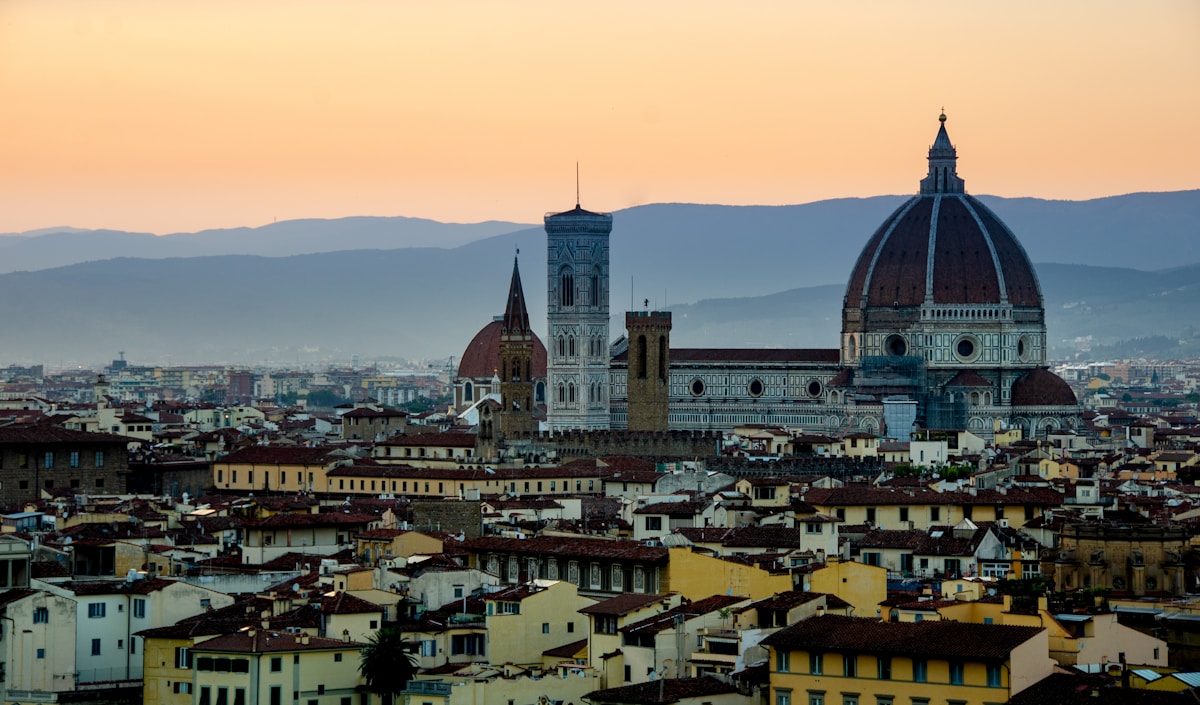
Rome and Florence are Italy’s two most visited cities - and they could not be more different in character. Rome is vast, chaotic, layered with 2,800 years of history, and rewards those who wander without a plan. Florence is compact, elegant, and focused - a city built around the Renaissance that still feels like an open-air museum. Choosing between them is one of the most common dilemmas in Italian travel planning.
Quick Verdict
| Category | Rome | Florence |
|---|---|---|
| Ancient history | Winner | - |
| Renaissance art | - | Winner |
| Food variety | Winner | - |
| Value for money | Winner | - |
| Walkability | - | Winner |
| Nightlife | Winner | - |
| Day trips | Tied | Tied |
| First-time visitors | Winner | - |
Choose Rome if you want ancient history, variety, and a city that feels alive at every hour. Choose Florence if Renaissance art, Tuscan cuisine, and a walkable historic centre are your priorities.
Art and Museums
Florence punches far above its size in art. The Uffizi Gallery (€25, book ahead - queues can exceed 2 hours without a reservation) holds the densest collection of Renaissance masterpieces anywhere: Botticelli’s Birth of Venus, Leonardo’s Annunciation, and rooms of Raphael and Titian. Michelangelo’s David at the Galleria dell’Accademia (€16) is extraordinary in person - photographs do not capture the scale. The Palazzo Pitti and Bardini Museum add depth without the crowds.
Rome’s art is more dispersed but equally staggering. The Vatican Museums (from €20, book online to avoid 3-hour queues) contain the Sistine Chapel and Raphael’s Stanze. The Borghese Gallery (€13, timed entry - must book weeks ahead) houses Bernini sculptures that rank among the finest works in Western art. The Capitoline Museums (€16) and MAXXI for contemporary art round out an art scene that spans millennia rather than centuries.
Winner: Florence for Renaissance concentration. Rome for breadth across all periods.
Ancient History and Sightseeing
Rome dominates this category. The Colosseum (€24 combined ticket with Roman Forum and Palatine Hill) is the icon of ancient civilisation. The Pantheon (free entry) remains one of the best-preserved Roman buildings, nearly 2,000 years old. Walking from the Trevi Fountain to the Spanish Steps to Piazza Navona covers more landmark density per kilometre than almost any city on earth.
Florence’s history is medieval and Renaissance rather than ancient. The Duomo (cathedral free, dome climb €30) with Brunelleschi’s dome dominates the skyline. Ponte Vecchio, the Palazzo Vecchio, and the Basilica of Santa Croce (where Michelangelo, Galileo, and Machiavelli are buried) anchor a historic centre that is a UNESCO World Heritage Site in its entirety.
Winner: Rome for ancient history. Florence for medieval and Renaissance architecture.
Food and Dining
Both cities eat exceptionally well, but in different registers.
Rome’s food is robust and unapologetic. The four canonical pasta dishes - cacio e pepe, carbonara, amatriciana, and gricia - are religion here. A plate of carbonara at a solid trattoria like Da Enzo al 29 in Trastevere costs €12–14. Pizza al taglio (by the slice) from Bonci Pizzarium near the Vatican costs €3–5 and is among the best pizza in Italy. Supplì (fried rice balls, €2–3) from street vendors make the perfect walking snack. A full dinner with wine at a mid-range restaurant runs €30–45 per person.
Florence is the gateway to Tuscan cuisine, which is simpler and more ingredient-driven. The bistecca alla fiorentina - a massive T-bone steak from Chianina cattle, typically shared - costs €45–60 per kg at restaurants like Trattoria Mario or Perseus. Ribollita (bread soup), pappa al pomodoro (tomato bread soup), and lampredotto (tripe sandwich, €4–5 from street stalls) are the local staples. The Mercato Centrale offers excellent food-hall dining. Tuscan wines - Chianti Classico, Brunello di Montalcino, Vino Nobile - are outstanding and widely available by the glass (€5–8).
Winner: Rome for variety and budget-friendly options. Florence for refined Tuscan ingredients and wine.
Accommodation
Rome has far more hotel stock, which generally keeps prices lower. A well-located 3-star hotel near Termini or in Trastevere costs €90–150/night. Boutique hotels near the Spanish Steps or Piazza Navona run €180–300. Budget travellers can find clean hostels from €30–40/night per bed.
Florence’s compact centre means higher demand per room. A 3-star hotel within walking distance of the Duomo costs €110–180/night. Boutique properties in the Oltrarno district (across the Arno, quieter and more local) offer better value at €130–200. The city has fewer budget options than Rome - hostels run €35–50/night.
Winner: Rome, with more options across all price tiers.
Getting Around
Florence is one of the most walkable cities in Europe. The entire historic centre can be crossed in 25 minutes on foot, and most major sights are within a 15-minute walk of the Duomo. You do not need public transport unless you are visiting Piazzale Michelangelo or Fiesole.
Rome is much larger and requires some public transport. The metro has three lines (A, B, and C) - Line A connects the Vatican to the Spanish Steps and Termini; Line B reaches the Colosseum. A single ticket costs €1.50 (100 minutes). Buses are extensive but unreliable. Walking between major sights is possible but distances add up - the Vatican to the Colosseum is a 45-minute walk.
Winner: Florence for walkability. Rome’s metro is functional but the city demands more planning.
When to Visit
Both cities are best in shoulder season. April to mid-June and September to October offer warm weather (20–28°C), manageable crowds, and lower hotel prices.
Rome in July and August regularly hits 35–40°C and the tourist crowds are at their worst. Florence is similarly hot - the city sits in a valley that traps heat, making July and August genuinely uncomfortable for sightseeing. Winter (December–February) is mild in Rome (8–14°C) and cooler in Florence (2–10°C), with far fewer tourists and lower prices. Florence’s Christmas markets and Rome’s nativity scenes add seasonal appeal.
Winner: A draw. Both are best in May, June, September, or October.
Day Trips
Both cities serve as excellent bases for day trips.
From Rome: Pompeii (2.5 hours by train, €12–20), Tivoli and Villa d’Este (45 minutes), Orvieto (1 hour by train), and the Castelli Romani wine towns. From Florence: Siena (1.5 hours by bus), Lucca (1.5 hours by train, €8), Pisa (1 hour by train, €9), the Cinque Terre (2.5 hours by train), and the Chianti wine country (best by car or guided tour from Florence).
Winner: A tie - both offer outstanding day-trip options in different directions.
Final Verdict
Rome and Florence are not interchangeable - they scratch different itches. Rome is the city for those who want scale, chaos, ancient history, and the feeling of being at the centre of Western civilisation. Florence is for those who want intimacy, artistic focus, and the refined pleasures of Tuscany.
If you have time, visit both - the 90-minute train connection makes it easy. If you must choose one: Rome for a first trip to Italy, Florence if you have already seen Rome or if Renaissance art is your primary motivation.
Ready to Plan Your Trip?
See our itineraries for inspiration:
- 3 Days in Rome - the perfect short break in the Eternal City
- One Week in Italy - seven days through Rome, Florence, and Venice
- Tuscany Itinerary - five days in the heart of Italy
- 10 Days in Italy - the classic grand tour of Italy’s highlights
Also comparing Rome with other cities? Our Milan vs Rome guide covers Italy’s design capital versus the Eternal City, and our Naples vs Rome guide sets out the differences between the capital and the south’s great food city.
Plan Your Trip
✈️ Book your flights to Italy 🛡️ Get travel insurance 📱 Stay connected with an eSIM 🚗 Rent a car
🎟️ Browse tours in Rome — Browse tours in Florence 🏨 Search hotels in Rome — Search hotels in Florence