Orvieto Travel Guide: The Cathedral on the Cliff
Orvieto travel guide: the Gothic cathedral, the Etruscan underground city, Signorelli's frescoes in the Cappella Nuova, and Orvieto wine.
Guides for Orvieto
Orvieto sits on a flat-topped plug of volcanic tuff 300m above the Paglia valley - one of the most dramatically positioned towns in central Italy. The tufa cliff is effectively hollow, tunnelled for 3,000 years by successive inhabitants: Etruscans, Romans, medieval inhabitants, and papal refugees. Above the cliff, the town’s Gothic cathedral is considered one of the finest in Italy.
The Duomo
Orvieto Cathedral was begun in 1290 to house the Corporal of Bolsena - a cloth associated with a medieval eucharistic miracle (1263) that prompted Pope Urban IV to establish the Feast of Corpus Christi. The facade is a mosaic and sculpture programme that took 300 years to complete; the gold mosaics catch the afternoon light spectacularly - arrive after 3pm for the best effect.
Inside, the Cappella di San Brizio contains Luca Signorelli’s fresco cycle of the Last Judgment (1499–1504), which influenced Michelangelo’s later Sistine Chapel ceiling. The muscular figures, dramatic foreshortening, and scenes of the damned are extraordinary. The Cappella del Corporale opposite houses the relic itself in a bejewelled reliquary.
Entry to the cathedral is free; the Cappella di San Brizio requires a ticket (approximately €5 as of 2026, or approximately €8 for a combined ticket covering the Cathedral, San Brizio, and the Museo dell’Opera del Duomo). Open daily; hours vary by season (typically 8am–7:30pm summer, 8:30am–6pm winter).
The underground city
Orvieto Underground is a network of Etruscan and medieval tunnels, cisterns, and chambers beneath the town, carved from the tufa over 2,500 years. Guided tours depart from Piazza del Duomo (approximately every hour, approximately €7, duration approximately 45 minutes). The tunnels include a medieval olive press, dove-cotes (colombaie) for pigeon rearing, Etruscan wells, and WWII air-raid shelters. Over 1,200 chambers have been mapped; visitors see a fraction of the network.
Pozzo di San Patrizio (St. Patrick’s Well, Viale Sangallo) - A 16th-century engineering marvel commissioned by Pope Clement VII as an emergency water supply. Two intertwined spiral staircases (248 steps each, so that donkeys carrying water up would not meet donkeys going down) descend 54m to the water level. Entry approximately €5. Open daily. The well is architecturally ingenious and worth the descent.
The city
Corso Cavour - The main street, running from the funicular station to Piazza del Duomo. Pottery shops (Orvieto has a strong ceramics tradition), wine shops, and restaurants line the route.
Torre del Moro (Corso Cavour 87) - A 13th-century tower offering the best panoramic view over the town and the surrounding valley. 250 steps. Entry approximately €3. Open daily.
Museo Claudio Faina (Piazza del Duomo 29) - An important Etruscan museum opposite the cathedral, with ceramics, bronzes, and artefacts from the Etruscan necropolis around Orvieto. Entry approximately €6. Closed Monday.
Necropoli del Crocifisso del Tufo - An Etruscan cemetery at the base of the cliff, with chamber tombs dating to the 6th–3rd century BC. Each tomb entrance is inscribed with the name of the deceased in Etruscan script. Entry approximately €3. Open daily.
Wine
Orvieto Classico DOC - White wine made primarily from Grechetto and Trebbiano grapes, produced in the vineyards around the cliff. The best producers (look for “Classico Superiore”) make wines of genuine quality. Several cantinas in and around the town offer tastings - Palazzone and Barberani are well-regarded. A glass of Orvieto Classico in a restaurant costs approximately €4–6.
Where to eat
Umbrian cuisine with local specialities: umbrichelli (thick hand-rolled pasta) with wild boar ragù, pigeon (palomba), and porchetta. Trattoria dell’Orso (Via della Misericordia 18 - mains approximately €10–14) serves traditional Umbrian food. La Mezza Luna (Via Ripa Serancia 3 - mains approximately €12–16) has a terrace with valley views.
Where to stay
Budget: approximately €45–70/night. Mid-range: approximately €80–130/night. Hotel Maitani (Via Lorenzo Maitani 5 - doubles from approximately €90/night) is steps from the Duomo.
Getting there
Orvieto is on the Rome–Florence high-speed rail line. Frecciarossa from Rome approximately 1 hour (from approximately €12). From Florence approximately 2 hours (from approximately €18). The funicular from the station (at the base of the cliff) ascends to the town in approximately 3 minutes (approximately €1.30; included in bus/funicular day pass approximately €4).
Practical details
Combined tickets: The Orvieto Card (approximately €25 as of 2026) covers the Cappella di San Brizio, the Museo dell’Opera del Duomo, Orvieto Underground guided tour, Pozzo di San Patrizio, and unlimited funicular and minibus rides. This is good value if visiting most major sites - the components individually total more than the card price.
How long to allow: A half-day from Rome (morning departure, back by late afternoon) is the minimum. A full day allows the underground tour, the well, and a proper lunch. Staying overnight is worthwhile - Orvieto is noticeably quieter after 6pm when the day visitors leave, and the cathedral facade lit at night is beautiful.
Ceramics shopping: Orvieto has a long tradition of majolica pottery. The studio-shops along Corso Cavour sell work ranging from tourist ware to genuinely fine pieces. Michelangeli (Via Gualverio Michelangeli 3) makes intricate wooden carved objects unique to Orvieto. Prices range from approximately €15 for small ceramic pieces to €200+ for large hand-painted platters.
Where to stay: Budget options in and around the old city from approximately €45–70/night. Agriturismo Tiber (outside the walls - doubles from approximately €65/night) provides practical value for drivers. Hotel Maitani (Via Lorenzo Maitani 5 - doubles from approximately €90/night as of 2026) is the best-positioned mid-range hotel, a 2-minute walk from the Duomo. Palazzo Piccolomini (Piazza Ranieri 36 - doubles from approximately €130/night) is a converted Renaissance palazzo with a panoramic terrace.
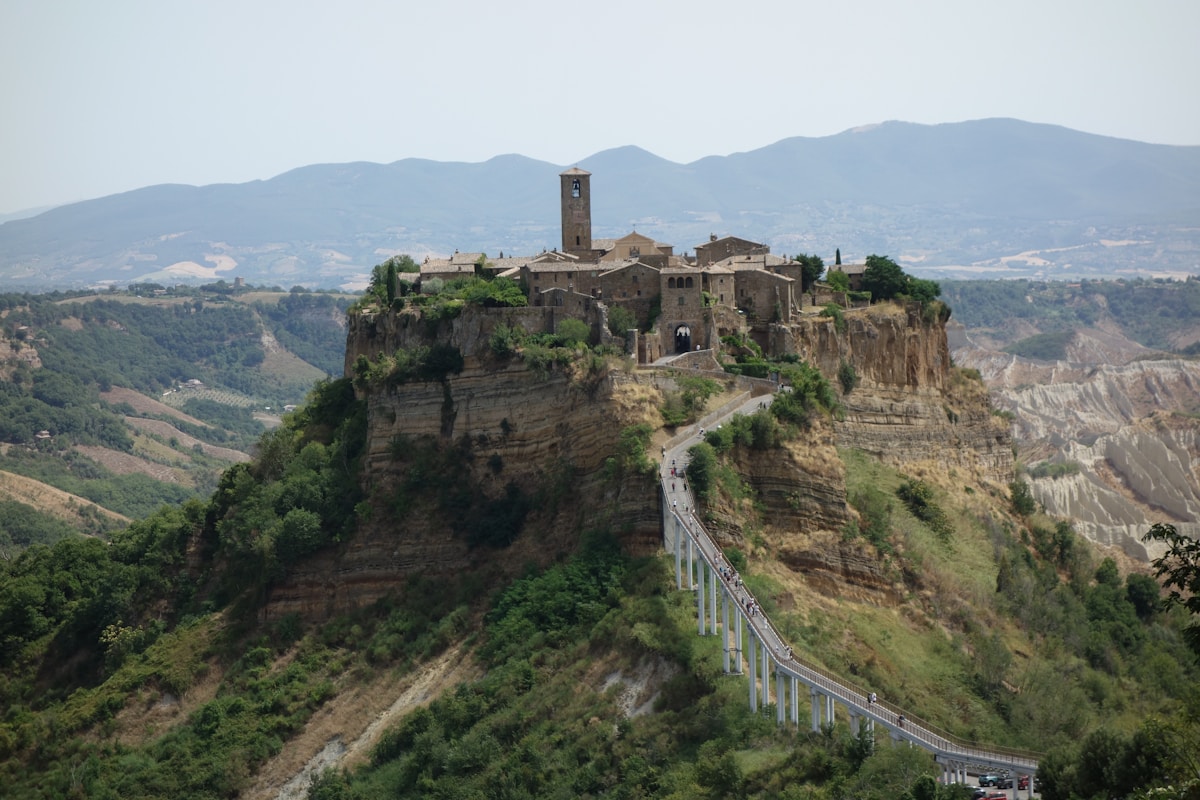
Nearby: Civita di Bagnoregio (approximately 30km north-west by car) - a hilltop village on a collapsing tufa plateau, accessible only by footbridge. Entry approximately €5. One of the most dramatic landscapes in Lazio. Todi (approximately 40km north-east) is another Umbrian hilltop town worth combining with Orvieto on a longer Umbria trip.
For accommodation in and around the old city: Orvieto hotels. For the full sights, underground tours, and Pozzo di San Patrizio: things to do in Orvieto. Book a guided Orvieto tour to explore the cathedral, the underground tunnels, and Etruscan history with a local expert. Orvieto makes an easy day trip from Rome (1 hour by Frecciarossa) - see our southern Italy itinerary for a broader route through Lazio and Umbria.
Upcoming Events in Orvieto
La Befana - Feast of the Epiphany 2027
La Befana 2027, January 6. Italy's Epiphany gift-giving day: children receive sweets or coal from the Befana witch, then decorations come down.
Book an experience
Top experiences in Orvieto
Explore the best tours and activities in Orvieto, with instant confirmation and free cancellation on most bookings.