Three days in Rome is not a lot, but it is enough to cover the city’s essential layers - ancient, Vatican, and baroque - without rushing through any of them. This itinerary organises Rome geographically so you spend less time on buses and more time at the sites that matter.
Before You Go: Essential Bookings
Do not arrive in Rome without these reservations:
- Colosseum + Roman Forum + Palatine Hill - book on coopculture.it at least 2 weeks ahead in peak season. Full Experience ticket approximately €22 as of 2026
- Vatican Museums + Sistine Chapel - book on museivaticani.va. Entry approximately €17. Skip-the-line is worth it in summer
- Borghese Gallery - timed entry only, book on galleriaborghese.beniculturali.it. Entry approximately €15. Slots fill weeks in advance
Prefer to leave the logistics to a guide? Rome guided tours cover all three sites with skip-the-line access and expert commentary included.
Arriving sooner than that? Check our last-minute tours page for Rome tours and skip-the-line tickets with confirmed availability in the next three days - refreshed twice daily.
Where to Stay in Rome
Budget (from €80 per night)
The Yellow (Via Palestro 44, Termini area) - well-run hostel with private rooms from approximately €80 per night as of 2026. Ten-minute walk to Termini station and the 40 Express bus to the Vatican.
Mid-Range (€150–250 per night)
Hotel Adriano (Via di Pallacorda 2, near Pantheon) - boutique hotel in a converted palazzo, from approximately €180 per night as of 2026. Walking distance to the Pantheon, Piazza Navona, and Trevi Fountain.
Luxury (from €350 per night)
Hotel de Russie (Via del Babuino 9, Piazza del Popolo) - five-star property with a terraced garden between Piazza del Popolo and the Spanish Steps. Rooms from approximately €400 per night as of 2026.
Search all hotels in Rome on Booking.com
Day 1: Ancient Rome
Start at the Colosseum when it opens at 9:00. Allow 2 hours for the amphitheatre, then walk directly into the Roman Forum and up to Palatine Hill - all covered by the same ticket (approximately €22 as of 2026, valid 24 hours). The Forum and Palatine together take another 2 hours. Bring water - there is limited shade in summer.
Lunch
Walk 10 minutes to Trattoria Luzzi (Via San Giovanni in Laterano 88) for straightforward Roman pasta. Cacio e pepe or amatriciana for approximately €10–12. It is always busy and does not take reservations - arrive by 12:30 or expect a queue.
Afternoon
Head to the Capitoline Museums on Piazza del Campidoglio (approximately €15 entry, open 9:30–19:30 as of 2026). The collection includes the original Marcus Aurelius equestrian statue and the Dying Gaul. From the museum terrace, you get a direct view down into the Forum.
Walk down to Piazza Venezia and take in the Altare della Patria (free, panoramic terrace lift approximately €7). Continue through the backstreets to the Largo di Torre Argentina - the sunken ruins where Julius Caesar was assassinated, visible from street level for free.
Dinner
Roscioli (Via dei Giubbonari 21) - one of Rome’s best restaurants for carbonara and cured meats. Expect to pay approximately €40–50 per person with wine. Book ahead. Alternatively, Trattoria Da Enzo al 29 in Trastevere (Via dei Vascellari 29) serves classic Roman dishes for approximately €25–35 per person - expect a queue.
Day 2: Vatican City and Trastevere
Morning
Arrive at the Vatican Museums by 8:00 (doors open at 9:00, but the queue forms earlier). The route through the museums to the Sistine Chapel takes approximately 2 hours if you move steadily. Exit directly into St Peter’s Basilica through the group exit after the Sistine Chapel - this bypasses the main basilica queue entirely.
St Peter’s Basilica is free to enter. The dome climb costs approximately €8 (with lift) or €6 (stairs only, 551 steps). The views from the top are the best in Rome. Allow 30 minutes for the climb and return.
Lunch
Cross the Tiber to Pizzarium Bonci (Via della Meloria 43) for pizza al taglio - Roman-style pizza sold by weight. Some of the best pizza in the city. Budget approximately €8–12 for a filling lunch. It is a 15-minute walk from the Vatican.
Afternoon
Walk south along the Tiber to Trastevere. This neighbourhood is Rome’s most walkable - narrow streets, ivy-covered facades, and the golden mosaics of the Basilica di Santa Maria in Trastevere (free entry, open 7:30–21:00). Cross the Ponte Sisto footbridge for views back towards St Peter’s dome.
If time allows, climb the Janiculum Hill above Trastevere (free) for a panoramic view across the entire city. The cannon fires daily at noon from here.
Dinner
Stay in Trastevere for dinner. Da Teo (Piazza dei Ponziani 7a) serves excellent Roman classics - fried artichokes, tonnarelli cacio e pepe - for approximately €30–40 per person. Book ahead or arrive before 19:30.
Day 3: Borghese, Baroque Rome, and the Historic Centre
Morning
Start with your timed entry at the Borghese Gallery (entry approximately €15 as of 2026, sessions every 2 hours, book well ahead). The collection includes Bernini’s Apollo and Daphne, Caravaggio’s Boy with a Basket of Fruit, and Titian’s Sacred and Profane Love. Each session lasts 2 hours - plan to use the full time.
After the gallery, walk through the Villa Borghese gardens - Rome’s largest central park. Exit at the south end toward the top of the Spanish Steps for the classic view down to Piazza di Spagna.
Lunch
Antico Caffè Greco (Via dei Condotti 86) - Rome’s oldest café, open since 1760. Coffee and a light lunch for approximately €15–20. The location on the main shopping street near the Spanish Steps makes it convenient but busy.
For something more substantial, walk 5 minutes to Osteria dell’Ingegno (Piazza di Pietra 45) for seasonal Italian dishes. Main courses approximately €16–22.
Afternoon
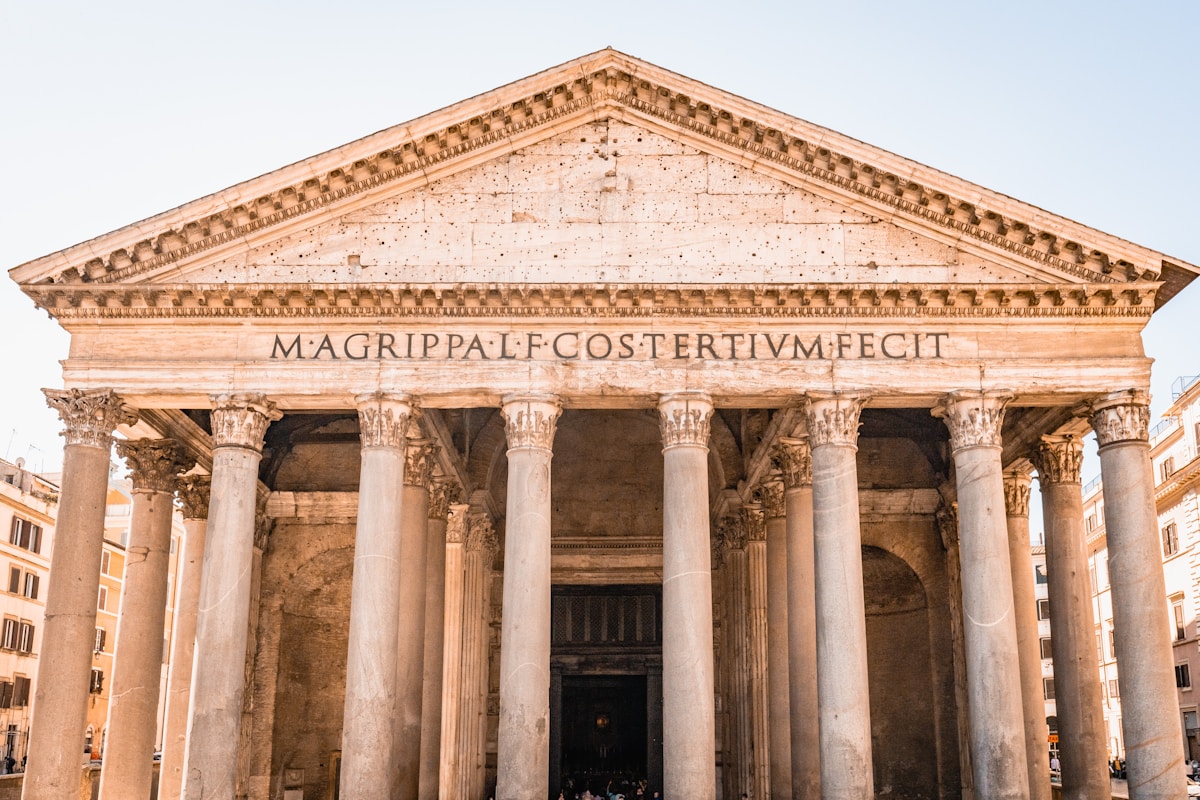
Walk to the Trevi Fountain - best visited in early afternoon when the morning tour groups have moved on. No entry fee. Continue 10 minutes on foot to the Pantheon (entry approximately €5 as of 2026, open 9:00–19:00 Monday to Saturday, 9:00–18:00 Sunday). The unreinforced concrete dome, built in 125 AD, remains the world’s largest of its kind.
From the Pantheon, walk 5 minutes to Piazza Navona - Bernini’s Fountain of the Four Rivers and Borromini’s Sant’Agnese church face each other across the square. End at Campo de’ Fiori for the late-afternoon market atmosphere.
Dinner
Armando al Pantheon (Salita dei Crescenzi 31) - a family-run trattoria two minutes from the Pantheon serving Roman classics since 1961. Main courses approximately €14–20. Book at least a day ahead. Finish the evening with gelato from Giolitti (Via degli Uffici del Vicario 40) - approximately €3–5 per serving.
Getting Around Rome
- Metro - two main lines (A and B) cross at Termini. Single ride approximately €1.50, 24-hour pass approximately €7 as of 2026
- Walking - most of the historic centre is walkable. Day 1 to Day 3 can each be done entirely on foot with some stamina
- Bus 40 Express - runs from Termini to the Vatican. More useful than the metro for Vatican access
- Taxis - fixed fare from Fiumicino airport to the city centre approximately €50 as of 2026. Ciampino approximately €31
Budget Breakdown for 3 Days
| Category | Budget | Mid-Range | Luxury |
|---|---|---|---|
| Accommodation (3 nights) | from €240 | from €540 | from €1,200 |
| Entry tickets | approximately €70 | approximately €70 | approximately €100 (with guided tours) |
| Meals (3 days) | approximately €90 | approximately €150 | approximately €300 |
| Transport | approximately €20 | approximately €25 | approximately €50 |
| Total per person | from €420 | from €785 | from €1,650 |
Prices are approximate as of 2026. Airport transfers, souvenirs, and evening drinks are not included.
Tips for Making the Most of 3 Days
- Buy the Roma Pass (approximately €32 for 48 hours) only if you plan to use public transport frequently and visit 1–2 paid sites beyond the Colosseum and Vatican. Otherwise, individual tickets are usually cheaper
- Eat lunch as your main meal - Roman trattorias serve the same dishes at lunch for less than dinner service
- Avoid restaurants directly on major piazzas (Piazza Navona, Trevi, Spanish Steps) - the food quality drops and prices double
- Water fountains (nasoni) are everywhere in Rome - carry a refillable bottle and use them freely
- The best light for photos at the Colosseum is in the morning; for Trevi Fountain, late afternoon
For everything on Rome: Rome travel guide. For tickets: Colosseum tickets guide and Vatican tours guide. For the food - cacio e pepe, carbonara, Jewish-Roman cooking: Roman food guide. For where to sleep: Rome hotels and Rome hostels. Planning a longer trip from Rome? Our 1-week Italy itinerary adds Florence and Venice.
Book Your Trip
- Flights - Find the best fares to Italy
- Travel Insurance - Get covered before you go
- eSIM - Stay connected from landing
- Airport Transfers - Door-to-door from Fiumicino or Ciampino
- Car Rental - Compare prices across providers
- Tours & Activities - Browse Rome tours on GetYourGuide