Rome is a city where location matters more than almost anywhere else in Italy. The distances are walkable in theory, but Roman traffic and the cobblestone streets make anything more than 2–3 km an effort in summer heat. Pick the right neighbourhood and you walk to most things; pick the wrong one and you spend significant time and money on taxis. This guide covers the five main areas where it makes practical sense to base yourself, with named hotels at each price tier.
Search Rome hotels on Booking.com to compare prices and check availability across all areas in this guide.
Centro Storico (Historic Centre)
The dense medieval core between the Pantheon and the Tiber - including Piazza Navona, Campo de’ Fiori, Via Giulia, and the streets around them. This is Rome’s tourist epicentre and, for first-time visitors, the most useful base.
Pros: Walking distance to the Pantheon, Piazza Navona, Campo de’ Fiori, the Colosseum (30 minutes on foot), Trastevere (15 minutes across the Tiber), and the Vatican (35–40 minutes on foot or one bus stop). The streets are atmospheric around the clock.
Cons: Expensive. Noisy at night around Campo de’ Fiori. Streets are narrow and confusing.
Budget (€90–140/night): Guesthouses and family-run B&Bs in the lanes around Via dei Coronari and the Ghetto neighbourhood. The Albergo del Senato (Piazza della Rotonda 73) is notable for its Pantheon-facing position at a surprisingly accessible price; doubles from approximately €110/night as of 2026 in shoulder season.
Mid-range (€140–280/night): The Hotel Campo de’ Fiori (Via del Biscione 6) has a rooftop terrace and a good position; doubles from approximately €160/night as of 2026. Hotel Santa Chiara (Via di Santa Chiara 21, directly behind the Pantheon): a three-star in a former palazzo with original architectural details, doubles from approximately €180/night.
Top-end (€280–700+/night): The Hotel de la Ville (Via Sistina 67/69, though technically near the Spanish Steps - short taxi) and the Palazzo Manfredi (Colosseum view) represent the luxury ceiling. For pure Centro Storico position, the Hotel Raphael (Largo Febo 2, adjacent to Piazza Navona) has ivy-covered exterior and art-filled interiors; doubles from approximately €350/night as of 2026.
Trastevere
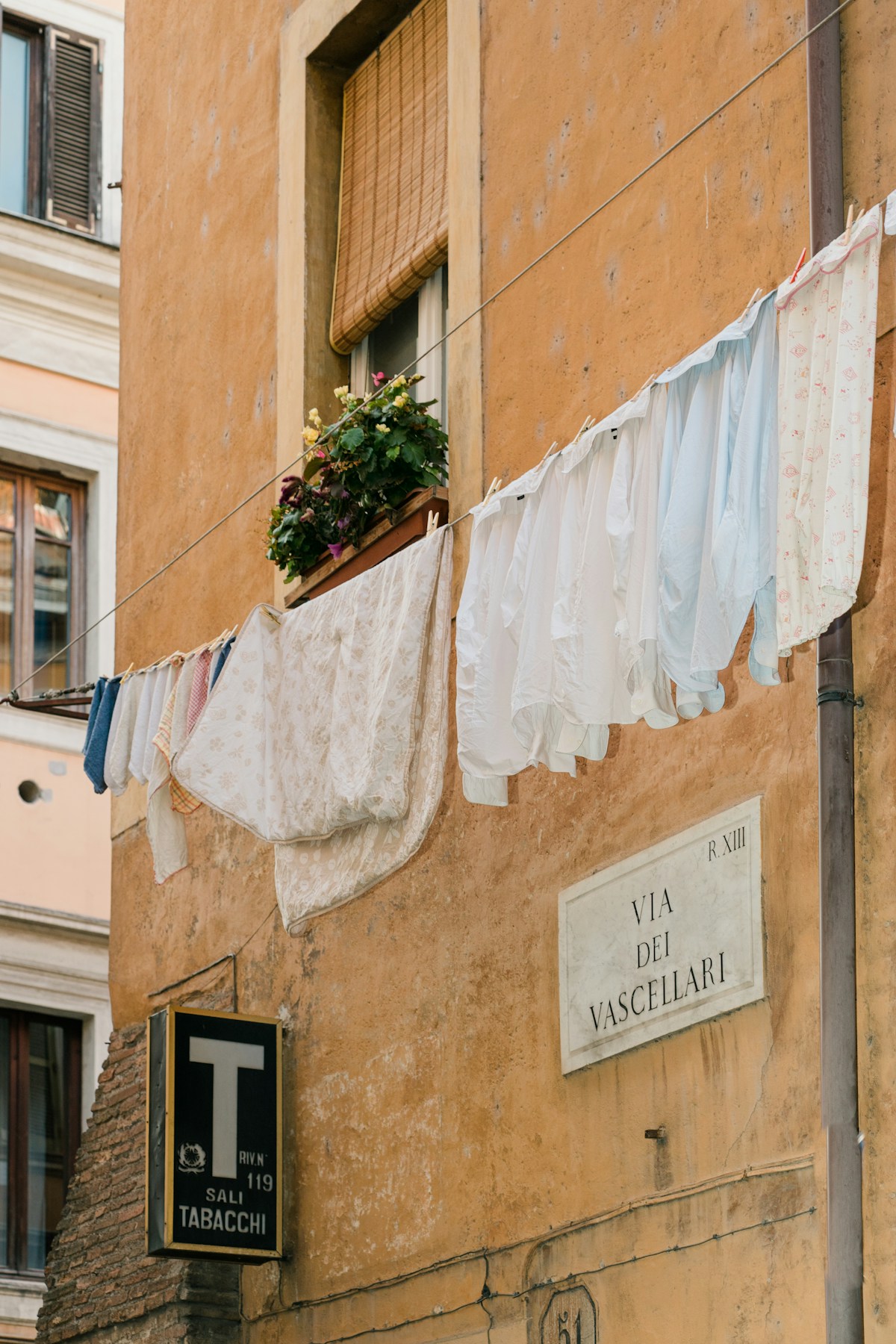
Across the Tiber from the historic centre, Trastevere is Rome’s most photographed neighbourhood - ochre buildings, laundry lines, cobblestone streets, and some of the city’s best trattorie and wine bars.
Pros: Genuinely atmospheric. Excellent restaurants and bars. Less tourist-saturated than Centro Storico (though this is relative). Good tram connections to Termini and the rest of the city.
Cons: Further from the main sights. Lively until late - street noise is a real issue near the main piazzas. Fewer hotels than the historic centre.
Budget (€70–120/night): B&Bs and guesthouses in the quieter streets away from Piazza di Santa Maria in Trastevere. The Arco del Lauro (Via dell’Arco de’ Tolomei 27) has a handful of simple rooms in a genuine Trastevere building; doubles from approximately €80/night as of 2026.
Mid-range (€140–250/night): The Hotel Santa Maria (Vicolo del Piede 2): a small hotel built around a courtyard with orange trees in the heart of Trastevere - a genuinely pleasant base. Doubles from approximately €160/night as of 2026. The Residenza Santa Maria nearby offers apartment-style rooms at similar prices.
Top-end: Trastevere has fewer luxury hotels than the centre, which is partly its appeal. The Villa della Fonte (Via della Fonte dell’Olio 8) is a small, elegant option; doubles from approximately €220/night as of 2026.
Monti
The neighbourhood between the Colosseum and Termini station - one of Rome’s oldest rioni, now one of its most appealing for visitors who want a local-feeling base at slightly lower prices than the historic centre.
Pros: Walking distance to the Colosseum (10 minutes), Roman Forum, Palatine Hill, and the Baths of Caracalla. Well connected by metro (Termini). Good independent restaurants and wine bars. Less touristy than Campo de’ Fiori.
Cons: The streets around Termini immediately adjacent to the station are lower quality; Monti proper is distinct from this zone. Some streets are quiet and underpopulated at night.
Budget (€70–110/night): Guesthouses around Via Baccina and Via dei Serpenti. The B&B Monti (Via dei Falisci 23) is a reliable option in the quieter part of the neighbourhood; doubles from approximately €80/night as of 2026.
Mid-range (€120–220/night): The Palazzo Lazzaroni (Via del Boschetto 57): a boutique hotel in a restored 19th-century palazzo with original floors; doubles from approximately €140/night as of 2026. Hotel Quirinale (Via Nazionale 7): a historic hotel (opened 1865) at the edge of Monti, slightly grander; doubles from approximately €160/night.
Top-end (€250+/night): The Inn at the Roman Forum (Via degli Ibernesi 30) has rooms overlooking excavated Roman ruins at the back of the building; doubles from approximately €280/night as of 2026 - premium for the proximity and view.
Testaccio
South of the historic centre, Testaccio was Rome’s working-class market district - now one of the best areas in the city for food. Less visited than Monti or Trastevere, it has a genuine neighbourhood feel.
Pros: Rome’s best food market (the Testaccio covered market, open mornings Tuesday–Sunday). The Baths of Caracalla are 10 minutes on foot. Quieter and more affordable than the historic centre. Very local atmosphere.
Cons: Slightly removed from the main sights - the Colosseum is about 25 minutes on foot or a short bus ride. Fewer accommodation options than other areas. Transport connections rely on bus.
Budget (€65–100/night): A handful of B&Bs around Piazza Testaccio and Via Marmorata. The Hotel Aventino (Via San Domenico 10, technically Aventino hill adjacent to Testaccio) has garden grounds and a peaceful position; doubles from approximately €90/night as of 2026.
Mid-range (€110–200/night): The Kolbe Hotel Rome (Via di San Teodoro 44, between Testaccio and the Forum): a former Franciscan monastery with cloisters and gardens; doubles from approximately €130/night as of 2026. One of the better mid-range options in the southern historic zone.
Vatican Area (Prati neighbourhood)
The district immediately north of the Vatican - Prati - is the main residential neighbourhood for travellers who prioritise the Vatican Museums and St Peter’s. Wide boulevards, a good food market (Mercato Trionfale), and quieter streets than the historic centre.
Pros: Five to ten minutes’ walk from the Vatican Museums entrance. Quieter than Centro Storico. Good range of accommodation at all price levels. Castel Sant’Angelo is nearby.
Cons: Relatively dead in the evenings once the Vatican visitors leave. Further from most other major sights - the Colosseum is at least 40 minutes on foot or a long bus journey.
Budget (€70–110/night): Numerous small hotels and guesthouses on Via Cola di Rienzo and surrounding streets. The Hotel Sant’Anna (Borgo Pio 133): a small hotel within the medieval Borgo district, literally in the shadow of the Vatican walls; doubles from approximately €95/night as of 2026.
Mid-range (€130–230/night): The Hotel Bramante (Vicolo delle Palline 24): a hotel in the house where the architect Bramante supposedly lived, steps from Castel Sant’Angelo and the Vatican; doubles from approximately €150/night as of 2026. The Residenza Paolo VI (Via Paolo VI 29): with direct views of St Peter’s Square from several rooms; doubles from approximately €160/night.
Top-end (€300+/night): The Rome Cavalieri (Via Alberto Cadlolo 101, Monte Mario): the top luxury option in this part of Rome - hilltop hotel with pool, three restaurants, and city views; doubles from approximately €400/night as of 2026.
Plan your trip:
- Browse day tours and experiences in Rome
- Book an airport transfer to your hotel
- Get travel insurance before you book
- Pick up an eSIM for Italy
- Search hotels in Rome on Booking.com
Booking and practical tips
- Book well ahead for April–May and September–October. These are Rome’s peak months for tourism; decent mid-range rooms in the centre book up 6–8 weeks ahead.
- Check noise carefully for Trastevere and Campo de’ Fiori hotels. Read reviews specifically mentioning noise - both neighbourhoods are lively until 2–3am on weekends. A top-floor room or rear-facing room is worth paying for.
- For first-time visitors, prioritise walkability over price. A room €30/night cheaper on the city edge will cost more in taxis and time.
- The Rome city tax is charged separately by almost all accommodation - approximately €3–7/night per person depending on the hotel category; pay on arrival or departure, cash or card.
- Week-long self-catering apartments (via platforms such as Airbnb or Vrbo) in Trastevere and Monti offer good value for groups or extended stays.
For the full Rome planning picture: Rome travel guide covers sights, entry fees, and neighbourhood character. For hostels and budget accommodation in Rome: best hostels in Rome. For what to eat by neighbourhood: Rome food guide and the Roman food guide. For a 3-day Rome route with accommodation logistics: 3 days in Rome itinerary. Comparing Rome and Milan before committing? Our Milan vs Rome guide covers pace, cost, and character.
Ready to Plan Your Trip?
See our itineraries for inspiration:
- 3 Days in Rome - the perfect short break in the Eternal City
- One Week in Italy - seven days through Rome, Florence, and Venice
- 10 Days in Italy - the classic grand tour of Italy’s highlights
- 10-Day Family Italy Itinerary - ten days through Rome, the Amalfi Coast, Florence, and Lake Garda
Hotels by price tier
The following hotels are grouped by nightly rate to help with budget planning.
Luxury hotels (from €300/night as of 2026)
Hotel de Russie (Via del Babuino, near Piazza del Popolo) - One of Rome’s finest five-star properties with terraced gardens designed by landscape architect Giuseppe Valadier. Doubles from approximately €450/night. The internal courtyard restaurant, Le Jardin de Russie, is excellent. Spa and fitness centre on-site.
Palazzo Manfredi (Via Labicana, overlooking the Colosseum) - A 16-room boutique hotel with direct Colosseum views from the rooftop terrace and several rooms. The restaurant Aroma holds a Michelin star. Doubles from approximately €500/night. Book 3–4 months ahead for peak season.
Hotel Raphael (Largo Febo, near Piazza Navona) - Ivy-covered facade, art collection throughout, and a rooftop terrace with panoramic views. Doubles from approximately €350/night. The rooms in the older wing are more characterful; the renovated wing is more modern and spacious.
Hotel Eden (Via Ludovisi, near Via Veneto) - Dorchester Collection property reopened after a major renovation. The rooftop restaurant Il Giardino has exceptional views across the city to St Peter’s. Doubles from approximately €550/night.
Hotel de la Ville (at the top of the Spanish Steps) - Rocco Forte property with bold interiors by Olga Polizzi and Tommy Smythe. Rooftop bar with 360-degree views. Doubles from approximately €400/night.
Mid-range hotels (€100–250/night as of 2026)
Hotel Santa Maria (Vicolo del Piede, Trastevere) - A former convent with rooms around an orange-tree courtyard. Simple, clean rooms with terracotta floors and exposed beams. Doubles from approximately €140/night. Excellent location steps from Santa Maria in Trastevere.
Hotel Adriano (Via di Pallacorda, near the Pantheon) - Well-located three-star in a 15th-century building. Doubles from approximately €160/night. Small rooms but the location is hard to beat - 2 minutes from the Pantheon.
Relais Palazzo Taverna (Via dei Gabrielli, Centro Storico) - Quiet boutique hotel in a 15th-century palazzo. Doubles from approximately €130/night. Breakfast served in a vaulted dining room. No lift - request a lower floor if mobility is a concern.
Hotel Modigliani (Via della Purificazione, near Piazza Barberini) - Family-run three-star with a small garden courtyard. Doubles from approximately €120/night. Clean, well-maintained, and the staff are genuinely helpful with restaurant recommendations.
Casa Fabbrini (Via Capo d’Africa, near the Colosseum) - Boutique B&B with six individually decorated rooms. Doubles from approximately €110/night. The terrace has partial Colosseum views. Home-made breakfast included.
Budget hotels and B&Bs (under €100/night as of 2026)
Hotel Lancelot (Via Capo d’Africa) - A family-run three-star near the Colosseum with a loyal repeat clientele. Doubles from approximately €95/night including breakfast. The communal dining room feels like a friend’s house. Book directly for the best rate.
Hotel Panda (Via della Croce, near the Spanish Steps) - Simple rooms in an extraordinary location. Doubles from approximately €80/night without private bathroom, from €95 with. No breakfast, but you’re surrounded by cafes. One of the best budget options in central Rome.
Hotel Duca d’Alba (Via Leonina, Monti neighbourhood) - Clean, functional three-star in Rome’s trendiest neighbourhood. Doubles from approximately €90/night. The Monti location means excellent restaurants and bars within walking distance.
Arco del Lauro B&B (Via dell’Arco de’ Tolomei, Trastevere) - A small B&B with just four rooms in a quiet Trastevere side street. Doubles from approximately €75/night. Italian breakfast included. Book well ahead - it fills quickly.
Practical notes
City tax (tassa di soggiorno): Rome charges a tourist tax on top of room rates - approximately €3–7 per person per night depending on the hotel’s star rating, as of 2026. This is standard and non-negotiable. Budget hotels charge €3; five-star properties charge €7.
Breakfast: Most Rome hotels include breakfast (continental, varying quality) in the room rate. If it’s not included, walk to a nearby bar for a cornetto and cappuccino for approximately €3–4 - often better than hotel breakfast.
Termini station area: A large cluster of affordable hotels surrounds Termini, but the immediate area (Esquilino) is functional rather than attractive and not enjoyable to walk around at night. It’s fine for 1–2 night transit stays; for longer visits, pay slightly more to stay in a better neighbourhood.
Booking timing: For peak season (Easter, June–September), book 2–3 months ahead for mid-range hotels. Luxury properties require 3–6 months. Off-season (November–February, excluding Christmas/New Year) offers significant discounts - often 30–40% below peak rates.
Transport from airports: Fiumicino to central Rome costs approximately €14 by Leonardo Express train (32 minutes to Termini) or €48 by fixed-rate taxi. Ciampino to central Rome costs approximately €6 by bus to Termini or €30 by fixed-rate taxi, as of 2026. A pre-booked airport transfer to your Rome hotel avoids unlicensed taxis and is worth considering for late-night arrivals or with heavy luggage.
For the full Rome travel guide - sights, Vatican, food, and getting around - see our Rome guide. Where to eat once you’ve settled in: our Rome food guide covers the five Roman pastas, the offal tradition, and the best trattorias by neighbourhood. Planning activities: our Rome things to do guide covers the Colosseum, Pantheon, and lesser-known sights. For a regional hotels guide covering the whole of Lazio and the wider area, see our hotels in Rome guide. If you are choosing between Rome and Florence, our Rome vs Florence guide sets out what each city does best.