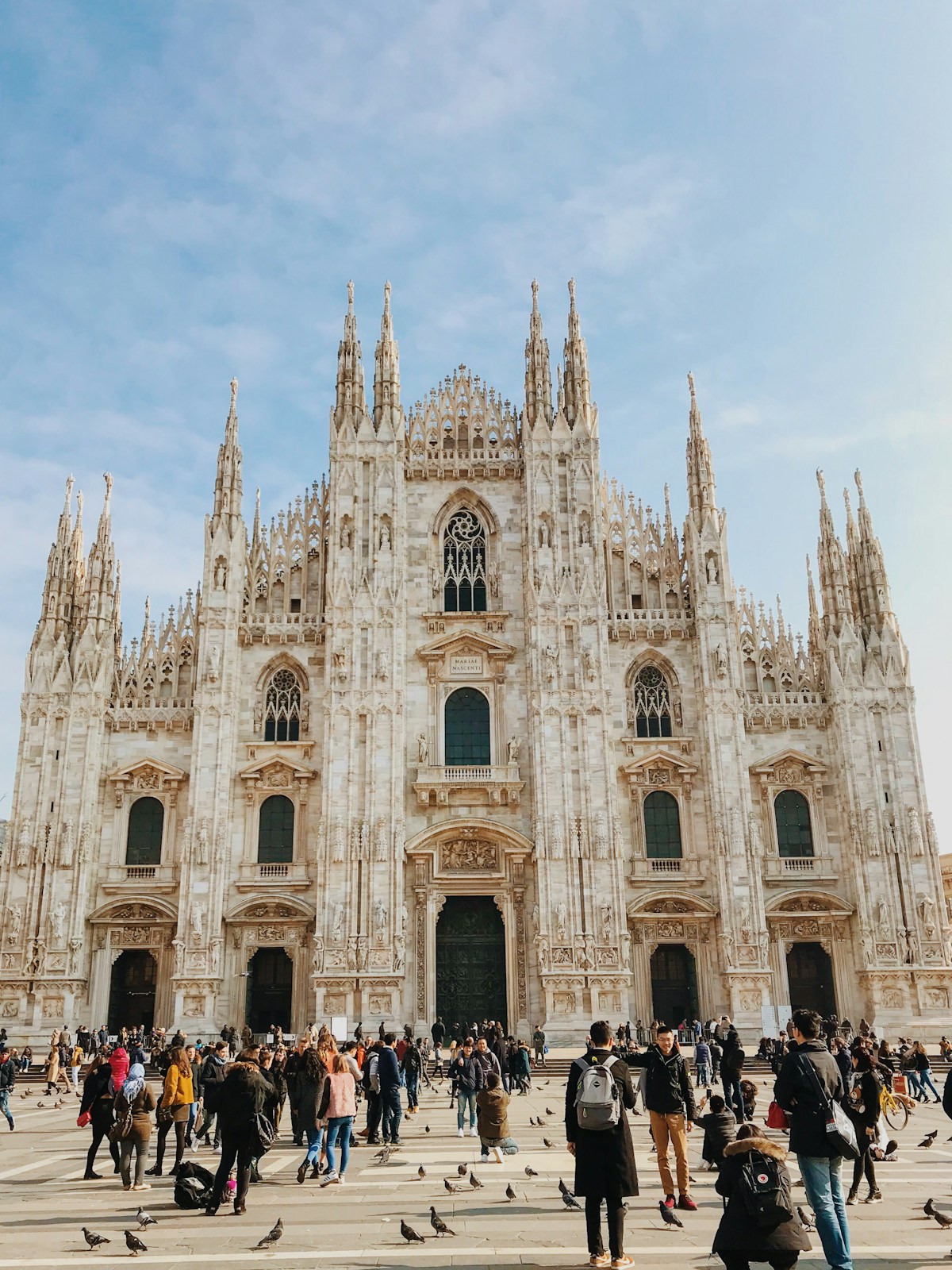
Milan and Rome represent two faces of Italy that rarely overlap. Rome is ancient, chaotic, and romantic - a city where you trip over 2,000-year-old ruins walking to get coffee. Milan is modern, efficient, and stylish - Italy’s economic engine, fashion capital, and the city that looks forward rather than back. Most travellers visit Rome first, but Milan deserves more than a quick stopover.
Quick Verdict
| Category | Milan | Rome |
|---|---|---|
| Ancient history | - | Winner |
| Modern culture | Winner | - |
| Shopping | Winner | - |
| Traditional food | - | Winner |
| Fine dining | Winner | - |
| Nightlife | Winner | - |
| Value for money | - | Winner |
| First-time visitors | - | Winner |
Choose Milan if you want design, fashion, contemporary dining, and a city that feels cosmopolitan. Choose Rome if you want ancient history, traditional food, and the classic Italian experience.
Sightseeing and Culture
Rome is one of the world’s great open-air museums. The Colosseum (€24), the Roman Forum, the Pantheon (free), the Trevi Fountain, the Vatican Museums (from €20) with the Sistine Chapel, and St Peter’s Basilica (free, dome climb €10) represent an unmatched concentration of historical sites. You could spend two weeks in Rome and still miss things.
Milan’s sights are fewer but distinctive. The Duomo (cathedral free, rooftop €14–22) is Italy’s largest church and took nearly six centuries to complete - the rooftop terrace with its forest of Gothic spires is extraordinary. Leonardo da Vinci’s Last Supper at Santa Maria delle Grazie (€15, must book weeks ahead - only 25 visitors every 15 minutes) is one of the world’s most famous paintings. The Pinacoteca di Brera (€15) holds an excellent collection of Italian Renaissance art. The Gallerie d’Italia (€12) and Fondazione Prada (€15, designed by Rem Koolhaas) represent Milan’s strength in contemporary culture.
Winner: Rome for sheer volume and history. Milan for design and contemporary culture.
Food and Dining
Rome’s food is deeply traditional and best experienced at trattorias. Carbonara at Da Enzo al 29 in Trastevere (€13), cacio e pepe at Felice a Testaccio (€14), and pizza al taglio at Bonci Pizzarium (€3–5/slice) are benchmark experiences. A full dinner with wine costs €30–45 per person. Rome’s food scene is conservative - restaurants serve what they have always served, and that is the point.
Milan’s food scene is Italy’s most modern. The aperitivo tradition - an early evening drink (€8–12) that comes with a substantial free buffet of food - originated here and remains central to Milanese social life. The Navigli canal district and Brera neighbourhood are the aperitivo hotspots. Milan has more Michelin-starred restaurants than any Italian city - Enrico Bartolini al Mudec (3 stars), Seta (2 stars), and numerous 1-star addresses. For traditional Milanese food, risotto alla milanese (saffron risotto, €14–18) and cotoletta alla milanese (breaded veal cutlet, €18–24) at Trattoria Masuelli San Marco are the benchmarks. Our Milan food guide covers the full range of Milanese dishes, the aperitivo circuit, and where to eat by neighbourhood.
Winner: Rome for tradition. Milan for innovation and aperitivo culture.
Shopping
Milan is Italy’s undisputed fashion capital - and one of the world’s top shopping destinations. The Quadrilatero della Moda (Via Montenapoleone, Via della Spiga, Via Manzoni, Corso Venezia) houses every major luxury brand. The Galleria Vittorio Emanuele II, connecting the Duomo to La Scala, is one of the world’s most beautiful shopping arcades. For vintage and independent designers, the Navigli district and Corso di Porta Ticinese offer better value. The Serravalle Designer Outlet (1 hour from Milan, shuttle buses available) has discounts of 30–70% on Italian and international brands.
Rome has good shopping - Via Condotti near the Spanish Steps is the luxury strip, and the streets around Campo de’ Fiori have interesting independent shops - but it does not match Milan’s depth or variety. Via del Governo Vecchio has excellent vintage clothing.
Winner: Milan, convincingly.
Accommodation
Both cities have extensive hotel stock across all price ranges.
Rome’s hotels range from budget hostels near Termini (€25–40/night) to luxury properties like the Hotel de Russie (from €400) and the Palazzo Manfredi overlooking the Colosseum (from €500). A well-located 3-star hotel in Trastevere, Centro Storico, or Monti costs €90–150/night. The city’s sprawl means location matters significantly.
Milan’s hotels skew more business-oriented but have excellent quality. A 3-star hotel near the Duomo or Navigli costs €100–160/night. Design hotels like the Yard Hotel (from €150) and nhow Milan (from €120) reflect the city’s aesthetic sensibility. Budget options near Centrale station run €60–100. During fashion weeks (February and September) and Salone del Mobile (April), prices spike dramatically - book months ahead.
Winner: Rome for more budget options. Milan during non-event periods is comparable.
Getting Around
Rome’s metro has three lines that cover the main tourist areas. Line A connects the Vatican to the Spanish Steps and Termini; Line B reaches the Colosseum. A single ticket costs €1.50. Buses are extensive but erratic. Walking between sights is the best approach for the historic centre, but distances between areas (Vatican to Trastevere to Colosseum) can add up.
Milan’s metro is Italy’s best - four lines covering the city efficiently, clean, and punctual. A single ticket costs €2.20 (90 minutes, valid on metro, trams, and buses). The iconic orange trams add character. Milan is flatter and more grid-like than Rome, making it easier to navigate on foot. The city also has Italy’s best bike-sharing system (BikeMi, from €4.50/day).
Winner: Milan, with a significantly better public transport system.
Nightlife and Entertainment
Milan has Italy’s most active nightlife. The Navigli district (canals lined with bars and restaurants) is the centre of evening life. Clubs like Alcatraz and Hollywood attract international DJs. La Scala opera house (tickets from €30 for upper gallery, from €200 for stalls) is the world’s most famous opera venue - attending a performance is a genuine cultural event.
Rome’s nightlife is more scattered. Trastevere is lively every night with bars and trattorias spilling onto cobblestone streets. Testaccio has clubs and live music venues. The area around Piazza Navona and Campo de’ Fiori fills with an aperitivo crowd at sunset. Rome’s nightlife is more atmospheric; Milan’s is more energetic.
Winner: Milan for clubbing and contemporary culture. Rome for atmospheric evening dining.
When to Visit
Rome is best from April to June and September to November. Summer (July–August) is brutally hot (35–40°C) and overwhelmed with tourists.
Milan is best from April to June and September to October. The city is emptier and more pleasant outside the summer heat. Milan’s winters (December–February) are cold, grey, and foggy - harsher than Rome’s mild winters. However, December brings beautiful Christmas decorations and the opening night of La Scala’s opera season (December 7th, a major social event). Summer in Milan is hot (30–35°C) and many locals leave the city for August.
Winner: Both are best in spring and autumn. Rome has milder winters.
How to Combine Milan and Rome in One Trip
The two cities pair well because they are so different - you get the full range of Italian culture without repetition. The Frecciarossa high-speed train connects them in approximately 2 hours 55 minutes, with departures every 30 minutes from Milano Centrale to Roma Termini. Tickets from approximately €25 booked 2–3 weeks ahead; last-minute prices €50–80. Compare Trenitalia and Italo fares on Omio to find the cheapest option for your date.
Typical combined itineraries:
| Trip Length | Suggested Split | Routing |
|---|---|---|
| 5 days | 2 Milan + 3 Rome | Fly Milan, train to Rome, fly home from Rome |
| 7 days | 3 Milan + 4 Rome | Fly Milan, train south, fly home from Rome |
| 10 days | 3 Milan + 3 Florence + 4 Rome | Classic northern Italy arc |
| 2 weeks | 3 Milan + 2 Lake Como + 3 Florence + 4 Rome + 2 Naples | Grand tour, North to South |
Practical note on direction: Flying into Milan and out of Rome (or vice versa) avoids a backtrack and is usually the same price as a return. If your schedule requires a return to the same city, the 3-hour train makes it straightforward.
Cost Comparison: Milan vs Rome
Both cities are more expensive than the Italian average but comparable to each other. Milan skews slightly higher for accommodation and dining; Rome compensates with cheaper public transport and free entry to many sites.
| Expense | Milan | Rome |
|---|---|---|
| Budget hostel/dorm | €25–40/night | €20–35/night |
| Mid-range 3-star hotel | €100–160/night | €90–150/night |
| Luxury hotel | from €250 | from €200 |
| Dinner with wine (trattoria) | €35–50/person | €30–45/person |
| Aperitivo with buffet | €8–12 | — (not traditional) |
| Espresso at bar | €1.50 | €1.20 |
| Metro single ticket | €2.20 | €1.50 |
| Top attraction entry | €14–22 (Duomo) | free–€24 (Colosseum) |
| Budget daily total | approx. €90–110 | approx. €80–100 |
| Mid-range daily total | approx. €180–240 | approx. €160–220 |
Bottom line: Rome is marginally cheaper for budget travellers, mainly because of cheaper public transport, hostels, and the large number of free or low-cost churches and public spaces. Milan has better value at mid-range thanks to the aperitivo culture (a €10 drink that effectively includes dinner). For luxury travel, the two cities are comparable.
Final Verdict
Rome is the essential Italian destination - if you visit Italy once, see Rome. Milan is the city that rewards return visitors, design enthusiasts, food adventurers, and those who want to see Italy’s modern face alongside its ancient one.
The two cities are connected by a 3-hour train ride, making a combined trip straightforward. Most itineraries benefit from 3–4 days in Rome and 2–3 days in Milan.
Ready to Plan Your Trip?
See our itineraries for inspiration:
- 3 Days in Rome - the perfect short break in the Eternal City
- Northern Italy Itinerary - lakes, cities, and the Dolomites
- One Week in Italy - seven days through Rome, Florence, and Venice
- 10 Days in Italy - the classic grand tour of Italy’s highlights
For more Rome comparisons: our Rome vs Florence guide covers the classic art-versus-history debate, and our Naples vs Rome guide sets out how Italy’s great southern food city stacks up against the capital.
Plan Your Trip
✈️ Book your flights to Italy 🛡️ Get travel insurance 📱 Stay connected with an eSIM 🚗 Rent a car
🎟️ Browse tours in Milan — Browse tours in Rome 🏨 Search hotels in Milan — Search hotels in Rome