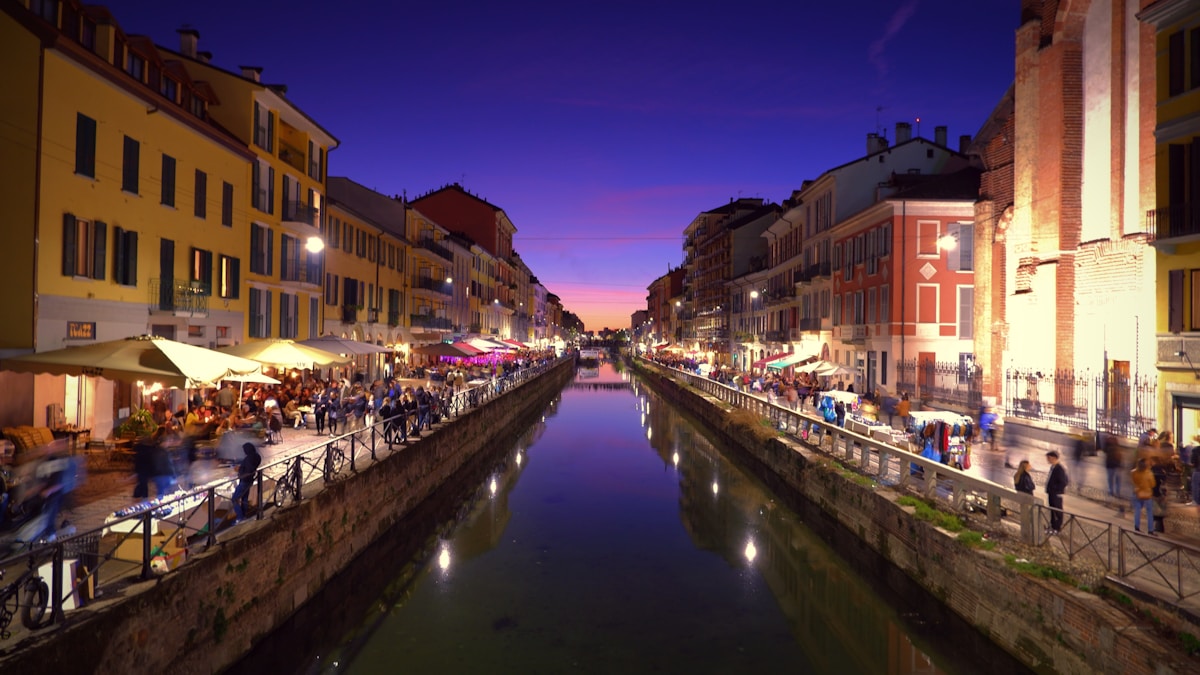
Milan sits in the Po Valley, the richest agricultural land in Italy, surrounded by rice paddies, dairy farms, and some of Europe’s most productive food regions. The city’s food tradition draws on northern Italian ingredients - butter, cream, bone marrow, saffron, Carnaroli rice, aged Grana Padano - rather than the olive oil and dried pasta of the south. It’s a different cuisine from Rome or Naples, and it rewards understanding before you eat.
This guide covers the essential dishes, the best restaurants by neighbourhood, the aperitivo circuit, and the food markets and halls worth your time.
The essential Milanese dishes
Risotto alla Milanese
The defining dish of Milan. Made with Carnaroli rice (occasionally Vialone Nano), bone marrow (midollo di bue), white wine, saffron, and finished with butter and Grana Padano in a technique called mantecatura - folding cold butter into the hot rice off the heat until it becomes glossy and waves in the pan like a slow tide.
In the classic presentation, risotto alla Milanese is served alongside ossobuco alla Milanese (braised veal shank with gremolata - lemon zest, garlic, parsley), not as a standalone dish. Many modern trattorias serve both separately, but ordering them together is historically accurate.
Price range: approximately €14–20 at a good trattoria; €22–35 at more formal restaurants.
Cotoletta alla Milanese
A bone-in veal cutlet (costoletta), pounded thin, breaded in egg and fine breadcrumbs, and fried in clarified butter - never olive oil, never pan-drizzled, always fully submerged in butter. It should be large enough to hang off the plate. The crust should be pale gold, not dark brown, and the meat must stay pink inside.
The thin version (orecchia d’elefante - elephant’s ear, pounded very flat) is the Milanese way. The thick bone-in version is traditional but less common. Do not accept the oven-baked imitations at tourist restaurants.
Price: approximately €20–28 at a proper trattoria.
Ossobuco alla Milanese
Braised veal shank cross-cut so the bone marrow is visible. The marrow, extracted with a small spoon, is considered the prize of the dish. The sauce is a soffritto of onion, carrot, and celery with white wine and veal stock; finished with gremolata stirred in at the end. Slow-cooked for 2–3 hours until the meat falls from the bone.
Served with risotto alla Milanese (the combination is called “ossobuco in gremolata con risotto allo zafferano”) or polenta.
Price: approximately €22–32.
Cassouela
A winter dish - pork (various cuts: ribs, sausage, ear, rind) slow-braised with savoy cabbage. It’s a rich, unglamorous dish that appears on menus from November to February and disappears in spring. A marker of a serious northern Italian kitchen.
Panzerotti Luini
The best street food in Milan. Luini on Via Santa Radegonda 16 (near the Duomo, open Monday–Saturday) has been frying panzerotti since 1888. The classic is tomato and mozzarella; there are also variants with spinach and ricotta, or meat. Approximately €3.50 each - order two at minimum.
The queue moves fast. The counter window is the goal; the interior is small and standing only.
Panettone
Not a restaurant dish, but a food experience worth taking seriously in Milan. The city invented panettone - or at least the modern industrial version of it. The artisan bakery version bears no resemblance to the dry supermarket loaf. Pasticceria Cova on Via Montenapoleone has been making it since 1817. Marchesi 1824 (now owned by Prada, with a cafe inside the store) on Via Santa Maria alla Porta is the other top name.
Buy a whole panettone (750g–1kg) if you have luggage space. They keep for several weeks.
Aperitivo culture
Milan’s aperitivo is not a custom invented for tourists - it’s a functioning part of how Milanese people eat on weekdays. The ritual: arrive at a bar between 6pm and 9pm, order a drink for approximately €8–14, gain access to a free spread of food. At the best spots, this means a full antipasto table: bruschetta, pasta salads, risotto bites, pizza, cheese, and more.
The Negroni (gin, Campari, sweet vermouth, orange peel) is the aperitivo drink of choice. The Aperol Spritz is everywhere but considered less serious by the Milanese themselves - Campari Soda or Americano are the local choices. Campari was invented in Milan and has been the house aperitivo since 1860.
Best aperitivo by neighbourhood:
Navigli (best overall):
- Mag Café (Ripa di Porta Ticinese 43): the most respected cocktail bar in Navigli, serious drinks, good food spread, from approximately €10/drink
- Upcycle (Via Corsico 11): large food spread, popular with locals, approximately €8–10/drink
- El Brellin (Vicolo dei Lavandai, Naviglio Grande): historic setting in a covered courtyard at the waterside wash-house, aperitivo from approximately €9
Brera:
- Bar Brera (Via Brera 23): the original aperitivo neighbourhood bar, €8–10/drink, reliable food spread
- Jamaica (Via Brera 32): where the Brera art school crowd has gathered since the 1950s, Campari Soda at approximately €7, simple nibbles
Isola:
- Ratanà (Via de Castillia 28): more restaurant than bar, but the aperitivo hour is serious - chef Cesare Battisti’s kitchen extends to the drinks service, approximately €12/drink
Restaurants: neighbourhood by neighbourhood
Duomo / Centro Storico
Luini (Via Santa Radegonda 16): panzerotti only, street food, approximately €3.50/piece. The most important single food stop in central Milan.
Al Mercante (Piazza Mercanti 17): a reliable trattoria in a 13th-century palazzo, risotto alla Milanese and ossobuco, approximately €35–50 per person for a full meal with wine.
Trattoria Milanese (Via Santa Marta 11): one of the oldest trattorias in Milan, open since 1933. Cotoletta for approximately €22, risotto alla Milanese for approximately €16. Old-fashioned interior, regulars who’ve been coming for decades. Booking required.
Peck (Via Spadari 9): Milan’s most famous gastronomic shop. The ground floor sells cheese, salumi, wines, chocolates, and prepared foods. The deli counter is the place to buy mortadella, culatello, and aged Grana Padano to take home. The upstairs restaurant is formal and expensive (€60–100/person); the food shop is for everyone.
Navigli
The canal district along Naviglio Grande and Naviglio Pavese is the centre of Milanese nightlife and informal dining. Restaurants and bars line both banks; the atmosphere peaks on warm evenings.
Ristorante Brellin (Vicolo dei Lavandai 14): Milanese cuisine in a historic setting (the covered courtyard of the old canal-side washing house), approximately €40–55 per person. Traditional risotto, cassouela in winter.
Pizzeria Tradizionale (Ripa di Porta Ticinese 7): Neapolitan-style pizza in the Navigli, approximately €10–16 per pizza. Long queues on weekends - arrive early or go on a weekday.
Osteria del Binari (Via Tortona 1, near Naviglio Grande): casual neighbourhood restaurant, pasta and grilled meats, approximately €25–35 per person.
Isola
A former working-class neighbourhood north of Porta Garibaldi that has become one of Milan’s most interesting eating areas.
Ratanà (Via de Castillia 28): the best modern Milanese kitchen in the city. Chef Cesare Battisti cooks traditional dishes with precision - the cotoletta and risotto are benchmarks. Approximately €50–70 per person for a full meal with wine. Book ahead.
Berbere (Via Montevideo 4): artisanal pizza from a small Italian chain that takes the craft seriously. Roman-style al taglio and round pizzas, approximately €10–18. Good craft beer selection.
Brera
The neighbourhood around the Pinacoteca di Brera - galleries, design studios, and the most expensive restaurant strip in Milan.
Trattoria Masuelli San Marco (Via Umbria 80, technically Porta Romana but considered Brera adjacent): a small, unreconstructed trattoria that has been serving Milanese food since 1921. The risotto alla Milanese is among the best in the city (approximately €16). Ossobuco for approximately €25. No concessions to modern presentation; the plates look as they would have in 1960. Booking essential.
Brera Caffè (Via Brera 23): not a restaurant, but the best spot for a standing lunch - cappuccino, tramezzino, and a glass of house white for approximately €8–12. Locals eat at the bar; this is normal and correct.
The Navigli food walk
The Naviglio Grande stretches 2 km from the Piazza XXIV Maggio to the Darsena basin. A walk along both banks from Piazza XXIV Maggio to the Vicolo dei Lavandai takes about 30 minutes without stopping - longer with the inevitable detours.
Good walking order (start from Piazza XXIV Maggio):
- Piazza XXIV Maggio - the entry to the Navigli district. The Darsena (the old dock basin, now a leisure park) is 5 minutes west.
- Ripa di Porta Ticinese - the main bar strip on the east bank. Walk south from here.
- Vicolo dei Lavandai - turn left off Ripa di Porta Ticinese at Via Corsico. The covered courtyard of the historic canal-side washhouse is down the alley - an unexpected quiet spot in the middle of the busy canal district.
- El Brellin and Ristorante Brellin - in the Vicolo dei Lavandai; the bar and the restaurant occupy the same historic space.
- Naviglio Pavese - the second canal, running south from Piazza dell’Ospedale Maggiore, quieter and more residential than the Grande. Worth a 10-minute walk for the contrast.
Best time: Thursday or Friday early evening (6–9pm), when the aperitivo culture is at its most alive and the bars are full but not yet weekend-crowded.
Food markets and halls
Mercato di Via Fauché (Via Fauché, Parco Sempione, Tuesday and Saturday morning): One of Milan’s best traditional street markets, selling fresh fruit, vegetables, cheese, salumi, fish, and flowers. Not a tourist market. Saturday mornings are the busiest and best.
Mercato di Porta Romana (Via Luigi Muratori, Monday through Saturday morning): A covered market hall in the Porta Romana neighbourhood. Similar character to Via Fauché - produce, cheese, meat, and salumi. The cheese counter is outstanding.
Mercato Centrale Milano (Piazza Luigi di Savoia, inside Stazione Centrale): A curated food hall opened in 2016 inside the grand railway station. Around 20 producers operate permanent counters: fresh pasta (Pastificio), mortadella (Forno della Tradizione), gelato (Gelateria dei Peccatori), and craft beer (Birra Artigianale). Food quality is good; prices are food-hall rather than market (€10–18 for lunch). The setting - inside the 1931 station building - is worth the visit regardless.
Eataly Milano Smeraldo (Piazza XXV Aprile 10, Brera/Isola border): The flagship Eataly superstore in Milan, five floors of Italian food products, wine, and several restaurants. More useful for take-home purchases (high-quality olive oil, pasta, cheese) than for eating in; restaurant prices are above average for the quality. The wine cellar on the lower floors is the most worthwhile section.
Coffee in Milan
Milan has a serious coffee culture that differs from Naples - less intense, more focused on bar technique and bean quality.
Bar Camparino (Galleria Vittorio Emanuele II, ground floor): The original home of Campari in Milan since 1915. Order a Campari Soda at the bar (approximately €8) in the Galleria at aperitivo hour. Coffee also excellent.
Caffè Pasticceria Marchesi (Via Santa Maria alla Porta 11a): Elegant 19th-century pasticceria, cappuccino at the bar for approximately €2.50. The pastries (approximately €3–5) are among the best in Milan.
Orsonero Coffee (Via Disciplini 3, near Porta Ticinese): The best specialty coffee in Milan - a serious third-wave roaster with knowledgeable staff and rotating single-origin espresso from approximately €2.50.
Standard rule: Drink coffee standing at the bar (it costs less and is the Milanese way). Sitting at a table costs 20–50% more and is for extended stays only.
For food tours and aperitivo walking experiences, browse Milan food tours - the Navigli neighbourhood food walk and the Brera market tour are the most popular options.
Take a Guided Food Tour of Milan
Milan’s food scene rewards local knowledge: the cotoletta alla Milanese is only worth eating at a handful of long-running trattorias, and the aperitivo buffets vary wildly between Brera, Navigli, and Isola. A guided food tour typically covers four to six neighbourhood stops — a historic pasticceria for the morning pastry, a proper risotto lunch, Navigli bars for aperitivo — giving you a cross-section of the city’s eating culture in three hours. Browse Milan food tours on GetYourGuide.