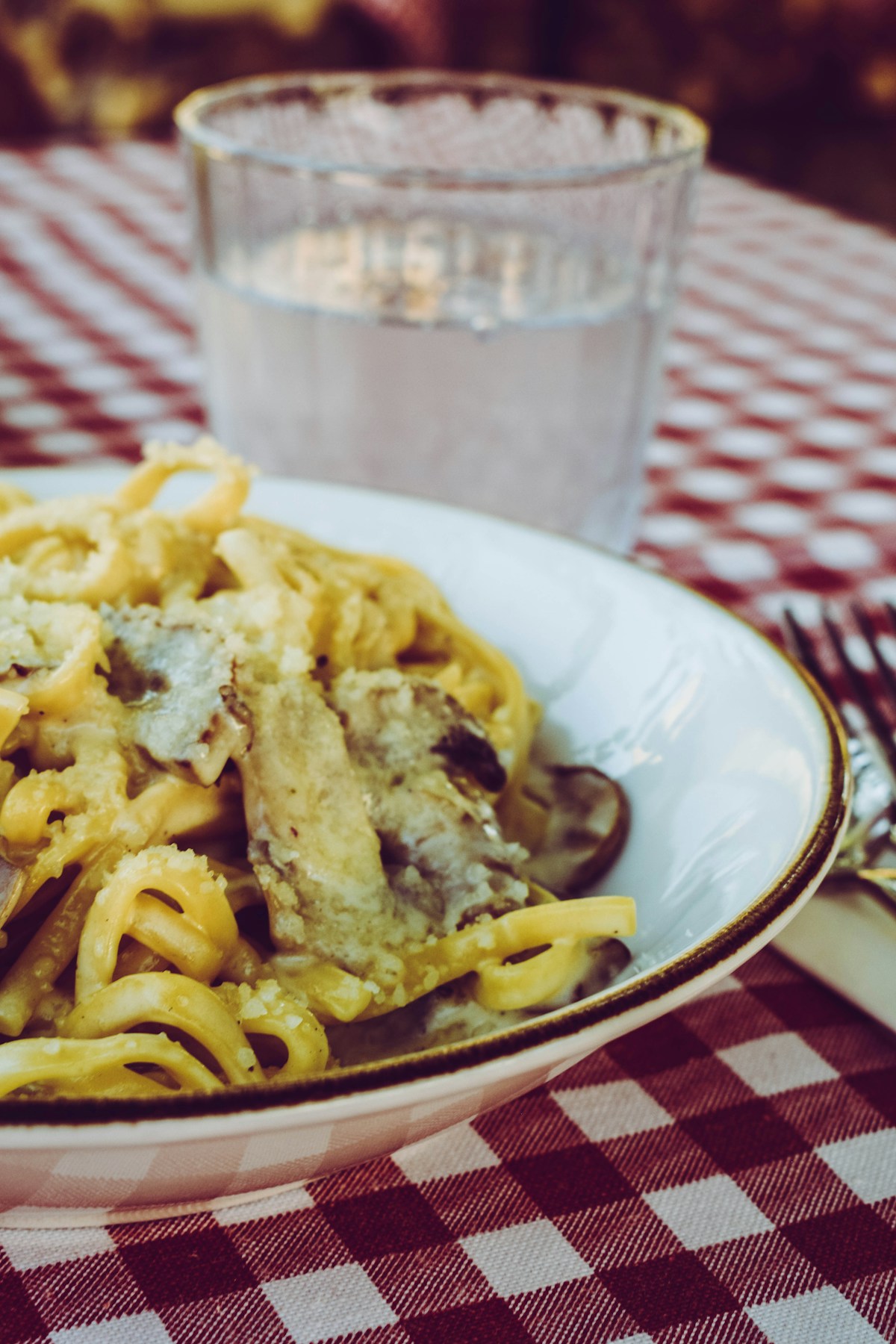
There are over 300 documented pasta shapes in Italy. This is not variety for its own sake - each shape was developed for a purpose, to hold a particular type of sauce or to suit a particular cooking method. Understanding the logic behind pasta shapes and regional traditions makes ordering in Italian restaurants considerably more rewarding.
Fresh pasta vs dried pasta
Fresh pasta (pasta fresca): Made with flour and eggs (sometimes semolina and water for southern fresh pasta). Soft, silky, absorbs sauce well. Associated with Emilia-Romagna - tagliatelle, lasagne, tortellini, pappardelle. Best with butter-based or cream sauces and the rich ragùs of the north.
Dried pasta (pasta secca): Made from semolina (durum wheat flour) and water, extruded through dies and dried. Firm, holds its shape, stands up to olive oil-based sauces and longer cooking. Associated with southern Italy - spaghetti, rigatoni, orecchiette, bucatini. The commercial pasta most associated with Italy globally.
The two categories are not interchangeable. Carbonara made with fresh pasta has a different texture and character to carbonara made with spaghetti. Neither is wrong; they are different dishes.
Key shapes and their proper partners
Spaghetti - long, round. Sauces that coat without weighing down: aglio e olio (garlic and oil), carbonara (eggs, guanciale, pecorino, black pepper), amatriciana (tomato, guanciale, pecorino). All three are Roman.
Rigatoni - short, ridged tubes. Holds chunky, robust sauces: rigatoni alla pajata (offal, Roman), pasta alla norma (aubergine, tomato, ricotta salata - Sicilian), arrabbiata (tomato, chilli, garlic).
Penne - smooth or ridged tubes. All-purpose; less character than rigatoni. Better with smooth sauces.
Tagliatelle - flat egg pasta ribbons from Emilia-Romagna. Tagliatelle al ragù is the correct Bolognese presentation (not spaghetti bolognese, which doesn’t exist in Bologna). The width of a tagliatelle ribbon is specified by the Bologna Chamber of Commerce as 1/12,270th of the height of the Asinelli Tower - approximately 8mm when cooked.
Pappardelle - very wide flat egg pasta from Tuscany. For game ragùs: wild boar (cinghiale), hare (lepre), duck (anatra). The width holds up to the richness.
Orecchiette - “little ears,” small concave pasta from Puglia. Specifically: orecchiette con cime di rapa (turnip tops, anchovy, chilli) - the signature Pugliese dish. The concave shape traps the sauce.
Bucatini - hollow spaghetti, the tube runs through the centre. Amatriciana (tomato, guanciale, pecorino) is the standard pairing. The tube fills with sauce.
Trofie - short, twisted pasta from Liguria. Eaten with pesto alla genovese - the twisted shape holds the basil oil. Do not order trofie in Rome and expect it to taste the same.
Bigoli - thick, whole-grain spaghetti from the Veneto. Bigoli in salsa (sardine and onion sauce) is the traditional preparation.
Malloreddus - small ridged gnocchi-shaped pasta from Sardinia. Served with sausage ragù.
Culurgiones - Sardinian pasta parcels with potato, pecorino, and mint filling. The pinched closure is a specific gesture.
Tortellini - small ring-shaped filled pasta from Bologna. Tortellini in brodo (in meat broth) is the correct form; tortellini with cream sauce is a compromise. The filling is a mixture of pork loin, prosciutto, mortadella, Parmesan, and nutmeg.
Agnolotti del plin - small filled pasta from Piedmont, filled with roast meat mixture. The “plin” refers to the pinch closure.
The ragù question
Ragù alla Bolognese: The Bolognese ragù registered with the Bologna Chamber of Commerce (1982) specifies: beef (coarse mince), pork belly, onion, celery, carrot, tomato paste, whole milk, white wine, and a small amount of tomato. Cooked for minimum 2 hours. No garlic. Served with tagliatelle. The spaghetti bolognese of the outside world is not a Bolognese tradition.
Ragù alla Napoletana: A completely different dish - a single piece of beef (or pork) slow-cooked for hours in tomato sauce until falling apart. The meat is served separately from the pasta (which uses the sauce). Sunday tradition in Naples.
How to order pasta in Italy
Primo piatto: Pasta is a first course in Italian dining, not a main. A full Italian meal is: antipasto, primo (pasta or risotto), secondo (meat or fish), contorno (vegetable side), dolce.
Portions: Italian pasta portions are smaller than outside Italy, by design - you’re supposed to eat it as a first course, not a main.
Al dente: Cooked to firm-to-bite. If you like pasta cooked softer, you can ask but it’s not appreciated.
Fresh vs dried in restaurants: Restaurants typically specify when pasta is fresh (pasta fresca / fatta in casa). If not specified, assume dried. For pasta-making classes across the regions - tortellini in Bologna, orecchiette in Bari, pici in Tuscany - Italy cooking and food tours offer hands-on experiences with local sfogline and home cooks.
For the regional food guides covering each pasta tradition: Roman food guide (carbonara, amatriciana, cacio e pepe), Tuscan food guide (pici, pappardelle with wild boar), Neapolitan food guide (ragù Napoletano, spaghetti alle vongole), and Emilian food guide (tagliatelle al ragù, tortellini). For Bologna - the city most associated with pasta: Bologna travel guide.
Book a Pasta-Making Class
Fresh pasta is one of the easiest Italian skills to acquire with the right teacher — and what you learn in a two-hour class translates directly back home. Classes are widely available across the country: Florence and Bologna for egg-based pasta (tagliatelle, tortellini, pappardelle), Rome for cacio e pepe technique, Naples for gnocchi. Most classes cover the dough, shaping, and a full meal you cook together. Browse pasta-making classes on GetYourGuide.
Plan Your Stay
Find hotels in Italy — search accommodation across all budgets in Italy.