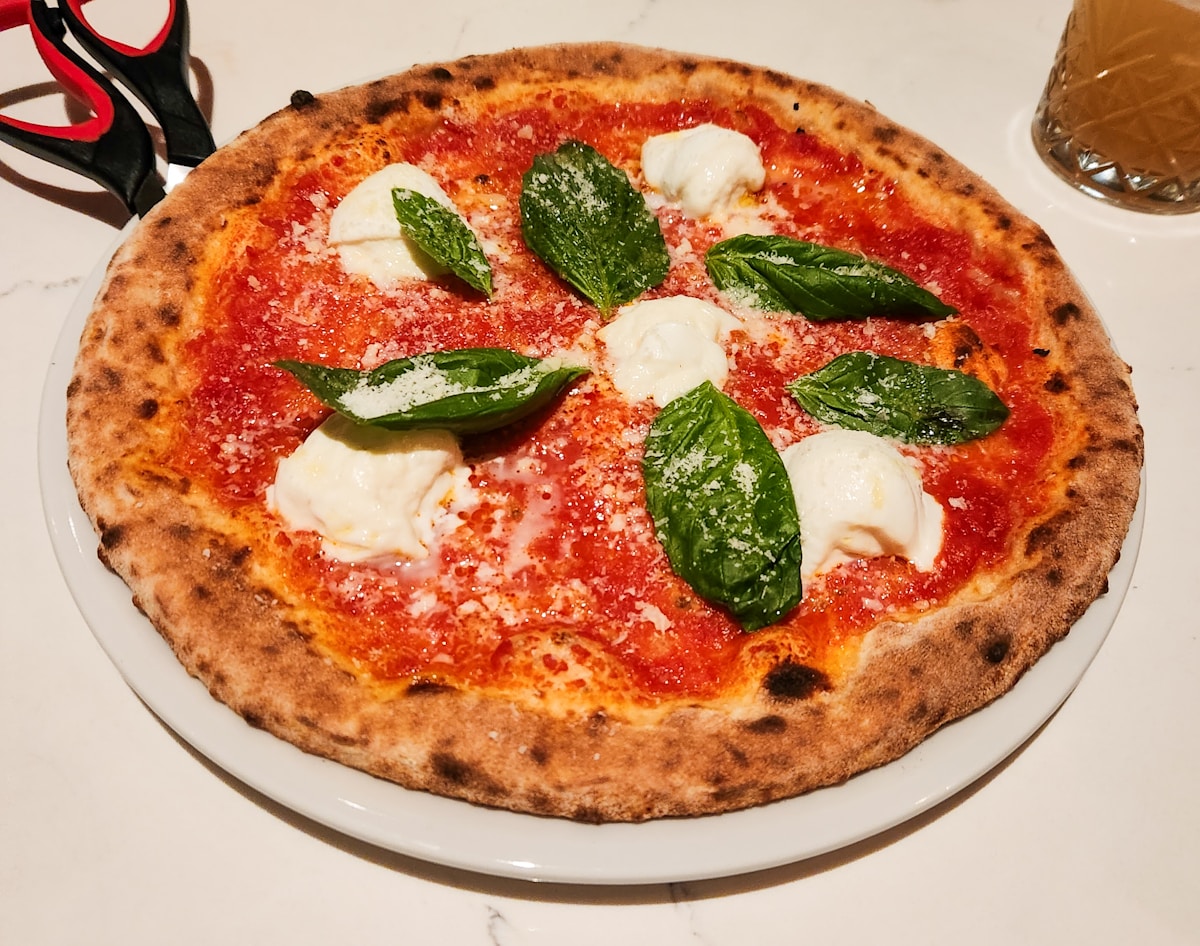
Pizza in Italy is nothing like pizza outside Italy. Not just better - structurally different, with regional variations that are as distinct from each other as they are from international adaptations. Understanding the differences is the foundation of eating pizza well in Italy.
Neapolitan pizza (Pizza Napoletana)
The original and, in most informed views, the gold standard. Invented in Naples in the 18th century when tomatoes from the Americas arrived in southern Italy and were applied to the existing flatbread tradition. The Margherita (tomato, mozzarella, basil) was allegedly created in 1889 for Queen Margherita of Savoy, with the colours of the Italian flag.
Characteristics:
- Thin base, thick risen crust (cornicione)
- Cooked at 480°C in a wood-fired dome oven for 60–90 seconds
- Soft, slightly charred, pliable - you fold it in four to eat it
- The centre is wet from the tomato and mozzarella
The dough: Type 00 flour, water, salt, yeast. Leavened 8–24 hours. The technique is UNESCO Intangible Cultural Heritage since 2017.
What to order: Margherita (tomato, mozzarella fior di latte or buffalo mozzarella, fresh basil). Marinara (tomato, garlic, oregano, olive oil - no cheese). These two are the traditional forms.
Where: In Naples, the pizzerias to know are the historic names - L’Antica Pizzeria da Michele (established 1870, serves only Margherita and Marinara, expect a wait), Sorbillo, Starita (known for fried pizza), Di Matteo. Outside Naples, the quality of Neapolitan pizza drops sharply. For pizza-making classes and guided pizzeria tours in Naples with a working pizzaiolo, Naples food tours include behind-the-counter experiences at established pizzerias.
Roman pizza
Pizza Tonda (round pizza): The Roman street version - very thin, crispy base, cooked in an electric oven, cut into rectangular slices and charged by weight. Very different from the Neapolitan model. The crust is cracker-crisp throughout (no soft cornicione). Eaten at the counter in a pizza al taglio shop.
Pizza in Teglia (in the pan): A thicker, focaccia-style pizza baked in a square pan. Typical of Rome’s traditional pizzerias. Usually with toppings added after baking (cheese, rocket, cured meats) rather than cooked on.
Scrocchiarella: The extra-thin, super-crispy Roman round pizza. Fashionable in recent years; characterised by its pronounced crunch.
Sicilian pizza
Sfincione: Not really a pizza in the round sense - a thick, spongy rectangular dough topped with tomato sauce, anchovy, onion, and caciocavallo cheese. Street food rather than restaurant food. Sold from carts and market stalls in Palermo.
Pizza Siciliana: Thicker than Neapolitan, usually with a more heavily topped surface. The Catania school uses a different dough and different toppings (eggplant, olives).
Pizza al taglio (by the slice)
Found throughout Italy. A rectangular pan pizza with varying thickness (from thin to thick), displayed in sections in the window, cut to order, and priced by weight. A genuinely good lunch option throughout the country. Quality varies enormously; the best pizza al taglio operations use good ingredients and long fermentation times.
Book a Pizza-Making Class in Naples
The best way to understand Neapolitan pizza is to make it yourself under the instruction of a pizzaiolo who was trained here. Naples has dozens of reputable classes — some run by the pizzerias on the UNESCO intangible heritage list — covering dough fermentation, hand-stretching, and wood-fired oven technique. You leave knowing why the same recipe produces a different result everywhere else. Browse Naples pizza classes on GetYourGuide.
What to avoid
- Restaurants adjacent to major tourist sites: price and quality are reliably poor
- “Pizza with chips (french fries)” on the menu: not a traditional pizza, indicates a tourist-adjusted kitchen
- Pineapple pizza: not an Italian thing anywhere; its presence indicates adaptation for foreign tastes
- Pre-sliced pizza sitting under heat lamps: go to a place that makes it fresh to order
Naples vs Rome
The single most discussed topic in Italian pizza. Both traditions are centuries old, both are defensible, neither is objectively better. The key differences:
| Neapolitan | Roman | |
|---|---|---|
| Base | Thin with thick crust | Thin throughout |
| Texture | Soft, pliable, slightly charred | Crispy |
| Oven | Wood-fired, 480°C | Electric or gas, lower temperature |
| Eating | Folded, by hand | Cut in pieces, fork or hand |
| Philosophy | Simplicity of toppings | More varied toppings |
If you are in Naples, eat Neapolitan pizza. If you are in Rome, eat Roman pizza. The question of which is better doesn’t need to be settled.
For context on the city behind Neapolitan pizza: Naples travel guide covers the street food circuit, the pizzerias by neighbourhood, and logistics. For Rome’s pizza al taglio scene and the broader Roman food tradition: Roman food guide. Sicily has a distinct pizza tradition (scaccia, sfincione) covered in the Sicilian food guide.
Plan Your Stay
Find hotels in Italy — search accommodation across all budgets in Italy.