Venetian cooking reflects the city’s history as a seafaring trading republic - strong connections to the Adriatic, spice routes from the East, and an agricultural hinterland in the Veneto that provides rice, vegetables, and wines. The cuisine is distinct from central Italian food: less pasta, more rice and polenta, strong use of preserved fish and sea creatures that other regions ignore.
Cicchetti
The Venetian equivalent of tapas - small portions of food served in bacari (traditional wine bars) with glasses of wine (ombra). Typical cicchetti: crostini with baccalà mantecato (creamed salt cod), hard-boiled eggs with anchovy paste, meatballs (polpette), deep-fried artichokes, small crabs, and sardines. The tradition is to stand at the bar, order multiple small items, and drink Prosecco or the house white.
The Rialto market area (around Calle dei Botteri and Campo San Giacomo di Rialto) has the highest concentration of bacari. The best time is late morning before lunch or 6–7pm. Avoid the ones closest to the main tourist spots. A guided Venice cicchetti and bacari tour is one of the best introductions to the Rialto area - covering the market, the canal-side bars, and the correct method for ordering an ombra.
The traditional Venetian lunch is a giro de ombra - a circuit of several bacari on foot, stopping for a glass and a few cicchetti at each. A single cicchetto costs approximately €1.50–3 as of 2026. A glass of ombra is approximately €1.50–3. Three or four cicchetti and two glasses of wine makes a filling lunch for approximately €12–15 per person.
The best bacari
All’Arco (Calle dell’Ochialer, San Polo 436, near Rialto) - Widely considered the best bacaro in Venice. Outstanding crostini with seasonal toppings - baccalà mantecato, raw fish, artichoke. Cicchetti approximately €2–3. House wine approximately €2. Standing room only. Open Monday–Saturday 8am–3pm.
Cantina Do Spade (Calle delle Do Spade, San Polo 860) - Operating since 1488. Excellent cicchetti and fuller meals. Cicchetti approximately €2–3, pasta approximately €12–15. Open daily for lunch and dinner.
Al Mercà (Campo Bella Vienna, San Polo 213) - A tiny bar on a campo near the Rialto. Standing only. Panini from approximately €3, Prosecco approximately €2. Open Monday–Saturday 10am–3pm and 6–9pm.
Osteria alla Vedova (Calle del Pistor, Cannaregio 3912) - Known for the best meatballs (polpette) in Venice - fried, crispy, served at the bar. Cicchetti approximately €1.50–3. Open Monday–Saturday.
Cantina Do Mori (Calle Do Mori, San Polo 429) - The oldest bacaro in Venice, operating since 1462. Copper pans hang from the ceiling, excellent crostini and wine selection. Cicchetti approximately €2–3. Open Monday–Saturday 8:30am–7:30pm. Standing only.
Al Timon (Fondamenta degli Ormesini 2754, Cannaregio) - A canal-side bar; order baccalà mantecato on bread with a glass of ombra. Standing only, €3–8 per cicchetto.
Sarde in Saor
Sardines marinated in a sweet-sour sauce of onions, raisins, and pine nuts - a preservation method dating to the Republic. The dish improves over several days and is best the day after it’s made. Found throughout the city; versions vary significantly in quality.
Where to eat it: Osteria alle Testiere (Calle del Mondo Novo 5801, Castello, Venice) - tiny, 22 covers, outstanding lagoon seafood including sarde in saor. Book 2–3 weeks ahead; no walk-ins on weekends. €50–80/person.
Baccalà Mantecato
Creamed salt cod - stockfish (dried unsalted cod) whipped with olive oil into a creamy mousse, served on grilled white polenta or bread. One of the most characteristic Venetian flavours. Light and intense simultaneously.
Where to eat it: Al Timon (Fondamenta degli Ormesini 2754, Cannaregio) - baccalà mantecato on bread is among the standard cicheti; one of the better canal-side bars in Cannaregio.
Risi e Bisi
Rice and peas - a spring dish traditionally presented to the Doge on 25 April (St Mark’s Day). More liquid than risotto, using the fresh peas and their pods. Found in Venice and the Veneto in late spring when fresh peas are in season.
Where to eat it: Dall’Amelia (Via Miranese 113, Mestre) - outside the island but worth the detour for proper Veneto risotto, including risi e bisi in season and risotto al radicchio. €35–60/person.
Risotto al Nero di Seppia
Black risotto made with cuttlefish ink - dramatic in colour, with a clean seafood flavour. Served throughout the lagoon; a good version should have proper depth of flavour from the cuttlefish beyond the inky colour.
Where to eat it: Antiche Carampane (Rio Terà delle Carampane 1911, San Polo, Venice) - no tourist menus, reliable seafood risotto and excellent frittura mista. A genuine local institution. €45–70/person.
Fegato alla Veneziana
Calf’s liver thinly sliced and cooked with white onions and white wine - one of the most famous second courses of the region. The sweet onions balance the liver. Found in traditional restaurants across Venice and the Veneto.
Where to eat it: Dall’Amelia (Via Miranese 113, Mestre) - fegato alla veneziana is a fixture on the menu; the Veneto tradition is well represented here outside the tourist circuit of the island. €35–60/person.
Frittura Mista
Mixed fried seafood - small fish, shrimp, calamari, soft-shell crab - depends entirely on what’s in the market. Best near the Rialto fish market in the morning when ingredients are freshest. Approximately €14–18 at trattorias; street food versions from approximately €8.
Where to eat it: Antiche Carampane (Rio Terà delle Carampane 1911, San Polo, Venice) - excellent frittura mista using whatever the Rialto market has that morning. €45–70/person.
Seppie in Nero
Cuttlefish cooked in its own ink, served with polenta - deeply savoury, jet-black, and unmistakably Venetian. A good version requires fresh cuttlefish from the lagoon; quality varies. Approximately €15–18 at trattorias.
Where to eat it: Antiche Carampane (Rio Terà delle Carampane 1911, San Polo) - the kitchen uses whatever the Rialto market has; seppie in nero appears when fresh cuttlefish are available.
Bigoli in Salsa
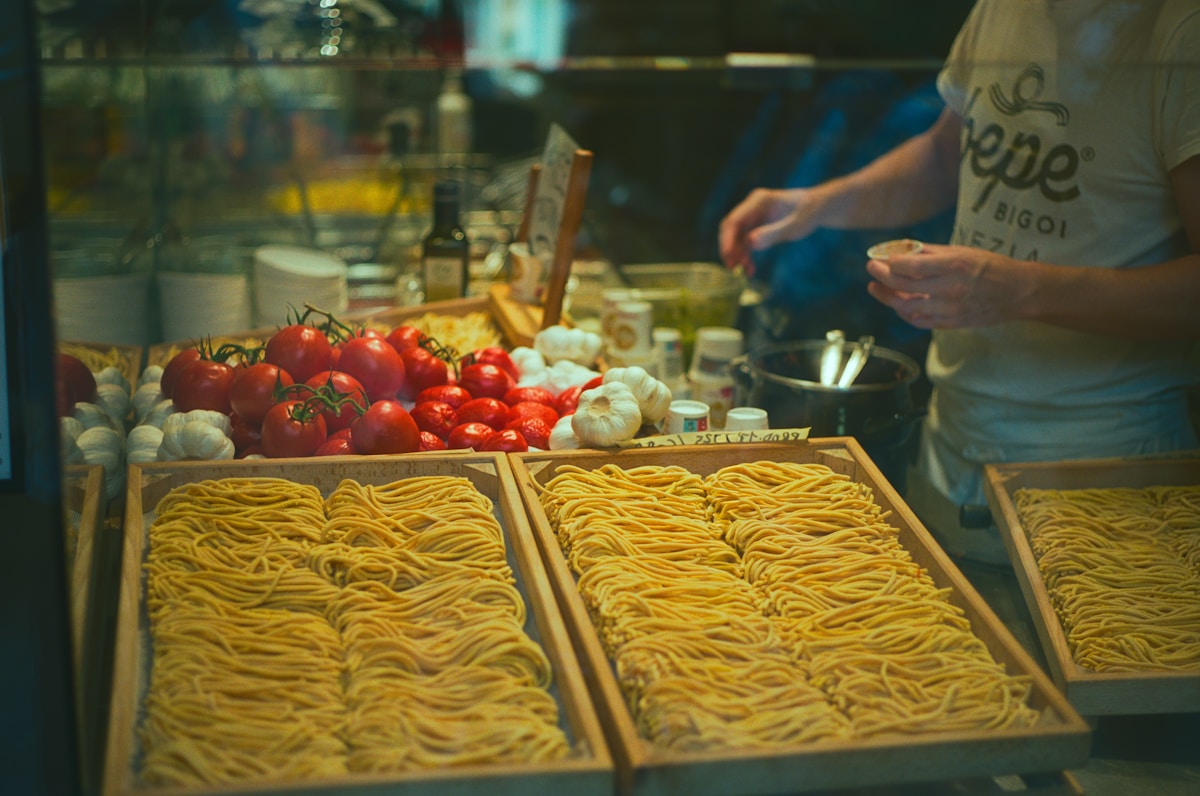
Thick, rough-textured spaghetti (bigoli) with a sauce of anchovy and onion - cooked together until the anchovies dissolve into a deeply savoury paste. Simple and excellent; an underknown Venetian pasta. Approximately €10–13 at trattorias.
Rialto Market
The Rialto Market (Erberia for vegetables, Pescheria for fish) operates Tuesday–Saturday mornings, closing around 1pm. It has operated here for approximately 1,000 years. The fish hall is extraordinary - Adriatic seafood that reaches Venice within hours of being caught. Visit 8–10am when the selection is fullest.
Wine
Prosecco (from Valdobbiadene and Conegliano, 45 minutes from Venice) is the local sparkling wine - drunk in the bacari as ombra. Soave and Valpolicella are the white and red table wines of the Veneto; Amarone della Valpolicella (from dried grapes, intensely concentrated) is the prestige red.
Where to drink it: Enoteca Trevigiana (Treviso) - for radicchio di Treviso IGP dishes paired with local Veneto wines in season (November–March); Treviso is 30 minutes from Venice and the home of radicchio.
Where to Eat
Restaurants more than two streets away from the main tourist routes are generally better and cheaper. Castello (the eastern sestiere) and Cannaregio (the northern area around the ghetto) have lower prices than San Marco or the Rialto tourist core. Lunch at the Rialto market after visiting the market itself (10am–noon) is one of the best experiences in Venice.
Trattoria alla Madonna (Calle della Madonna, San Polo 594, near Rialto) - A Venice institution serving Adriatic seafood since 1954. Pasta approximately €12–16, fish mains approximately €18–25. No reservations - arrive before 12:30pm for lunch or 7pm for dinner. Closed Wednesday.
Osteria alle Testiere (Calle del Mondo Novo, Castello 5801) - Tiny (10 tables), excellent lagoon seafood including sarde in saor. Tasting menus from approximately €55. Book at least a week ahead - one of the hardest reservations in Venice. Closed Sunday and Monday.
Antiche Carampane (Rio Terà delle Carampane 1911, San Polo) - No tourist menus. Reliable seafood risotto and excellent frittura mista. €45–70/person. A genuine local institution.
Anice Stellato (Fondamenta della Sensa, Cannaregio 3272) - Away from the tourist centre; canal-side seating. Pasta approximately €14–17, mains approximately €18–22. Book ahead for dinner. Closed Monday and Tuesday.
Gelato
Gelateria Nico (Fondamenta Zattere ai Gesuati, Dorsoduro 922) - Famous for the gianduiotto (chocolate-hazelnut ice cream, approximately €4) on a waterfront terrace facing the Giudecca. Open daily.
Gelateria Alaska (Santa Croce 1159) - Small-batch gelato with unusual flavours (artichoke, asparagus, ginger-cinnamon). Small cup approximately €3. Open 11am–8pm.
Take a Guided Food Tour of Venice
The bacaro circuit — Venice’s network of old wine bars serving cicchetti — is the best food experience in the city, and it requires local knowledge to do properly. The best bacari are on unmarked calli in Cannaregio and San Polo; ordering well (and knowing when a bacaro has declined in quality) is not obvious from the outside. A guided cicchetti walk covers six to eight bacari in two to three hours, with the guide handling the ordering and providing the context on each dish and the wine poured by the glass. Browse Venice food tours on GetYourGuide.
Practical Tips
- The tourist premium in Venice is real near St Mark’s. Move to Dorsoduro, Cannaregio, or the Rialto market area for food. A Venice food tour covering the bacari circuit and the Rialto fish market is the most efficient introduction.
- The coperto (cover charge) in Venice is approximately €2–4 per person - higher than elsewhere in Italy.
- Sitting at a table at a cafe in Piazza San Marco incurs a supplemento musica (music surcharge) of approximately €6 per person when the live band is playing.
- A full trattoria meal with fish, wine, and coperto costs approximately €40–60 per person. A bacaro lunch with cicchetti and wine costs approximately €12–18.
- Tap water is safe to drink - ask for acqua del rubinetto.
For Venice in full: Venice travel guide covers the sestieri, logistics, and what to see beyond the food. Verona - 1.5 hours west by train - has its own food culture: see Verona food guide for Venetian dishes with a Veronese character. For the wines of the Veneto - Prosecco, Soave, Amarone - the Italian wine guide covers the regional appellations and what to order with what. Planning a trip across northern Italy? Our northern Italy itinerary covers Venice, Verona, Milan, and the Dolomites with practical budget figures.