Rimini Travel Guide: Adriatic Beaches and Roman Ruins
Guide to Rimini: Emilia-Romagna's biggest Adriatic beach resort, with 15km of beach clubs, Roman monuments, and the Fellini Museum.
Guides for Rimini
Rimini divides into two distinct worlds: a 15km chain of private beach clubs along the Adriatic coast, and a compact historic centre approximately 10 minutes inland with genuine Roman and Renaissance heritage. Both are worth knowing. The beach operation is extraordinarily well organised - this is Italian beach culture at its most systematic and commercial. The historic centre is undervisited relative to its quality. And then there is Fellini: this was where the director was born in 1920, the city whose summer nights and provincial tensions drove so many of his films, and which now has a museum that is one of the best of its kind in the country.
The beach
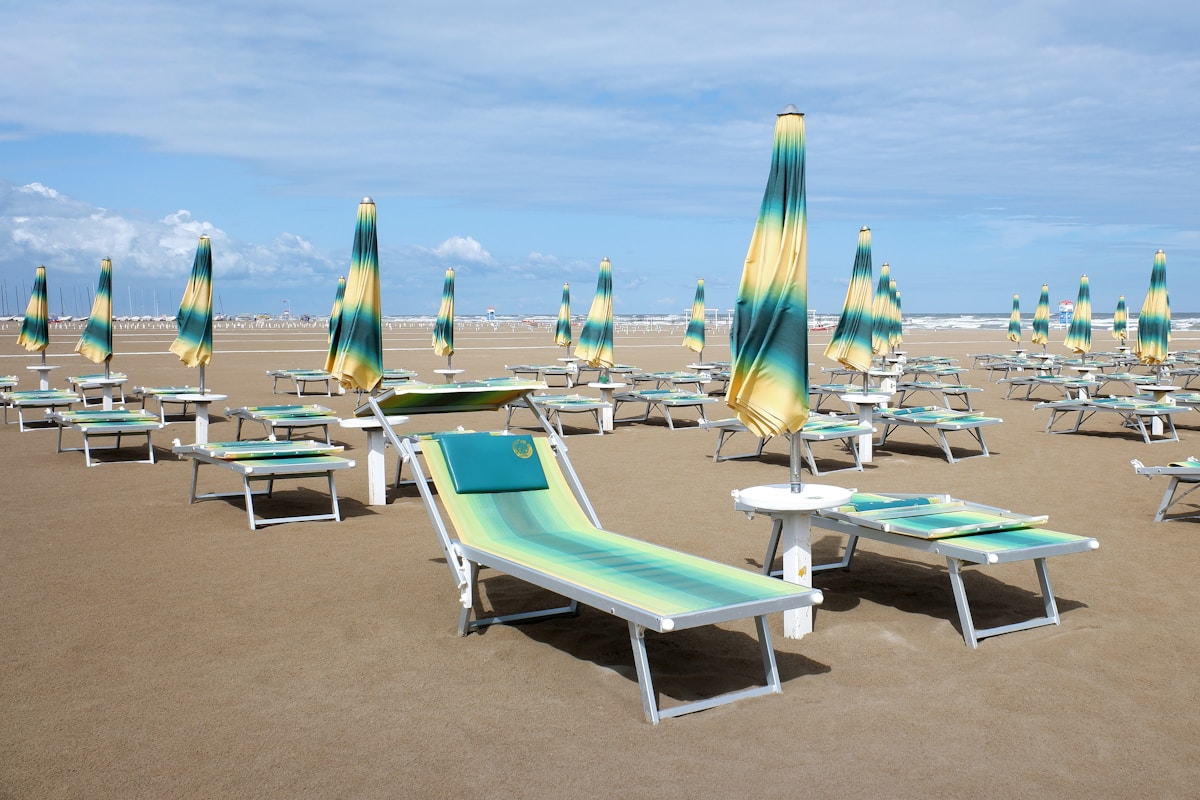
Rimini’s beach (approximately 15km from Marina di Rimini to Miramare) is one of the most intensively managed stretches of coast in Europe. The approximately 1,000 stabilimenti balneari (private beach clubs) divide the sands into numbered rows of umbrellas and sun loungers, each club with its own bar, changing facilities, and showers. The system is organised, clean, and social - Italian families book the same row of umbrellas season after season.
Sunbed and umbrella hire costs approximately €15–35 per day per person as of 2026 (varying by club and row position - closer to the sea is more expensive). In July and August, peak-season reservations are advisable. Free beach sections (spiagge libere) exist between private clubs but are relatively narrow.
Nightlife along the Rimini coast is part of the cultural offer - the strip from Rimini north to Riccione has dozens of clubs and bars, some famous throughout Italy. The beach scene transitions into nightlife in the evenings, particularly in July and August.
The historic centre
Arco di Augusto (Piazza Ferrari) is the oldest surviving Roman triumphal arch in Italy, built in 27 BC to mark the meeting point of the Via Flaminia and Via Emilia - two of Rome’s most important consular roads. The arch is remarkably intact and freely accessible.
Ponte di Tiberio (Bridge of Tiberius) is a Roman bridge completed in 21 AD across the Ausa canal, still carrying vehicle traffic - a 2,000-year-old piece of infrastructure in daily use. The five arches of Istrian stone are visually striking.
Tempio Malatestiano (Cathedral of Sant’Agostino, Via IV Novembre) - One of the most important Renaissance buildings in Emilia-Romagna. What is now the cathedral was transformed by Sigismondo Pandolfo Malatesta, Rimini’s lord, in 1450, with a marble exterior by Leon Battista Alberti over the existing Gothic church - one of the first applications of classical architectural principles in the Renaissance. The interior contains Malatesta family tombs and the Cappella delle Reliquie. Free entry, open daily approximately 8:30am–12:30pm and 3:30pm–7pm.
Piazza Cavour is the historic civic centre with the 16th-century Palazzo dell’Arengo, a fish market loggia from 1747, and the Fontana della Pigna.
The Fellini Museum
The Museo Fellini (opened 2021) is spread across two sites connected by a path: Castel Sismondo, a 15th-century fortress in the centre, and the Cinema Fulgor on Corso d’Augusto (a 1914 cinema where the young Fellini worked). The museum is one of the most imaginatively designed in Italy - not simply a display of objects but an immersive installation with film sets, reconstructed scenes, and archive material exploring both Fellini’s creative process and Rimini’s own mythology in his films. Entry approximately €15 as of 2026, with combined tickets available. Open Tuesday–Sunday approximately 10am–7pm.
Borgo San Giuliano - the neighbourhood just across the Ponte di Tiberio - has walls painted with murals depicting scenes from Fellini films. It has a handful of good restaurants and a more local atmosphere than the seafront.
Food
Rimini is in Emilia-Romagna, which means the baseline food quality is high. The beach resort area has a full range of tourist-pitched restaurants; the best eating is in and around the historic centre and Borgo San Giuliano.
Piadina (flatbread filled with prosciutto, squacquerone cheese, and rocket) is the signature street food of the Romagna coast - substantially different from the Parma and Bologna version of Emilian cuisine. Every bar and kiosk sells it; expect to pay approximately €3–5.
Brodetto di pesce (Adriatic fish stew - distinct in each coastal town) is the local fish dish; Rimini’s version uses a broader range of species and a thin tomato base.
Named restaurants: La Marianna (Lungamare Amerigo Vespucci 24 - reliable seafood near the beach, mains approximately €14–22), Osteria de Borg (Via Forzieri 10, Borgo San Giuliano - Romagnolo home cooking, mains approximately €12–18), Guido (Molo Levante, Porto Canale - the best address for high-end seafood, mains approximately €22–35).
Where to stay
Rimini has a huge accommodation stock built for the beach season - prices vary significantly between peak (July–August) and shoulder months.
Budget: Hotel Aracne (Via Siracusa 11 - doubles from approximately €50/night in June, approximately €80–100 in August) is a small family-run hotel a few streets from the beach. Numerous two-star hotels in the beach zone offer doubles from approximately €40–60 in shoulder season, approximately €70–100 in peak.
Mid-range: Hotel Imperiale (Lungamare Murri 30 - doubles from approximately €80–140/night) has a direct beach position with a private section. Hotel Carillon (Viale Regina Elena 50 - doubles from approximately €70–120/night) is a reliable three-star near the beach with good facilities for families.
Luxury: Grand Hotel Rimini (Parco Federico Fellini 1 - doubles from approximately €200–400/night) is the historic grande dame of the Rimini seafront, opened in 1908 and a Fellini obsession (he set several scenes here and had a suite reservation for the last 30 years of his life). The Art Nouveau facade and Liberty-style interiors are genuinely impressive.
Getting there and around
By train: Rimini is on the Bologna–Ancona coastal line, well connected to the rest of the network. From Bologna Centrale: approximately 1–1.5 hours (from approximately €10–20 as of 2026). From Milan Centrale: approximately 2.5–3 hours (from approximately €25 booked ahead). From Florence: approximately 2.5 hours via Bologna (from approximately €20 booked ahead). Rimini Centrale station is approximately 10 minutes’ walk from the beach and approximately 5 minutes from the historic centre.
By air: Rimini Federico Fellini International Airport (RMI) has seasonal charter and low-cost services (primarily Ryanair) from European cities, mainly April–October. A taxi to the seafront costs approximately €15–20; no direct bus service to the beach zone.
Getting around: The beach is accessible on foot from the station. Bicycles are the standard Rimini transport - rental from approximately €5–10/day from numerous points along the seafront.
Practical details
Riccione and the riviera: Rimini sits at the northern anchor of the Riviera Romagnola, a stretch of Adriatic resort towns running south to Cattolica. Riccione (approximately 12km south, accessible by train in approximately 15 minutes) is slightly more upmarket and known for its nightlife. Cattolica (approximately 20km south) is smaller and quieter.
Timings: The beach season is essentially June–September. Outside these months, the resort strips are quiet to the point of emptiness - good for visiting the historic centre without crowds, but many hotels reduce capacity or close entirely. The best museum visiting is spring (April–May) and autumn (October), when the Fellini Museum and Roman sites are unhurried.
San Marino: The independent republic is approximately 30km inland from Rimini by car or bus (approximately 1 hour, approximately €5 return as of 2026). The medieval citadel on Monte Titano is worth a half-day visit; the surrounding souvenir shops are best navigated quickly.
For accommodation across the beach zone and historic centre: Rimini hotels. For the Fellini Museum, Roman sites, and beach logistics: things to do in Rimini. Book a guided tour of Rimini and the Emilian Riviera to explore the Roman monuments and the Tempio Malatestiano with a local guide. For the Romagnolo food tradition - piadina, brodetto di pesce, and where to eat: Rimini food guide and the Emilian food guide. Bologna is 1–1.5 hours north by train and a natural pairing for a combined Emilia-Romagna itinerary.
Upcoming Events in Rimini
Alba White Truffle Fair 2026
Alba White Truffle Fair 2026, October 3–December 6. World's largest white truffle market with Barolo tastings, tajarin, and live auctions in Piedmont.
La Befana - Feast of the Epiphany 2027
La Befana 2027, January 6. Italy's Epiphany gift-giving day: children receive sweets or coal from the Befana witch, then decorations come down.
Book an experience
Top experiences in Rimini
Explore the best tours and activities in Rimini, with instant confirmation and free cancellation on most bookings.