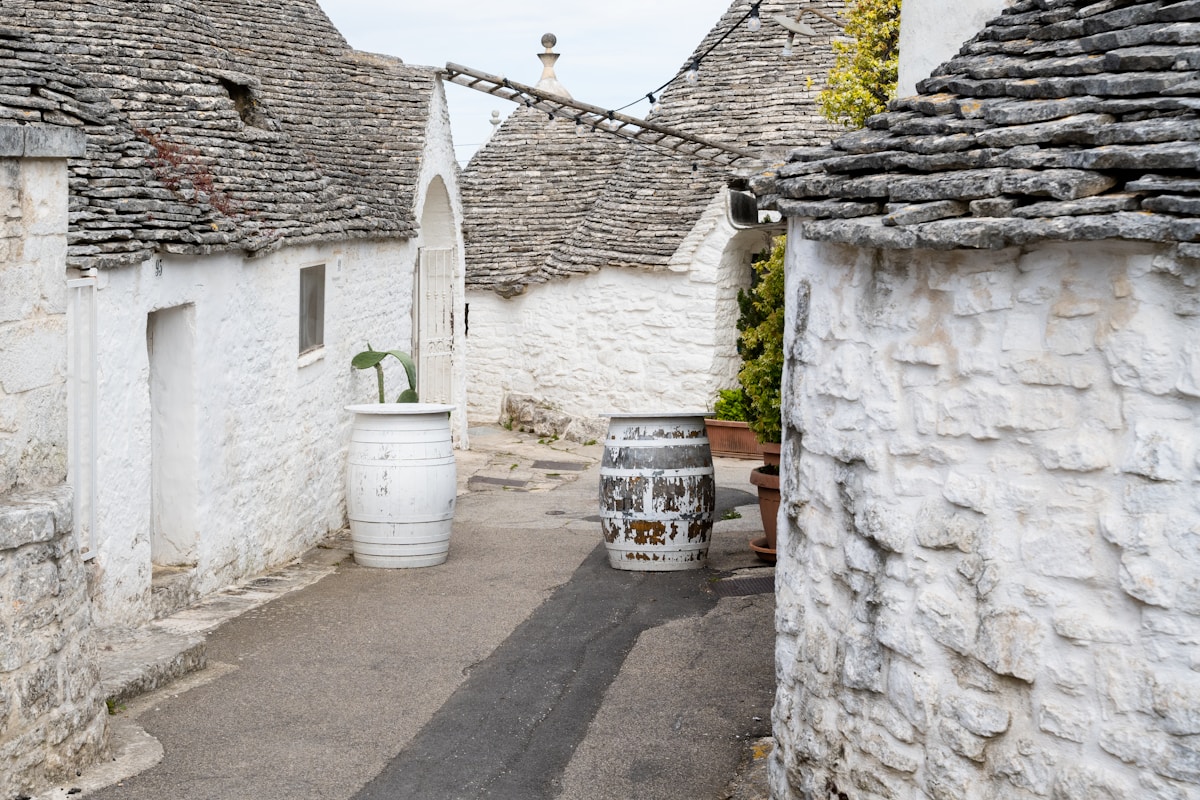
Puglia and Sicily are Italy’s two great southern destinations - and they represent different visions of what the Italian south can be. Sicily is a cultural powerhouse: Greek temples, volcanic landscapes, one of Italy’s most intense food traditions, and a complexity shaped by centuries of conquest. Puglia is quieter, more elegant, and increasingly fashionable - whitewashed towns, olive groves, baroque architecture, and a coastline that rivals anything in Italy. Both are best explored by car over at least a week.
Quick Verdict
| Category | Puglia | Sicily |
|---|---|---|
| Beaches | Winner | - |
| Food depth | - | Winner |
| Ancient history | - | Winner |
| Baroque architecture | Tied | Tied |
| Value for money | Tied | Tied |
| Luxury accommodation | Winner | - |
| Off-the-beaten-path | Winner | - |
| Dramatic landscapes | - | Winner |
Choose Puglia if you want beautiful beaches, trulli villages, elegant masserias, and a quieter southern Italian experience. Choose Sicily if you want ancient history, volcanic landscapes, intense street food, and a richer cultural complexity.
Cost Comparison at a Glance
Both regions are among Italy’s most affordable. Budget travellers can manage well in either; the differences are modest.
| Expense | Puglia | Sicily |
|---|---|---|
| Budget accommodation (hostel/B&B) | €35–60/night | €30–55/night |
| Mid-range hotel (3-star) | €70–110/night | €60–100/night |
| Masseria/agriturismo | €120–300/night | €80–180/night |
| Dinner (trattoria, per person with wine) | €25–35 | €20–30 |
| Street food snack | €2–5 | €1.50–4 |
| Car hire (per day, booked ahead) | from €30 | from €28 |
| Entry: top archaeological site | €10–14 | €13–18 |
| Budget daily total | approx. €70–90 | approx. €60–85 |
| Mid-range daily total | approx. €130–180 | approx. €120–165 |
Overall verdict on cost: Sicily is marginally cheaper — mainly because Palermo and Catania have a wider range of budget accommodation, and street food is exceptionally good value. Puglia is comparable at mid-range, and its masserias offer an upscale rural experience that Sicily cannot match at the same price point.
Food and Dining
Sicily’s food culture is among Italy’s most complex, shaped by Greek, Arab, Norman, and Spanish influences. Palermo’s street food - arancine (€2–3), panelle (€1.50), sfincione (€2), and stigghiola (grilled lamb intestines, €3) - is a world unto itself. Pasta alla Norma (aubergine, tomato, ricotta salata, €10–14), pasta con le sarde (sardines, fennel, raisins, pine nuts, €12–16), and raw red prawns from Mazara del Vallo are benchmark dishes. Granita con brioche (€3–4) for breakfast is a Sicilian institution. Nero d’Avola wines and Etna Rosso are outstanding.
Pugliese food is simpler and more ingredient-driven - what Italians call cucina povera (peasant cooking), elevated by extraordinary raw materials. Orecchiette con cime di rapa (ear-shaped pasta with turnip tops, €8–12) is the signature dish. Burrata from Andria (a town that claims to have invented it) is creamy, fresh, and best eaten within 24 hours. Friselle (dried bread topped with tomatoes, oregano, and olive oil, €5–7), bombette pugliesi (meat rolls, €3–4), and taralli (savoury ring-shaped crackers) are everyday staples. Puglia produces more olive oil than any other Italian region - the quality is exceptional.
Winner: Sicily for complexity and depth. Puglia for ingredient purity and simplicity.
Beaches and Coast
Puglia’s coastline - particularly the Salento peninsula (the “heel” of Italy’s boot) - has some of Italy’s finest beaches. The water around Gallipoli, Porto Cesareo, Torre dell’Orso, and Polignano a Mare is crystal-clear and turquoise. Bari’s coastal promenade connects to beaches north and south. The Gargano promontory (the “spur”) in northern Puglia has dramatic sea stacks and forested coastline. Puglia’s beaches are generally less crowded than Sicily’s main beaches.
Sicily’s beaches are good but more variable. San Vito Lo Capo on the northwest coast has white sand and clear water. Cefalù’s beach has the medieval town as a striking backdrop. The Aeolian Islands (Lipari, Stromboli - ferries from Milazzo, from €20) offer volcanic black-sand beaches and excellent swimming. The Scala dei Turchi near Agrigento is visually dramatic. Overall, Sicily’s coastline is longer and more diverse, but Puglia’s Salento has the edge for pure beach quality.
Winner: Puglia for water clarity and beach beauty. Sicily for coastal variety.
History and Culture
Sicily has one of the most layered histories of any place in Europe. The Valley of the Temples at Agrigento (€14) has Greek temples that rival anything in mainland Greece. Taormina’s ancient Greek theatre (€10), with Mount Etna as a backdrop, is extraordinary. Palermo’s Arab-Norman churches - the Cappella Palatina (Palazzo dei Normanni, €14) with its golden mosaics, Monreale Cathedral (€6) with 6,340 square metres of Byzantine mosaics - are among the finest religious buildings in Europe. Syracuse’s archaeological park (€13.50) spans Greek and Roman civilisations.
Puglia’s history is less layered but distinctive. Lecce - the “Florence of the South” - has exuberant Baroque architecture carved from soft local limestone (Basilica di Santa Croce, free, is the pinnacle). Alberobello’s trulli (whitewashed cone-roofed stone houses, UNESCO World Heritage Site) are unique to Puglia. Castel del Monte (€10), Frederick II’s mysterious octagonal castle, sits alone on a hilltop in stunning isolation. Matera - technically in neighbouring Basilicata but often visited from Puglia - has ancient cave dwellings (sassi) that are a UNESCO site.
Winner: Sicily for sheer depth and diversity. Puglia for baroque architecture and trulli uniqueness.
Accommodation
Puglia has developed a distinctive accommodation style: the masseria. These converted fortified farmhouses - often with pools, olive groves, and white-on-white interiors - have become some of southern Italy’s most sought-after places to stay. Prices range from €120 for a simple masseria to €300+ for luxury properties like Borgo Egnazia or Masseria Torre Maizza. Hotels in Lecce and Ostuni cost €70–130/night for mid-range options. Budget travellers find B&Bs from €50–70.
Sicily’s accommodation is more conventional. Palermo and Catania have 3-star hotels from €60–100/night. Taormina is pricier (€100–200). Agriturismi in the interior offer characterful rooms from €60–100. Syracuse’s Ortigia island has boutique hotels from €90–160. Overall, Sicily has more budget options.
Winner: Puglia for the masseria experience. Sicily for budget variety.
Getting Around
Both regions require a car for full exploration.
Puglia’s highlights are spread across the region - Bari to Lecce is 1.5 hours by train (€12) or car, but the Itria Valley towns (Alberobello, Ostuni, Cisternino, Locorotondo, Martina Franca) are connected by minor roads that demand a vehicle. The Ferrovie del Sud Est railway connects some towns but runs infrequently. Car hire from Bari airport starts from approximately €30/day - compare car hire rates for Puglia and Sicily and book ahead in summer when availability is limited.
Sicily has better public transport between major cities. Trains connect Palermo, Catania, Messina, and Syracuse. Buses (AST, Interbus) reach Taormina and Agrigento. But the western coast, interior, and smaller towns need a car. Car hire from Palermo or Catania airports from approximately €30/day.
Winner: Sicily for public transport between cities. Both need a car for the full experience.
When to Visit
Both regions have long seasons and are at their best outside July and August.
Puglia is ideal from May to June and September to October. The Salento stays warm enough for swimming into October. July and August are hot (35–38°C) and crowded, particularly on the beaches around Gallipoli. April brings wildflowers and comfortable temperatures for sightseeing.
Sicily follows a similar pattern. May and June, and September and October, offer warm weather (25–30°C), swimming temperatures (23–26°C), and manageable crowds. Mount Etna adds a mountain dimension - skiing is possible from December to March.
Winner: A draw. Both are best in shoulder season.
Final Verdict
Sicily is the richer, more complex destination - a place where Greek temples, volcanic eruptions, Arab-Norman art, and explosive street food combine into one of Italy’s most intense travel experiences. Puglia is the more elegant, more relaxing destination - whitewashed towns, crystal water, extraordinary olive oil, and the masseria experience create a holiday that is stylish without being flashy.
For a two-week southern Italy trip, combining both is ideal. Fly into Palermo, spend a week exploring Sicily, then fly to Bari (1-hour flight, from €30) for a week in Puglia. Alternatively, a dedicated Puglia itinerary or Sicily itinerary gives each region the time it deserves.
Ready to Plan Your Trip?
See our itineraries for inspiration:
- Puglia Itinerary - seven days through Italy’s heel
- Sicily Itinerary - ten days around the Mediterranean’s largest island
- Southern Italy Itinerary - ten days from Naples to Sicily
- 3 Weeks in Italy - the north-to-south grand tour from Milan to Sicily
Also interested in Sicily versus the islands? Our Sicily vs Sardinia guide compares Italy’s two largest islands.
Plan Your Trip
✈️ Book your flights to Italy 🛡️ Get travel insurance 📱 Stay connected with an eSIM 🚗 Rent a car
🎟️ Browse tours in Puglia — Browse tours in Sicily 🏨 Search hotels in Puglia — Search hotels in Sicily