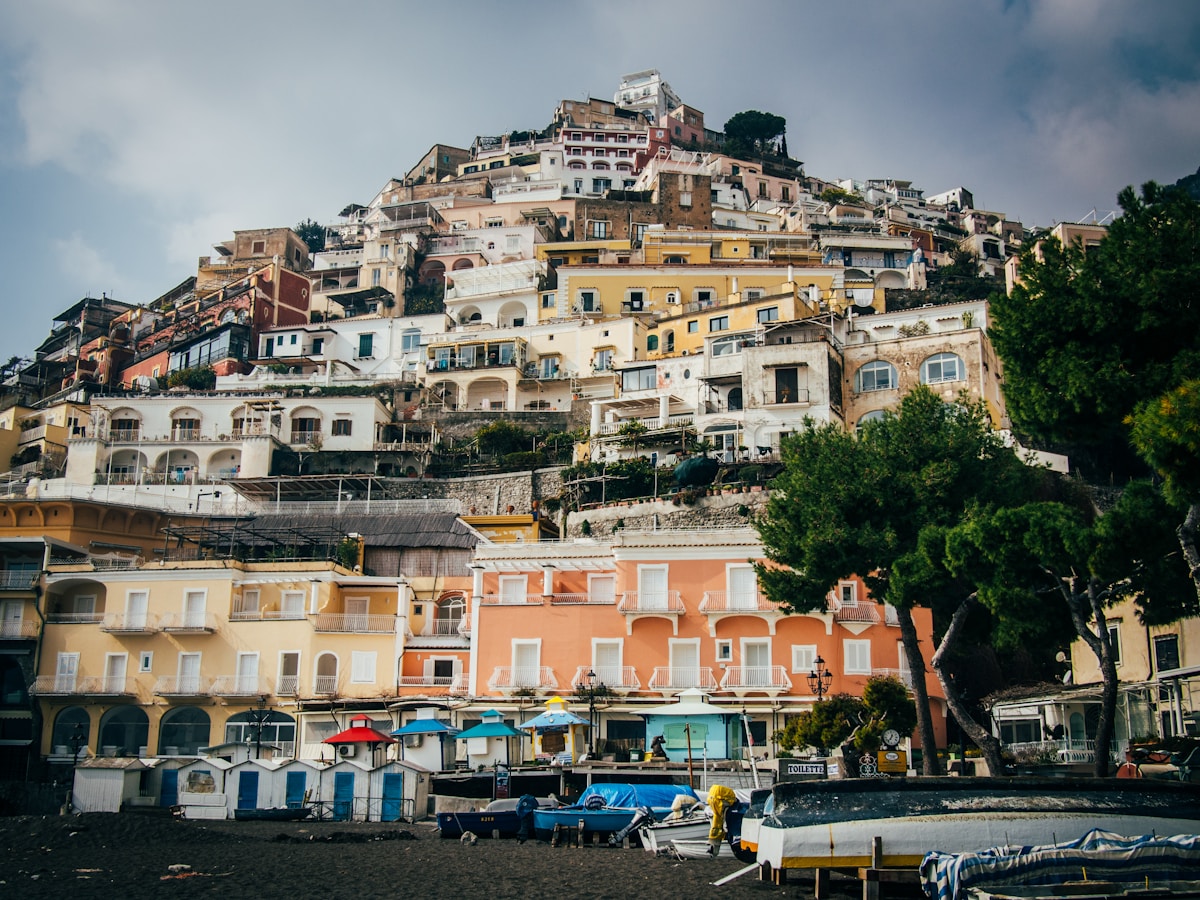
Southern Italy rewards time and transport flexibility. This 10-day itinerary runs from Naples through the Amalfi Coast, into Basilicata and Puglia, and ends in Sicily. It requires a combination of trains, a car for Amalfi and Puglia, and a short flight or overnight ferry for Sicily. The food, the archaeology, and the landscape are different from the north - this is not a refinement of the Rome-Florence-Venice circuit but an entirely different Italy.
Getting to Naples
High-speed Frecciarossa from Rome (1h 10min) or from Milan (4h 45min). Fly direct to Naples Capodichino (NAP) from most European cities.
Search hotels in Naples on Booking.com | Search hotels in Matera on Booking.com | Search hotels in Lecce on Booking.com
Before you go: key bookings
- Pompeii online (pompeionline.net) - book ahead, particularly for summer
- Hire a car for the Amalfi Coast days and for Puglia (collect in Naples or Salerno)
- Flights or ferry from Calabria/Naples to Sicily
Days 1–2: Naples
Naples is overwhelming, magnificent, and requires at least two days.
Day 1 - Archaeological Museum and Spaccanapoli: The Museo Archeologico Nazionale in the morning (the world’s finest Roman art collection - the Pompeii finds, the Farnese Hercules, the secret erotic cabinet). Allow 3 hours. Then walk Spaccanapoli - the long, arrow-straight road cutting through the historic centre. The Cappella Sansevero (pre-book) for the Veiled Christ marble sculpture.
Day 2 - Castel Nuovo, Pizzeria, day prep: The Castel Nuovo (14th-century waterfront fortress, the Triumphal Arch is the main feature), the Spaccanapoli church circuit (Gesù Nuovo, Santa Chiara and its tiled cloister, San Domenico Maggiore). Evening: pizza at L’Antica Pizzeria da Michele or Sorbillo - the original Neapolitan margherita, eaten in 10 minutes standing.
Day 3: Pompeii and Herculaneum
Circumvesuviana train from Napoli Piazza Garibaldi (30 minutes). Arrive at Pompeii before 9am. Spend the morning on the Forum, Via dell’Abbondanza, the House of the Vettii, the amphitheatre, and the Villa of the Mysteries. Return to Ercolano for Herculaneum in the afternoon - smaller, better preserved, far fewer visitors. Return to Naples for the night.
Days 4–5: Amalfi Coast
Collect a hire car in Naples or Salerno. Drive the coast road (SS163) or take the ferry from Naples to Positano (1.5 hours, much more pleasant).
Day 4 - Positano and the Sentiero degli Dei: Spend the morning in Positano - the vertical village above the sea. Walk the Path of the Gods (Sentiero degli Dei) along the ridge above the coast - 2 hours, extraordinary views, ends in Nocelle. Hire a car back to Positano or walk down the 1,700 steps. Amalfi town for lunch: the Cathedral, the Arsenale della Repubblica museum.
Day 5 - Ravello and Paestum: Drive up to Ravello (350m, 7km above the sea) - Villa Rufolo, Villa Cimbrone. Then drive south along the coast past Salerno to Paestum - three Greek Doric temples (5th century BC) in remarkably complete condition, standing in a flat plain with the sea visible. The National Museum of Paestum holds the painted Tomb of the Diver (480 BC) - the most complete Greek fresco discovered. Return car at Salerno; take the train to Matera via Potenza or to Taranto.
Day 6: Matera
The cave city of Basilicata. Arrive from Salerno via the bus from Potenza or directly from Naples via bus. Spend the day walking the Sassi, visiting the rock-cut churches, the underground cisterns, and the Casa Grotta. The Gravina ravine view at sunset from the Piazza Vittorio Veneto is essential.
Days 7–8: Puglia (Alberobello, Lecce, Ostuni)
Hire a car at Matera for these two days.
Day 7 - Alberobello and Locorotondo: Drive to Alberobello - the trulli town. The UNESCO-protected rione Monti quarter has the highest concentration of conical stone houses. Then drive to Locorotondo - a whitewashed hill town above the Valle d’Itria, with excellent trattorias.
Day 8 - Lecce: The baroque capital of the south. Santa Croce Basilica, the Piazza del Duomo, the Roman amphitheatre, the underground city, the craft shops. Eat: pasticciotto (the custard pastry), rustico leccese, orecchiette fresh from a market stall. Evening in Lecce; return car and travel to Bari or Brindisi for the Sicily connection.
Days 9–10: Sicily
Getting there: Fly from Brindisi or Bari to Palermo or Catania (45 minutes, from €30 on Ryanair). Alternatively, overnight ferry from Naples to Palermo (11 hours).
Day 9 - Palermo: The Palatine Chapel (essential), the Ballarò market (morning), the Capo market, pani câ meusa (the spleen sandwich), the Arab-Norman churches.
Day 10 - Day trip to Monreale or Agrigento: Monreale Cathedral (30 minutes by bus from Palermo) - the gold mosaic programme. Or travel to Agrigento for the Valley of the Temples. Depart from Palermo airport.
Getting around: transport between cities
The southern Italy circuit is logistically the most demanding route in Italy. Here is how each leg works, with approximate costs as of 2025.
Rome or Milan → Naples: Frecciarossa high-speed rail from Rome Termini to Napoli Centrale takes 1 hour 10 minutes; book ahead for fares from €22. From Milan Centrale it is 4 hours 45 minutes; advance fares from €45. Book on Trenitalia.com or Italo, or use Omio to compare both operators in one search.
Naples → Pompeii and Herculaneum: Circumvesuviana commuter train from Napoli Piazza Garibaldi. Pompeii Scavi station is 30 minutes (€2.80 each way). Ercolano Scavi is 20 minutes (€2.20 each way). Entry to Pompeii is €18; Herculaneum is €13. Book Pompeii entry online at pompeionline.net — queues without a booking can exceed 1 hour in summer.
Naples → Amalfi Coast: Ferries run April to October from the Molo Beverello hydrofoil terminal. Naples to Positano is approximately 1 hour 30 minutes, from €25 each way; Naples to Amalfi town is approximately 1 hour 45 minutes, from €22. SITA buses run year-round along the SS163 from Sorrento to Salerno; single fare approximately €1.30. The ferry is worth the cost: the road in summer is traffic-choked and the sea approach to Positano is the better arrival.
Amalfi Coast → Matera: This is the awkward leg. The practical route is to return to Salerno by ferry or bus, take a regional train to Potenza (1 hour 20 minutes, from €7), then a bus from Potenza to Matera (1 hour, from €4). The total journey from Salerno is 3 to 4 hours. An alternative is the direct bus from Naples to Matera via Flixbus (approximately 4 hours, from €12). Book the Flixbus option at flixbus.com — it departs from the Naples port area.
Matera → Puglia: No practical rail connection. Hire a car from Matera (Hertz, Avis, and Europcar all operate here); a compact car for two days costs approximately €60–90 total. Return the car at Bari or Brindisi airport when connecting to Sicily.
Puglia → Sicily: Ryanair and Volotea fly Bari or Brindisi to Palermo or Catania; flights take 45 minutes and fares start from €25–30 booked 2–3 weeks ahead. The overnight ferry from Naples to Palermo (GNV and Tirrenia lines) takes 11 hours and costs from €55 per person in a seat, from €90 in a shared cabin; a good option if you prefer to skip the Puglia segment.
Budget breakdown per person per day
Southern Italy is meaningfully cheaper than Rome, Florence, and the north. These are 2025 figures including accommodation, meals, entry fees, and local transport — excluding flights and the hire car.
Budget (approximately €70–90/day): Hostel dorms or budget B&Bs (from €30–40/night per person sharing), pizza and street food, SITA buses and the Circumvesuviana rather than taxis. Feasible in Naples and Matera; harder on the Amalfi Coast in July–August when even the cheaper options fill. Sicily is the easiest budget destination on this route.
Mid-range (approximately €130–170/day): 3-star hotels or boutique B&Bs (from €70–100/night per person sharing), lunch at a trattoria (€15–22 per person), dinner at a sit-down restaurant (€25–35 per person). This is the comfortable baseline for a 10-day trip: expect to spend approximately €1,300–1,700 in total excluding international flights.
Higher-end (approximately €220–300/day): Boutique cliffside hotels in Positano start from €180–250/night per room; Lecce has a strong selection of converted palazzo hotels from €120/night. The Amalfi Coast is where the budget gap between mid-range and higher-end is widest — the same room in Positano costs roughly double what it does in Lecce.
Entry fees to budget: Pompeii €18, Herculaneum €13, Paestum €12, Cappella Sansevero Naples €9, Matera rock-cut churches approximately €5–8 per church, Palatine Chapel Palermo €15, Valley of the Temples Agrigento €15.
Practical notes
Car hire: Essential for Amalfi (days 4–5) and Puglia (days 7–8). Book your hire car before arriving; collect and return at different cities (Naples to Salerno/Matera; Matera to Bari/Brindisi) - one-way rental is standard in Italy but adds €30–60 to the price.
Sicily flight: Book the domestic flight or ferry in advance. Ryanair prices are volatile; booking 2–3 weeks ahead gets the best fares.
Best season: April–June and September–October. July–August works for Sicily beaches but Pompeii and Amalfi are exhausting in peak heat. March is viable for Matera and Puglia — fewer visitors, lower prices — but the Amalfi ferry services don’t start until late March or April.
What to pack: Light layers for Matera and the Ravello clifftops even in summer; comfortable walking shoes for the Sentiero degli Dei and Pompeii’s uneven basalt streets; a swimsuit if you plan to stop at Positano beach or the Ionian coast near Lecce.
For the main destinations: Naples guide, Amalfi Coast guide, Pompeii guide, Matera guide, Lecce guide, and Sicily guide. For guided tours at Pompeii: Pompeii tours guide. For the food along this route: Neapolitan food guide, Pugliese food guide, and Sicilian food guide.
Book Your Trip
- Flights - Flights to Italy guide · Find the best fares to Italy
- Travel Insurance - Italy travel insurance guide · get covered with EKTA
- eSIM - Italy eSIM & SIM guide · buy with Airalo
- Airport Transfers - Door-to-door from Naples airport
- Car Rental - Renting a car in Italy · Compare prices across providers
- Tours & Activities - Browse Amalfi Coast tours on GetYourGuide