Lecce Travel Guide: The Florence of the South
Your guide to Lecce: the baroque capital of Puglia, honeyed stone churches, the Roman amphitheatre, and day trips to the Salento coast.
Guides for Lecce
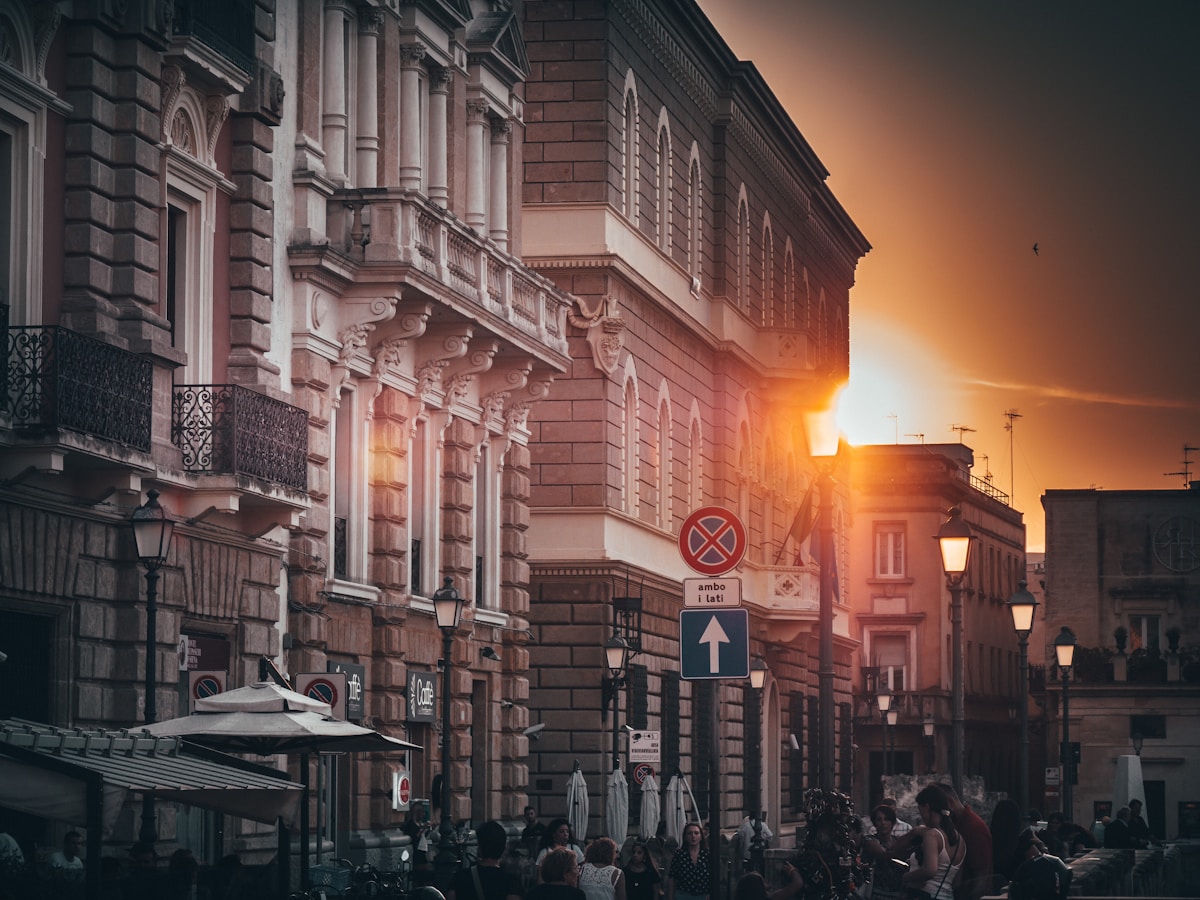
Lecce is the finest baroque city in Italy and the cultural capital of the Salento peninsula at the heel of the Italian boot. Built from pietra leccese - a soft, honey-coloured local limestone that carves with unusual precision - the churches and palaces of the historic centre are extraordinary for their sculptural elaboration. It is also one of the most affordable cities in Italy, with excellent food, a growing international presence, and access to some of the finest beaches in the country.
The baroque
Basilica di Santa Croce is the masterwork of Lecce baroque - a 150-year-long project (1549–1695) with a facade covered in carved floral decoration, grotesque figures, and symbolic animals. The level of sculptural detail is unmatched anywhere else in Italy. Free entry; open daily 9am–1pm and 5pm–9pm (summer hours).
Piazza del Duomo is the most contained baroque ensemble: the Cathedral (with a 72m bell tower), the Bishop’s Palace, and the Seminary all in matching Leccese stone. The piazza is enclosed - you enter through a single archway, which gives it the quality of an outdoor room.
Piazza Sant’Oronzo has the remains of a Roman amphitheatre (2nd century AD, originally seating 25,000) partially excavated beneath it. The Column of Sant’Oronzo, topped with a bronze statue of the patron saint, was moved here from Brindisi (where it was one of the pair marking the end of the Appian Way).
Chiesa di San Matteo - A small church with an extraordinarily elaborate curved facade, combining concave and convex forms. Often cited as the finest single piece of Lecce baroque. Free entry.
What to see beyond the baroque
Museo Faggiano (Via Ascanio Grandi 56) - A building where a plumber’s attempt to fix a sewage pipe in 2000 uncovered layers of archaeological remains: a Messapian tomb, a Roman grain store, a medieval well, and a Knights Templar passage. Entry approximately €5 as of 2026. One of the most unusual small museums in Italy.
MUST Museum (Via dell’Università) - Lecce’s modern art museum, housed in a former monastery. Temporary exhibitions. Entry varies.
Roman Theatre (Via dell’Arte della Cartapesta) - A small 2nd-century Roman theatre, separate from the amphitheatre, seating approximately 5,000. Free entry.
Food
Puglia has one of Italy’s most distinctive regional cuisines. Orecchiette (ear-shaped pasta, made by hand across the region) with cime di rapa (turnip tops) or tomato ragù is the emblematic dish. Frisa (twice-baked bread ring soaked in water and topped with tomatoes, olive oil, and olives) is the street food. Pasticciotto - a pastry shell filled with custard cream - is Lecce’s signature pastry, eaten for breakfast (approximately €1–1.50 at any bar). Puglia produces 40% of Italy’s olive oil; the local variety is grassy and peppery, excellent with everything.
Named restaurants: Alle Due Corti (Corte dei Giugni 1 - traditional Salentine cuisine, mains approximately €10–14), Osteria degli Spiriti (Via Battisti 4 - pasta and seafood, mains approximately €12–16), Bros’ (Via degli Acaya 2 - Lecce’s Michelin-starred restaurant, tasting menu approximately €90–120).
Beaches
The Salento coast - both Adriatic (east) and Ionian (west) - has some of Italy’s clearest water. Porto Cesareo (approximately 30km west) has shallow, sandy beaches. Otranto (approximately 45km south-east) has a medieval old town and the Cathedral with a 12th-century mosaic floor. Santa Maria di Leuca (approximately 70km south) is the southernmost point of Puglia where the Adriatic meets the Ionian. The Adriatic coast north of Otranto has dramatic karst cliff formations - Torre dell’Orso and the Grotta della Poesia are standout spots.
Where to stay
Lecce is one of the most affordable cities in Italy for accommodation. B&Bs in the historic centre from approximately €40–70/night. Mid-range hotels approximately €80–130/night. Patria Palace Hotel (Piazzetta Riccardi - doubles from approximately €150/night) faces the Santa Croce Basilica and has a rooftop terrace. Palazzo Ferraioli (Via Palmieri 66 - doubles from approximately €100/night) is a boutique option in a restored palazzo.
Getting there
Lecce is approximately 90 minutes south of Bari by Trenitalia regional or Intercity train (from approximately €10). Direct trains from Rome take approximately 5–6 hours (from approximately €35 booked ahead). Brindisi Airport (BDS) is approximately 40km north, with direct European flights - the STP bus to Lecce takes approximately 40 minutes (approximately €7).
Practical details
Cartapesta (papier-mâché): Lecce is the Italian capital of cartapesta - an elaborate papier-mâché sculpture tradition dating to the 17th century. Lecce-stone is heavy and expensive; papier-mâché was used for polychrome religious statues instead. Workshops in Via Marco Basseo and the Convitto Palmieri area sell everything from small figures (approximately €10–20) to elaborate altarpiece reconstructions. Several studios offer demonstrations and short workshops.
Timing: Lecce is hot and crowded from June to August. The best months to visit are April–May and September–October: warm enough for beaches, but with lower accommodation prices and smaller crowds. The historic centre is car-free and manageable on foot; a full day covers the main baroque churches and Piazza Sant’Oronzo.
Digital nomad scene: Lecce has grown as a remote-work destination since approximately 2020. Several co-working spaces operate in the centro storico - Spazio Murat and others advertise day passes (approximately €15–20). Fast fibre internet is available throughout the city centre. Monthly accommodation rental is significantly cheaper than in Italian cities further north: furnished apartments from approximately €500–700/month.
More accommodation options: Lecce’s affordability extends to hotels. Bed and Breakfast Prestige (Via Augusto Imperatore - doubles from approximately €50/night) is a reliable budget option. La Fiermontina (Via dei Perroni 18 - doubles from approximately €180/night) is a luxury boutique in a 17th-century palazzo with a garden and pool - one of the finest small hotels in southern Italy. For mid-range, B&B Palazzo Storico (doubles from approximately €90/night) and several similar converted-palazzo options near the Duomo offer good value relative to the rest of Italy.
For a full hotel guide by neighbourhood: Lecce hotels. For baroque church opening times, cartapesta workshops, and the Salento coast: things to do in Lecce. Book a guided tour of Lecce to visit the baroque churches and artisan workshops with a local expert. For local food - pittule, pasticciotto, and Salentine cuisine: Lecce food guide and the Pugliese food guide. Planning a broader Puglia visit? Our Puglia itinerary connects Lecce with Bari and Alberobello.
Upcoming Events in Lecce
La Befana - Feast of the Epiphany 2027
La Befana 2027, January 6. Italy's Epiphany gift-giving day: children receive sweets or coal from the Befana witch, then decorations come down.
Book an experience
Top experiences in Lecce
Explore the best tours and activities in Lecce, with instant confirmation and free cancellation on most bookings.