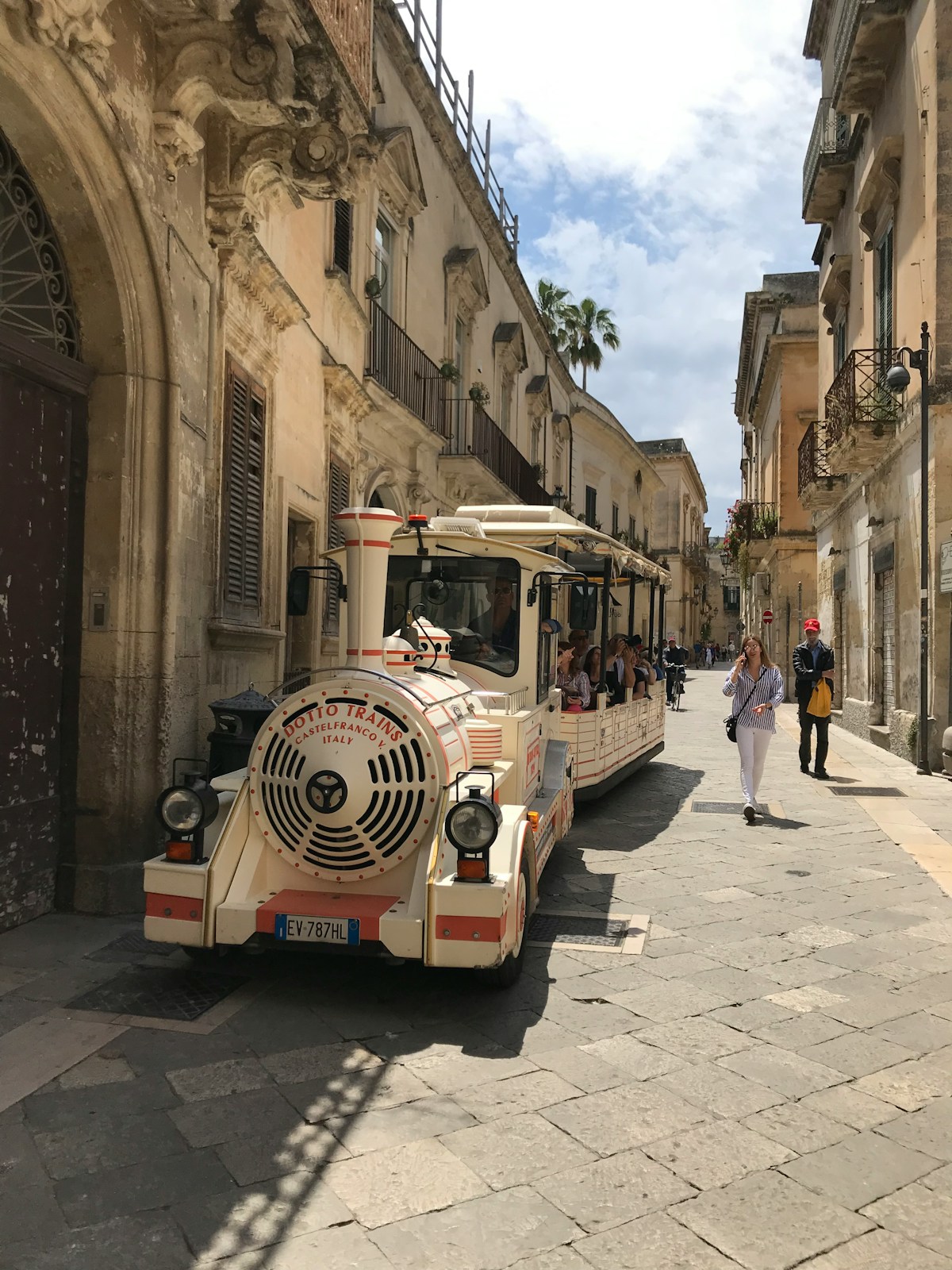
Lecce is the baroque capital of Italy - not Rome, not Venice, but this small city in the heel of the boot. Guided tours of Lecce covering the baroque churches, the Roman amphitheatre, and the papier-mâché workshops are widely available. The local limestone (pietra leccese) is so soft when quarried and so hard when it dries that the 17th-century craftsmen who worked it carved it like wood - producing facades of extraordinary ornamental density. Every church surface is covered in floral garlands, cherubs, grotesque masks, and writhing figures. The result is one of the most distinctive architectural environments in Europe, and a completely distinctive city.
Santa Croce Basilica
The defining church of Lecce baroque. The facade took over 100 years to complete (1549–1695) and represents successive generations of craftsmen pushing the pietra leccese to its decorative limits. The rose window is surrounded by figures of humans, animals, and monsters in tiers. The lower level has classical pilasters; the upper section is an explosion of ornament. The interior is calmer but still elaborately decorated.
Piazza del Duomo
The enclosed piazza - one of the most theatrical baroque spaces in Italy. The Cathedral of Santa Maria Assunta (17th century), the Bishop’s Palace, and the Seminary building all face each other in a stone-paved square separated from the surrounding streets by a single entrance. The campanile (the bell tower, 70m) can be climbed. The Seminary courtyard has an ornate baroque well-head.
Roman Amphitheatre (Anfiteatro Romano)
A 1st-2nd century AD Roman amphitheatre discovered in 1901 under the Piazza Sant’Oronzo, the main square. About half of it is visible; the rest runs under the surrounding buildings. Capacity was around 25,000 - making it significant for a city of Lecce’s size. The Roman columns on the square (one original, one reconstructed) are topped by St Oronzo, the city’s patron.
The Old Town on foot
Lecce’s baroque architecture extends beyond the major churches throughout the historic centre. The streets around Via Vittorio Emanuele II, Via degli Ammirati, and the area between Santa Croce and the Duomo are dense with ornate doorways, window surrounds, and balcony brackets. The artisan tradition continues - papier-mâché workshops (cartapesta leccese) are scattered throughout the centre, producing religious figures and carnival figures that form another distinctive Lecce craft.
Otranto and the Salento Coast
Lecce is the gateway for the Salento peninsula - the extreme heel of Italy, where the Adriatic and Ionian seas meet.
Otranto (35 minutes east) - a small walled town on the Adriatic coast with a cathedral floor mosaic from 1163–1166 depicting the Tree of Life (the largest medieval floor mosaic in Europe). The crypt holds the bones of 800 martyrs killed by the Ottomans in 1480. The castle on the waterfront. Blue water below the walls.
Gallipoli (35 minutes south-west) - a baroque island town on the Ionian coast with good beaches on the southern Lido.
Santa Maria di Leuca (1.5 hours south) - the southernmost point of the heel, where the two seas meet. More symbolic than spectacular; the coastline is wild.
The Salento coast beaches - particularly the eastern coast between Otranto and Santa Cesarea Terme: dramatic limestone cliffs, sea caves, and very clear water. Less developed than the Adriatic beaches further north.
Pugliese food in Lecce
Lecce sits in the middle of Puglian food culture:
- Orecchiette con cime di rapa (ear-shaped pasta with turnip tops and anchovy) - the signature Pugliese dish
- Pasticciotto - a short-pastry tart filled with custard cream, sold from bakeries throughout the city and the reason Lecce residents queue at 7am
- Rustico leccese - a puff-pastry tart filled with mozzarella, tomato, and béchamel; a Lecce street food
- Primitivo wine - the southern Pugliese red, now associated with “Zinfandel” in California
- Negroamaro - the other major red grape of Salento, particularly good from Copertino and Brindisi DOCs
Book Lecce Tours on GetYourGuide
| Tour | Duration | From price | Highlights |
|---|---|---|---|
| Lecce baroque architecture walking tour | 2.5 hrs | From €20 | Santa Croce Basilica, Piazza del Duomo, Roman amphitheatre, pietra leccese craftwork |
| Lecce food tour — pasticciotto, rustico, and Salento wine | 3 hrs | From €50 | Six+ local tastings, historic centre, Primitivo and Negroamaro |
| Salento coast day trip — Otranto and Gallipoli from Lecce | 8 hrs | From €55 | Byzantine mosaics, sea caves, Ionian coast beaches |
Browse all Lecce tours on GetYourGuide →
Back to the full Lecce travel guide for baroque architecture, Roman sites, and logistics. For Lecce food - pasticciotto, rustico leccese, and Salento wines - see the Lecce food guide. For day trips from Lecce to Otranto, Gallipoli, and the Salento coast, see day trips from Lecce. For the Puglian food tradition in context, our Pugliese food guide covers the regional cuisine. For a Puglia circuit itinerary connecting Bari, the Valle d’Itria, Matera, and Lecce, see our Puglia itinerary. For Puglia vs Sicily as a southern Italy choice, see our Puglia vs Sicily guide.
Where to stay in Lecce: Find hotels in Lecce — search accommodation across all budgets.