Quick Answer
The best time to visit the Dolomites depends on what you want to do. For hiking and via ferrata, go from late June to late September, when lifts and mountain huts (rifugi) are open and trails are mostly snow-free. For skiing, go from mid-December to late March, with the most reliable snow in January and February. May and November are low season, when many lifts, huts and hotels close. September is the best compromise: stable weather, golden light, fewer people and open huts.
This page covers the year as a whole. For winter detail, see our Dolomites in winter guide and winter guide for the Dolomites; for planning activities, see the Dolomites hub.
Dolomites Weather and Conditions by Month
| Month | Valley high | Conditions | Crowds | Prices | Best for |
|---|---|---|---|---|---|
| January | 0 to 3°C | Deep snow, cold | High | High | Skiing, Christmas-New Year markets |
| February | 2 to 5°C | Most reliable snow | High | High | Skiing, Carnival week |
| March | 6 to 9°C | Spring skiing, sunny | Moderate | Mid | Ski touring, lower prices |
| April | 10 to 13°C | Lifts close, melting | Very low | Low | Quiet valleys, few services |
| May | 15 to 18°C | Mud and snow on high trails | Very low | Low | Cycling in valleys, closed huts |
| June | 20 to 23°C | Lifts open late June | Moderate | Mid | Wildflowers, lower huts |
| July | 24 to 27°C | Hiking season peaks | Peak | Peak | High-altitude hikes, via ferrata |
| August | 24 to 27°C | Warm, afternoon storms | Peak | Peak | Huts, lakes, Ferragosto crowds |
| September | 19 to 22°C | Clear, stable weather | High | Mid | Best hiking, fewer crowds |
| October | 12 to 15°C | Golden larches, lifts close | Low | Low | Autumn colour, quiet trails |
| November | 5 to 8°C | Closed season | Very low | Low | Hotel breaks, Bolzano markets late month |
| December | 0 to 3°C | Ski season opens | High | High | Christmas markets, early skiing |
Figures are approximate valley temperatures around Cortina, Val Gardena and Alta Badia; at 2,500m expect 10 to 15°C cooler.
Summer (Mid-June to Mid-September): Hiking Season
Summer is the main season for walkers, climbers and cyclists. Lifts and rifugi (mountain huts) begin opening in mid to late June, with the full network running from early July to early September. High-altitude trails such as the Alta Via 1, the Tre Cime di Lavaredo circuit, the Seceda ridge and the Sella group are usually snow-free by early July, though patches can linger on north slopes in June. Wildflowers peak from mid-June to mid-July on Alpe di Siusi, Europe’s largest high-altitude meadow.
July and August are peak season with crowds, high prices and afternoon thunderstorms. Start early, check mountain forecasts and carry waterproofs. Popular spots (Lago di Braies, Seceda, Tre Cime) can fill by 9am, and vehicle access to Braies is restricted in peak summer, so check the current rules before driving. Huts and hotels book months ahead. For guided options see Dolomites guided hikes or browse Dolomites tours and our best tours in the Dolomites.
Autumn (Mid-September to October)
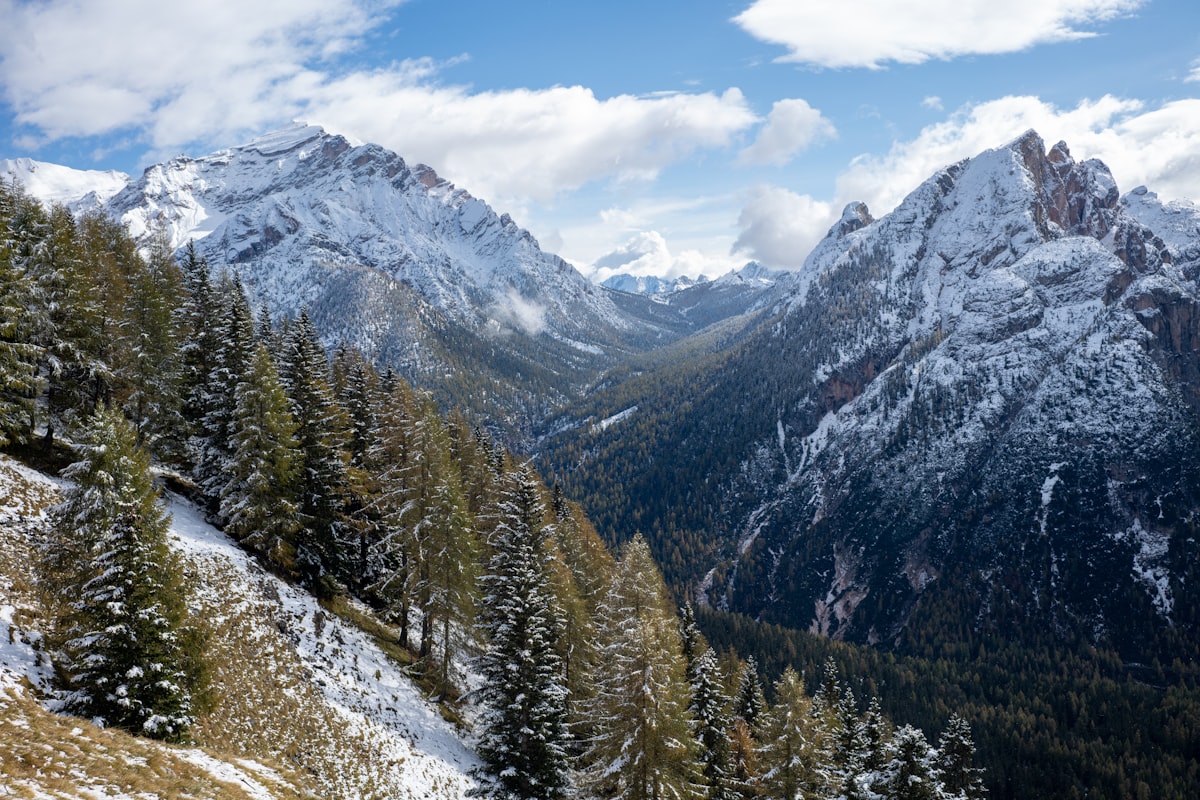
Mid-September is arguably the best time to hike: the air is clear, afternoon storms are rarer, crowds fall and huts remain open. Lifts and rifugi start closing from mid-to-late September, and many operators stop by early October, so verify before you plan a hut-to-hut route. Larch forests turn gold in October, especially around Alpe di Siusi, Val di Funes and Cortina. Roads such as the Passo Giau and Passo Sella may close after the first snow. Prices drop, but services are limited from mid-October.
Winter (December to March): Ski Season
The ski season generally starts in early-to-mid December and runs until late March or early April. The Dolomiti Superski network links around 1,200km of pistes across 12 areas, including Cortina, Val Gardena, Alta Badia and Kronplatz, with the Sella Ronda circuit as the signature route. Snow is most reliable in January and February, with sunny spring skiing in March. Peak weeks (Christmas to Epiphany, Carnival in February) are the busiest and priciest. Milano Cortina hosted the 2026 Winter Olympics in February, bringing upgraded facilities to Cortina d’Ampezzo and Bormio.
For ski area comparisons, rifugio lunches and snowshoeing, see our Dolomites in winter guide and skiing in the Dolomites rather than duplicating them here. Late November to early January also brings Christmas markets in Bolzano, Merano, Bressanone and Brunico.
Spring Shoulder (April to Early June)
Spring is the quiet season. Lifts close once the ski season ends, many huts and hotels shut until mid-June, and high trails are muddy or snowbound. This is a good time to cycle valley roads, walk low-altitude paths, visit Bolzano’s museums (Ötzi the Iceman at the South Tyrol Museum of Archaeology) and enjoy Merano’s gardens. Choose accommodation in a town such as Bolzano or Brunico, which keep services open year-round.
Best Time for Specific Plans
- High-altitude hiking and via ferrata: July to mid-September.
- Wildflowers: mid-June to mid-July.
- Fewer crowds with open huts: early September.
- Golden larches and photography: October.
- Skiing: January to mid-March for snow reliability.
- Cheapest trip: early December, late March or June, outside peak weeks.
- Christmas markets: late November to 6 January.
Getting There and Staying by Season
Most visitors fly into Venice, Verona, Innsbruck or Munich and continue by car, shuttle or train to Bolzano, Cortina or Brunico. In summer, roads and passes are open and buses link major valleys. In winter, check chain rules and winter tyre laws, as mountain roads can close. Use a transfer in Italy for door-to-door arrivals. For stays, our Dolomites hotel guide covers areas and budgets, and you can check current rates through Booking.com for the Dolomites. Rooms are most expensive in the peak summer weeks (late July to mid-August) and from Christmas to early March.
Practical Notes
Lift dates, hut opening and pass closures change each year, so check operators’ websites before travelling. The Dolomiti Superski site lists winter lift status and pass prices, and Dolomiti UNESCO provides information on the World Heritage area. As of 2026, summer lift tickets and winter day passes are priced by season, with the highest rates over Christmas and Carnival; compare options in advance and buy online when possible. A travel insurance policy that covers mountain activities is sensible (travel insurance for Italy).