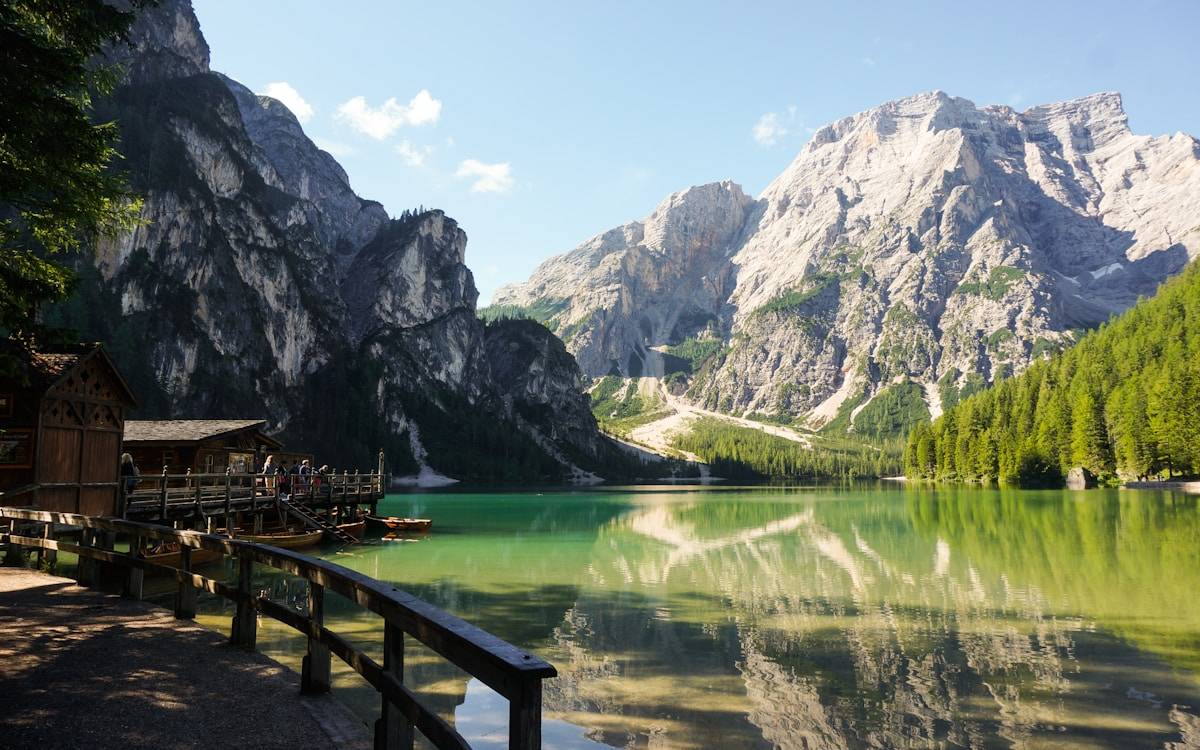
The Dolomites are a UNESCO World Heritage mountain group in northeast Italy, straddling the provinces of South Tyrol (Alto Adige/Südtirol), Trentino, and Belluno. The rock formations — vertical limestone towers and ridgelines in shades of pale grey and cream, turning pink and orange at sunset — are among the most visually dramatic landscapes in Europe. The range covers roughly 150 km east-west and contains some of the finest hiking terrain on the continent, alongside premier ski resorts in winter.
Choosing a base in the Dolomites requires some thought: the range is large, the valley structure means drives between areas can take longer than the map suggests, and each area has a distinct character. Here’s a practical breakdown of the main options.
Search Dolomites hotels on Booking.com to compare prices and check availability across all areas in this guide.
Bolzano (Bozen) — Best All-Round City Base
Bolzano is the capital of South Tyrol and the most practical base if you want both a city experience and easy access to the mountains. It sits at the confluence of two rivers at an altitude of 260 metres, surrounded by vineyards on the lower slopes before the Dolomite rock begins in earnest above. The city centre has good restaurants, the Ötzi the Iceman museum (South Tyrol Museum of Archaeology — one of the most extraordinary museum experiences in Italy), a covered market, and a walkable historic centre.
Pros: Best transport connections in the region — on the Brenner railway line from Innsbruck/Munich (north) and Verona/Milan (south). Cable car from the city centre to the Renon plateau. Warm microclimate and good city infrastructure. More affordable than Cortina. Central position for reaching multiple Dolomite valleys by car.
Cons: At low altitude, it doesn’t feel like a mountain resort. The city heat in July and August can be significant. Not ideal if you want to be at altitude for early morning hikes.
Budget (€80–120/night): The Hotel Feichter (Via Grappoli 15): a family-run guesthouse in the historic centre, clean simple rooms, excellent value; doubles from approximately €90/night as of 2026. Several good B&Bs in the old town at similar prices.
Mid-range (€120–200/night): The Stadt Hotel Citta (Piazza Walther 21): a four-star on the main piazza, excellent position, solid facilities; doubles from approximately €140/night as of 2026. Hotel Greif (Via della Rena 28): a boutique four-star with individually designed rooms and the best position in the historic centre; doubles from approximately €170/night.
Luxury (€200–350/night): The Parkhotel Laurin (Via Laurino 4): a Liberty-style (Art Nouveau) hotel with garden, a Bolzano institution; doubles from approximately €220/night as of 2026.
Cortina d’Ampezzo — Premier Ski Resort
Cortina is Italy’s most famous mountain resort, host of the 1956 Winter Olympics and co-host of the 2026 Winter Olympics. In summer it’s a hiking and climbing destination; in winter one of the Alps’ best ski areas. The resort sits at 1,224 metres in the Ampezzo basin, surrounded on three sides by Dolomite massifs. The village has an attractive historic centre (Corso Italia), good restaurants, and some of Italy’s most expensive skiing.
Pros: The most spectacular mountain setting of any Dolomite base. Outstanding skiing in winter with access to the Dolomiti Superski pass covering 1,200 km of pistes. In summer, excellent hiking directly from the resort including the Cinque Torri area. World-class mountain scenery.
Cons: The most expensive option in the Dolomites by a considerable margin. The village itself is heavily commercialised in both seasons. Road access from Bolzano or Venice can take 2–3 hours depending on traffic. Train access is poor (nearest station is Calalzo, 35 km).
Budget (€120–160/night): Budget options are limited in Cortina. A handful of simpler guesthouses and B&Bs on the edge of the resort area; doubles from approximately €130/night in summer as of 2026.
Mid-range (€180–300/night): The Hotel Menardi (Via Majon 110): a historic family hotel with mountain views, wood-panelled rooms, one of the most characterful addresses in Cortina; doubles from approximately €210/night. Hotel Montana (Corso Italia 94): comfortable mid-range four-star on the main street; doubles from approximately €190/night.
Luxury (€350–700+/night): The Cristallo Resort & Spa (Via Rinaldo Menardi 42): the grandest hotel in Cortina, with pool, spa, multiple restaurants and the full Cortina social experience; doubles from approximately €450/night in peak winter as of 2026.
Val Gardena and Ortisei — Central Dolomites
The Val Gardena runs from the Isarco valley west of Bolzano into the heart of the Dolomites, with three main villages: Ortisei (St. Ulrich), Santa Cristina, and Selva Gardena (Wolkenstein). This valley is centrally placed for the Sella Ronda ski circuit (the most popular in the Dolomites) and for summer hiking on the Seceda plateau — one of the most spectacular ridgeline walks in the range.
Mid-range (€130–240/night): The Hotel Gardena Grödnerhof (Ortisei): a four-star family hotel with spa, pool, and wood-interior traditional character; doubles from approximately €180/night as of 2026 in summer. The Hotel Adler Dolomiti (Ortisei): one of the best hotels in the valley, spa-hotel category; doubles from approximately €250/night.
Mountain Huts (Rifugi) — On the Alta Via Routes
The Dolomites’ network of rifugi (mountain huts) along the Alta Via walking routes offer dormitory beds from approximately €35–55/night with half-board (dinner and breakfast included), or private rooms from approximately €75–110/night as of 2026. The Rifugio Auronzo (below Tre Cime di Lavaredo), Rifugio Lagazuoi (above the Falzarego pass), and Rifugio Scoiattoli (near Cinque Torri) are among the most scenic options. All require advance booking in July and August.
Plan your trip:
- Browse guided Dolomites hikes and tours
- Book an airport transfer from Bolzano or Innsbruck
- Get travel insurance before you book
- Pick up an eSIM for Italy
- Search hotels in the Dolomites on Booking.com
Booking and practical tips
- Book rifugi well ahead. Mountain hut beds fill quickly for July and August. For the most popular huts (Auronzo, Lagazuoi, Locatelli), booking 4–6 months ahead is not excessive. Check each rifugio’s own website — most now accept online reservations.
- The South Tyrol Guest Pass. Many hotels in South Tyrol province provide guests with a free mobility pass covering all public transport in the province during their stay. Confirm with your hotel when booking.
- Dolomiti Superski season. The Dolomiti Superski pass connects 12 valleys and 1,200 km of pistes — one of the world’s largest ski areas. Purchase before arrival for discounts. Season usually runs early December to late March, depending on snow.
- Driving in the Dolomites. Several spectacular mountain passes (Passo Gardena, Passo Sella, Passo Falzarego, Passo Giau) are closed in winter. In summer they’re popular motorcycle and cycling routes. Check road status at the start of each day.
- Lago di Braies (Pragser Wildsee). One of the most photographed locations in Italy. Access is restricted in summer peak hours — park at the lower car park and walk in (approximately 1.5 km) to avoid the long queues for the upper parking. Arrive before 8:00 or after 17:00 for the best light and fewer people.
For the full Dolomites guide: our Dolomites hub covers the Alta Via routes, the Tre Cime di Lavaredo circuit, and the Seceda ridge walk in detail. For the nearest city accommodation: hotels in Trento and hotels in Lake Garda for the southern approaches.
Ready to Plan Your Trip?
- Dolomites Itinerary - the definitive week in the Dolomites
- Northern Italy Itinerary - lakes, cities, and mountain ranges
- 2 Weeks in Italy - incorporating the Dolomites into a longer Italian tour