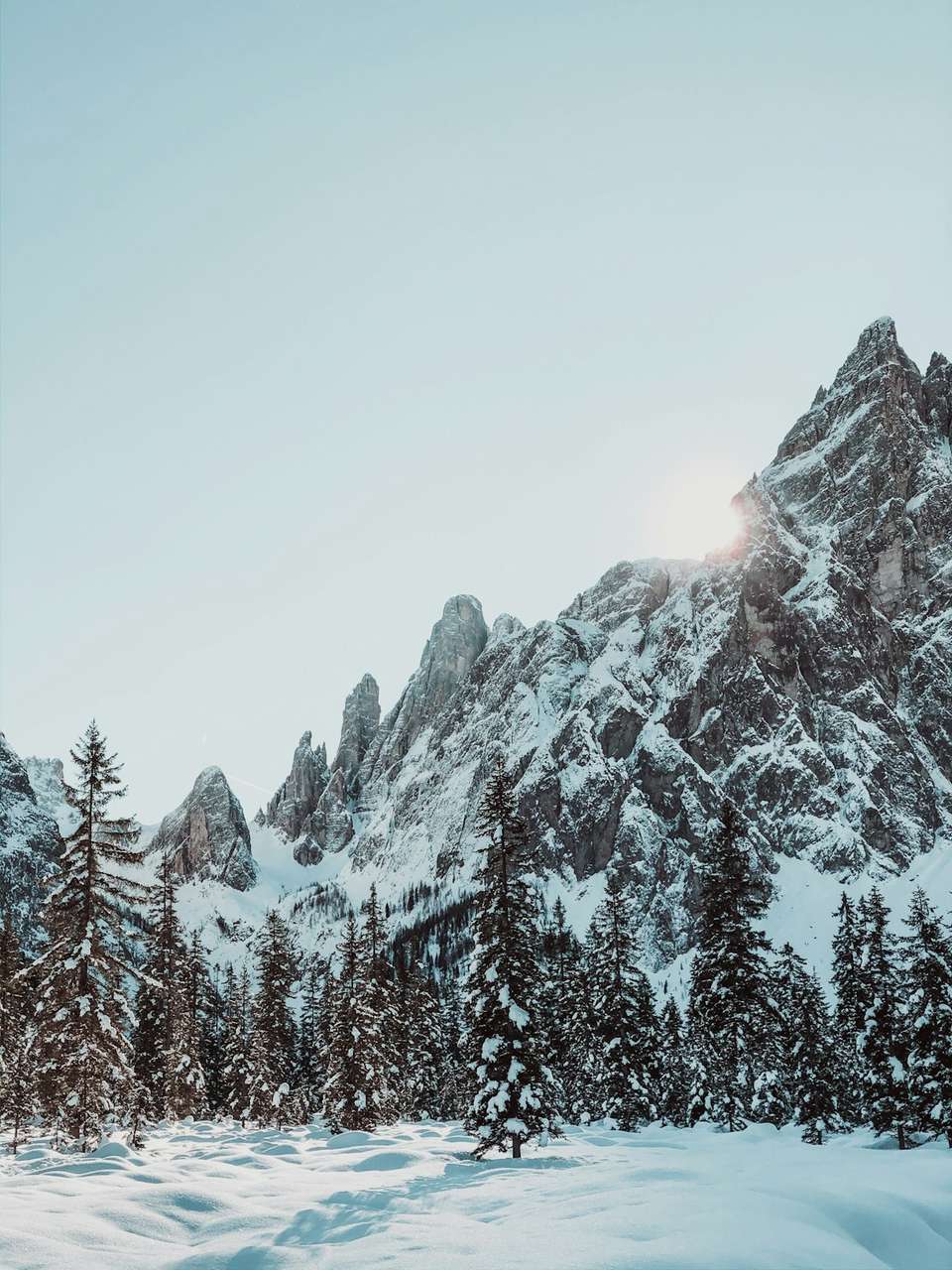
The Dolomites in winter are something apart from the usual Alpine ski holiday. The rock towers — pale, vertical, and improbably dramatic — rise above snowfields and pine forests in a way that makes Swiss or Austrian alternatives feel straightforward by comparison. You are still skiing or snowshoeing through the Alps, but the landscape has an operatic quality that is distinctly Italian.
This guide covers the full winter experience: when to go, which areas suit different travel styles, what to do if you don’t ski, where to eat on the mountain, and what to expect from the après-ski and village life.
When to Go
| Period | Conditions | Crowds | Notes |
|---|---|---|---|
| December (early) | Variable snow, not all runs open | Low | Good for value; some lifts still closed |
| Christmas–New Year | Reliable snow, full resort opening | Very high | Book accommodation 3–4 months ahead |
| January | Best snow depth, all runs open | Low | Quietest period; ski schools less crowded |
| February | Good snow, long days | High (half-term) | Second week especially busy |
| March | Spring sunshine, firm snow on upper runs | Moderate | Best value for good conditions |
| April | Snow melting at low altitude | Very low | Only high-altitude runs reliable |
Practical note: The Dolomites sit at the junction of the Veneto, Trentino-Alto Adige and South Tyrol. Higher resorts (Cortina, Arabba) tend to keep snow later; valley villages like Ortisei can have patchy cover in December even when upper lifts are running.
The Main Ski Areas
The Dolomiti Superski network ties together 12 ski areas with a single pass, covering approximately 1,200km of marked pistes. That said, the areas are not all directly ski-connected — some require a shuttle bus or drive. Browse available Dolomites tours to book guided experiences or hire local instructors across all resorts.
Cortina d’Ampezzo is Italy’s most glamorous ski resort and the host venue for the 2026 Winter Olympics (cross-country, biathlon, sliding events, with Alpine races on the Tofana piste). The ski area itself — Tofana, Faloria and Cristallo — totals around 115km of runs, which is smaller than many people expect. What Cortina offers beyond skiing is unmatched: the Corso Italia promenade, serious restaurants, high-end accommodation, and the backdrop of the Cinque Torri and Tofana di Rozes. Best for: experienced skiers, non-skiing partners, winter luxury breaks.
Alta Badia comprises the linked villages of Corvara, Colfosco, San Cassiano, La Villa and Badia, with around 130km of runs on the Sella group. The terrain is varied but weighted toward intermediate and advanced skiing. The in-piste dining is excellent — the Michelin-starred La Siriola and the terrace restaurants at Piz Sorega are among the best on-mountain eating in the Alps. Best for: intermediate skiers, food-focused travellers, families.
Val Gardena (Ortisei, Santa Cristina, Selva) connects into the Sella Ronda circuit — a 40km ski loop around the Sella massif that links Val Gardena with Alta Badia, Val di Fassa and Arabba. The Sella Ronda is best done in full in a single day; January or March mornings offer the least traffic. Best for: skiers wanting high mileage, those doing the Sella Ronda route.
Plan de Corones (Kronplatz) near Bruneck/Brunico is slightly separate from the main cluster — an exceptional ski mountain built on a single plateau summit at 2,275m, with 32 lifts radiating outward. Superb for mixed-ability groups as runs of all grades descend from the same summit. Best for: all abilities, day trips from Brunico.
Beyond Skiing: Winter Activities for Non-Skiers
The assumption that the Dolomites require skiing is wrong. Several excellent winter alternatives exist:
Snowshoeing is the most accessible winter activity. Marked snowshoe trails cover most of the main valleys. The area around Dobbiaco (Toblach) and San Candido near the Austrian border has over 100km of marked routes through forests and across frozen Lake Dobbiaco. Equipment rental costs approximately EUR 10–15 per day in most ski towns; guided half-day tours run from approximately EUR 35–50 per person.
Cross-country skiing (Langlauf) is taken seriously in the Dolomites, particularly in Pusteria Valley (Val Pusteria). The trails around Dobbiaco, Sexten (Sesto) and Braies are groomed daily throughout the season. Equipment rental costs approximately EUR 15–20 per day.
Toboggan runs operate independently of ski lifts at several locations. The Pralongia toboggan run above Corvara (Alta Badia) is 2km long and floodlit on Tuesday and Thursday evenings — a reliable family option. The run above Passo Falzarego near Cortina is longer and steeper.
Ice skating rinks operate in Cortina (outdoor, near the Olympic Ice Stadium), Ortisei and San Martino di Castrozza. Entry is approximately EUR 8–12 per person including skate hire.
Horse-drawn sleigh rides (carrozza) are available through farms and stables across Alta Badia and Val Gardena. A 30-minute circuit costs approximately EUR 20–30 per person; longer cross-valley routes can be arranged through hotels.
Winter hiking on cleared paths remains possible throughout the season. The path around Lago di Braies (Pragser Wildsee) — frozen and white-bordered by snow-heavy pines — is one of the most photographed scenes in the Dolomites and is walkable in under an hour.
Rifugio Culture: Eating on the Mountain
The rifugio system is the single most Italian thing about skiing in the Dolomites. These mountain huts — some accessible only by ski or snowshoe, others reachable on foot — serve full meals at altitude and define how Italians approach a ski day: hours of skiing broken by a serious sit-down lunch.
Signature dishes vary by region but typically include canederli (bread dumplings in broth), pizzoccheri (buckwheat pasta with cabbage and fontina), goulash with polenta, and locally cured speck. A full rifugio lunch — two courses and a drink — runs approximately EUR 20–35 per person.
Notable stops: Rifugio Scotoni (Alta Badia, reachable from La Villa) has one of the most dramatic settings on the Sella group, with views across to Lagazuoi. Rifugio Lagazuoi sits at 2,752m above Passo Falzarego near Cortina and is reachable by cable car even without skis — the views over the Dolomites from the terrace are among the best in the range.
Booking for lunch is advisable in high season. Most rifugi have websites or phone numbers posted at lift stations.
Après-Ski and Evening Life
Cortina’s après-ski centres on the Corso Italia — bar terraces fill from around 4pm. Enoteca and Ciasa de Ra Ròzes are long-established evening stops. Expect prosecco and grappa more than beer; the pace is Italian-measured rather than Tyrolean-raucous.
Alta Badia has a quieter après scene concentrated in Corvara. The Kursaal bar at the base of the Boè lift gets busy mid-afternoon. San Cassiano is calmer still.
Val Gardena’s Ortisei has a good selection of wine bars along Via Rezia. The town is more accessible and less expensive than Cortina, with a younger crowd in peak season.
Getting There
The nearest airports with good winter connections are:
- Venice Marco Polo (VCE) — approximately 2.5 hours by road to Cortina; direct transfer buses operate during ski season
- Innsbruck (INN) — approximately 2 hours to Val Gardena via the Brenner motorway
- Verona (VRN) — approximately 2.5 hours to most Dolomites resorts
By road: The Dolomites are largely car-dependent in winter. Snow chains or winter tyres are legally required on mountain passes. Several main passes (Pordoi, Sella, Gardena, Campolongo) close overnight and sometimes during bad weather — check ANAS or local traffic reports before driving. Rental cars with winter tyres are widely available from Bolzano, Trento and Verona airports. Pre-book car rental in advance to guarantee winter-equipped vehicles in high season. Alternatively, arrange airport transfers to avoid navigating mountain roads in snow.
By public transport: Dolomiti Bus operates regional services connecting Cortina, Auronzo, San Vito and the Belluno area. Val Gardena and Alta Badia are served from Bolzano by Südtirol bus. Journey times are long and require connections; a car makes access significantly easier in winter.
What to Pack
The Dolomites sit between 1,000m (valley floors) and 3,000m+ (ski summits). Temperature ranges from around 0°C on valley floors to -15°C or colder at altitude in January.
Essential: waterproof, insulated ski jacket and salopettes; base layers (merino or synthetic, not cotton); gloves with a liner; neck gaiter or balaclava; ski goggles or glacier sunglasses; SPF 50 sun protection (UV intensity at altitude is high even in winter).
If snowshoeing or cross-country skiing: waterproof walking boots, thermal socks, trekking poles with snow baskets.
Where to Stay
Accommodation ranges from agriturismo farmhouses charging from approximately EUR 80 per room per night to five-star ski-in/ski-out hotels in Cortina approaching EUR 1,000 per night at peak Christmas and February periods.
Cortina d’Ampezzo: The Cristallo Resort (EUR 400–900/night in peak season) and Hotel de la Poste (EUR 300–600/night) are the classic options. Mid-range is well-covered by Hotel Menardi and Ciasa Domani.
Alta Badia: La Perla in Corvara (EUR 400–700/night) is the benchmark property. Rifugio-style B&Bs in La Villa and Badia start from EUR 90 per room in January.
Val Gardena: Ortisei has a wide spread from family-run two-star hotels (from EUR 70/night) to the five-star Adler Mountain Lodge (EUR 350–700/night).
For current availability and prices, we recommend booking direct or via a ski specialist — the best rooms in peak week book out months ahead.
Plan Your Trip
For the full year-round picture of the Dolomites, our Dolomites city guide covers the main valleys, access points, and what each area specialises in. If a Dolomites winter trip is part of a longer Italy visit, the northern Italy itinerary shows how to combine the mountains with Venice and the Lakes in one cohesive trip.
Plan Your Trip
- Flights - Find the best fares to Italy
- Travel Insurance - Get covered before you go
- eSIM - Stay connected from landing
- Car Rental - Compare prices across providers
See also: Dolomites city guide · Dolomites itinerary · Best time to visit Italy · Getting around Italy