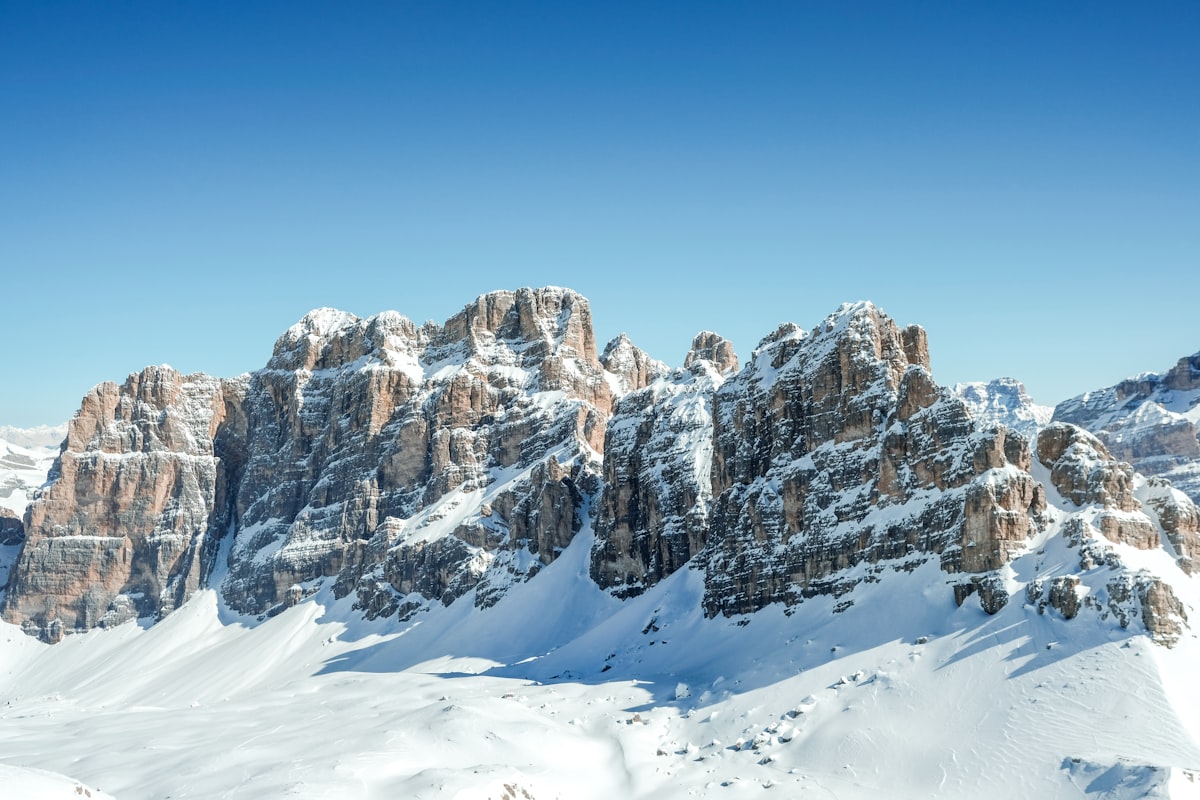
The Dolomites in winter isn’t just a skiing destination - though skiing is exceptional here. The range has a quieter character once you step off the groomed pistes: snowshoeing trails through empty forests, thermal pools overlooking the peaks, Christmas markets that feel genuinely Alpine rather than tourist-packaged, and winter hiking routes that open up the landscape with none of the summer crowds.
This guide covers what the Dolomites offers in winter beyond the ski pass.
Snowshoeing
Snowshoeing has grown considerably as a winter activity in the Dolomites over the past decade. Rental equipment is available from most mountain sport shops in the main resort towns - expect to pay approximately €15–20 per day for snowshoes and poles.
Best routes:
Alpe di Siusi (Seiser Alm) - Europe’s largest high-altitude alpine meadow, at around 1,800–2,350m. In winter it becomes an enormous white plateau, largely free of lift infrastructure. The loop from the Saltria car park to the Laurin Hütte (around 8km, 2–3 hours) is manageable for most adults and gives unobstructed views of the Schlern and Sassolungo massifs. The cableway from Ortisei or Siusi runs year-round.
Lago di Braies (Pragser Wildsee) - The lake circuit (3.5km) takes on a different character in winter when ice forms on the surface and the boathouse is closed. Snow builds up along the shoreline. Access by car is possible until mid-December; after that, a shuttle from Braies di Sotto is usually required due to road conditions. Check local road reports before setting out.
Tre Cime area - The Tre Cime plateau (2,360m) is accessible in winter by snowshoe from the Auronzo hut (reached by the toll road when ploughed) or via longer routes from Misurina. The landscape in deep snow, with the three towers catching morning light, is arguably more dramatic than in summer. Route difficulty increases with snowfall depth - check conditions and consider a guide in poor visibility.
Guided snowshoeing: Several operators in Val Gardena, Cortina, and Alta Badia run half-day and full-day guided snowshoe excursions from approximately €45–65 per person. The advantage beyond safety is the naturalist commentary - the wildlife signs visible in fresh snow (fox tracks, chamois paths) aren’t something you’d notice alone. Browse available Dolomites winter tours to compare guided options before you book.
Christmas Markets
Bolzano (Bozen) - Piazza Walther’s market is the most famous in northern Italy and draws comparisons with Innsbruck and Salzburg rather than the Italian equivalents in the south. Around 80 stalls sell regional produce: Speck Alto Adige, mountain cheeses, schüttelbrot (crisp rye bread), Glühwein (mulled wine), and carved wooden decorations made by craftspeople from Val Gardena and the Gröden valley. The market runs from late November to 6 January. Entry is free; stall prices are moderate - a Glühwein costs approximately €3–4, local cheeses €15–25 per piece.
Bressanone (Brixen) - The smaller market in the cathedral square (Domplatz) has a more intimate atmosphere than Bolzano. The medieval surroundings - the Bishop’s Palace courtyard is incorporated into the layout - give it a genuinely historic character. The artisan stalls lean towards handmade goods rather than mass-produced items. Running in parallel with Bolzano from late November, it’s worth combining both in a single day (35 minutes apart by train on the Brenner line).
Merano (Meran) - Merano’s market in the Kurhaus gardens runs a few weeks shorter than Bolzano but is notably less crowded. It’s worth combining with the Merano spa complex (see below) for a full winter day out.
Brunico (Bruneck) - The town at the foot of Plan de Corones has a smaller market with a strong focus on local food producers. The old town (Altstadt) is well-preserved and worth the 20-minute walk from the market.
Thermal Spas
QC Terme Dolomiti, Plan de Corones - At 2,275m on the summit of Plan de Corones, QC Terme’s outdoor thermal pools with 360-degree Dolomites panoramas are one of the genuinely memorable experiences in the region. The facility includes indoor and outdoor pools, steam rooms, saunas, and a relaxation area. Entry for a full day costs approximately €50–70 per person (as of 2026); advance booking is strongly recommended at weekends. Access is by gondola from Brunico - the lift ticket is not included and costs separately. The combination of soaking in warm water at altitude in winter cold, with the Dolomites peaks all around, is hard to find elsewhere in Italy.
Terme di Levico, Trentino - In the Valsugana valley south of Trento, Terme di Levico is a more traditional thermal spa complex in a 19th-century setting, approximately 1.5 hours by road from Bolzano. Day access from approximately €28 per person. A more budget-friendly option than QC Terme, with less dramatic views but a longer-established bathing tradition.
Aquarena, Silandro (Schlanders) - In the Val Venosta west of Merano, Aquarena is a well-regarded local sports and wellness centre with thermal water treatments. Primarily used by locals rather than tourists, which keeps prices reasonable (day pass approximately €15–20).
Ice Climbing
The Dolomites has several established ice climbing areas, particularly active in January and February when temperatures stay consistently below freezing. The Landro valley and Sesto (Sexten) area in eastern South Tyrol are the most developed.
Guided ice climbing introductions for beginners are available from mountain guide associations in Cortina, Bolzano, and Brunico. A full-day introduction including equipment hire typically costs approximately €120–160 per person in a small group of 2–4 (as of 2026). Prior rock climbing experience isn’t required for beginner ice courses, though a reasonable level of fitness is.
The Comitato Regionale Guide Alpine Trentino-Alto Adige maintains a register of qualified mountain guides - book through their members or through established mountain sport operators in resort towns rather than through informal channels.
Winter Hiking on Open Paths
Not all Dolomites hiking stops in November. Several lower-altitude paths remain accessible throughout winter, particularly in the southern Dolomites and Adige valley.
The Mendel ridge (Mendola) above Lake Caldaro stays largely snow-free through December due to its southern aspect and lower altitude (around 1,200–1,400m). The path from Caldaro to the Mendola Saddle gives views over the Adige valley and the plains towards Bolzano.
Lago di Caldaro (Kalterersee) itself is the southernmost wine lake in the Alps - walking the 8km lakeshore circuit in winter, with vines dormant and no crowds, is one of the more peaceful experiences in the region.
For higher-altitude winter walking on closed summer paths, hire a guide - route-finding in snow is significantly harder than on marked summer trails, and conditions change quickly.
Practical Notes for a Winter Visit
Getting around: A hire car is strongly recommended in winter. Public buses serve the main towns and ski resort bases, but schedules are reduced compared to summer, and taxi costs between valley stations add up quickly. Snow chains are legally required in South Tyrol on many mountain roads between November and April - this applies to hire cars, and rental companies will ask you to confirm you have them.
What to pack: Base layers (wool or synthetic), mid-layer fleece, waterproof outer shell, warm waterproof boots with grip (not standard walking shoes), gloves, and a hat. Sunglasses or goggles are essential at altitude - snow reflection at 2,000m is intense even on overcast days.
Accommodation: Winter rates at Dolomites hotels and B&Bs outside peak ski weeks (Christmas, February half-term) are significantly lower than summer. Many agritourismo properties offer winter stays from around €80–120 per night for a double room including breakfast.
For skiing alongside your non-ski activities, the Dolomites skiing guide covers all the major resorts and the Dolomiti Superski pass in detail. For the full picture of the Dolomites across all seasons, start with the Dolomites travel hub. Cortina d’Ampezzo, the region’s most famous winter resort town, has its own detailed guide.
Many ski resorts and winter activities in the Dolomites are easiest to reach with your own transport - car hire in Italy is the most flexible option, especially for moving between resorts.
Book Dolomites Winter Tours on GetYourGuide
| Tour | Duration | From price | Highlights |
|---|---|---|---|
| Dolomites snowshoe tour — guided winter hike in the Alta Badia | 4 hrs | From €50 | Snowshoe through Alta Badia, Ladin cultural stops, panoramic summit views |
| Bolzano Christmas market and South Tyrol day trip | 7 hrs | From €55 | Walther Platz market, Ötztal Iceman museum, South Tyrol wine and speck |
| Skiing the Dolomiti Superski — guided freeride tour across resorts | 6 hrs | From €120 | Val Gardena to Cortina traverse, Dolomiti Superski pass included, expert guide |