The Dolomites are a mountain range in northeastern Italy - straddling South Tyrol, Trentino, and Belluno - declared a UNESCO World Heritage Site in 2009. What makes them distinct is the geology: pale limestone towers and spires that turn from white to orange to red at sunset, rising sharply from forested valleys. The area is one of the best hiking destinations in Europe, and also one of the top ski areas in winter.
The main access towns are Bolzano (Bozen), Bressanone (Brixen), Brunico (Bruneck), and Cortina d’Ampezzo, with Verona and Innsbruck as the nearest airports. Getting around requires a hire car - public transport reaches the valleys but not most trailheads.
Tre Cime di Lavaredo
The three limestone pinnacles of Tre Cime - Cima Grande (2,999m), Cima Occidentale (2,973m), and Cima Piccola (2,857m) - are the most photographed mountain formation in the Dolomites. The classic circuit (Rundweg) takes 2.5–3 hours at a steady pace and covers approximately 10km, circling all three peaks with views from multiple angles. The north faces, steep and shadowed, were the site of famous early 20th-century climbing achievements; they’re best seen from Rifugio Lavaredo.
Access: A toll road runs from Misurina to the Auronzo hut (Rifugio Auronzo, 2,333m). Toll as of 2026 is approximately €30 per vehicle. In summer (mid-June to mid-September), the road is often closed to private vehicles between 9am and 4pm to reduce congestion - a shuttle bus runs from Misurina instead, approximately €3 each way. Arriving before 7am guarantees parking and avoids the shuttle window entirely.
Rifugio stops on the circuit: Rifugio Auronzo (start/end), Rifugio Lavaredo (midpoint, good coffee and soup), and Rifugio Locatelli / Drei Zinnen Hütte (on the north side, with the classic face-on view of all three peaks). Prices at rifugi vary - a bowl of soup and drink runs approximately €12–16 as of 2026.
Seceda and the Odle Group
Seceda (2,519m) in Val Gardena offers the most dramatic ridge view in the Dolomites - a long limestone escarpment dropping vertically below the ridge, with the valleys of Ortisei far below. The Odle group behind the ridge adds scale. Sunrise from the Seceda plateau is genuinely exceptional.
Cable car access from Ortisei: The gondola from Ortisei (Urtijëi in Ladin) runs in two stages - Ortisei → Furnes (Col Raiser) → Seceda. As of 2026, the return fare is approximately €32 per person. Operating hours typically 8:30am–5pm in summer; check current schedule at the Val Gardena tourism website as hours shift with season and weather.
Hiking down: A signed trail (3A) descends from Seceda to Ortisei through meadows and forest - roughly 2.5 hours. This avoids the cable car descent, is more satisfying, and is well within easy hiking ability. Wear proper footwear - the upper section crosses some exposed rock.
Val Gardena itself - the valley below - is worth an evening on foot. Ortisei, Selva di Val Gardena, and Santa Cristina are the three main villages, with the region known for traditional woodcarving alongside the outdoor industry.
Lago di Braies
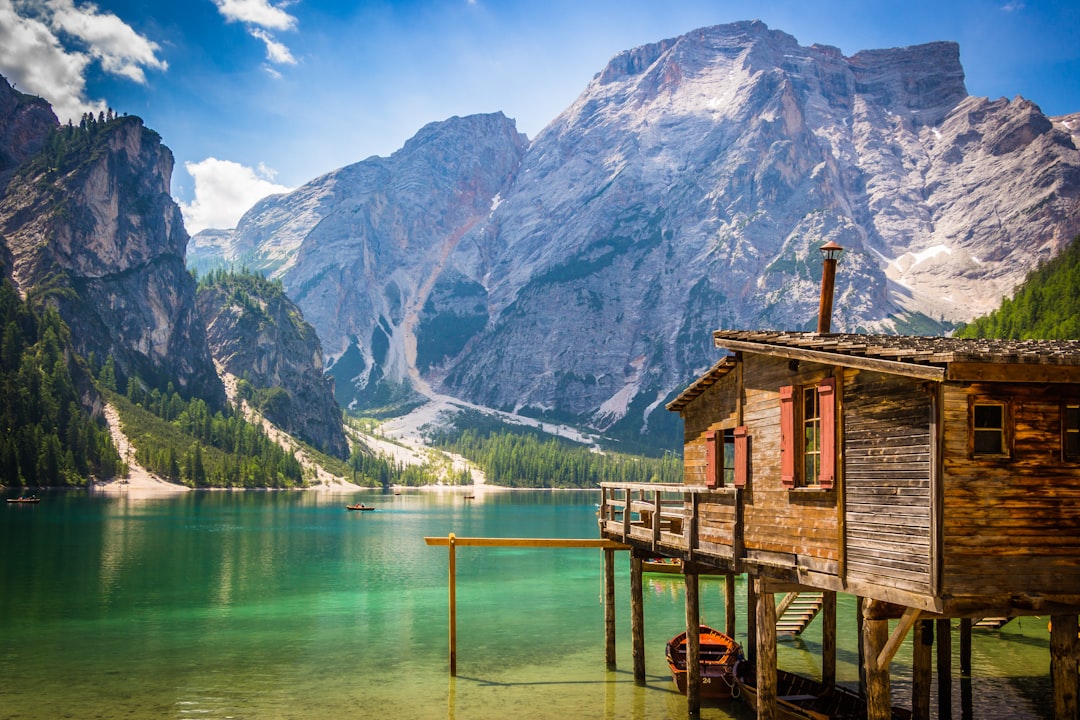
Lago di Braies (Pragser Wildsee in German) is the most photographed lake in the Dolomites - turquoise-green water, a rustic boathouse on wooden pilings, and the Seekofel peak as backdrop. It’s in Braies Valley (Val di Braies) in the Prags Dolomites, about 45 minutes from Brunico.
The lake circuit takes 1.5 hours on flat terrain around the shoreline. Rowing boats can be hired from the boathouse (approximately €20–25 per hour as of 2026). The Pragser Wildsee Hotel sits at the southern end - rooms run approximately €200–350 per night in high season; breakfast on the terrace facing the lake is one of the better simple pleasures in the Dolomites.
Parking: The car park at Lago di Braies fills by 7am in July and August. Shuttle buses from Braies village run from approximately 9am; the valley road is often closed to private vehicles from 9am to 3pm in peak summer. Plan accordingly - very early or very late are the only reliable options without the shuttle.
A longer trail connects Lago di Braies to the Seekofel peak above (Croda del Becco, 2,810m) - allow 4–5 hours return and proper hiking gear for the upper section.
Val Gardena and the Sella Ronda
Val Gardena is the central valley of the Dolomites, running through Selva di Val Gardena, Santa Cristina, and Ortisei. In winter, it connects to the Sella Ronda - a 40km ski circuit around the Sella massif covering four different ski areas (Val Gardena, Val di Fassa, Alta Badia, Arabba). The circuit can be done in one day by a competent intermediate skier; day ski passes run approximately €55–68 as of 2026 for a single area, or approximately €62–75 for the full Dolomiti Superski area.
In summer, the same area offers mountain biking (lifts carry bikes), via ferrata routes, and gentler valley walking. Guided via ferrata and cycling tours in Val Gardena depart from Ortisei for half-day and full-day routes. The Alpe di Siusi (Seiser Alm) - accessible by cable car from Siusi, 20 minutes from Ortisei - is the largest high-altitude Alpine meadow in Europe, at 1,800–2,350m. Easy walking above the treeline with views across to the Sassolungo and Schlern peaks.
Cable car to Alpe di Siusi: Departs from Siusi (Seis), approximately €17 return as of 2026. Private cars are not permitted on the plateau from 9am to 5pm in summer - the cable car and shuttle buses from Castelrotto are the only access during that window.
The Rifugio System
Rifugi (mountain huts) are central to Dolomites hiking in a way that’s distinct from most mountain ranges. They’re not basic shelters - they serve hot meals, wine, and beds, typically sitting at 2,000–2,500m with dramatic locations. Multi-day hut-to-hut routes (like the Alta Via 1 and Alta Via 2 long-distance trails) are genuinely comfortable because of them. Guided Dolomites hiking tours that include rifugio bookings and luggage transfers take the planning pressure off multi-day routes.
Key rifugi by area:
- Rifugio Locatelli / Drei Zinnen Hütte (2,405m): North face view of Tre Cime, full restaurant, dorm beds available, approximately €35–45 per person per night for accommodation including breakfast as of 2026.
- Rifugio Lagazuoi (2,752m): Accessible by cable car from Passo Falzarego, or by hiking. Magnificent sunset views over Cortina. Full restaurant; rooms approximately €75–90 per person half-board.
- Rifugio Nuvolau (2,574m): One of the oldest rifugi in the Dolomites (1883), sitting on a rocky summit above Passo Giau. Hard to reach - 1.5 hours up from the pass - and worth it for that reason.
- Rifugio Sella (2,180m): On the Sella massif between Val Gardena and Val di Fassa. Accessible from multiple trails and by ski lift in winter. Central position makes it a good base for exploring the area.
Booking ahead for summer stays is essential - popular rifugi fill months in advance for July and August.
Cortina d’Ampezzo
Cortina is the most famous resort in the Dolomites - it hosted the 1956 Winter Olympics and will co-host the 2026 Winter Olympics alongside Milan. In winter it’s a serious ski area (Dolomiti Superski coverage) with upscale shopping and hotels running €300–600+ per night at the top end. In summer it’s a hiking base with good trail access to the Tofane group and the Lagazuoi area, and a pleasant town to walk around.
The Faloria cable car (Cortina → Faloria, 2,123m) gives access to walking trails above the treeline; return ticket approximately €22 as of 2026. The Tofane cable car system above Cortina runs in summer for hiking access and in winter for skiing.
Getting Around
A hire car is essential for anything beyond the most basic Dolomites visit. Main roads follow the valleys; scenic mountain passes (Passo Gardena, Passo Sella, Passo Giau, Passo Falzarego, Passo Tre Croci) connect the areas but are narrow and slow. Allow more time than the map suggests. Fuel up in main towns - petrol stations are rare on passes.
Airport transfers from Verona or Innsbruck run approximately 2–2.5 hours to Bolzano or Cortina. Self-drive is more practical for anything more than a single-valley visit.
The Dolomiti Superski pass covers 1,200km of pistes across 12 connected ski areas - the most extensive skiing area in Europe. Day passes approximately €62–75 as of 2026, multi-day discounts available. Ski rental in Val Gardena and Cortina runs approximately €30–45 per day.
Book Dolomites Tours on GetYourGuide
| Tour | Duration | From price | Highlights |
|---|---|---|---|
| Tre Cime di Lavaredo guided hiking tour | Full day | From €79 | Iconic rock towers, alpine meadows, rifugio lunch, panoramas |
| Val Gardena and Seceda cable car excursion | Full day | From €75 | Seceda ridge walk, Ortisei, Ladin culture, mountain scenery |
| Lago di Braies and Cortina scenic day tour | Full day | From €85 | Emerald lake, rowing boats, Cortina d’Ampezzo, Faloria cable car |
Browse all Dolomites tours on GetYourGuide →
Where to stay in the Dolomites: Find hotels in the Dolomites — search accommodation across all budgets.