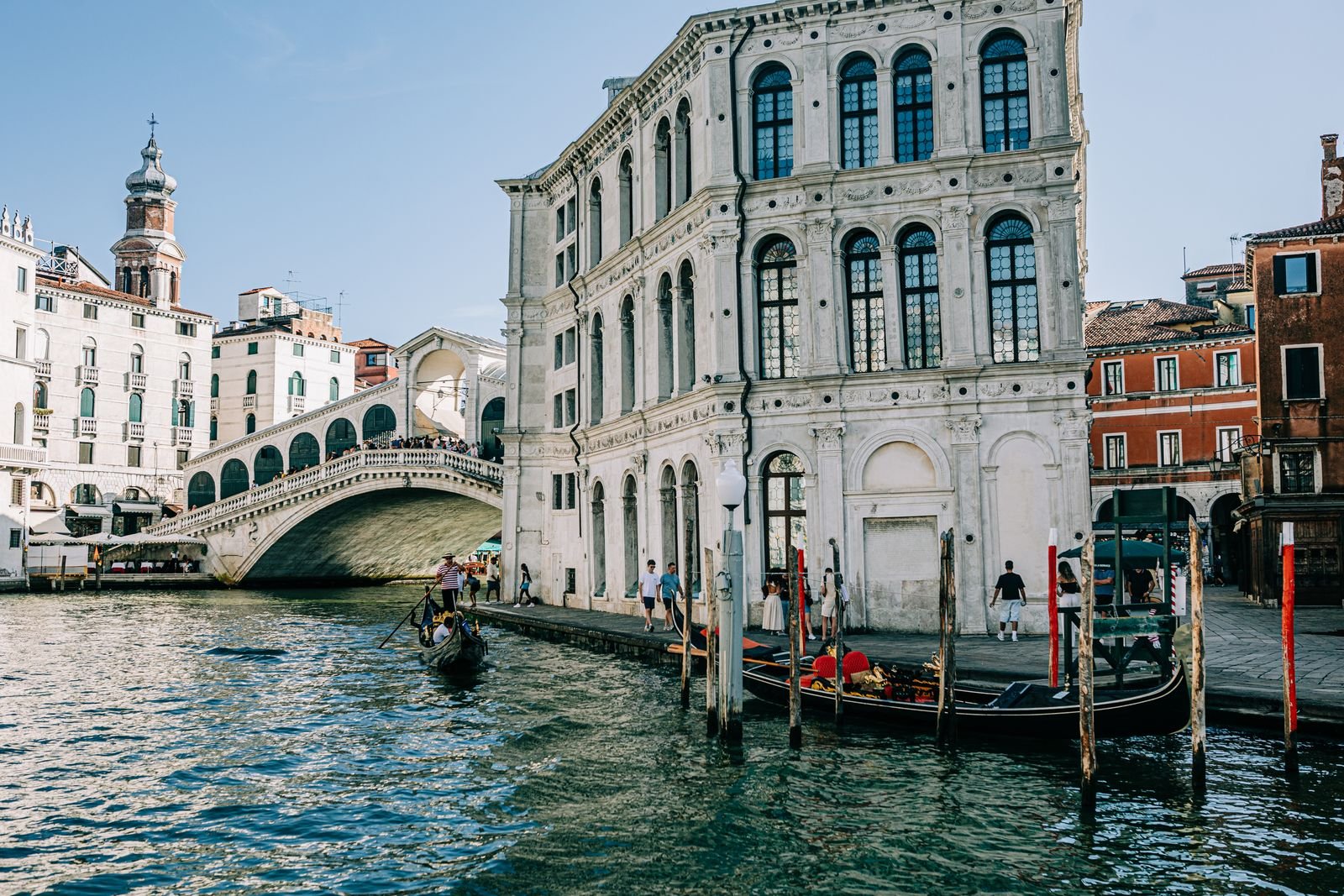
Five days is the length most people actually have for a first Italy trip, and it works if you accept one rule: pick three bases and move between them by high-speed train, rather than trying to see everything. This itinerary gives you Rome for two nights, Florence for two nights and one night in Venice, with a swap for the Amalfi Coast if you prefer sea to canals. If you have a few more days, our 1 week in Italy itinerary adds breathing room, and our guide to how many days you need in Italy helps you decide whether five is right.
The route at a glance
| Day | Where | Highlights |
|---|---|---|
| 1 | Rome | Arrive FCO, Pantheon, Trevi, Piazza Navona |
| 2 | Rome | Colosseum, Forum, Trastevere dinner |
| 3 | Florence | Morning train, Duomo, Oltrarno, sunset at Piazzale Michelangelo |
| 4 | Florence, then Venice | Uffizi or Accademia, afternoon train to Venice |
| 5 | Venice | St Mark’s, Doge’s Palace, Rialto, fly out of VCE |
Fly into Rome Fiumicino (FCO) and out of Venice Marco Polo (VCE). This open-jaw routing avoids a long backtrack. Our Fiumicino airport transfer guide compares the Leonardo Express (EUR 14, 32 minutes to Termini as of 2026), buses and pre-booked airport transfers.
Trains and tickets for 2026
- Rome to Florence: Frecciarossa or Italo, about 1 hour 30 minutes. Advance fares start around EUR 19, walk-up fares reach EUR 45-55. Details in our Rome to Florence train guide.
- Florence to Venice: about 2 hours 5 minutes to Venezia Santa Lucia. Advance fares start around EUR 19-25. See the Venice to Florence train guide.
- Booking: fares are released roughly four months ahead on Trenitalia and Italo, and you can compare both on Omio. Cheapest fares are non-refundable, so book once your flights are fixed. Our train travel in Italy guide covers strikes and passes.
Prices are approximate and as of 2026; fares move with demand.
Where to stay
Stay central so you can walk everywhere and skip taxis. In Rome, the area around the Pantheon and Piazza Navona or Monti puts you within 20 minutes of the Colosseum. In Florence, aim for the streets between the Duomo and Santa Maria Novella station, which makes train days easy. In Venice, Cannaregio is quieter and cheaper than San Marco and has a direct walk to Santa Lucia station. Venice is the most expensive of the three, so budget about EUR 150-250 a night for a mid-range double. Browse Rome hotels, Florence hotels and Venice hotels, or search directly for Rome, Florence and Venice.
Day 1: Rome, the old centre
Land at Fiumicino, drop your bags and start on foot. Begin at the Pantheon, which now charges a small entry fee (see our Pantheon tickets guide), then walk to Piazza Navona and the Trevi Fountain. Do Trevi early or late; by midday it is packed. Our Trevi Fountain guide explains the current access rules.
For dinner, eat Roman classics in the Campo de’ Fiori or Monti area: cacio e pepe, carbonara, supplì. Aim for roughly EUR 25-40 per person with wine at a neighbourhood trattoria, and avoid places with picture menus facing the main squares. If you are arriving jet-lagged, a guided evening walk is an easy way to see the centre without planning.
Day 2: Rome, ancient Rome and Trastevere
Book a timed Colosseum and Forum ticket weeks ahead; our Colosseum and Roman Forum tickets guide explains the combined ticket and the official booking route. Allow 3 to 4 hours for the Colosseum, Forum and Palatine Hill. If you would rather do the Vatican, swap using the Vatican Museums tickets guide, but you cannot comfortably do both in one day.
Spend the afternoon in Trastevere and climb the Janiculum Hill for a view over the rooftops. Eat dinner in Trastevere, and go to bed early: the Day 3 train leaves from Roma Termini. A skip-the-line Rome tour saves real time at the two big sights. See our 3 days in Rome itinerary if you want to give the capital longer.
Day 3: Florence, Duomo and the Oltrarno
Take a morning Frecciarossa (about 1.5 hours) and be in Florence by lunchtime. Leave bags at your hotel, then walk to the Duomo, Baptistery and Giotto’s Bell Tower. Climbing Brunelleschi’s Dome needs a reserved slot; see our Duomo dome tickets guide.
Cross Ponte Vecchio into the Oltrarno for the afternoon: artisan workshops, Santo Spirito square and an aperitivo. End at Piazzale Michelangelo for sunset (a 25-minute uphill walk or bus 12/13). Dinner can be a bistecca alla fiorentina, which is priced by weight, so ask the price per 100g before you order. Our Florence 3-day itinerary goes deeper.
Day 4: Florence in the morning, Venice by evening
Spend the morning on one museum only. The Uffizi Gallery is the choice for Botticelli and Renaissance painting; book timed entry on the official Uffizi site. If you prefer Michelangelo’s David, book the Accademia instead, as described in our Accademia tickets guide. Finish with lunch at the Mercato Centrale or a sandwich from an all’antico vinaio style shop.
Take an early-afternoon train to Venice (2 hours 5 minutes). Walk out of Santa Lucia station and you are on the Grand Canal, so the first view is the arrival. Take vaporetto Line 1 to San Marco (a single ticket costs EUR 9.50 as of 2026, so a 24-hour pass at about EUR 25 pays off if you ride more than twice). Dinner in Cannaregio is cheaper and more local than in San Marco; try cicchetti (small bar snacks) and a spritz at a bacaro. See our Venice food guide.
Day 5: Venice and departure
Start early at St Mark’s Square before the day-trip crowds arrive. Book the Doge’s Palace in advance using our Doge’s Palace tickets guide, then walk to the Rialto Bridge and market. A short gondola ride costs a fixed official rate, so agree the price before boarding. If you have time, Venice tours include a lagoon option.
Allow generous time for your flight: the Alilaguna water bus or bus to Marco Polo takes 20 to 75 minutes depending on route; see our Venice airport transfer guide. Our Venice city guide has more for a longer stay, and our 2 days in Venice page covers an extra night if you can add one.
Alternative: 5 days in Rome and the Amalfi Coast
If you want coast and food over museums, swap Florence and Venice for the Amalfi Coast. Fly in and out of Rome, or fly out of Naples (NAP) to save the return.
- Days 1-2: Rome. Follow Days 1 and 2 above.
- Day 3: Take a Frecciarossa to Naples (about 1 hour 10 minutes, from approximately EUR 13-30 as of 2026), see Pompeii or Naples’ pizza streets, then continue to Sorrento or Salerno. Our Rome to Amalfi Coast guide compares routes.
- Days 4-5: Amalfi, Positano, and a ferry or SITA bus along the coast. Use our Amalfi Coast itinerary for the order, and book Amalfi Coast tours for a boat day. Allow extra transfer time, as the coast has no railway.
The trade-off is clear: this version has less art, more transit, and works best from May to early October, when ferries run frequently.
Budget for 5 days in Italy
| Item | Per person (mid-range) |
|---|---|
| Hotels (4 nights, shared double) | EUR 300-500 |
| Intercity trains (2 journeys) | EUR 38-90 |
| Entry tickets (4-5 sights) | EUR 90-130 |
| Meals | EUR 150-200 |
| Local transport | EUR 40-70 |
| Total | approximately EUR 650-1,000 |
All prices approximate as of 2026, excluding international flights. The biggest saving is booking the trains and big-ticket entries early. If you are travelling at short notice, check the last-minute tours page for availability.
Estimate this route: plug your days, hotel level and transport into our trip cost calculator for a per-person total.
Book your trip
- Flights: Flights to Italy guide · Find the best fares
- Insurance: Italy travel insurance guide
- eSIM: Italy eSIM guide
- Tours: Browse Italy tours on GetYourGuide